Muscle soreness is one of those things everyone accepts—until it starts slowing you down.
At first, it feels like progress. That post-leg-day stiffness. The tightness after a heavy push session. The subtle ache that tells you you’ve done something right.
But then it lingers.
It starts affecting your next session. Your performance dips. Your motivation drops. And suddenly the question changes from “Did I train hard enough?” to:
“How do I recover faster?”
That’s where amino acids come in. Promoted as a shortcut to faster recovery, reduced soreness, and better performance—but do they actually deliver?
Let’s break it down properly.
1. Which amino acids help with muscle soreness?
Not all amino acids are created equal—especially when it comes to recovery.
When people talk about amino acids for soreness, they’re usually referring to three key players:
Leucine
The most important amino acid for muscle repair. It directly triggers muscle protein synthesis—the process your body uses to rebuild damaged muscle tissue after training.
Isoleucine
Supports energy regulation and helps reduce muscle breakdown during training.
Valine
Plays a role in reducing fatigue and supporting recovery.
Together, these form BCAAs (branched-chain amino acids)—the most commonly used amino acid supplement category.
Products like MyProtein Impact BCAA 2:1:1 and Warrior BCAA 2:1:1 Capsules are built around this exact ratio, with leucine taking the lead due to its direct role in recovery.
But here’s the nuance most people miss:
BCAAs don’t repair muscle on their own—they support the environment for recovery.
They reduce muscle breakdown and help kickstart repair processes, but they work best when your overall nutrition is already solid.
That means:
- Enough protein
- Enough calories
- Proper hydration
Without that foundation, amino acids become less effective.

2. Do BCAAs actually reduce muscle soreness?
Yes—but not dramatically.
This is where expectations need to be realistic.
BCAAs can help reduce DOMS (delayed onset muscle soreness), but they won’t eliminate it completely. You’re still going to feel the effects of hard training—just potentially less intense and shorter-lasting.
The way they work is fairly simple:
- Reduce muscle breakdown during training
- Support faster repair post-workout
- Lower perceived soreness over time
For example, using something like MyProtein Impact BCAA 2:1:1 around your training—especially during or immediately after—can help take the edge off soreness in the following days.
The same applies to Warrior BCAA Capsules, which are a more convenient option if you don’t want to mix powders.
But here’s the key point:
BCAAs are most effective when training volume is high.
If you’re:
- Training frequently
- Doing high-volume sessions
- Pushing intensity regularly
…then the cumulative benefit becomes noticeable.
If you’re training casually, the difference will be much smaller.
3. How long does it take for amino acids to work?
Amino acids don’t work like stimulants—you don’t feel them kick in.
Their effect is subtle and cumulative.
However, in terms of timing:
- Absorption: Within 30–60 minutes
- Short-term support: During and after training
- Noticeable benefits: After consistent use over several sessions
This is why intra-workout use is so popular.
Something like Optimum Nutrition Amino Energy + Electrolyte RTD works well here—not just for amino acids, but also for hydration and energy during longer sessions.
When you sip it during training, you’re:
- Supporting muscle tissue while it’s under stress
- Maintaining hydration
- Potentially reducing fatigue mid-session
The result isn’t instant—but over time, recovery becomes smoother, and soreness becomes more manageable.
4. Do amino acids reduce inflammation after workouts?
To a degree—yes.
Muscle soreness is closely tied to inflammation, but not all inflammation is bad. In fact, some level of inflammation is necessary for muscle growth.
The goal isn’t to eliminate it—it’s to control it.
Amino acids help by:
- Supporting muscle repair
- Reducing excessive breakdown
- Improving recovery efficiency
This can indirectly lead to less prolonged inflammation, which often translates to less lingering soreness.
But they’re not the strongest tool for inflammation on their own.
This is where stacking becomes important.
For example:
- BCAAs → reduce muscle breakdown
- Collagen (Applied Nutrition Marine Collagen) → support connective tissue repair
- Proper nutrition → control systemic inflammation
Together, this creates a more balanced recovery process.
Think of amino acids as part of the system—not the entire solution.

5. Are amino acids better than protein for recovery?
This is one of the most common misconceptions.
Short answer: No. Protein is still the foundation.
Amino acids are essentially parts of protein. When you consume whole protein, you’re getting a full spectrum of amino acids—including the ones responsible for recovery.
So why use amino acids at all?
Because they offer speed and convenience.
Protein
- Slower digestion
- Full amino acid profile
- Essential for total recovery
Amino Acids
- Fast absorption
- Targeted support (especially BCAAs)
- Useful during training or between meals
So it’s not a competition—it’s a combination strategy.
For example:
- Use protein to meet your daily requirements
- Use amino acids to support recovery around your workouts
That’s where something like Optimum Nutrition Amino Energy RTD fits naturally—bridging the gap during training when you’re not eating but still want to support recovery.
Intermission
So far, we’ve covered:
- Which amino acids actually matter for soreness
- What BCAAs realistically do (and don’t do)
- How long they take to work
- Their role in inflammation
- And how they compare to protein
In Part 2, we’ll go deeper into:
- Whether amino acids can actually speed up recovery
- Signs you might need them
- Daily use and potential downsides
- Food vs supplements
- And what the best overall approach to reducing soreness really looks like
Part 2
6. Can amino acids speed up muscle recovery?
Yes—but only within the limits of your overall recovery.
Amino acids don’t override poor sleep, bad nutrition, or inconsistent training. What they do is improve the efficiency of recovery when everything else is in place.
When you train, you’re creating micro-damage in muscle tissue. Recovery is simply the process of repairing that damage stronger than before.
Amino acids—especially BCAAs—help by:
- Reducing muscle breakdown during training
- Supporting protein synthesis post-workout
- Providing readily available building blocks for repair
This is where timing starts to matter more.
Using something like MyProtein Impact BCAA 2:1:1 during or immediately after your session gives your body access to amino acids when it needs them most—not hours later when you finally eat.
And in longer sessions, something like Optimum Nutrition Amino Energy + Electrolyte RTD adds another layer—keeping hydration and energy levels stable while still feeding recovery.
The result?
Not a dramatic overnight change—but a noticeable improvement in how quickly you feel “ready to train again.”
That’s the real metric. Not soreness elimination—but recovery speed between sessions.

7. Is there a downside to taking amino acids daily?
For most people, no—amino acids are generally safe when used correctly.
But that doesn’t mean they should be taken blindly.
The biggest issue isn’t side effects—it’s misuse.
Common mistakes:
- Using amino acids instead of meeting protein intake
- Taking excessive doses expecting faster results
- Relying on them without addressing recovery fundamentals
Amino acids are a supplement—not a replacement.
If your diet is already high in protein, the added benefit of BCAAs becomes smaller. Not useless—but less impactful.
That said, there are still scenarios where daily use makes sense:
- Training fasted
- Training multiple times per day
- High-volume or high-frequency training
- Struggling with recovery between sessions
In these cases, even something simple like Warrior BCAA Capsules can provide consistent support without needing to think about mixing powders.
The key is using them strategically, not automatically.
8. How do you know if you need amino acid supplements?
Most people don’t ask this—they just buy them.
But the better question is:
Are you actually struggling with recovery?
You might benefit from amino acids if you’re experiencing:
- Persistent soreness that lasts multiple days
- Drop-offs in performance between sessions
- Fatigue during longer workouts
- Difficulty recovering from high training volume
In these cases, amino acids can help smooth things out.
But if you:
- Recover well
- Hit your protein targets
- Feel fresh for each session
…then they’re more of a bonus than a necessity.
This is also where context matters.
For example:
- Training fasted? → Amino acids become more useful
- Long endurance or high-volume sessions? → More useful
- Short, low-volume training? → Less noticeable impact
Pairing amino acids with broader recovery support—like Applied Nutrition Marine Collagen for connective tissue—can also help if soreness isn’t just muscular, but structural.
Because not all soreness is muscle. Sometimes it’s the tissues around it that are lagging behind.
9. What foods are highest in leucine for recovery?
If you want to keep things natural, leucine-rich foods can do a lot of the heavy lifting.
Leucine is the amino acid most responsible for triggering muscle repair, so getting enough of it through food is key.
Top sources include:
- Chicken breast
- Lean beef
- Eggs
- Dairy (especially whey protein)
- Fish
These foods provide a complete amino acid profile, which is something BCAAs alone don’t offer.
This is why whole nutrition still comes first.
But here’s where supplements still have a role:
You’re not always eating during or immediately after training.
That’s where something like Optimum Nutrition Amino Energy + Electrolyte RTD becomes practical—it fills the gap between meals without needing digestion-heavy foods.
So it’s not food or supplements—it’s using both where they make sense.

10. What is the best supplement for muscle soreness?
There isn’t one perfect answer—because soreness isn’t caused by one thing.
It’s influenced by:
- Training intensity
- Volume
- Nutrition
- Sleep
- Hydration
- Recovery habits
So the best approach is layered.
1. Amino Acids (BCAAs)
→ Reduce muscle breakdown and support recovery
→ MyProtein Impact BCAA 2:1:1
→ Warrior BCAA Capsules
2. Hydration + Intra-Workout Support
→ Maintain performance and reduce fatigue
→ Optimum Nutrition Amino Energy + Electrolyte RTD
3. Connective Tissue Support
→ Help with deeper recovery beyond muscle
→ Applied Nutrition Marine Collagen
4. Performance Support
→ Improve endurance and reduce fatigue buildup
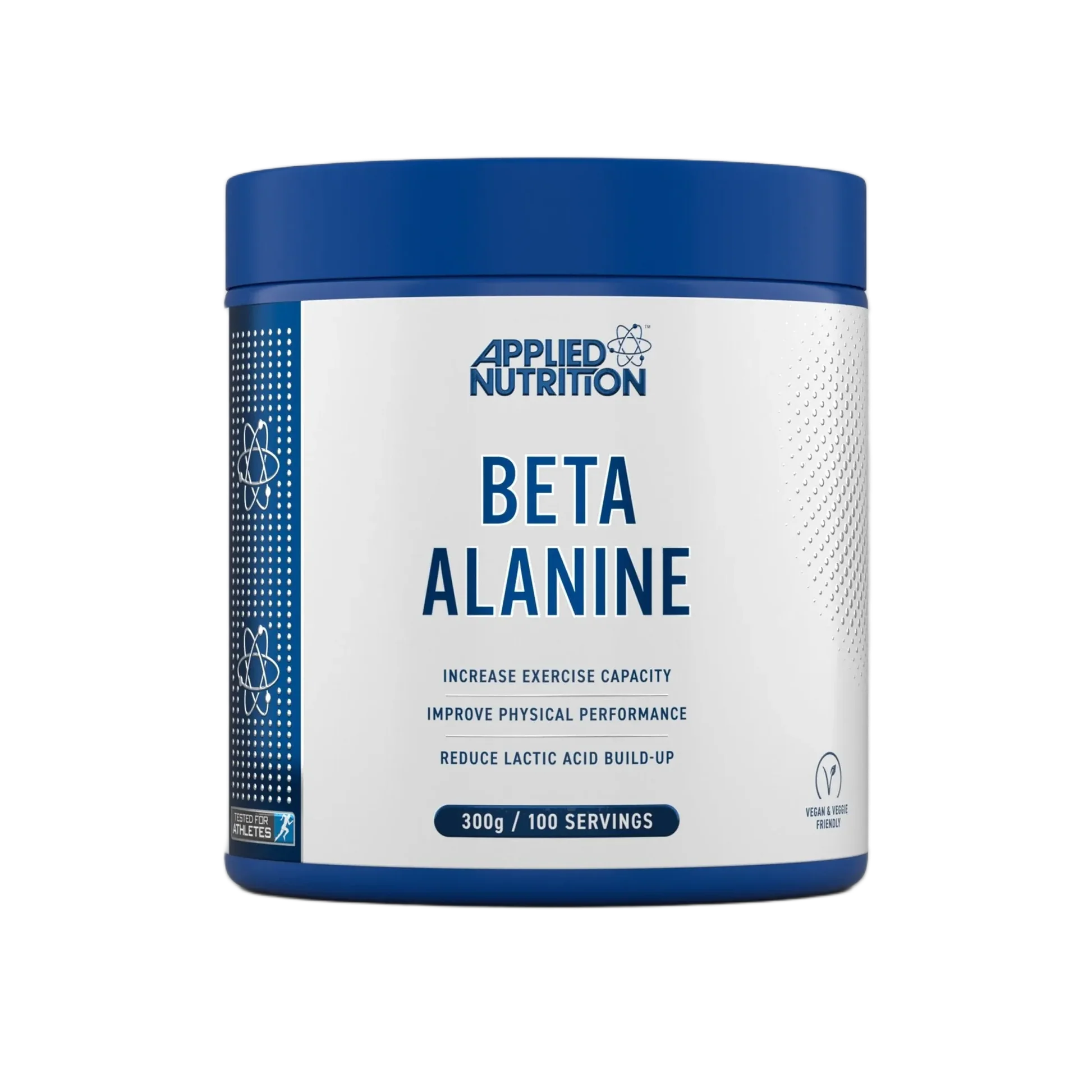
→ Applied Nutrition Beta-Alanine
Together, this creates a much stronger recovery system than relying on one product alone.
And that’s the real takeaway:
There isn’t a single “best” supplement for soreness—there’s a best approach.
Conclusion
Amino acids can help reduce muscle soreness—but they’re not a miracle fix.
They don’t replace good nutrition.
They don’t override poor recovery habits.
And they won’t eliminate soreness entirely.
What they can do is make recovery more efficient.
Less lingering soreness.
Better performance across sessions.
More consistent training.
And that’s what actually drives progress.
Because the goal isn’t to avoid soreness—it’s to recover from it faster so you can train again properly.
FAQ
1. Do amino acids actually reduce muscle soreness?
Yes, they can help reduce the severity and duration of soreness, especially when used consistently.
2. Are BCAAs or EAAs better for recovery?
EAAs are more complete, but BCAAs are still effective for reducing muscle breakdown and supporting recovery.
3. How quickly do amino acids work?
They absorb quickly, but noticeable recovery benefits build over multiple sessions.
4. Should I take amino acids every day?
Only if your training demands it—daily use is helpful for high-frequency or intense training.
5. Can amino acids replace protein?
No, protein is still essential. Amino acids are a supplement, not a replacement.
6. Do amino acids help with DOMS?
They can reduce DOMS slightly, but won’t eliminate it completely.
7. Are amino acids worth it for beginners?
Not essential, but useful if recovery is an issue.
8. Can amino acids improve workout performance?
Yes, especially during longer sessions when fatigue becomes a factor.
9. Do amino acids help if I train fasted?
Yes, they are particularly useful in fasted training situations.
10. What’s the best time to take amino acids?
During or immediately after training for best results.