


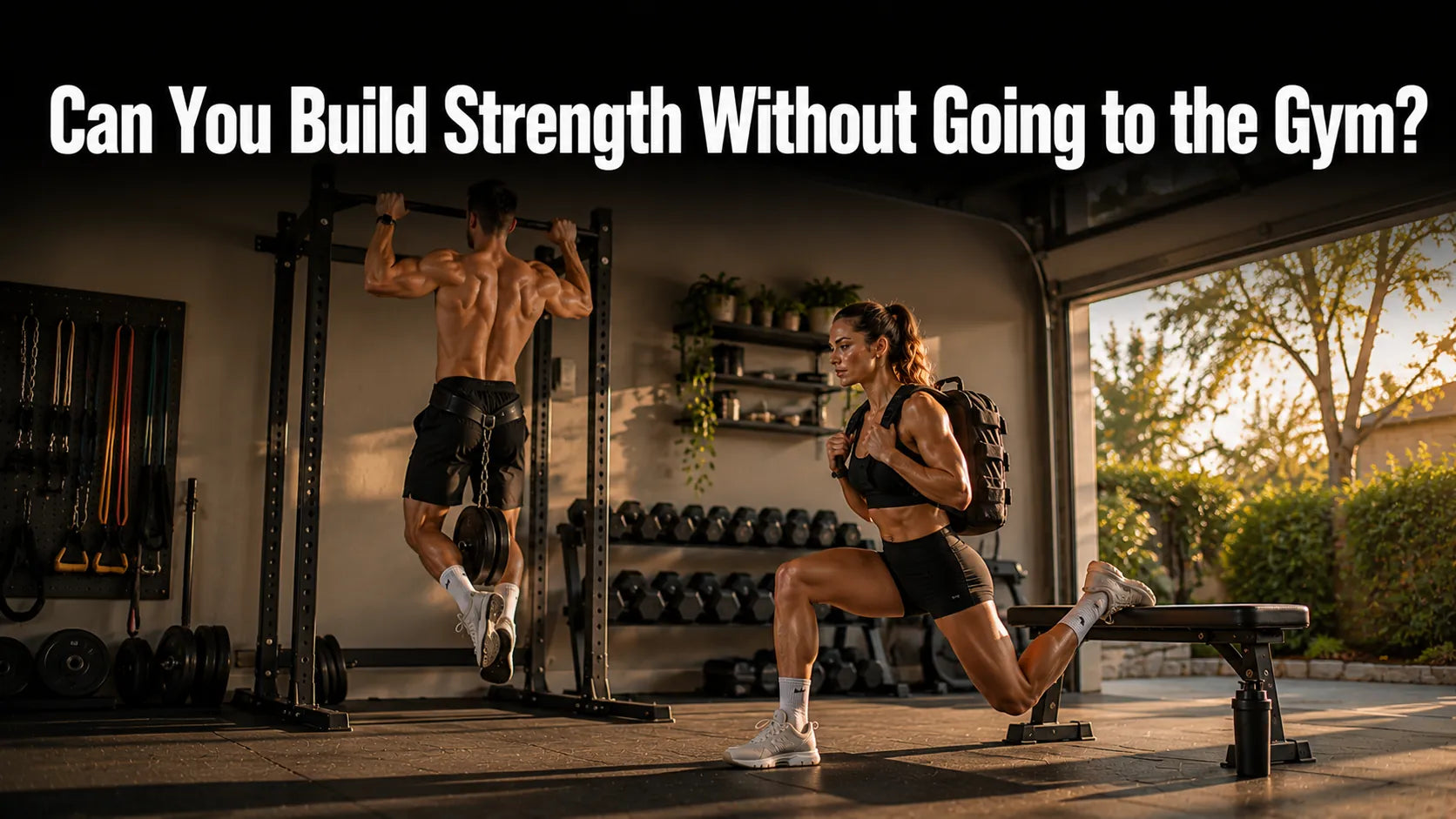
For many people, building strength has become almost synonymous with joining a gym.
Rows of barbells, squat racks and heavy dumbbells are often seen as essential tools for getting stronger, leaving many people wondering whether meaningful progress is even possible without them.
But what happens if you train at home?
Perhaps you don't have time to travel to a gym.
Maybe you prefer exercising in your living room, garage or garden.
Or perhaps you're simply looking for a more affordable way to improve your strength.
The good news is that strength isn't built by a building.
It's built by challenging your muscles consistently over time.
While commercial gyms provide more equipment and greater opportunities for progression, they're not the only place where strength can be developed.
Bodyweight exercises, resistance bands and even everyday household items can all provide effective resistance when used intelligently.
The key isn't where you train.
It's how you train.
Let's explore whether home workouts can genuinely build strength and how to make the most of training without ever stepping inside a gym.
1. Can You Really Build Strength at Home?
Yes.
Your muscles don't know whether you're training in a commercial gym or your spare bedroom.
They simply respond to resistance.
Strength develops whenever your muscles are challenged beyond what they're accustomed to.
At home, that resistance might come from:
- bodyweight exercises
- resistance bands
- adjustable dumbbells
- weighted backpacks
- water containers
- sandbags
- household objects
As long as the exercises become progressively more challenging over time, your body continues adapting.
This is particularly true for beginners, who often make rapid strength gains with relatively simple equipment.
Animal Creatine – 300 Capsules can naturally complement structured strength training by supporting repeated high-intensity efforts, whether you're training with barbells in a gym or bodyweight exercises at home.

The location doesn't determine your progress.
Consistency does.

2. Which Bodyweight Exercises Build the Most Strength?
Bodyweight training has been used for centuries to develop impressive levels of strength.
Some of the most effective movements include:
- push-ups
- pull-ups
- chin-ups
- dips
- pistol squats
- Bulgarian split squats
- handstand push-ups
- plank variations
These exercises challenge multiple muscle groups simultaneously while improving coordination and stability.
As your strength improves, many of these movements can be progressed by:
- increasing repetitions
- slowing the tempo
- adding pauses
- increasing range of motion
- wearing a weighted backpack
- progressing to more advanced variations
For example, standard push-ups may eventually become decline push-ups, ring push-ups or one-arm push-up progressions.
Bodyweight training isn't limited by imagination.
It's limited by progression.
3. Can Resistance Bands Replace Weights?
Resistance bands are far more effective than many people realise.
Although they don't perfectly replicate barbells or dumbbells, they provide continuous resistance throughout a movement and can effectively train most major muscle groups.
Bands are particularly useful for:
- rows
- chest presses
- shoulder presses
- squats
- Romanian deadlifts
- biceps curls
- triceps extensions
They're also highly portable, inexpensive and easy to store.
For beginners and intermediate trainees, resistance bands can provide enough challenge to build noticeable strength when exercises become progressively harder.
Eventually, stronger individuals may outgrow lighter bands, but combining multiple bands or using thicker resistance can continue providing effective training for quite some time.
4. Can Everyday Household Items Be Used for Strength Training?
Absolutely.
One of the advantages of home training is creativity.
Many everyday objects can become surprisingly effective pieces of training equipment.
Examples include:
- backpacks filled with books
- water bottles
- buckets
- sandbags
- heavy shopping bags
- furniture for elevated push-ups
- stairs for step-ups
A weighted backpack alone can dramatically increase the difficulty of:
- push-ups
- squats
- lunges
- step-ups
- pull-ups
Household items won't replace an entire commercial gym forever.
However, they're often more than enough to build significant strength, particularly during the early stages of training.
The body doesn't recognise whether resistance comes from a £2,000 cable machine or a backpack filled with textbooks.
It only responds to the challenge.

5. How Important Is Progressive Overload Without a Gym?
Progressive overload remains the single most important principle of strength development.
Without it, progress eventually stops.
Fortunately, increasing resistance isn't the only form of progression.
At home, you can progressively overload by:
- increasing repetitions
- adding sets
- slowing the eccentric phase
- reducing rest periods
- increasing range of motion
- progressing to harder exercise variations
- adding weight using household objects
For example:
A standard push-up eventually becomes:
- decline push-up
- ring push-up
- archer push-up
- one-arm push-up progression
Each variation increases the challenge without requiring expensive equipment.
Understanding progression rather than simply collecting equipment is what separates effective home training from random exercise.
Intermission
So far we've explored why strength can absolutely be built at home, which bodyweight exercises develop the most strength, how resistance bands compare with traditional weights, how everyday household items can become effective training tools, and why progressive overload remains the foundation of strength development regardless of where you train.
In Part 2, we'll look at whether beginners can get stronger without equipment, which supplements naturally support home strength training, the common mistakes that limit progress outside the gym, when a commercial gym becomes advantageous, and the best long-term strategy for building strength without ever relying on gym membership.
Part 2
6. Can Beginners Get Stronger Without Equipment?
Yes.
In fact, beginners often make excellent strength gains using nothing more than their own body weight.
When someone first starts resistance training, the body adapts quickly by improving:
- muscle fibre recruitment
- coordination
- balance
- movement efficiency
- exercise technique
These early improvements are largely driven by the nervous system rather than large increases in muscle size.
Bodyweight exercises such as push-ups, squats, lunges and planks provide enough resistance to stimulate these adaptations in most beginners.
As strength develops, exercises can be progressed by:
- increasing repetitions
- reducing assistance
- adding pauses
- increasing range of motion
- progressing to more difficult exercise variations
Meeting daily protein requirements also supports recovery and adaptation.
Applied Nutrition Clear Whey – 875g provides a refreshing source of high-quality protein, making it easier to support muscle repair after home strength-training sessions.


Beginners don't need expensive equipment.
They need consistency.

7. Which Supplements Support Strength Training at Home?
Whether you train in a commercial gym or your garage, the principles of recovery remain exactly the same.
Strength improves through:
- progressive overload
- adequate protein
- quality sleep
- sensible nutrition
- consistent training
Supplements simply help support those habits.
Optimum Nutrition Electrolyte – 264g can naturally support hydration before, during or after home workouts, helping maintain performance throughout demanding bodyweight or resistance-band sessions.


While hydration may seem less important during home workouts, maintaining fluid balance still supports exercise quality, particularly during longer or higher-intensity sessions.
The location changes.
The physiology doesn't.
8. What Mistakes Limit Strength Gains Outside the Gym?
Home training is highly effective—but only when it's approached with the same discipline as gym training.
Common mistakes include:
- repeating the same workout every week
- never increasing exercise difficulty
- rushing through repetitions
- neglecting recovery
- relying only on easy exercises
- believing equipment is more important than effort
Another mistake is overlooking overall nutrition.
Even when calories are sufficient, consistently falling short on essential vitamins and minerals may make it harder to support recovery and maintain training quality.
Applied Nutrition Multi-Vitamin Complex – 90 Capsules can naturally complement a balanced diet by helping support overall micronutrient intake alongside regular strength training.
Successful home training isn't about having more equipment.
It's about making today's workout slightly more challenging than last week's.
9. When Is a Gym Better Than Home Training?
Although impressive strength can be built at home, there comes a point where a commercial gym offers clear advantages.
A gym provides:
- heavier resistance
- greater exercise variety
- specialised equipment
- easier progression
- more precise loading
- access to squat racks, barbells and cable machines
These become increasingly valuable as your strength improves.
For advanced lifters chasing maximal strength, progressively loading a barbell is often more practical than continually finding heavier household objects.
That said, many people never reach a stage where limited equipment becomes their biggest obstacle.
More often, progress is limited by:
- inconsistent training
- poor recovery
- inadequate nutrition
- lack of progressive overload
A gym makes progression easier.
It doesn't make progression automatic.

10. What's the Best Way to Build Strength Without a Gym?
The most effective home strength programme focuses on progression—not perfection.
Prioritise:
- compound bodyweight movements
- resistance-band exercises
- progressive overload
- consistent weekly training
- proper recovery
- good technique
Every few weeks, aim to make exercises more challenging through:
- additional repetitions
- harder exercise variations
- extra resistance
- slower eccentrics
- improved movement quality
Supporting demanding home workouts is equally important.
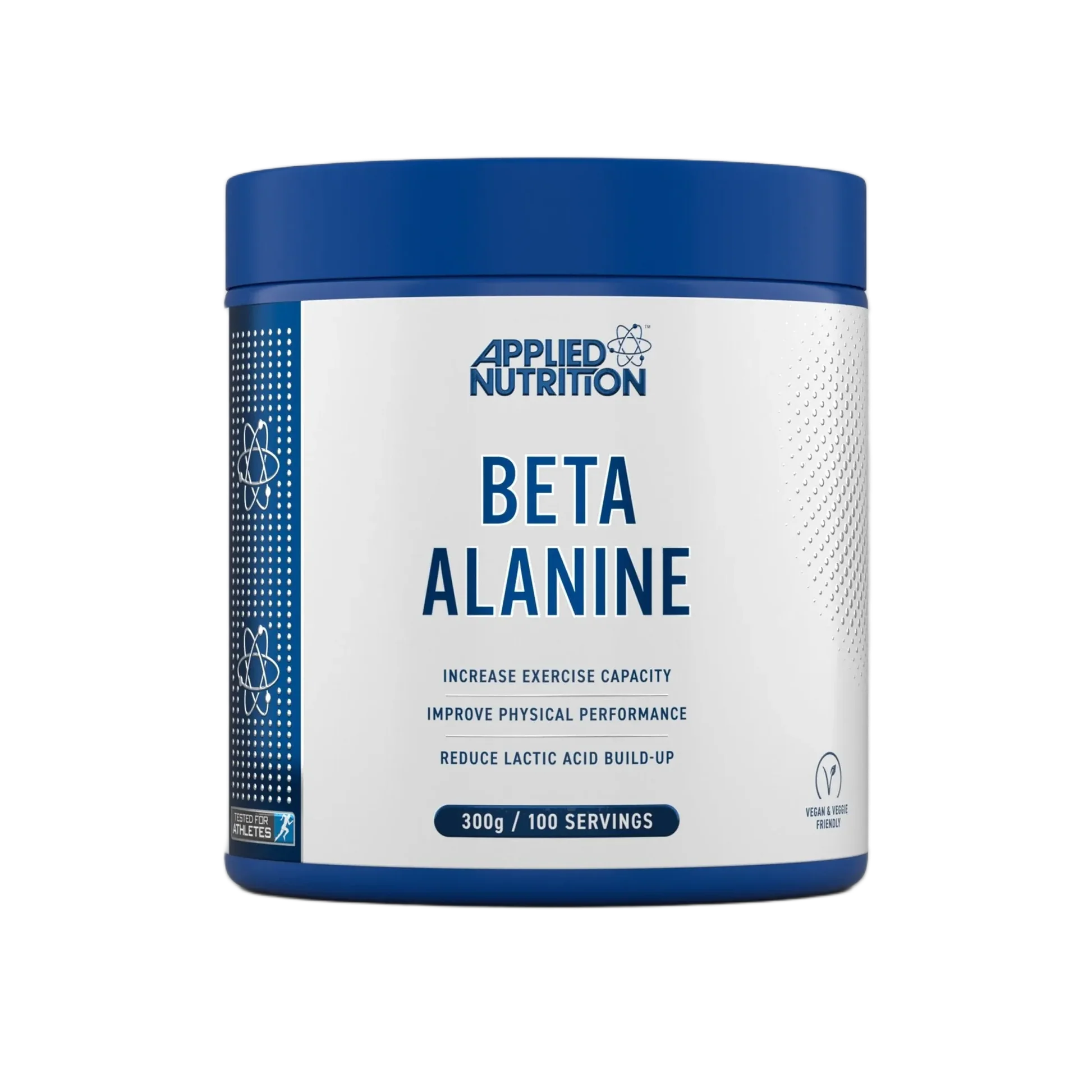
Applied Nutrition Beta-Alanine – 300g can naturally complement higher-intensity bodyweight circuits and resistance-band training by supporting performance during repeated muscular efforts, helping maintain workout quality as sessions become more demanding.
Strength doesn't come from where you train.
It comes from challenging your body consistently over time.
Conclusion
So, can you build strength without going to the gym?
Absolutely.
Bodyweight exercises, resistance bands and even everyday household items can all provide enough resistance to build impressive strength when combined with progressive overload and consistent training.
While a commercial gym offers greater opportunities for long-term progression, it's far from essential for most people—particularly beginners and intermediate trainees.
Focus on mastering movement, increasing the challenge gradually, recovering well and staying consistent.
Because the strongest training programme isn't necessarily the one with the most equipment.
It's the one you actually stick to.
FAQ
1. Can you build strength without going to the gym?
Yes. Consistent resistance training using bodyweight exercises, resistance bands or household items can effectively build strength.
2. Can bodyweight exercises build strength?
Absolutely. Exercises such as push-ups, pull-ups, dips and pistol squats can significantly improve strength, especially when progressively overloaded.
3. Are resistance bands good for strength training?
Yes. Resistance bands provide effective resistance for many compound and isolation exercises and are suitable for beginners and intermediate trainees.
4. Can beginners get stronger without equipment?
Yes. Most beginners can make excellent strength gains using only bodyweight exercises while developing proper technique and movement control.
5. How do you progressively overload at home?
You can increase repetitions, add sets, slow the eccentric phase, reduce rest periods, use harder exercise variations or add resistance with household items.
6. When is a gym better than home training?
A gym becomes increasingly beneficial as you require heavier loads, more exercise variety and more precise progression to continue building maximal strength.
7. Can you gain strength without lifting weights?
Yes. Bodyweight exercises and resistance-band training can both increase strength when performed consistently and progressed over time.
8. What's the best way to build strength at home?
Focus on compound movements, progressive overload, consistent training, quality nutrition and effective recovery.


