


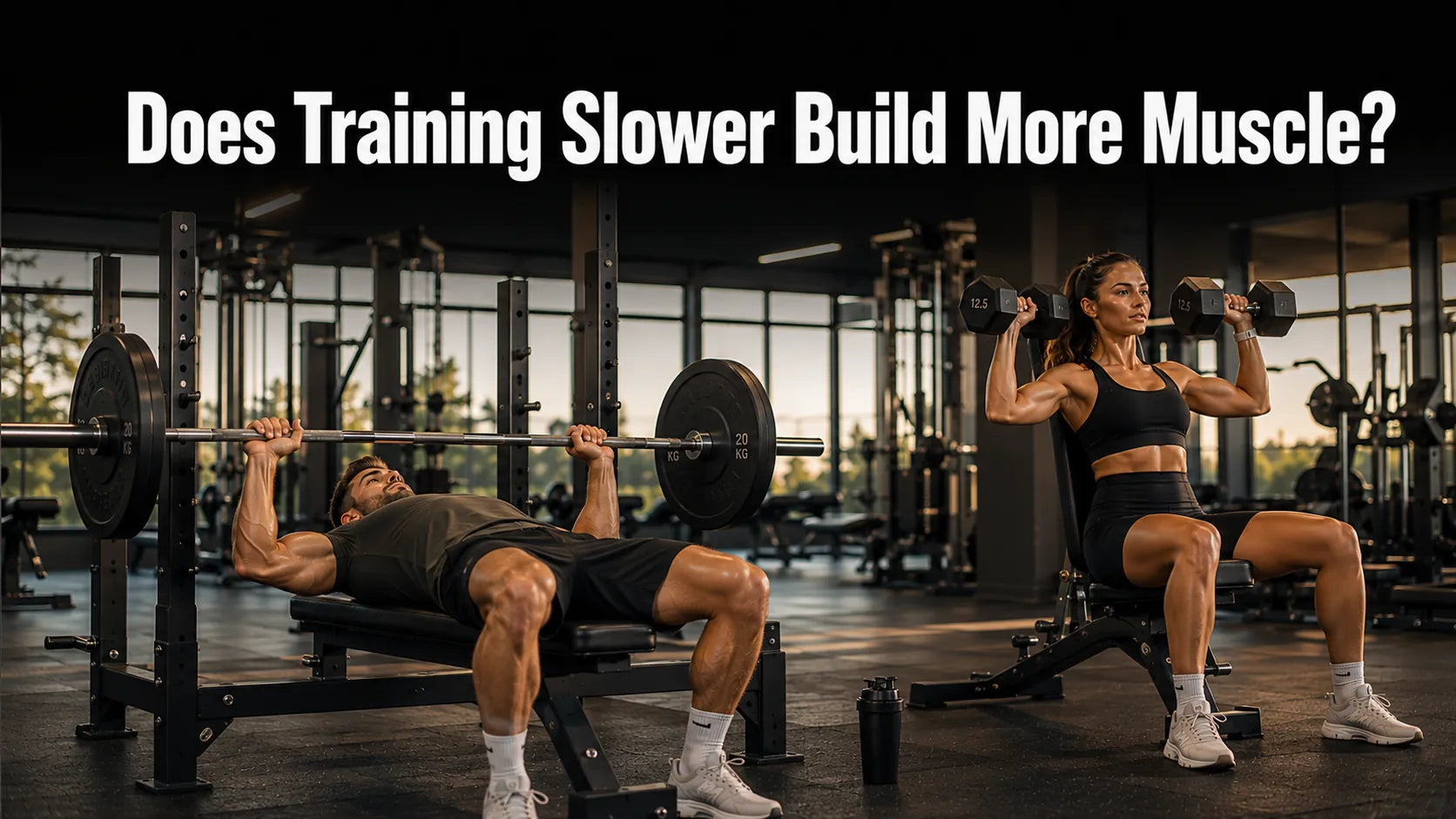
Walk into almost any gym and you'll see people lifting weights at very different speeds.
Some lower the weight under complete control before driving it back up explosively.
Others rush through every repetition as quickly as possible.
Then there are those who deliberately slow every movement down, believing that spending more time under tension automatically leads to greater muscle growth.
So who's right?
Does moving more slowly really build more muscle, or is it simply making your workout feel harder?
The answer lies in understanding how muscles actually grow.
Tempo—the speed at which you perform each repetition—certainly influences your workout, but it's only one piece of a much larger puzzle that includes mechanical tension, progressive overload, training volume and recovery.
Slowing your repetitions can be an effective training tool when used correctly, but performing every exercise slowly isn't necessarily the fastest route to bigger muscles.
Let's explore what tempo training really is and when slowing down your reps actually makes sense.
1. What Is Tempo Training?
Tempo training refers to deliberately controlling the speed of every phase of a repetition.
Rather than simply lifting and lowering the weight however feels natural, each movement follows a planned rhythm.
A typical tempo is written as four numbers.
For example:
3-1-1-0
This represents:
- 3 seconds lowering the weight (eccentric phase)
- 1 second pause at the bottom
- 1 second lifting the weight (concentric phase)
- 0 second pause before beginning the next repetition
Different tempos create different training effects.
A slower lowering phase increases muscular control and extends the amount of work each repetition performs.
A faster concentric phase focuses more on force production and power.
Tempo training isn't about making every repetition painfully slow.
It's about controlling movement quality while matching the tempo to your training goal.

2. Does Slowing Down Your Reps Increase Muscle Growth?
Sometimes—but not always.
One of the biggest myths in fitness is that slower automatically means better.
In reality, muscle growth depends on several factors working together, including:
- mechanical tension
- sufficient training volume
- progressive overload
- adequate recovery
Slowing the eccentric (lowering) portion of a repetition can increase muscle fatigue and improve control, particularly during hypertrophy-focused training.
However, if slowing every repetition forces you to use dramatically lighter weights, you may reduce the overall mechanical tension placed on the muscle.
Finding the right balance is key.
The goal isn't simply to make each repetition take longer.
The goal is to challenge the muscle effectively while continuing to progress over time.
Animal Creatine – 300 Capsules can naturally complement progressive resistance training by supporting repeated high-intensity efforts, whether your programme includes controlled tempo work, traditional lifting or a combination of both.

Tempo should support progressive overload—not replace it.
3. What Is Time Under Tension?
Time under tension, often shortened to TUT, refers to the total amount of time a muscle remains working during a set.
For example:
- Ten fast repetitions might keep a muscle under tension for around 20 seconds.
- Ten slower repetitions could increase that to 40 or even 50 seconds.
Increasing time under tension can:
- increase muscular fatigue
- improve movement control
- encourage better mind-muscle connection
- make lighter weights more challenging
However, longer isn't always better.
Extremely slow repetitions can reduce the amount of weight you're able to lift, potentially lowering mechanical tension if taken too far.
Most successful hypertrophy programmes use controlled repetitions rather than excessively slow ones.
The emphasis remains on quality movement while maintaining sufficient loading to stimulate muscle growth.
4. Should Every Exercise Be Performed Slowly?
No.
Different exercises benefit from different lifting speeds.
Isolation movements often respond well to slower tempos because they're easier to control and allow you to focus on the target muscle.
Examples include:
- biceps curls
- lateral raises
- leg extensions
- hamstring curls
- triceps pushdowns
Heavy compound exercises are slightly different.
Movements such as:
- squats
- deadlifts
- bench press
- overhead press
usually benefit from a controlled lowering phase followed by an intentional, powerful lifting phase.
Trying to perform every phase of a heavy squat in slow motion often reduces the amount of weight you can safely use while increasing unnecessary fatigue.
The most effective tempo usually depends on the exercise rather than following one rule for every movement.

5. When Is Fast Lifting Better Than Slow Lifting?
There are several situations where moving faster actually produces better training outcomes.
If your goal is improving:
- maximal strength
- power
- athletic performance
- force production
then lifting explosively during the concentric phase becomes increasingly important.
This doesn't mean using poor technique or rushing through repetitions.
Instead, it means producing force as quickly as possible while remaining completely in control.
Many experienced lifters use a combination of tempos within the same workout.
For example:
- controlled lowering during every repetition
- powerful lifting on compound exercises
- slower tempos during isolation work
- occasional pause repetitions to improve technique
This allows each exercise to be performed in the way that best supports its purpose.
Rather than choosing between slow or fast lifting, successful programmes use both where appropriate.
Intermission
So far we've explored what tempo training is, whether slower repetitions actually increase muscle growth, how time under tension influences hypertrophy, why different exercises require different lifting speeds, and when lifting explosively can be more beneficial than slowing every repetition down.
In Part 2, we'll look at whether beginners should use tempo training, which supplements support muscle growth and recovery, the common mistakes people make with slow repetitions, whether combining different rep speeds produces better results, and the best overall tempo for building muscle.
Part 2
6. Can Beginners Benefit From Tempo Training?
Absolutely.
Tempo training can be one of the best teaching tools for beginners.
When you're new to resistance training, it's easy to rely on momentum instead of making your muscles do the work. Slowing certain phases of a repetition encourages better technique, greater control and increased awareness of how each exercise should feel.
For beginners, tempo training can help:
- improve exercise technique
- develop movement control
- reduce reliance on momentum
- strengthen the mind-muscle connection
- build confidence before lifting heavier loads
The goal isn't to make every repetition painfully slow forever.
Instead, tempo training should be viewed as a learning tool that builds good habits early on.
Supporting overall nutrition is equally important during this stage.
Applied Nutrition Critical Greens – 250g can naturally complement a balanced diet by helping increase your intake of greens and plant-based nutrients while you're establishing consistent training and recovery habits.

Learning to lift well before lifting heavy often leads to better long-term progress.

7. Which Supplements Support Muscle Growth and Recovery?
Supplements don't directly create muscle growth.
Their role is to support the training, nutrition and recovery that allow your muscles to adapt over time.
One of the most important priorities is consuming enough protein each day to support muscle protein synthesis following resistance training.
Per4m Advanced Whey Protein – 2.01kg provides a convenient source of high-quality protein, helping support muscle repair and recovery after demanding training sessions.
Regardless of your lifting tempo, muscle growth still depends on the same core principles:
- progressive overload
- sufficient protein
- quality sleep
- effective recovery
- consistent resistance training
Tempo training simply changes how the muscles experience each repetition.
It doesn't replace the foundations of hypertrophy.
8. What Mistakes Do People Make With Slow Reps?
Tempo training is often misunderstood.
Many lifters assume that if slow repetitions are good, then extremely slow repetitions must be even better.
That's rarely the case.
Common mistakes include:
- lowering the weight so slowly that training intensity disappears
- using weights that are far too light
- sacrificing progressive overload
- slowing every exercise regardless of its purpose
- confusing muscular fatigue with muscle growth
- neglecting proper technique while focusing only on tempo
Hydration can also influence training quality, particularly during longer sets that increase time under tension and muscular fatigue.
Optimum Nutrition Electrolyte – 264g can naturally support hydration during resistance training, helping maintain workout quality throughout demanding hypertrophy sessions.


Tempo should improve the quality of your repetitions—not simply make your workouts feel more difficult.
9. Should You Combine Different Rep Speeds?
For most people, yes.
Very few successful training programmes rely on only one lifting tempo.
Instead, experienced lifters often use different tempos depending on the exercise and the goal.
For example:
- controlled eccentrics for hypertrophy
- explosive concentrics for compound lifts
- pause repetitions for improving technique
- slower isolation exercises to increase muscle control
Each approach develops slightly different qualities.
Using multiple tempos also keeps training varied while ensuring each exercise is performed in the most effective way.
Rather than asking whether slow or fast lifting is better, it's more useful to ask which tempo best suits the exercise you're performing.
The answer often changes throughout the workout.

10. What's the Best Tempo for Building Muscle?
There isn't one perfect tempo that works for every exercise or every person.
However, most successful hypertrophy programmes share several common characteristics.
They typically include:
- controlled lowering of the weight
- deliberate, stable technique
- a strong but controlled lifting phase
- full range of motion
- progressive overload over time
Many coaches recommend lowering the weight over approximately two to three seconds before lifting it with controlled intent.
This provides sufficient muscular control without unnecessarily reducing the amount of weight you can handle.
Maintaining training quality is just as important as tempo itself.
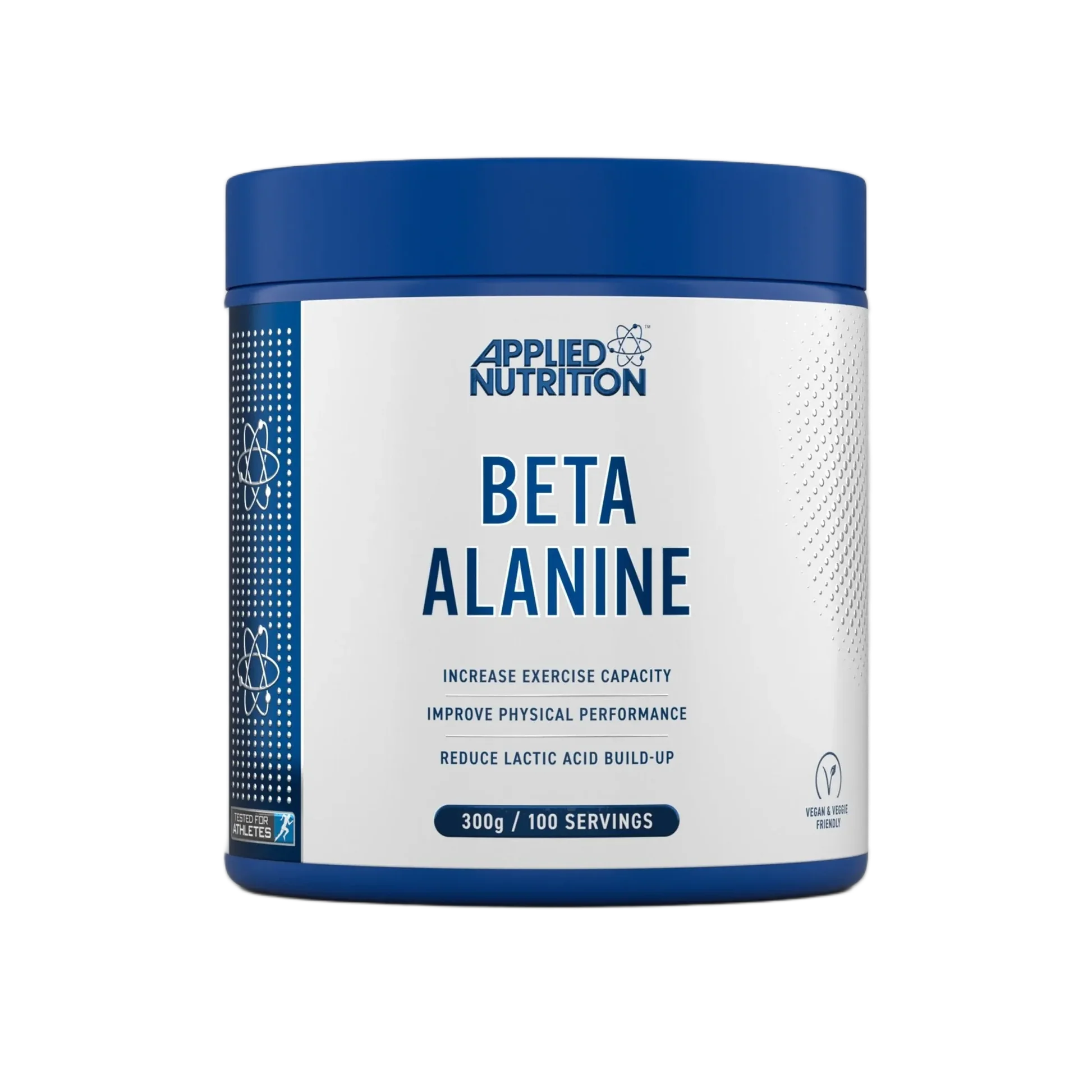
Applied Nutrition Beta-Alanine – 300g can naturally complement demanding hypertrophy workouts by supporting performance during repeated high-intensity efforts, helping maintain quality across multiple controlled working sets.
The best tempo is ultimately the one that allows you to apply progressive overload consistently while maintaining excellent technique.
Conclusion
So, does training slower build more muscle?
Sometimes—but not simply because the repetitions are slower.
Tempo training can increase time under tension, improve technique and enhance muscle control, all of which can contribute to muscle growth when combined with progressive overload and effective resistance training.
The mistake is assuming that slower is always better.
In reality, the most effective lifters use different tempos for different exercises and different goals.
Focus on quality movement, controlled technique and long-term progression rather than chasing one specific lifting speed.
Build good habits.
Recover well.
Train consistently.
That's what ultimately drives muscle growth.
FAQ
1. Does training slower build more muscle?
It can. Slower repetitions may increase time under tension and improve movement quality, but muscle growth still depends on progressive overload, sufficient training volume and recovery.
2. What is tempo training?
Tempo training involves controlling the speed of each phase of a repetition, including the lowering, pause and lifting phases.
3. Does time under tension increase hypertrophy?
Increasing time under tension can contribute to hypertrophy, provided sufficient mechanical tension and progressive overload are maintained.
4. Should every exercise be performed slowly?
No. Isolation exercises often benefit from slower tempos, while heavy compound lifts usually respond better to controlled lowering followed by an explosive but controlled lifting phase.
5. Are slow reps better than fast reps?
Neither is universally better. The ideal tempo depends on your goal, the exercise and your overall training programme.
6. Can beginners benefit from tempo training?
Yes. Tempo training helps beginners improve technique, movement control and the mind-muscle connection before progressing to heavier loads.
7. What's the best tempo for building muscle?
Most hypertrophy programmes favour a controlled eccentric phase of around two to three seconds while maintaining a purposeful concentric phase and progressive overload.
8. Should you combine different lifting tempos?
Yes. Combining controlled, explosive and paused repetitions can help improve muscle growth, strength and exercise technique.


