


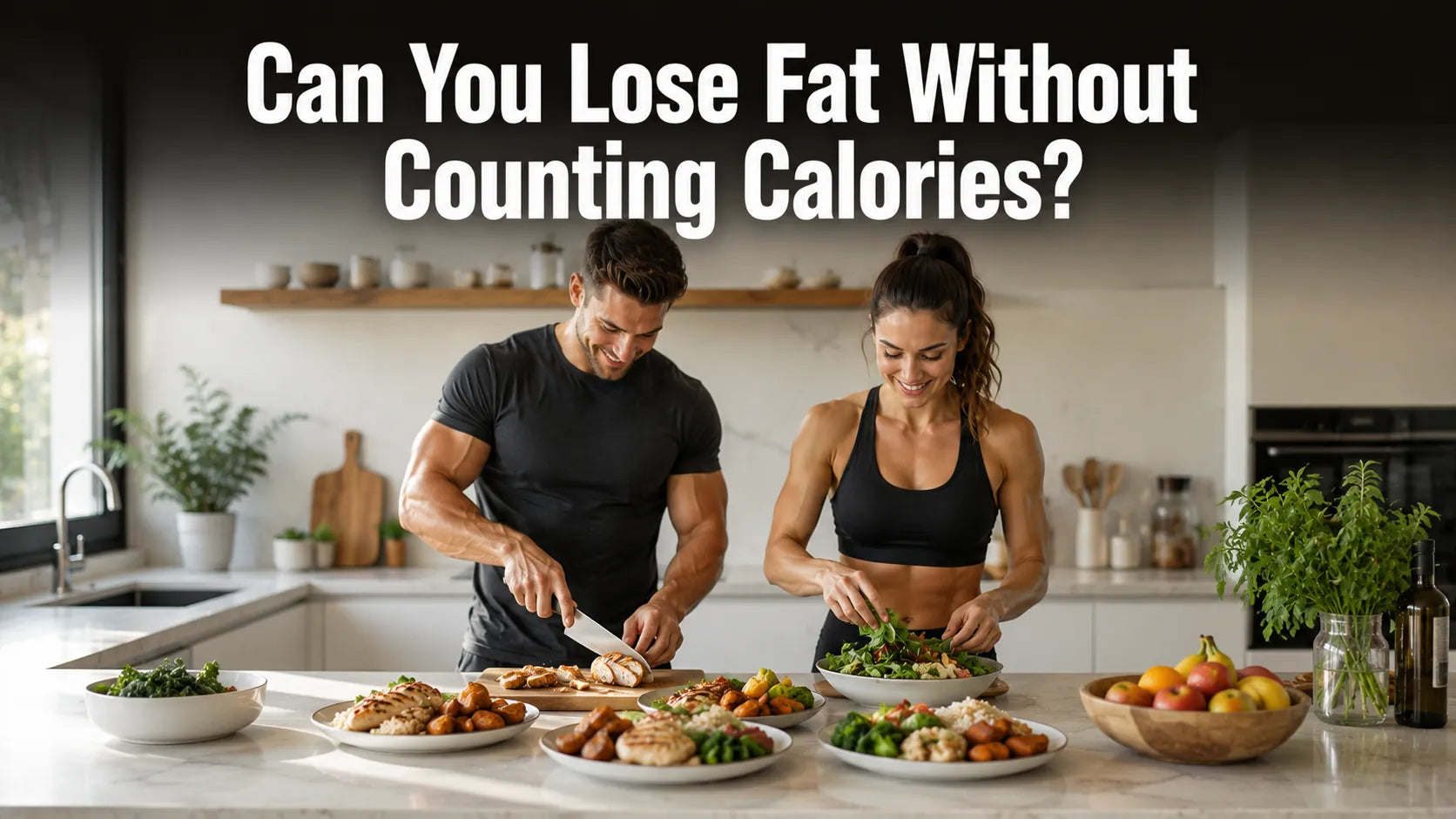
For many people, the words fat loss and calorie counting seem inseparable.
Open almost any fitness app and you'll find barcode scanners, food databases and daily calorie targets.
While these tools can certainly be effective, they're not the only way to lose body fat.
In fact, millions of people have successfully lost weight without ever tracking every meal they eat.
The key is understanding what actually causes fat loss.
Whether you count calories or not, your body still follows the same biological rules.
Fat loss happens when you consistently consume less energy than your body uses over time.
The difference is simply how you achieve that calorie deficit.
Some people prefer careful tracking.
Others naturally create it through smarter food choices and better eating habits.
Let's explore whether calorie counting is really necessary.
1. Do You Need to Count Calories to Lose Fat?
No.
You don't have to count calories to lose body fat.
Many people successfully lose weight without ever opening a tracking app.
What matters is creating a calorie deficit.
Counting calories is simply one method of helping you achieve that.
Other strategies include:
- eating more whole foods
- increasing protein intake
- reducing portion sizes
- limiting high-calorie snacks
- becoming more mindful while eating
For some people, tracking provides structure and accountability.
For others, it becomes stressful and difficult to maintain.
The best method is usually the one you can follow consistently for months—not just a few weeks.

2. Why Is a Calorie Deficit Still Important?
Regardless of which diet you follow, a calorie deficit remains essential.
Your body stores excess energy as body fat.
To reduce those fat stores, it needs to use more energy than it receives.
That's true whether you're following:
- a high-protein diet
- intermittent fasting
- Mediterranean eating
- low-carbohydrate nutrition
- portion control
All successful fat-loss approaches work because they help people maintain a calorie deficit.
The method may differ.
The biology doesn't.
Understanding this prevents people from chasing diets that promise "fat burning" without addressing energy balance.
3. Can Portion Control Be Enough?
For many people, yes.
Portion control naturally reduces calorie intake without requiring every meal to be weighed.
Simple habits often make a significant difference.
For example:
- using smaller plates
- serving food in the kitchen instead of at the table
- eating slowly
- avoiding second helpings
- filling half your plate with vegetables
These small changes often reduce calorie intake almost automatically.
They're also much easier to maintain long term than obsessively weighing every ingredient.
That doesn't mean portion control is perfect.
Some people naturally underestimate how much they're eating.
Others find tracking provides better awareness.
Neither approach is universally better.
Consistency is what matters most.
4. Which Foods Help You Stay Fuller?
One of the easiest ways to eat fewer calories is choosing foods that naturally keep you satisfied for longer.
Foods that tend to increase fullness include:
- lean meats
- eggs
- Greek yoghurt
- potatoes
- oats
- vegetables
- beans
- fruit
These foods generally provide a better balance of:
- protein
- fibre
- water
- volume
compared with highly processed snacks.
Choosing satisfying foods makes maintaining a calorie deficit feel much less restrictive.
A balanced snack can also help prevent excessive hunger between meals.
Per4m Protein Bars can naturally fit into a balanced eating plan by providing a convenient, protein-rich snack option when you're away from home or need something quick between meals.


The goal isn't simply eating less.
It's staying satisfied while eating appropriately.

5. Does Protein Make Fat Loss Easier?
In many ways, yes.
Protein is one of the most valuable nutrients during a fat-loss phase.
It helps because it can:
- increase feelings of fullness
- support muscle maintenance
- aid recovery after training
- require more energy to digest than carbohydrates or fat
Preserving lean muscle is especially important while dieting.
The more muscle you maintain, the better your body composition is likely to be as body fat decreases.
Per4m Whey Hydrate – 1.8kg provides a convenient source of high-quality protein, making it easier to consistently meet your daily protein target while supporting muscle recovery during a calorie deficit.


Fat loss isn't just about becoming lighter.
It's about losing body fat while keeping as much lean muscle as possible.
Intermission
So far we've explored why calorie counting isn't essential for successful fat loss, explained why a calorie deficit still matters, looked at how portion control can work, identified foods that naturally improve fullness, and discussed why protein plays such an important role during a dieting phase.
In Part 2, we'll examine whether you can trust your hunger signals, which supplements naturally support fat-loss goals, the common mistakes that slow progress, who benefits most from calorie tracking, and the best long-term strategy for losing fat without constantly counting every calorie.
Part 2
6. Can You Trust Hunger Signals?
Sometimes—but not always.
Your body uses hunger and fullness signals to help regulate food intake.
However, those signals can be influenced by much more than energy needs.
For example, hunger can increase because of:
- poor sleep
- stress
- boredom
- dehydration
- highly processed foods
- intense training
This means feeling hungry doesn't always mean your body genuinely needs more calories.
Likewise, feeling full doesn't necessarily mean you've eaten the right amount.
Learning the difference between physical hunger and emotional eating takes practice.
Eating slowly, choosing filling foods and staying hydrated often makes these signals much easier to understand.

7. Which Supplements Support Fat Loss?
No supplement burns body fat on its own.
The biggest driver of fat loss remains maintaining a calorie deficit consistently.
Once that foundation is in place, some supplements can support your overall nutrition while dieting.
Applied Nutrition Critical Greens – 250g can naturally complement a balanced diet by helping increase your daily intake of greens alongside healthy eating habits during a fat-loss phase.

Supplements work best when they're supporting good habits—not replacing them.
Long-term success always comes back to consistent nutrition and sensible food choices.
8. What Mistakes Slow Fat Loss?
Many people believe they're eating far less than they actually are.
Small habits often add hundreds of unnoticed calories each day.
Common examples include:
- drinking sugary coffees
- large portions of healthy foods
- frequent snacking
- cooking with excessive oils
- weekend overeating
- liquid calories
Another common mistake is assuming that exercise alone can compensate for poor nutrition.
Applied Nutrition Body Fuel Energy Shot 12 × 60ml can naturally support energy and focus during demanding workouts, but no performance supplement can overcome a consistently excessive calorie intake.


Fat loss is usually determined by your overall daily habits rather than one perfect workout.
9. Who Should Count Calories?
Calorie counting isn't essential for everyone.
Some people lose fat very successfully without ever tracking their food.
Others find it extremely helpful.
Tracking may be useful if you:
- have struggled to lose fat previously
- aren't sure how much you're eating
- enjoy data and structure
- want greater nutritional awareness
On the other hand, many people prefer a more flexible approach based on:
- portion control
- higher protein meals
- regular meal times
- mostly whole foods
Neither method is superior.
The best approach is the one you can maintain consistently without feeling overwhelmed.

10. What's the Best Long-Term Fat Loss Strategy?
The most successful fat-loss plan is rarely the strictest one.
It's the one you can realistically follow for months or even years.
Build your routine around:
- plenty of protein
- mostly whole foods
- sensible portion sizes
- regular resistance training
- daily movement
- good sleep
Supporting your overall health is equally important.
Optimum Nutrition Opti-Men can naturally complement a balanced diet by helping support your daily micronutrient intake, reinforcing the importance of overall nutrition while working towards sustainable fat-loss goals.


You don't need perfection.
You need consistency.
That's what produces lasting results.
Conclusion
You don't have to count calories to lose body fat.
Many people achieve excellent results through portion control, mindful eating and consistently choosing satisfying, nutrient-rich foods.
That said, a calorie deficit still remains essential.
Whether you create it through careful tracking or better daily habits doesn't matter nearly as much as maintaining it consistently.
The most effective fat-loss strategy is the one you can stick with.
Focus on:
- eating enough protein
- controlling portions
- staying active
- lifting weights
- recovering well
Small habits repeated every day almost always outperform extreme diets that only last a few weeks.
FAQ
1. Can you lose fat without counting calories?
Yes. Many people lose fat successfully by improving portion control, increasing protein intake and making healthier food choices while naturally maintaining a calorie deficit.
2. Do you need to count calories to lose body fat?
No. Calorie counting is a useful tool for some people, but it's not essential if you can consistently create a calorie deficit through sustainable eating habits.
3. Can portion control replace calorie counting?
For many people, yes. Reducing portion sizes and eating mindfully can naturally lower calorie intake without tracking every meal.
4. Does protein help with fat loss?
Yes. Protein increases fullness, supports muscle maintenance and helps recovery during a calorie deficit.
5. Can you trust hunger signals?
Not always. Hunger can be influenced by sleep, stress, hydration and food choices, not just energy requirements.
6. Which supplements support fat-loss goals?
Protein supplements and products that complement a balanced diet can support a structured fat-loss plan alongside regular exercise.
7. Who should count calories?
People who enjoy structure, struggle with portion sizes or want greater nutritional awareness may benefit from tracking their intake.
8. What's the best long-term fat-loss strategy?
Build sustainable habits around a calorie deficit, high-protein meals, regular resistance training, daily movement and consistent recovery.


