


When people think about burning calories, they usually picture someone running on a treadmill or cycling for an hour.
Weight training is often viewed differently.
Many people believe lifting weights is mainly for building muscle, while cardio is the only real way to burn fat.
The reality is far more interesting.
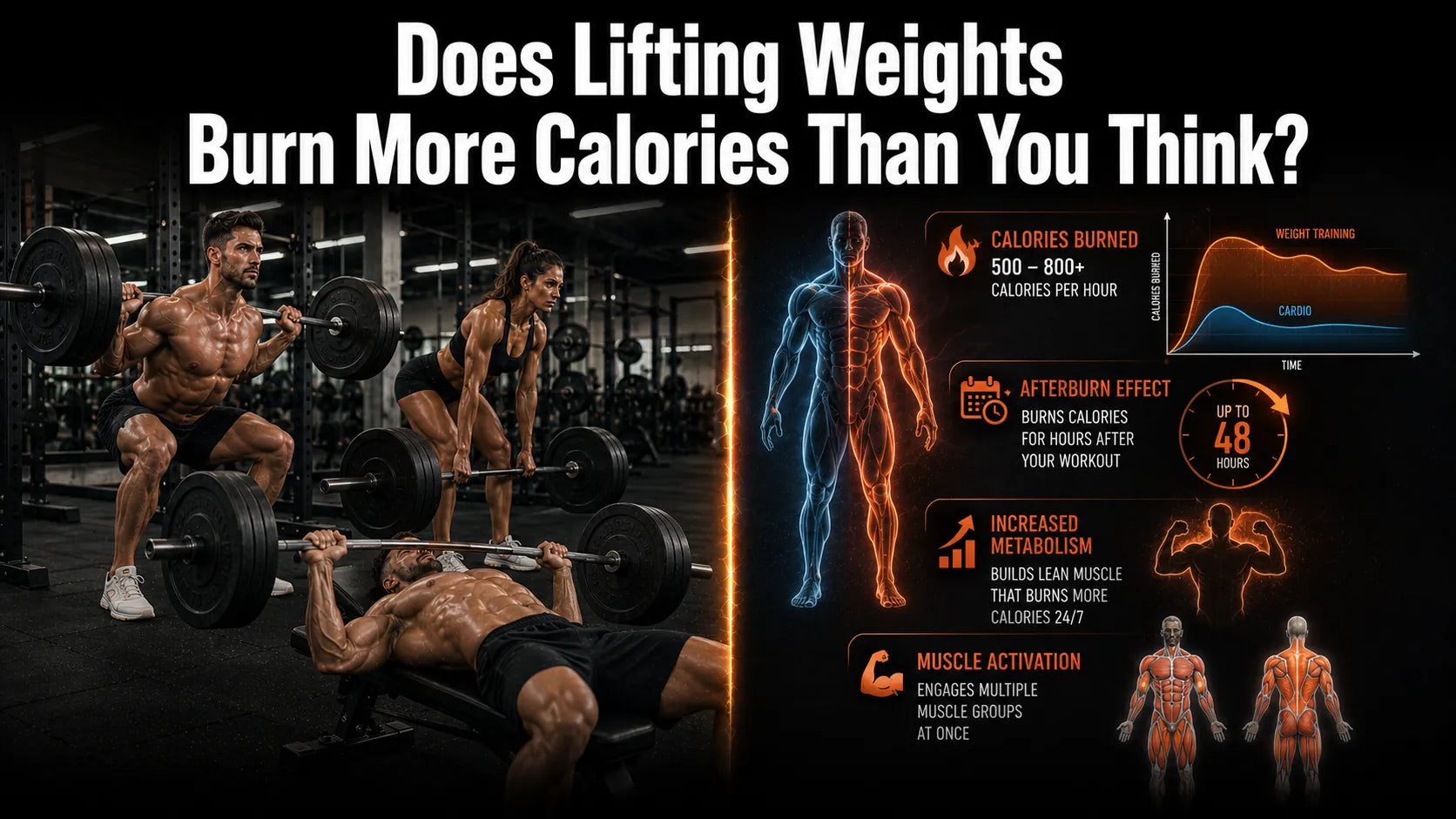
Resistance training burns a significant number of calories during your workout and continues influencing your energy expenditure long after you've left the gym.
It also helps preserve lean muscle while dieting, making it one of the most valuable forms of exercise for long-term body composition.
The number of calories you burn depends on several factors, including:
- your body weight
- workout intensity
- exercise selection
- training volume
- rest periods
- muscle mass
Understanding how resistance training affects calorie burn can help you train smarter and avoid one of the biggest myths in fitness.
Let's explore what actually happens.
1. How Many Calories Does Weight Training Burn?
There isn't a single answer.
Calorie expenditure varies from person to person.
Factors such as:
- body size
- muscle mass
- workout intensity
- exercise selection
- session length
all influence how many calories are burned.
Generally speaking, a demanding hour of resistance training can burn several hundred calories.
However, the number itself isn't the whole story.
Unlike many forms of cardio, weight training also creates a recovery demand after the workout has finished.
Your body continues using energy to:
- repair muscle tissue
- replenish energy stores
- restore normal body function
That means the true energy cost of lifting weights extends beyond the time you spend in the gym.

2. Does Lifting Burn More Than Cardio?
Sometimes.
Steady-state cardio often burns more calories while you're actually exercising.
However, resistance training offers several advantages that cardio doesn't.
Weight training helps you:
- build lean muscle
- preserve muscle during fat loss
- improve strength
- increase long-term training performance
Cardio mainly increases calorie expenditure during the session itself.
Lifting weights contributes to both immediate calorie burn and long-term improvements in body composition.
The two forms of exercise shouldn't be viewed as competitors.
For many people, combining both produces the best overall results.
3. Do Compound Exercises Burn More Calories?
Absolutely.
Compound exercises involve multiple joints and large muscle groups working together.
Because more muscle tissue is active, your body requires more energy.
Examples include:
- squats
- deadlifts
- bench press
- overhead press
- bent-over rows
- lunges
These movements demand considerably more effort than smaller isolation exercises such as:
- biceps curls
- triceps extensions
- calf raises
Compound lifts also tend to elevate your heart rate more dramatically, increasing the overall energy cost of the workout.
If your goal is burning more calories while building muscle, compound exercises deserve a central place in your programme.
4. Does Muscle Increase Daily Calorie Burn?
Yes—but perhaps not as dramatically as some people claim.
Muscle tissue is metabolically active.
That means it requires energy simply to exist.
As you build more lean muscle, your resting energy expenditure gradually increases.
The effect isn't enormous overnight.
However, over months and years, maintaining more muscle contributes to higher daily calorie requirements.
That's one reason resistance training is so valuable during fat-loss phases.
Rather than simply losing body weight, you're working to preserve or even increase lean muscle while reducing body fat.
Naughty Boy Prime Creatine 450g can naturally support a structured resistance training programme by helping maintain high-intensity performance while progressively building strength and lean muscle over time.
More muscle isn't a licence to eat anything you like.
But it certainly supports long-term body composition.

5. What Is the Afterburn Effect?
One of the most fascinating aspects of resistance training is what happens after the workout ends.
Following demanding exercise, your body continues using extra energy while returning to its normal resting state.
This process is known as Excess Post-Exercise Oxygen Consumption (EPOC), often referred to as the afterburn effect.
During this recovery period, your body works to:
- restore oxygen levels
- repair muscle tissue
- replenish glycogen stores
- regulate body temperature
- support recovery processes
The afterburn effect doesn't burn thousands of extra calories.
However, it does contribute to the overall energy cost of resistance training.
Combined with the muscle-building benefits of lifting weights, it's one reason strength training plays such an important role in effective fat-loss programmes.
Intermission
So far we've explored how many calories weight training burns, compared lifting with cardio, explained why compound exercises demand more energy, looked at how muscle influences daily calorie expenditure, and examined the science behind the afterburn effect.
In Part 2, we'll discuss why workout intensity matters, which supplements naturally support fat-loss goals, the mistakes that reduce calorie burn, whether lifting weights can help you lose fat faster, and the smartest long-term strategy for increasing your overall calorie expenditure.
Part 2
6. Does Workout Intensity Matter?
Very much so.
Not all weight training sessions burn the same number of calories.
A workout built around heavy compound lifts performed with purpose generally demands far more energy than a light session with long periods of inactivity.
Higher-intensity workouts usually involve:
- larger muscle groups
- greater training volume
- heavier loads
- higher heart rates
- more overall work completed
The goal isn't to rush through every exercise.
Instead, aim to perform every working set with focus and effort while maintaining good technique.
Applied Nutrition Body Fuel Energy Shot 12 × 60ml can naturally fit into a structured training routine where maintaining energy and focus during demanding lifting sessions is a priority.


Quality always beats simply spending more time in the gym.

7. Which Supplements Support Fat Loss?
No supplement directly replaces a calorie deficit.
Fat loss always depends on consistently burning more calories than you consume over time.
However, some supplements can help support the habits that make this process easier.
Per4m Whey Hydrate – 1.8kg provides a convenient source of high-quality protein while also contributing to your daily fluid intake, making it easier to support muscle recovery and meet your protein goals during a fat-loss phase.


Protein is especially important when dieting because it helps preserve lean muscle while body fat is reduced.
Supplements work best when they're supporting an already well-structured nutrition plan.
8. What Mistakes Reduce Calorie Burn?
Many people unintentionally reduce the effectiveness of their workouts.
Some of the most common mistakes include:
- avoiding compound exercises
- lifting weights that are too light
- taking excessively long rest periods
- cutting workouts short
- inconsistent training
- poor exercise technique
Another mistake is focusing only on the calories burned during the workout itself.
Resistance training offers benefits that continue long after you've left the gym through recovery, muscle maintenance and improvements in body composition.
The workout doesn't finish when you rack the weights.
9. Can Lifting Help You Lose Fat Faster?
Yes—when combined with the right nutrition.
Lifting weights helps preserve lean muscle while dieting.
That matters because maintaining muscle helps keep your metabolism higher than losing both muscle and fat together.
Resistance training also allows many people to:
- improve body composition
- become stronger
- maintain performance while dieting
- build a more athletic physique
Supporting your overall nutrition is equally important.
Applied Nutrition Critical Greens – 250g can naturally complement a balanced diet by helping increase your daily intake of greens alongside healthy eating habits during a fat-loss programme.

The goal isn't simply losing weight.
It's improving what your body is made of.

10. What's the Best Way to Burn More Calories?
The most effective approach combines several habits rather than relying on one type of exercise.
Aim to:
- perform regular resistance training
- include compound exercises
- stay physically active throughout the day
- eat a balanced diet
- recover well
- remain consistent
Long-term results come from building sustainable habits—not chasing quick fixes.
Optimum Nutrition Opti-Men can naturally complement a balanced diet by helping support your daily micronutrient intake, reinforcing the importance of overall nutrition while following a consistent training programme.


Burning more calories isn't about finding one perfect workout.
It's about consistently making good decisions every day.
Conclusion
Weight training burns far more calories than many people realise.
Its benefits extend beyond the workout itself by helping preserve lean muscle, supporting long-term calorie expenditure and contributing to improvements in body composition.
While cardio remains valuable, lifting weights offers advantages that go far beyond the number displayed on a treadmill.
When combined with:
- progressive overload
- sensible nutrition
- quality recovery
- consistent effort
resistance training becomes one of the most effective tools for long-term fat loss and overall health.
The best results rarely come from choosing weights or cardio.
They come from using both intelligently.
FAQ
1. Does lifting weights burn more calories than cardio?
Cardio often burns more calories during the workout itself, but weight training also supports muscle maintenance and increases overall energy expenditure through recovery.
2. How many calories does weight lifting burn?
The exact number depends on factors such as body weight, workout intensity, exercise selection and session length.
3. Do compound exercises burn more calories?
Yes. Compound movements recruit more muscle groups and generally require more energy than isolation exercises.
4. Does building muscle increase metabolism?
Yes. Lean muscle requires energy to maintain, contributing to a gradual increase in daily calorie expenditure.
5. What is the afterburn effect?
The afterburn effect, or EPOC, refers to the extra energy your body uses while recovering after exercise.
6. Which supplements support fat-loss goals?
Protein supplements and products that support a balanced nutritional routine can complement a structured fat-loss plan.
7. Can lifting weights help you lose belly fat?
Weight training helps reduce overall body fat when combined with a calorie deficit, but it cannot target fat loss from one specific area.
8. What's the best way to burn more calories?
Combine resistance training, regular physical activity, balanced nutrition and consistency for the best long-term results.


