


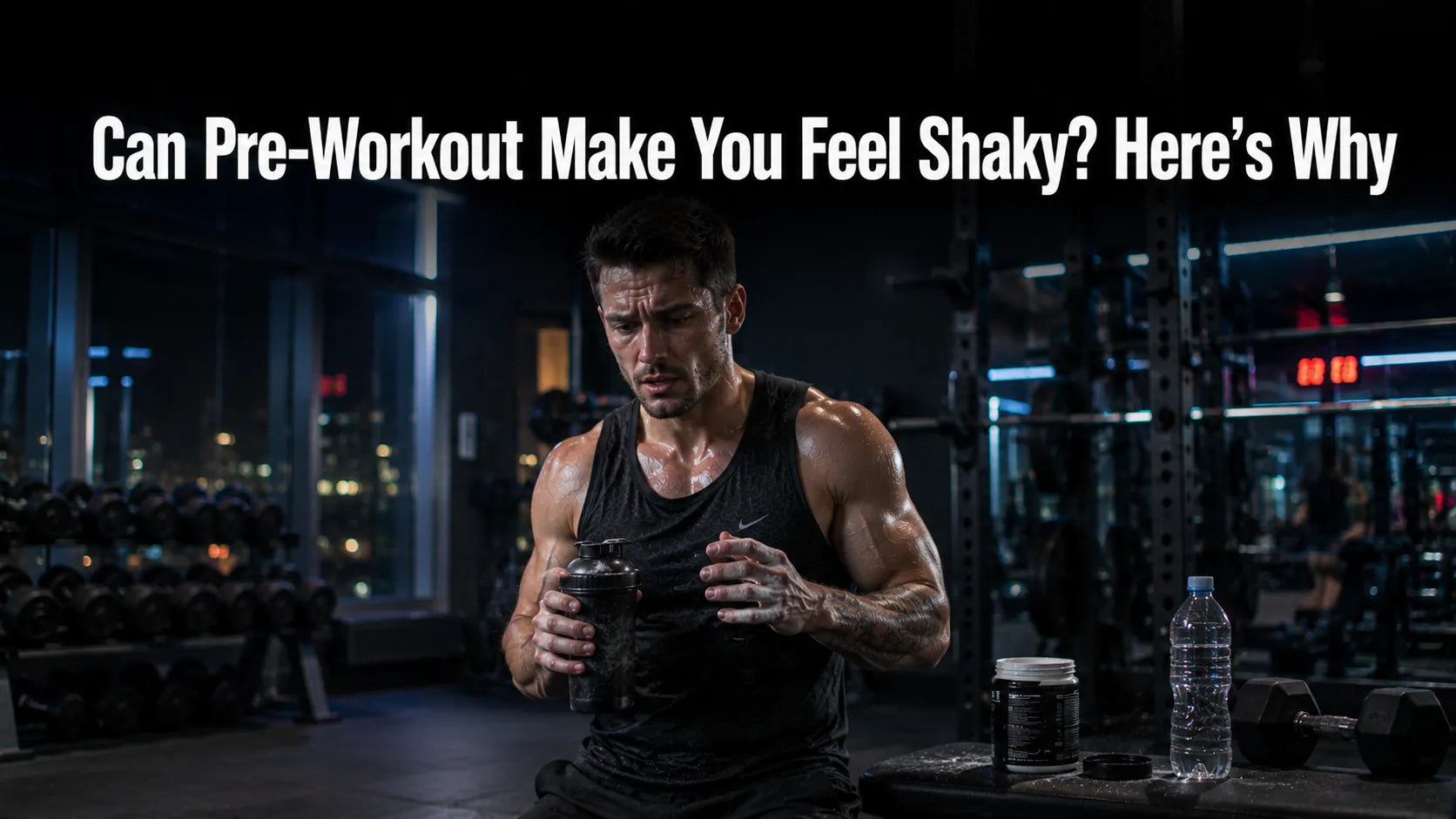
For some people, pre-workout feels incredible.
Energy rises quickly, focus sharpens, music suddenly sounds better, and workouts feel more explosive almost immediately. That intense “locked in” feeling is exactly why pre-workouts became so popular in the first place.
But for other people, the experience feels completely different.
Instead of feeling focused and energised, they end up shaky, anxious, sweaty, overstimulated, and uncomfortable halfway through the session. Sometimes their hands tremble between sets. Sometimes their heart feels like it’s racing harder than the workout itself. And sometimes the stimulation becomes so aggressive that the workout actually feels worse instead of better.
And surprisingly, this is extremely common.
The reason is that most pre-workouts are specifically designed to stimulate the nervous system aggressively. In the right amount, that can improve alertness, motivation, and training intensity. But once stimulant intake becomes too high for the body to comfortably tolerate, the nervous system often shifts from:
energised
to:
overloaded
very quickly.
That’s especially true when:
- caffeine tolerance is low
- sleep quality is poor
- hydration is inconsistent
- food intake is inadequate
- stress levels are already elevated
because all of those things influence how the body handles stimulants overall.
One of the biggest misconceptions in gym culture is the idea that stronger stimulation automatically means a better workout.
In reality, the best pre-workouts usually create:
- stable energy
- clean focus
- controlled aggression
- smoother performance
—not the feeling that your nervous system is short-circuiting during chest day.
1. Why can pre-workout sometimes make people feel shaky or jittery?
Usually because the nervous system becomes overstimulated.
Most pre-workouts are designed to increase alertness, adrenaline, focus, and energy output before training. That stimulation can absolutely improve performance in the right situation, but the body only tolerates so much comfortably.
Once stimulant intake becomes excessive, the nervous system often responds with symptoms like shakiness, trembling, sweating, anxiety, rapid heart rate, or jitteriness.
This is why two people can take the exact same product and react completely differently.
Someone who:
- sleeps well
- eats properly
- stays hydrated
- rarely uses caffeine
may tolerate the product very differently from someone who is already:
- stressed
- sleep-deprived
- dehydrated
- overusing stimulants daily
Tolerance matters massively.
Recovery quality matters massively too.
And interestingly, many people mistakenly assume that feeling “extreme” means the product is working better. In reality, once stimulation becomes too aggressive, workout quality often starts declining rather than improving.

2. Which ingredients in pre-workout are most likely to cause shakiness?
Caffeine is by far the biggest culprit.
Especially in:
- high-stimulant formulas
- double-scooped servings
- stacked stimulant combinations
because caffeine directly stimulates the central nervous system.
Once doses become too high, people often notice:
- trembling
- unstable energy
- elevated anxiety
- poor concentration
- shakier lifts
- cardiovascular discomfort
instead of smoother performance.
Other ingredients can contribute too.
Beta-alanine, for example, often causes tingling and skin sensations that some people interpret as “shakiness,” especially if they’ve never used it before. More aggressive stimulant blends combining caffeine with compounds like yohimbine or synephrine can amplify nervous system stress even further.
This is why products like Naughty Boy Menace V2 - 420g can feel extremely intense for people with lower stimulant tolerance or inconsistent pre-workout nutrition habits.


The important thing is understanding that stronger stimulation is not automatically more effective.
Eventually the body simply struggles to regulate it comfortably.
3. Can too much caffeine make workouts feel worse instead of better?
Absolutely.
This is probably one of the biggest mistakes people make with pre-workout.
A lot of gym culture encourages the idea that stronger always equals better. So people gradually escalate from normal pre-workouts into double scoops, energy drinks, fat burners, and multiple stimulant products stacked together without realising how much total stress they’re putting on the nervous system.
The problem is that once caffeine intake becomes excessive, workouts often stop feeling:
- focused
- powerful
- productive
and instead start feeling:
- anxious
- shaky
- chaotic
- uncomfortable
This becomes especially noticeable during:
- cardio sessions
- fasted training
- high-volume workouts
- hot weather
- poor recovery periods
because the body is already dealing with additional stress.
A lot of experienced gym-goers eventually realise their best workouts usually come from stimulation that feels controlled and manageable rather than overwhelming.
That difference matters more than people realise.
4. Does taking pre-workout on an empty stomach increase side effects?
Very often, yes.
This is one of the biggest reasons people suddenly feel shaky after taking pre-workout.
When stimulants hit an empty stomach, absorption becomes much faster and harsher. That often amplifies:
- jitters
- trembling
- dizziness
- nausea
- anxiety
- sweating
especially in people with lower caffeine tolerance.
A lot of people mistakenly believe:
“Fasted pre-workout hits harder.”
And technically it does.
The problem is that “harder” does not always mean “better.”
This is where pre-workout nutrition becomes incredibly important. Simple carbohydrates before training often help create steadier workout energy and smoother stimulant tolerance overall.
For example, Applied Nutrition Cream Of Rice - 1kg works extremely well before training because it provides easy-to-digest carbohydrates that help support more stable energy without feeling heavy before workouts.


The goal should not be maximum stimulation.
It should be controlled performance.

5. Are beginners more sensitive to strong pre-workouts?
Usually, yes.
Beginners often underestimate how aggressive some modern stimulant products actually are. A lot of first-time users immediately jump into:
- full servings
- strongest formulas available
- fasted training
- stacked caffeine products
without building tolerance gradually first.
That combination can make even moderate pre-workouts feel overwhelming.
This is why beginners commonly experience shakiness, sweating, dizziness, rapid heart rate, nausea, and anxiety much more intensely than experienced users.
Tolerance develops over time.
But recovery quality matters just as much.
People who consistently:
- under-eat
- stay dehydrated
- overconsume caffeine
- sleep poorly
usually tolerate stimulants far worse overall, regardless of training experience.
And interestingly, many people confuse feeling overwhelmed with having a “hardcore” workout.
The two are definitely not the same thing.
Intermission
So far, we’ve covered why pre-workout can make people feel shaky, the ingredients most likely to cause jitters, how excessive caffeine worsens workout quality, why fasted training amplifies side effects, and why beginners often react more strongly to aggressive stimulant products.
In Part 2, we’ll break down dehydration and low food intake, the difference between normal stimulation and excessive stimulation, high-stim pre-workouts and anxiety, how to reduce side effects without quitting training completely, and the warning signs you should lower your stimulant intake.
Part 2
6. Can dehydration or low food intake make pre-workout side effects worse?
Very easily.
This is one of the biggest reasons people suddenly feel awful halfway through training.
Stimulants already increase nervous system activity, heart rate, body temperature, and adrenaline output. If someone is already dehydrated or under-fuelled on top of that, the body often struggles much more with circulation, muscular performance, blood sugar stability, and overall stress regulation during exercise.
That’s why symptoms like shakiness, dizziness, sweating, headaches, nausea, and rapid heart rate often become dramatically worse during:
- fasted workouts
- low-calorie dieting phases
- high-volume sessions
- hot weather
- periods of poor recovery
A lot of people blame the pre-workout itself when the bigger issue is actually the combination of stimulants plus poor recovery habits.
This is where hydration support matters massively. Per4m Hydrate Electrolyte Mix 210g fits naturally into harder training phases because hydration and electrolyte balance strongly influence how well the nervous system tolerates stimulants overall.


Sometimes the body is not asking for more caffeine.
It’s asking for:
- more food
- more water
- better recovery
- less stress

7. What’s the difference between normal stimulation and taking too much?
Good pre-workout stimulation should feel focused, energised, alert, and controlled. You should still feel capable of training properly rather than fighting against your own nervous system.
Once stimulation becomes excessive, workouts often start feeling shaky, anxious, chaotic, and physically uncomfortable instead of productive.
This is where people often cross the line from:
performance enhancement
into:
nervous system overload
And interestingly, modern gym culture sometimes glorifies this feeling.
People assume that:
- shaky hands
- tunnel vision
- nausea
- racing heartbeats
mean the pre-workout is “working.”
But usually, those are signs the body is struggling to regulate the stimulant load comfortably.
The best workouts rarely feel chaotic.
They feel controlled.
8. Are high-stim pre-workouts more likely to cause anxiety or trembling?
Absolutely.
High-stimulant formulas are specifically designed to create stronger nervous system activation. That’s why they often feel more aggressive, more euphoric, and more intense initially.
The downside is that they’re also far more likely to trigger:
- trembling
- anxiety
- sweating
- overstimulation
- sleep disruption
- elevated heart rate
especially in people already sensitive to caffeine, stress, dehydration, or poor sleep.
This becomes even worse when people stack:
- high-stim pre-workouts
- energy drinks
- fat burners
- multiple caffeine products together
without realising how quickly stimulant intake escalates.
For example, combining aggressive pre-workouts with products like EHP Labs OxyShred Ultra Energy Drink 335ml can push caffeine and stimulant intake far higher than many people realise.
Eventually the nervous system stops feeling energised and simply starts feeling overloaded instead.
9. How can you reduce pre-workout side effects without stopping training?
Usually by lowering the overall stress load rather than eliminating pre-workout completely.
The biggest improvements often come from:
- lowering dosage
- improving hydration
- eating before training
- sleeping properly
- reducing caffeine stacking
- choosing calmer formulas
A lot of people jump straight into the strongest products available without giving the body time to adapt first. That’s usually where the problems begin.
For many people, simply:
- halving the serving
- avoiding fasted training
- improving hydration
- using easier-to-digest carbohydrates pre-workout
dramatically reduces side effects.
And interestingly, steadier pre-workout nutrition often improves training quality far more than increasing stimulant intake ever does.

10. What are the signs you should lower your stimulant intake?
Usually the body tells you pretty clearly.
If pre-workout consistently causes:
- shaky hands
- dizziness
- nausea
- elevated anxiety
- poor sleep
- headaches
- chest discomfort
- rapid heart rate
then stimulant intake is probably too aggressive for your current tolerance or recovery state.
A lot of people ignore these warning signs because they assume:
“This means the pre-workout is strong.”
But there’s a huge difference between feeling energised and feeling physically overwhelmed.
The best workouts usually come from controlled energy, stable focus, manageable stimulation, good hydration, and proper recovery—not from feeling like your nervous system is melting during leg day.
For example, ABE All Black Everything – Ultimate Pre-Workout can work extremely well when used sensibly, but like all stimulant products, dosage, sleep quality, hydration, and overall caffeine intake still matter massively for how well it’s tolerated.
Sometimes reducing stimulant intake actually improves performance because the body can finally train without excessive stress.
Conclusion
Pre-workout can absolutely make some people feel shaky.
Usually because stimulant intake, hydration, recovery quality, food intake, stress levels, and caffeine tolerance all start overlapping at the same time.
The biggest mistake many people make is assuming stronger stimulation automatically means a better workout.
In reality, the best pre-workouts usually create:
- stable energy
- smoother focus
- controlled aggression
- better workout quality
—not anxiety, trembling, dizziness, or nervous system overload.
Because ultimately, the goal of pre-workout is to improve performance—not make the body feel like it’s fighting against itself halfway through a session.
FAQ
1. Can pre-workout make you feel shaky?
Yes, especially when stimulant intake becomes too aggressive.
2. Why does pre-workout make me jittery?
Usually because of caffeine, nervous system stimulation, dehydration, or poor food intake.
3. Can taking pre-workout on an empty stomach worsen side effects?
Absolutely. Fasted stimulant intake often amplifies jitters and shakiness.
4. Are high-stim pre-workouts more likely to cause anxiety?
Yes, especially in people sensitive to caffeine or poor recovery.
5. Can dehydration worsen pre-workout side effects?
Very easily. Hydration strongly affects stimulant tolerance.
6. Is shaking after pre-workout normal?
Mild stimulation can happen, but excessive trembling usually suggests overstimulation.
7. Should beginners avoid aggressive pre-workouts?
Usually yes, especially until caffeine tolerance is understood properly.
8. What’s the best way to reduce pre-workout jitters?
Lower stimulant intake, improve hydration, eat before training, and avoid stacking caffeine products.


