


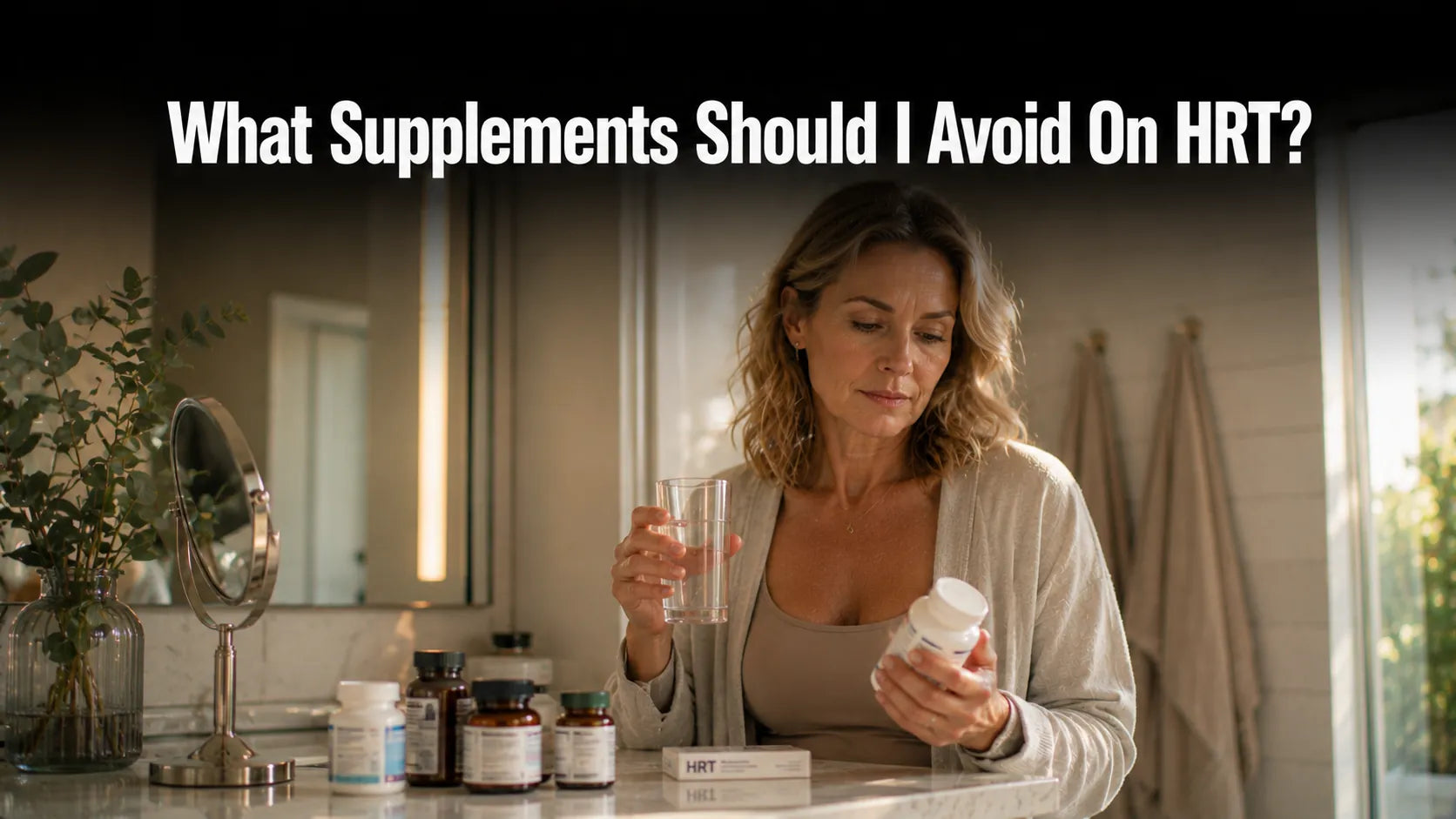
One of the biggest mistakes people make after starting HRT is assuming that more supplements automatically means more support.
In reality, the opposite is often true.
A lot of people begin HRT hoping to feel:
- more stable
- more energised
- better recovered
- healthier overall
…but then unknowingly overload their system with:
- aggressive stimulant products
- hormone “boosters”
- mega-dosed supplements
- trendy herbal blends
- overlapping ingredients
all at the same time.
And this is where things can start becoming messy.
Because while properly chosen supplements can absolutely support recovery, hydration, nutrition, and wellbeing during HRT, the wrong combination can sometimes worsen:
- anxiety
- sleep
- blood pressure
- headaches
- fatigue
- digestive issues
- recovery quality
The difficult part is that many of these products are marketed as:
“natural”
“hardcore”
“optimisation-focused”
which makes them sound automatically safe.
But HRT already changes how multiple systems inside the body function. Adding highly aggressive supplementation on top of that without thinking carefully about recovery, hydration, stress levels, or medication interactions can sometimes create more problems than benefits.
That’s why the smartest approach during HRT is usually:
- simpler
- calmer
- more consistent
- recovery-focused
rather than trying to build the most extreme supplement stack possible.
1. Are there supplements that can interfere with HRT medications?
Potentially, yes.
This is one of the most overlooked areas of supplementation during HRT.
A lot of people assume:
“If it’s sold legally, it must be harmless.”
But some supplements can absolutely influence:
- hormone pathways
- blood pressure
- nervous system activity
- metabolism
- sleep quality
- stress response
especially when combined with prescription hormone therapy.
This becomes more relevant with:
- herbal hormone products
- testosterone boosters
- stimulant-heavy supplements
- fat burners
- unregulated wellness blends
because many of them contain multiple active ingredients interacting with the body simultaneously.
That doesn’t mean every supplement is dangerous.
It simply means HRT is not the time to treat supplementation casually.
Usually, safer routines focus more on:
- recovery
- hydration
- nutritional consistency
- sleep quality
- long-term health support
rather than chasing aggressive “hormone optimisation” products.

2. Why is it important to check ingredients while on HRT?
Because many supplements contain far more than people realise.
A lot of products marketed for:
- fat loss
- energy
- hormone support
- mood enhancement
- metabolism boosting
often combine:
- stimulants
- herbal extracts
- caffeine
- overlapping vitamins
- multiple active compounds
into one formula.
The problem is that people often stack several products together without realising how quickly ingredients overlap.
For example:
- pre-workout
- fat burner
- energy drink
- testosterone booster
might all contain stimulants affecting:
- heart rate
- sleep
- anxiety
- blood pressure
- recovery quality
at the same time.
This is why simpler supplementation often works better during HRT.
Products focused on broader wellness support tend to create far less unnecessary stress on the body overall.
For example, Applied Nutrition Multi-Vitamin Complex – 90 Capsules fits naturally into a simpler HRT-support routine because it focuses on broader nutritional support rather than aggressive stimulation or hormone manipulation.
That difference matters more than people realise.
3. Can high-stimulant supplements affect hormone balance or blood pressure?
They potentially can—especially in people already sensitive to:
- stress
- anxiety
- sleep disruption
- blood pressure changes
- nervous system overstimulation
High-stimulant supplements often increase:
- adrenaline
- heart rate
- nervous system activity
- cortisol response
temporarily.
For some people, that feels energising.
For others, it creates:
- anxiety
- shakiness
- headaches
- sleep disruption
- elevated stress levels
- recovery issues
This becomes even more important during HRT because recovery, sleep quality, and nervous system balance often play a huge role in how stable someone feels overall.
A lot of people mistakenly assume:
“More energy = better.”
But sometimes calmer recovery and better sleep improve wellbeing far more than aggressive stimulation ever will.
4. Should you be cautious with testosterone boosters while on HRT?
Usually, yes.
This is especially true when people start combining prescription hormone therapy with multiple “natural hormone support” products at the same time.
A lot of testosterone boosters contain:
- herbal hormone blends
- stimulants
- adaptogens
- testosterone-support ingredients
that may not even be necessary when someone is already on medically managed hormone therapy.
The issue is not that every ingredient is automatically dangerous.
The issue is that people often:
- overcomplicate supplementation
- stack products unnecessarily
- chase aggressive optimisation
- ignore recovery fundamentals
while assuming more supplements always equals better results.
Usually, the body responds far better to:
- good sleep
- protein intake
- hydration
- stress management
- consistent recovery
than endlessly adding more “boosters.”

5. Can fat burners or strong pre-workouts cause unwanted side effects?
Absolutely.
This is probably one of the biggest areas where people accidentally create unnecessary stress on the body during HRT.
A lot of high-stimulant products contain:
- large caffeine doses
- multiple stimulants
- aggressive thermogenic ingredients
- appetite suppressants
which can sometimes worsen:
- anxiety
- sweating
- headaches
- sleep quality
- dehydration
- elevated heart rate
- jitteriness
especially when recovery already feels inconsistent.
People often underestimate how much:
- dehydration
- overstimulation
- poor sleep
- elevated stress
can amplify side effects during hormonal changes.
That’s why calmer recovery-focused habits often become more valuable than chasing maximum stimulation.
For example, Applied Nutrition Cream Of Rice - 1kg fits naturally into steadier HRT-support routines because simple recovery-focused nutrition often supports stable energy and recovery far better than relying heavily on aggressive stimulant products.


Intermission
So far, we’ve covered:
- supplements that may interfere with HRT
- why ingredient awareness matters
- stimulant-heavy products and nervous system stress
- testosterone boosters during HRT
- and why aggressive fat burners or pre-workouts can sometimes worsen side effects
In Part 2, we’ll break down:
- herbal supplement interactions
- mega-dosing vitamins and minerals
- signs a supplement may be worsening HRT side effects
- hydration and recovery balance
- and what a safer, more balanced supplement approach on HRT actually looks like
Part 2
6. Can herbal supplements interact with hormone therapy?
Potentially, yes.
This is one of the reasons people should be cautious about assuming every “natural” supplement is automatically harmless during HRT.
A lot of herbal products are marketed around:
- hormone balance
- mood support
- stress reduction
- metabolism
- energy
- libido
But many of these ingredients still influence biological systems connected to hormones, blood pressure, nervous system activity, or metabolism.
That doesn’t automatically make them dangerous.
The issue is usually unpredictability.
Some people begin stacking:
- herbal hormone products
- stimulants
- adaptogens
- prescription HRT
- recovery supplements
without fully understanding how much overlap exists between them.
And once multiple products are combined together, it becomes much harder to identify what’s actually helping versus what may be worsening:
- anxiety
- headaches
- sleep quality
- fatigue
- recovery
- mood stability
This is why simpler routines often work better long-term.
Not because every herbal supplement is “bad,” but because consistency and stability usually matter more than chasing endless optimisation.

7. Should people on HRT avoid mega-dosing vitamins or minerals?
Usually, yes.
A lot of people assume:
“If a normal dose is good, a massive dose must be even better.”
But the body rarely works that way.
Mega-dosing large amounts of vitamins, minerals, or stimulants can sometimes create:
- digestive issues
- headaches
- sleep disruption
- nausea
- nervous system stress
- unnecessary imbalance
especially when multiple supplements overlap.
This is particularly common with:
- fat burners
- energy products
- stacked stimulant formulas
- aggressive wellness blends
because people often unknowingly duplicate ingredients across several products simultaneously.
A more balanced approach usually works far better during HRT:
- consistent hydration
- realistic nutrition
- proper protein intake
- manageable recovery habits
- sensible supplementation
rather than trying to overwhelm the body with excessive dosages.
8. How can you tell if a supplement is making HRT side effects worse?
Usually the body gives fairly clear warning signs.
A lot of people notice problems gradually rather than instantly.
For example, symptoms may become:
- more intense
- more frequent
- less predictable
after introducing a new supplement or stacking multiple products together.
Common signs something may not be agreeing with you include:
- worsening anxiety
- headaches
- poor sleep
- increased jitteriness
- elevated heart rate
- digestive discomfort
- worsening fatigue
- feeling overstimulated or “off”
This is one reason why introducing multiple supplements at the same time is usually a bad idea.
When everything changes simultaneously, it becomes almost impossible to identify:
- what’s helping
- what’s unnecessary
- what may be worsening side effects
A calmer, slower approach usually gives far better long-term results.
9. Can hydration and electrolyte balance affect how you feel on HRT?
Absolutely.
Hydration influences:
- energy
- recovery
- circulation
- muscular function
- temperature regulation
- fatigue levels
- overall wellbeing
And many people underestimate how much worse dehydration can feel during periods of hormonal change.
Things like:
- headaches
- low energy
- dizziness
- fatigue
- poor recovery
- muscle tightness
can all feel amplified when hydration becomes inconsistent.
This becomes even more important for people who:
- train regularly
- sweat heavily
- consume lots of caffeine
- struggle with appetite
- already feel fatigued or stressed
For example, BetterYou Magnesium Water – Hydrate fits naturally into calmer HRT-support routines where hydration, recovery, and nervous system balance become a bigger priority.


Sometimes people chase stronger supplements when the body is really just asking for:
- better hydration
- better sleep
- less stress
- more recovery consistency

10. What does a safer, balanced supplement approach on HRT look like?
Usually much simpler than social media makes it seem.
A balanced HRT-support routine often focuses on:
- nutritional consistency
- hydration
- recovery quality
- protein intake
- sleep support
- long-term wellness habits
rather than aggressive “hormone optimisation.”
For many people, a calmer and more sustainable approach works best long-term:
- a quality protein source
- broader micronutrient support
- omega-3 intake
- hydration support
- optional recovery-focused additions like magnesium or collagen
That’s why products like:
- Applied Nutrition Multi-Vitamin Complex – 90 Capsules
- Per4m Advanced Omega-3 - 90 Capsules
- BetterYou Magnesium Water – Hydrate
- Applied Nutrition Marine Collagen – 300g
- Applied Nutrition Cream Of Rice - 1kg
fit naturally into steadier HRT-support routines.
Not because they “boost hormones”…
…but because they support the basics properly without creating unnecessary stress on the body.
And in many cases, that’s exactly what helps people feel better most consistently.
Conclusion
The biggest mistake people make with supplements during HRT is often overcomplicating things.
A lot of people chase:
- stronger stimulants
- hormone boosters
- fat burners
- aggressive wellness stacks
when the body usually responds better to:
- recovery
- hydration
- sleep quality
- nutritional consistency
- manageable stress levels
Good supplementation during HRT should support stability—not create more chaos.
That’s why calmer, recovery-focused routines often work far better long-term than trying to force the body into constant stimulation or “optimisation.”
Because ultimately, feeling healthier and more balanced usually comes from consistency—not from taking the largest number of supplements possible.
FAQ
1. What supplements should you avoid on HRT?
Usually aggressive stimulant products, unnecessary hormone boosters, and overly complicated supplement stacks.
2. Can supplements interfere with HRT medications?
Potentially yes, especially stimulant-heavy or hormone-focused products.
3. Are fat burners safe while on HRT?
Some may worsen anxiety, dehydration, sleep quality, or blood pressure issues.
4. Should you avoid testosterone boosters on HRT?
Usually caution is recommended, especially without medical guidance.
5. Can herbal supplements affect HRT?
Potentially yes, depending on the ingredients involved.
6. Is too much caffeine bad during HRT?
Excessive stimulants may worsen sleep, stress, anxiety, and recovery quality.
7. Can dehydration worsen HRT side effects?
Absolutely—hydration strongly affects recovery, fatigue, and overall wellbeing.
8. What’s the safest supplement approach during HRT?
Usually a simpler, recovery-focused, balanced routine.


