


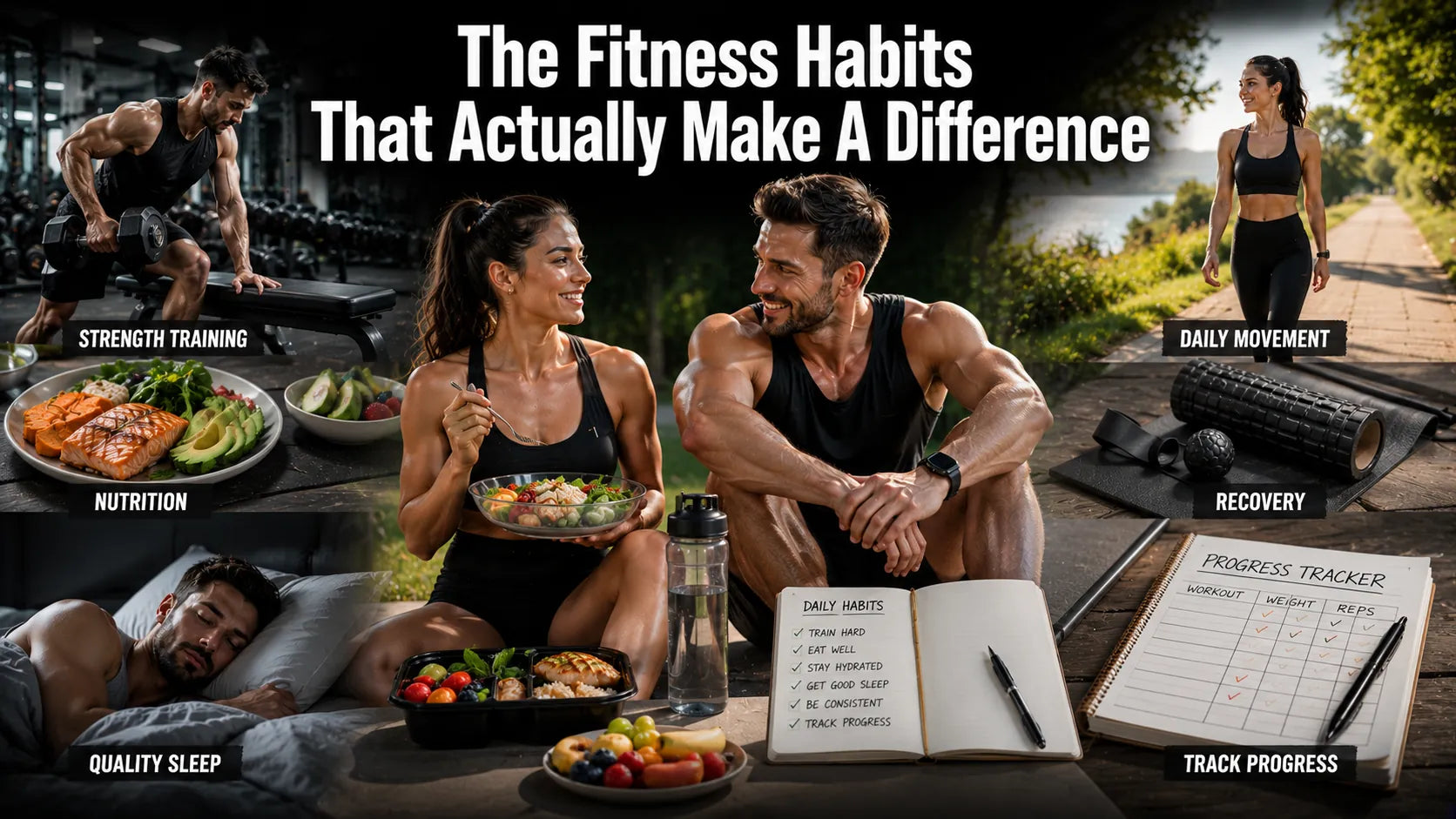
If you asked a hundred successful gym-goers what transformed their results, you'd probably expect a hundred different answers.
Some would talk about training.
Others would mention nutrition.
A few would swear by supplements.
But if you looked closely, you'd notice something interesting.
Despite their different routines, most of them share the same habits.
Not flashy hacks.
Not miracle programmes.
Simple habits that they repeat week after week.
That's because long-term fitness isn't built through one incredible workout or one perfect meal.
It's built through thousands of good decisions that gradually become automatic.
Unfortunately, many people spend years searching for the perfect workout plan while completely overlooking the habits that actually determine success.
The encouraging news is that these habits aren't complicated.
Anyone can start building them today.
Let's begin with the ones that make the biggest difference.
1. Prioritising Consistency Over Perfection
One of the biggest mistakes people make is believing they have to be perfect.
They miss one workout.
They eat one takeaway.
They skip one morning walk.
Then they convince themselves they've failed.
Successful people think differently.
They understand that one missed workout means very little.
What matters is what happens next.
Consistency isn't about never making mistakes.
It's about returning to your routine quickly whenever life gets in the way.
Over time, those consistent efforts compound into remarkable results.
Three good workouts every week for a year will almost always outperform two months of perfection followed by ten months of inconsistency.
Perfection is impossible.
Consistency is achievable.
And consistency wins.

2. Progressive Overload That Actually Works
If your workouts never become more challenging, your body has very little reason to change.
This is where progressive overload comes in.
Despite sounding technical, the principle is simple.
Gradually ask your body to do slightly more over time.
That might mean:
- adding weight
- performing extra repetitions
- improving technique
- increasing training volume
- reducing rest periods
Small improvements quickly add up.
Many people assume progressive overload means adding huge amounts of weight every week.
In reality, even tiny improvements matter.
One extra repetition.
A slightly heavier dumbbell.
Better control during each movement.
Those small victories eventually become significant progress.
Applied Nutrition Body Fuel Energy Shot 12 × 60ml can naturally support demanding training sessions by helping you stay focused and ready to give your best effort when it's time to progressively challenge yourself.


The goal isn't simply working harder.
It's working smarter.
3. Eating Enough Protein Every Day
Training creates the stimulus for muscle growth.
Protein helps provide the building blocks needed for recovery and repair.
Without enough protein, progress often becomes slower.
That's why consistently meeting your daily protein target is one of the most effective nutrition habits you can develop.
Protein supports:
- muscle recovery
- muscle maintenance
- muscle growth
- satiety
The exact amount varies between individuals.
But consistency matters far more than occasional high-protein meals.
Per4m Plant Protein – 2kg offers a convenient way to increase daily protein intake, particularly for those looking for a plant-based protein source that fits easily into a busy routine.


Think about protein across the whole day rather than just after your workout.
4. Making Recovery Part of Your Routine
Many people love training.
Far fewer enjoy recovering.
Yet recovery is where much of the progress actually happens.
Your body repairs damaged muscle tissue.
Strength adaptations occur.
Energy stores are restored.
Without proper recovery, performance gradually declines.
Good recovery includes:
- hydration
- sleep
- nutrition
- rest days
- stress management
These habits often determine how well your next workout goes.
Training hard while recovering poorly is a bit like pressing the accelerator while the handbrake is still on.
The body needs time to adapt.
Recovery isn't a break from progress.
It's part of it.

5. Why Daily Movement Matters More Than You Think
Many people believe the gym is where fitness begins and ends.
In reality, what you do outside the gym often matters just as much.
Walking more.
Taking the stairs.
Standing instead of sitting.
Playing with the kids.
Going for an evening stroll.
These activities increase daily movement without feeling like structured exercise.
Over weeks and months, they make a significant contribution to:
- calorie expenditure
- cardiovascular fitness
- overall health
- recovery
- energy levels
Optimum Nutrition Amino Energy + Electrolyte RTD – 24 × 250ml fits naturally into an active lifestyle, offering a convenient option to stay refreshed whether you're heading to the gym or simply staying active throughout the day.


The people who stay fit rarely rely on workouts alone.
They build movement into everyday life.
Intermission
So far we've explored why consistency beats perfection, how progressive overload actually works, the importance of eating enough protein, why recovery deserves as much attention as training, and how increasing your daily movement can dramatically improve long-term fitness.
In Part 2, we'll look at why sleep is essential for progress, how supplements should fill gaps rather than replace good nutrition, smarter ways to track progress, how to build habits that last, and the formula that consistently delivers long-term fitness success.
Part 2
6. Getting Enough Sleep to Maximise Results
Sleep is often the first thing people sacrifice.
Early starts.
Late nights.
Scrolling on your phone.
Watching another episode before bed.
It doesn't seem like a big deal.
But over time, poor sleep can quietly undermine almost every fitness goal.
Quality sleep supports:
- muscle recovery
- hormone regulation
- training performance
- energy levels
- concentration
Many people look for a new workout programme when what they really need is an extra hour of sleep.
Recovery doesn't only happen on rest days.
It happens every night.
Applied Nutrition Sleep – 300g can naturally become part of an evening routine designed to help you wind down and prioritise quality rest before the next day's training.


Improving your sleep may do more for your results than adding another workout.

7. Using Supplements to Fill the Gaps
Supplements are often misunderstood.
Some people expect them to transform their physique overnight.
Others dismiss them completely.
The truth sits somewhere in the middle.
Supplements aren't designed to replace:
- good nutrition
- hard training
- quality recovery
- consistency
They're there to support those habits.
Applied Nutrition Critical Greens – 250g can help improve overall dietary quality when you're not always able to eat as many vegetables as you'd like.

That doesn't make vegetables optional.
It simply provides additional nutritional support alongside a balanced diet.
The strongest fitness routines are built around habits first.
Supplements simply help fill the gaps.
8. Tracking Progress the Right Way
Many people rely on just one measurement.
The scales.
When the number doesn't move, they assume nothing is happening.
But fitness progress is far more complicated than body weight alone.
Useful ways to track progress include:
- strength improvements
- body measurements
- progress photos
- fitness levels
- how your clothes fit
- energy levels
Sometimes the scales stay exactly the same while body composition improves dramatically.
The body doesn't always change in a straight line.
That's why using multiple measures gives a much clearer picture of your progress.
Track trends.
Not single days.
9. Building Habits You Can Actually Stick To
The best fitness plan is rarely the most impressive one.
It's the one you'll still be following six months from now.
Many people try to change everything overnight.
They decide they'll:
- train every day
- meal prep every meal
- walk 20,000 steps
- sleep perfectly
- never eat chocolate again
It's simply too much.
Instead, focus on habits that fit your lifestyle.
Build them gradually.
Master one before adding another.
Small habits repeated consistently become automatic.
Automatic habits become long-term results.

10. The Formula for Long-Term Fitness Success
After removing all the noise, successful fitness usually comes down to a surprisingly simple formula.
Train consistently.
Eat well.
Recover properly.
Move every day.
Stay patient.
The people who achieve the best long-term results aren't normally the people chasing every new trend.
They're the people who keep showing up.
They understand that:
- consistency beats perfection
- recovery supports growth
- nutrition fuels performance
- habits compound over time
There isn't one magic workout.
There isn't one magic food.
There isn't one magic supplement.
There are simply good habits repeated often enough to produce extraordinary results.
Conclusion
Fitness success isn't built on motivation alone.
It's built on habits.
The habits that genuinely make a difference aren't usually exciting.
They're simple.
They're repeatable.
And they're backed by years of experience and scientific research.
If you consistently:
- train with purpose
- progressively overload
- eat enough protein
- recover well
- stay active
- sleep properly
- track your progress
- remain patient
you'll already be doing what most successful people do.
Because long-term fitness isn't about finding shortcuts.
It's about building a lifestyle that makes success inevitable.
FAQ
1. What are the best fitness habits?
The most effective habits include consistent training, eating enough protein, recovering well, staying active, and sleeping properly.
2. Why is consistency more important than perfection?
Small actions repeated over months produce far greater results than short periods of perfect behaviour.
3. How important is protein for fitness?
Protein supports muscle repair, recovery, maintenance, and growth, making it one of the most important nutrients for active people.
4. Why is recovery important?
Recovery allows your body to repair, adapt, and become stronger after training.
5. Do supplements make a big difference?
Supplements support an already solid routine but should never replace good nutrition or consistent training.
6. What's the best way to track fitness progress?
Use several measures, including strength, progress photos, body measurements, fitness levels, and how you feel.
7. How do you build long-term fitness habits?
Start small, stay consistent, and gradually build habits that realistically fit your lifestyle.
8. What's the secret to long-term fitness success?
There isn't a secret. Consistent training, sensible nutrition, quality recovery, and patience remain the foundations of lasting results.


