



Walk into almost any gym and you'll hear the same advice repeated over and over again.
"You need to train every day."
"If you're not sweating, you're wasting your time."
"Never skip a workout."
"No pain, no gain."
"Carbs make you fat."
Some of these ideas have been passed around gyms for decades.
Others have exploded across social media.
The problem?
Many of them simply aren't supported by modern exercise science.
In fact, some of the most common gym "rules" are the very things preventing people from making consistent progress.
Fitness isn't about following outdated advice.
It's about understanding what actually works.
That often means questioning long-held beliefs and replacing them with habits that are backed by evidence rather than tradition.
Let's look at the gym rules you should stop following.
1. You Don't Need to Train Every Day
One of the biggest misconceptions in fitness is that more training always equals better results.
It sounds logical.
If three workouts are good, then surely seven must be even better.
But the body doesn't improve while you're lifting weights.
It improves while recovering from them.
Every training session creates stress.
Recovery is what allows your muscles, nervous system and connective tissues to adapt.
Without enough recovery, performance gradually declines.
Instead of becoming stronger, you simply become more fatigued.
For most people, three to five well-structured sessions each week is more than enough to build muscle, increase strength and improve fitness.
The key isn't training every day.
It's training consistently for months and years.
Missing a rest day is often more damaging than missing a workout.

2. More Sweat Doesn't Mean Better Results
Many people judge the quality of a workout by how soaked their clothes become.
It's easy to assume that more sweat means:
- more calories burned
- more fat lost
- a better workout
But that's not how sweating works.
Sweat is simply your body's cooling system.
Its purpose is regulating temperature.
Not measuring fat loss.
You'll usually sweat more when:
- it's hot
- humidity is high
- you're wearing extra layers
- your genetics make you sweat more
Two people can complete exactly the same workout and produce completely different amounts of sweat.
Both can burn almost identical numbers of calories.
Instead of chasing sweat, focus on measurable progress.
Ask yourself:
- Are you getting stronger?
- Are your lifts improving?
- Is your fitness increasing?
- Are you recovering well?
Those are far better indicators of success.
3. You Shouldn't Always Train to Failure
Training to failure has become almost fashionable.
Some people believe every set should end with complete exhaustion.
In reality, constantly training to failure often creates more fatigue than progress.
Leaving one or two repetitions in reserve allows you to:
- maintain better technique
- recover faster
- complete more quality training
- reduce injury risk
Failure training certainly has its place.
But it shouldn't become your default approach.
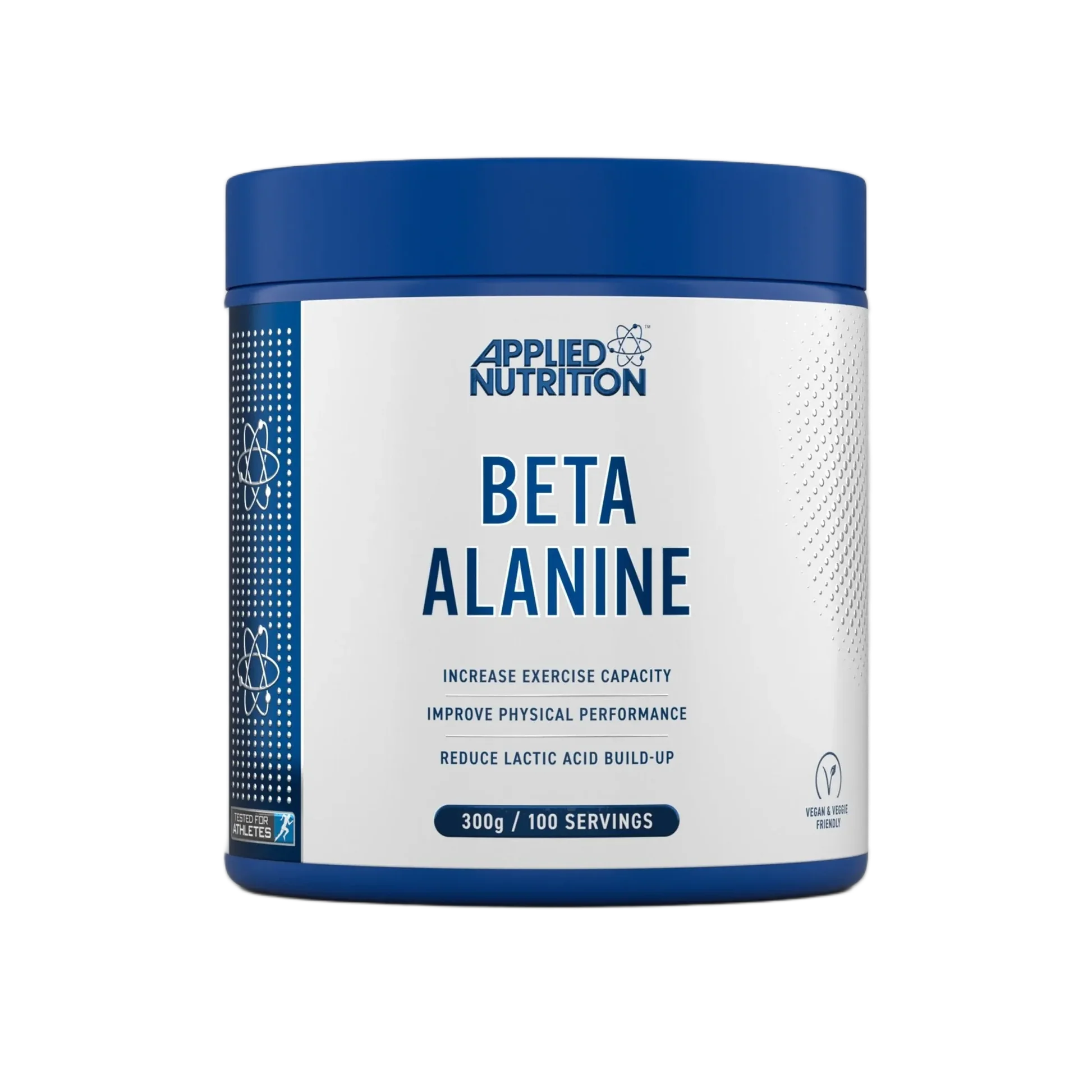
Applied Nutrition Beta-Alanine 300g can naturally support high-intensity training sessions by helping you maintain performance during demanding workouts.
That doesn't mean every workout needs to leave you completely exhausted.
Smart training almost always beats reckless training.
4. Long Workouts Aren't Always Better
Many people believe that spending two hours in the gym automatically produces better results than spending forty-five minutes.
Often the opposite is true.
Highly productive sessions tend to be:
- focused
- well planned
- progressive
- efficient
Long workouts often become longer because of:
- excessive phone use
- unnecessary chatting
- too many exercises
- long rest periods
Quality almost always beats quantity.
A focused sixty-minute workout usually outperforms a distracted two-hour session.
Naughty Boy Menace V2 – 420g fits naturally into this approach because it's designed to support focused, high-quality training sessions where intensity matters more than simply spending longer in the gym.


The goal isn't spending more time training.
The goal is making your training time count.

5. Carbs Aren't the Enemy
Few nutrition myths have lasted as long as the belief that carbohydrates automatically make you fat.
In reality, carbohydrates are one of the body's preferred energy sources.
They're particularly valuable for:
- resistance training
- explosive exercise
- high-intensity workouts
- recovery
Removing carbohydrates completely often leaves people feeling:
- tired
- flat
- weaker
- less motivated to train
The issue isn't carbohydrates themselves.
The issue is consistently eating more calories than your body needs.
Applied Nutrition Cream Of Rice – 1kg is an excellent example of a simple carbohydrate source that can help fuel demanding workouts without overcomplicating your nutrition.


Carbohydrates aren't something to fear.
They're something to use intelligently.
Intermission
So far we've challenged five of the biggest gym myths: you don't need to train every day, sweat isn't a measure of fat loss, every set doesn't need to end in failure, longer workouts aren't automatically better, and carbohydrates are not the enemy.
In Part 2, we'll look at why rest days help you grow, why supplements should never replace good habits, whether perfect form is always necessary, why constantly changing your programme hurts progress, and the habits that genuinely deliver long-term results.
Part 2
6. Rest Days Help You Grow
For years, rest days were viewed as a sign of laziness.
The mentality was simple:
If you're not training, you're falling behind.
Modern sports science tells a very different story.
Training creates microscopic damage to muscle tissue.
Recovery is when that damage is repaired, allowing muscles to become stronger and more resilient.
Without adequate recovery, you may experience:
- declining performance
- persistent soreness
- increased fatigue
- reduced motivation
- a greater risk of injury
Rest isn't the opposite of progress.
It's part of progress.
Sleep plays a huge role in that recovery process.
Applied Nutrition Sleep – 300g can naturally become part of an evening routine that prioritises quality sleep, helping you arrive at your next workout feeling refreshed and ready to perform.


The people making the fastest long-term progress usually recover just as seriously as they train.

7. Supplements Can't Replace Good Habits
This is one of the biggest misconceptions in fitness.
Some people spend more time researching supplements than improving their training.
The reality is much simpler.
Supplements can support good habits.
They cannot replace them.
Consistent progress still comes from:
- structured training
- sensible nutrition
- quality sleep
- patience
- progressive overload
Per4m Glutamine 400g can fit naturally into a recovery-focused routine, particularly for people training regularly and looking to support their overall recovery habits.

That doesn't remove the need to eat well or recover properly.
Every supplement should be viewed as the finishing touch to an already solid routine—not the foundation itself.
8. Perfect Form Isn't Always Necessary
You'll often hear people say every repetition must look absolutely identical.
In reality, lifting isn't always that black and white.
Perfect technique is an excellent goal.
But small variations naturally occur as exercises become challenging.
The important difference is understanding the difference between:
- controlled effort
- unsafe technique
A final repetition may slow down.
You may grind through a difficult lift.
That doesn't automatically mean your technique has failed.
Good coaching is about maintaining safe, effective movement patterns—not chasing robotic perfection.
Focus on continually improving your technique rather than expecting flawlessness from day one.
9. You Don't Need to Change Your Routine Constantly
Social media encourages constant programme hopping.
Every week there's:
- a new split
- a new exercise
- a new challenge
- a new "secret" workout
Many people abandon perfectly good programmes before they've even had time to work.
The truth is that progress usually comes from improving within a programme rather than constantly replacing it.
Sticking with a structured routine allows you to:
- measure progress accurately
- improve technique
- progressively overload
- build confidence
Consistency almost always beats novelty.
The programme isn't usually the problem.
Failing to stay with it long enough often is.

10. The Rules That Actually Build Results
Once you ignore outdated gym advice, the path to progress becomes much clearer.
The habits that consistently deliver results are surprisingly simple.
Train with purpose.
Recover properly.
Fuel your body.
Stay patient.
Repeat.
People who achieve long-term success rarely rely on shortcuts.
Instead, they focus on habits like:
- progressive overload
- sensible nutrition
- quality recovery
- consistent training
- realistic expectations
Those habits may not be exciting.
But they're incredibly effective.
The best fitness advice usually isn't new.
It's simply the advice people actually stick to.
Conclusion
Many traditional gym rules have survived simply because they've been repeated for years.
That doesn't make them correct.
The reality is that sustainable progress comes from understanding what actually matters.
You don't need to:
- train every day
- chase sweat
- fear carbohydrates
- spend hours in the gym
- rely on supplements
- constantly change your workouts
Instead, focus on:
- training consistently
- recovering properly
- fuelling your body
- applying progressive overload
- trusting the process
When you replace outdated myths with evidence-based habits, progress becomes far more predictable.
The biggest breakthroughs often come from breaking the rules that never deserved to exist in the first place.
FAQ
1. What gym rules should you stop following?
Many outdated rules, such as training every day or avoiding carbohydrates, are no longer supported by modern exercise science.
2. Do you need to train every day to build muscle?
No. Most people make excellent progress training three to five times per week while allowing adequate recovery.
3. Should every workout end in failure?
No. Training to failure has its place, but constantly doing so can increase fatigue and slow recovery.
4. Are long workouts more effective?
Not necessarily. Focused, well-structured sessions are often more productive than spending extra time in the gym.
5. Do supplements build muscle on their own?
No. Supplements support training, nutrition, and recovery—they don't replace them.
6. Is perfect form always required?
Good technique is important, but expecting every repetition to look identical isn't always realistic during challenging sets.
7. Should you keep changing your workout routine?
Usually not. Consistency and progressive overload produce better results than constantly switching programmes.
8. What habits actually build long-term results?
Consistent training, sensible nutrition, quality recovery, progressive overload, and patience remain the foundations of lasting fitness.


