


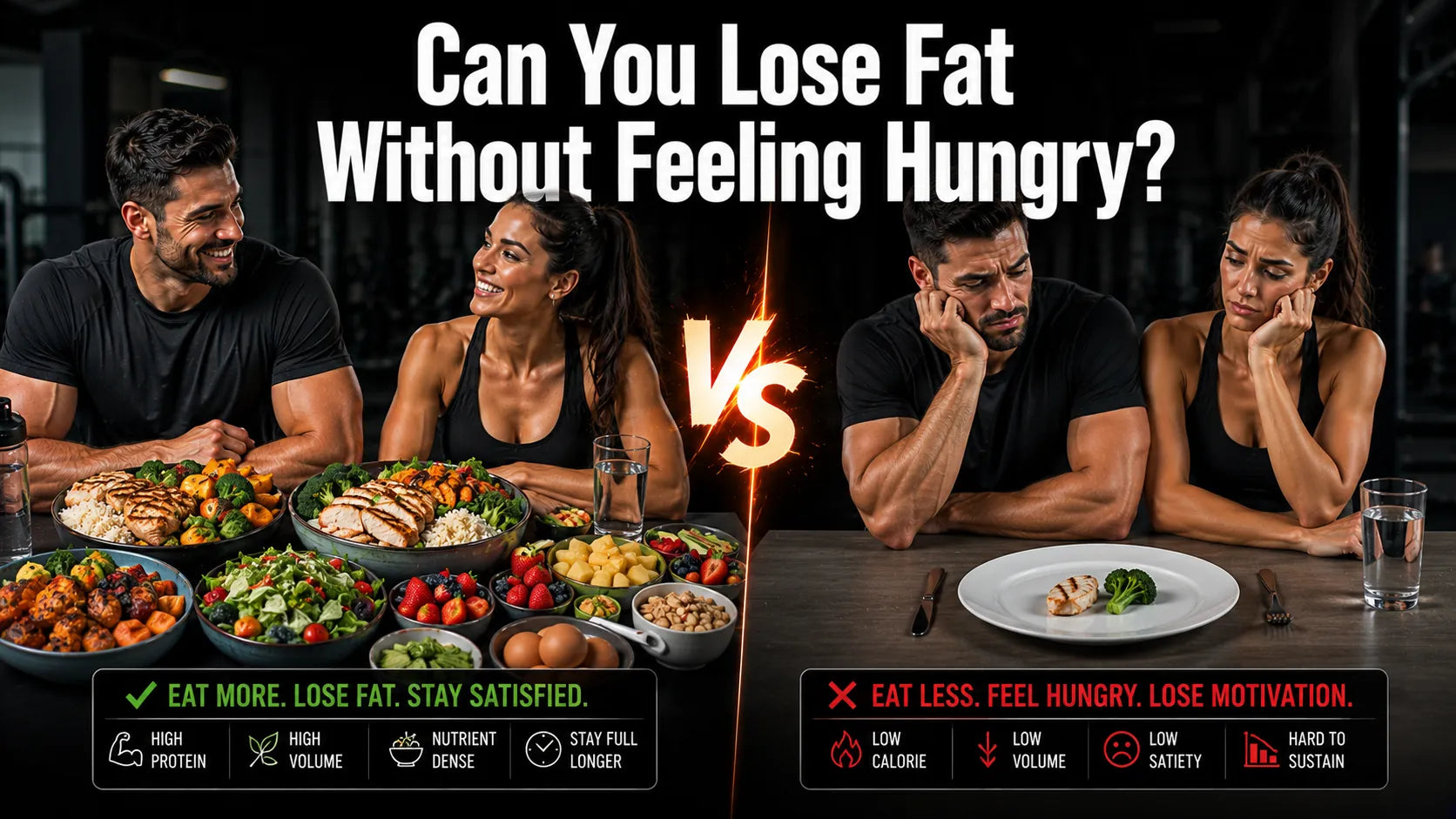
One of the biggest reasons diets fail isn't lack of motivation.
It isn't lack of knowledge.
And it isn't a lack of effort.
It's hunger.
Almost everyone has experienced it.
You start a new diet full of enthusiasm.
The first few days go well.
Then suddenly you're thinking about food constantly.
Meals feel smaller.
Cravings become stronger.
Willpower starts to disappear.
Before long, you're standing in front of the fridge wondering what went wrong.
This is why so many people believe fat loss has to involve suffering.
They assume hunger is simply part of the process.
And while some increase in appetite can occur during a calorie deficit, constant hunger is not necessarily a sign you're doing things correctly.
In fact, excessive hunger is often a sign that something about the diet needs improving.
The truth is that successful fat loss isn't usually about eating as little as possible.
It's about creating a plan that allows you to stay consistent for long enough to see results.
And that becomes much easier when you're not hungry all day.
Let's look at why hunger happens and how to manage it.
1. Why Does Dieting Make You Feel Hungry?
The answer is surprisingly simple.
Your body doesn't know you're trying to get lean for summer.
It doesn't know you're trying to fit into smaller clothes.
It simply notices that less energy is coming in.
From the body's perspective, that's something worth paying attention to.
Hunger is one of the ways it responds.
When calorie intake drops, the body begins encouraging behaviours that increase the chances of eating.
This is why many people notice:
- stronger cravings
- increased appetite
- more thoughts about food
- reduced feelings of fullness
The body is attempting to restore balance.
The important thing to understand is that hunger isn't a sign that fat loss isn't working.
It's simply a biological response.
The goal isn't eliminating hunger entirely.
The goal is managing it well enough that the diet remains sustainable.

2. Can You Lose Fat Without Constant Hunger?
Absolutely.
In fact, most successful long-term fat-loss plans rely on exactly that.
The biggest mistake many people make is assuming the fastest diet is automatically the best diet.
This often leads to:
- extreme calorie cuts
- restrictive food choices
- unnecessary suffering
The result?
They lose weight quickly for a short period.
Then the diet collapses.
A better approach is creating a calorie deficit that feels manageable.
One that allows you to:
- enjoy meals
- maintain energy levels
- train effectively
- stay consistent
This is why sustainable fat loss almost always beats aggressive fat loss.
The slower approach may feel less exciting.
But it's often far more successful.
3. Which Foods Keep You Fuller for Longer?
Not all calories affect hunger equally.
Some foods leave you hungry again within an hour.
Others help keep appetite under control for much longer.
Foods that generally improve satiety include:
- lean proteins
- vegetables
- fruit
- potatoes
- oats
- high-fibre foods
These foods tend to provide a combination of:
- volume
- fibre
- protein
- slower digestion
which can help reduce the urge to snack constantly.
One reason many successful diets work is because they prioritise foods that fill the stomach without providing excessive calories.
The goal isn't eating less food.
It's often choosing foods that provide more fullness per calorie.
4. How Important Is Protein for Appetite Control?
Protein is arguably the most powerful nutrient when it comes to managing hunger.
This is one reason high-protein diets consistently appear in successful fat-loss programmes.
Protein helps support:
- fullness
- muscle retention
- recovery
- body composition
Many people notice that increasing protein intake naturally reduces cravings and makes dieting easier.
This is where Per4m Advanced Whey Protein – 2.01kg can fit naturally into a fat-loss plan.
It provides a convenient way to increase protein intake without dramatically increasing calorie consumption.
For people struggling to hit protein targets through food alone, this can make a significant difference.
The goal isn't replacing meals.
The goal is making protein intake more consistent.

5. Can Drinking More Water Reduce Hunger?
Sometimes, yes.
The body isn't always great at distinguishing between hunger and thirst.
Many people spend large parts of the day mildly dehydrated without realising it.
The result can sometimes feel surprisingly similar to hunger.
This is why increasing water intake occasionally reduces:
- cravings
- snacking
- feelings of emptiness
It's not magic.
And it won't eliminate genuine hunger.
But proper hydration can certainly help support appetite management.
It also tends to support:
- training performance
- recovery
- energy levels
which become increasingly important during a calorie deficit.
Many people are surprised by how much better they feel simply by improving hydration habits before making any major dietary changes.
Intermission
So far we've explored why dieting increases hunger, whether fat loss can happen without constant cravings, the foods that keep you fuller for longer, why protein is so important for appetite control, and whether drinking more water can help reduce hunger.
In Part 2, we'll look at how sleep affects appetite, supplements that may help support dieting, the biggest mistakes that increase hunger levels, how fast fat loss should occur, and what sustainable fat loss actually looks like in the real world.
Part 2
6. Does Sleep Affect Hunger and Cravings?
Far more than most people realise.
Many people focus entirely on calories and exercise while completely overlooking sleep.
Yet poor sleep can make dieting dramatically harder.
When sleep quality drops, people often notice:
- stronger cravings
- increased appetite
- lower motivation
- poorer food choices
The body becomes more likely to seek quick sources of energy.
Unfortunately, those sources are often:
- sugary foods
- highly processed snacks
- calorie-dense meals
This is one reason successful fat loss isn't just about what happens in the kitchen.
It's also about what happens in the bedroom.
A well-rested person generally finds appetite management easier than someone constantly running on insufficient sleep.
The goal isn't perfect sleep.
The goal is recognising that recovery influences dieting success.

7. Which Supplements May Help Control Appetite?
It's important to be realistic here.
No supplement can completely eliminate hunger.
And no supplement can replace:
- sensible nutrition
- adequate protein
- good habits
However, some products can support the overall process.
For example, Per4m Advanced Whey Protein – 2.01kg can indirectly help appetite management because protein is one of the most filling nutrients available.
Improving overall dietary quality can help too.
Products such as Applied Nutrition Critical Greens – 250g are often used alongside broader efforts to improve food choices and nutritional consistency.

Digestive health also plays a role in maintaining healthy eating habits.
This is where Applied Nutrition Probiotic Advanced Multi-Strain Formula can fit naturally into a structured wellness routine.

For people focused on fat-loss goals, Reflex Nutrition Acetyl-L-Carnitine 90 Caps is another product commonly included in cutting phases because it aligns with broader fat-loss and energy-management strategies.

The key is understanding that supplements support the process.
They don't replace it.
8. What Dieting Mistakes Increase Hunger Levels?
Many hunger problems are self-inflicted.
Not intentionally.
But through common dieting mistakes.
Examples include:
- cutting calories too aggressively
- avoiding protein
- skipping meals unnecessarily
- relying heavily on processed "diet foods"
- poor sleep
- inadequate hydration
Perhaps the biggest mistake is trying to lose fat as quickly as possible.
Extreme diets often create extreme hunger.
And extreme hunger rarely leads to long-term success.
The people who maintain results are usually the people who create a plan they can actually live with.
Fat loss shouldn't feel effortless.
But it shouldn't feel miserable either.
9. How Fast Should You Lose Fat to Stay Satisfied?
Generally speaking, slower fat loss tends to be easier to sustain.
Rapid weight-loss approaches often create:
- stronger hunger
- lower energy
- poorer recovery
- increased cravings
This is one reason many successful fat-loss transformations happen gradually.
The slower approach allows people to:
- eat more food
- maintain training performance
- recover better
- stay consistent
Patience isn't always exciting.
But it often produces better results.
The body responds remarkably well when given enough time.
The goal isn't losing fat as fast as possible.
The goal is losing fat while maintaining habits you can continue following.

10. What Does Sustainable Fat Loss Look Like?
Sustainable fat loss rarely looks dramatic.
It doesn't involve:
- starvation
- endless cardio
- extreme restrictions
Instead, it usually looks surprisingly normal.
People continue:
- eating meals they enjoy
- training consistently
- sleeping well
- managing stress
- staying active
They simply do those things slightly better than before.
This is where long-term health habits become important.
Products such as Applied Nutrition Multi-Vitamin Complex can fit naturally into a sustainable approach because successful fat loss is often built around supporting overall health rather than chasing shortcuts.
The best fat-loss plan isn't the one that works for two weeks.
It's the one that still works six months later.
Conclusion
Can you lose fat without feeling hungry?
Yes.
At least, without feeling hungry all the time.
Some appetite increase is a normal part of dieting.
But constant hunger is often a sign that the plan needs improving.
The most successful fat-loss strategies usually focus on:
- adequate protein
- filling foods
- sensible calorie deficits
- hydration
- sleep
- consistency
Rather than trying to eat as little as possible.
Fat loss doesn't need to feel like punishment.
In fact, the more sustainable the approach becomes, the more likely it is to succeed.
Because the people who achieve lasting results are rarely the people who suffer the most.
They're usually the people who stay consistent the longest.
FAQ
1. Can you lose fat without feeling hungry all the time?
Yes. A well-structured diet can minimise hunger while still creating a calorie deficit.
2. What foods keep you full for longer?
Protein-rich foods, vegetables, fruit, potatoes, oats, and high-fibre foods tend to improve satiety.
3. How important is protein for appetite control?
Protein is one of the most filling nutrients and can help reduce hunger while supporting muscle retention.
4. Can drinking water reduce hunger?
Sometimes. Mild dehydration can occasionally feel similar to hunger.
5. Does poor sleep increase appetite?
Yes. Poor sleep is commonly associated with increased cravings and reduced appetite control.
6. What dieting mistakes make hunger worse?
Aggressive calorie deficits, low protein intake, poor sleep, and inadequate hydration are common causes.
7. How fast should you lose fat?
Generally, slower and more sustainable fat loss is easier to maintain and often produces better long-term results.
8. What does sustainable fat loss look like?
Consistent nutrition, adequate protein, good recovery, regular activity, and realistic expectations.


