


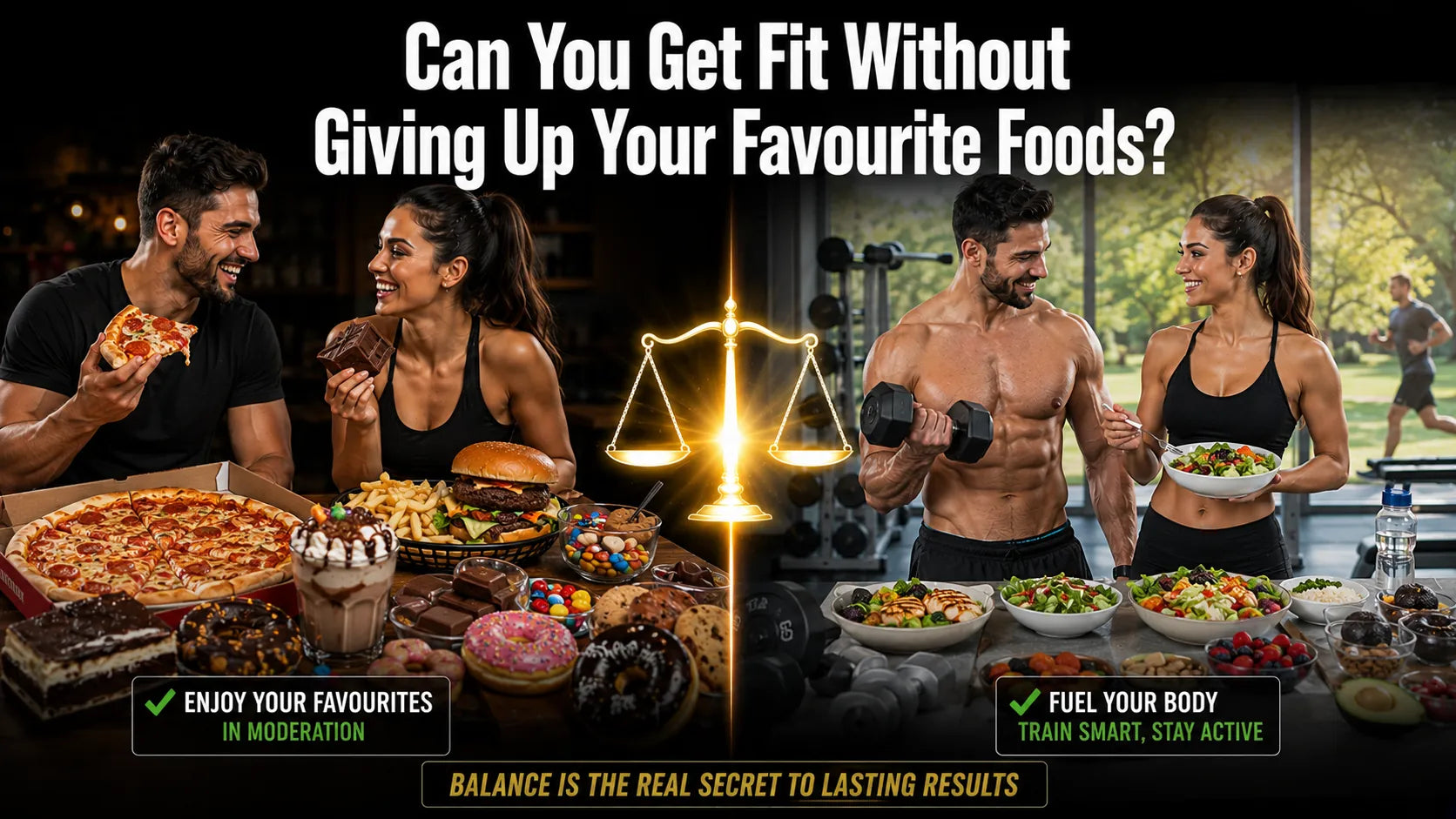
For many people, getting fit sounds like a trade-off.
You can have the body you want.
Or you can enjoy the foods you love.
But apparently, you can't have both.
That's the message countless diets have pushed for years.
No chocolate.
No pizza.
No takeaways.
No desserts.
No flexibility.
No fun.
It's hardly surprising that so many diets fail.
Because while extreme restrictions can sometimes produce short-term results, they're often incredibly difficult to maintain.
Eventually, life happens.
A birthday arrives.
A holiday comes around.
A stressful week at work appears.
And suddenly the perfect diet becomes impossible to follow.
This is where many people make an important discovery:
The people who stay in shape long-term rarely eat perfectly.
Instead, they develop a sustainable way of eating that allows them to enjoy life while still making progress.
That's a very different approach.
And for most people, it's a much more successful one.
Let's look at how it works.
1. Do You Really Need to Eat Perfectly to Get Fit?
No.
In fact, chasing dietary perfection is often one of the biggest obstacles to long-term success.
The body doesn't require a flawless diet.
It requires consistency.
Many people spend years bouncing between:
- strict diets
- cheat weekends
- extreme restrictions
- periods of overeating
because they believe fitness requires perfection.
The reality is usually far simpler.
A reasonably good diet followed consistently will almost always outperform a perfect diet that only lasts two weeks.
This is why successful fitness journeys often involve flexibility.
Not because standards don't matter.
But because sustainability matters more.
The goal isn't eating perfectly.
The goal is eating well enough for long enough.

2. Why Restrictive Diets Often Fail
Most restrictive diets fail for the same reason.
They're difficult to live with.
Initially, motivation is high.
People feel focused.
Determined.
Committed.
But over time, restrictions accumulate.
Foods become forbidden.
Cravings become stronger.
Social situations become harder.
Eventually the diet starts feeling like punishment.
At that point, adherence often collapses.
This isn't a weakness.
It's simply human nature.
The more restrictive a plan becomes, the harder it usually becomes to maintain.
This is why many successful nutrition approaches focus on moderation rather than elimination.
People generally do better when they can still enjoy some of the foods they love.
The key is learning how those foods fit into an overall healthy diet.
3. Can You Still Lose Weight Eating Treat Foods?
Absolutely.
This surprises many people.
They assume that enjoying chocolate, pizza, ice cream, or takeaways automatically prevents fat loss.
But weight loss is not determined by whether a food is labelled "good" or "bad."
It's primarily determined by overall energy balance.
If someone maintains a calorie deficit while occasionally enjoying treat foods, fat loss can still occur.
That doesn't mean nutrition quality becomes irrelevant.
Health matters.
Food quality matters.
Satiety matters.
But enjoying occasional treats does not automatically ruin progress.
In fact, allowing some flexibility often makes consistency easier.
And consistency is what drives results.
4. How Does the 80/20 Rule Work?
The 80/20 rule is one of the simplest concepts in nutrition.
The idea is straightforward:
Around 80% of your diet comes from nutrient-dense foods.
The remaining 20% allows room for enjoyment and flexibility.
This might include:
- chocolate
- desserts
- restaurant meals
- takeaway food
- social occasions
The exact percentages aren't important.
The principle is.
The majority of your nutrition supports your goals.
A smaller portion allows life to remain enjoyable.
This approach helps many people avoid the all-or-nothing mindset that causes so many diets to fail.
Instead of constantly feeling restricted, they learn how to balance health and enjoyment.

5. Which Foods Are Worth Keeping in Your Diet?
Many people approach fat loss by asking:
"What should I remove?"
A better question is often:
"What should I keep?"
Because sustainable nutrition usually involves keeping the foods that make a diet enjoyable.
For some people that might be:
- chocolate
- pizza
- burgers
- ice cream
- weekend meals out
The goal isn't pretending these foods don't exist.
The goal is learning how to enjoy them responsibly.
At the same time, it's important to build a foundation around foods that support health and satiety.
Products such as Applied Nutrition Critical Greens – 250g can fit naturally into this approach because they help support overall dietary quality without requiring someone to obsess over every meal.

A sustainable diet isn't built around perfection.
It's built around balance.
Intermission
So far we've explored whether perfect eating is necessary, why restrictive diets often fail, whether treat foods can still fit into a fat-loss plan, how the 80/20 rule works, and why keeping some favourite foods often leads to better long-term success.
In Part 2, we'll look at portion control, supplements that can help fill nutritional gaps, the mistakes that trigger cheat-day binges, whether muscle can still be built while enjoying favourite foods, and what sustainable healthy eating actually looks like in the real world.
Part 2
6. How Important Is Portion Control?
Portion control is one of the most underrated skills in nutrition.
Many people assume fat loss depends entirely on food choices.
But even healthy foods can become a problem when portions become excessive.
Likewise, many treat foods can fit perfectly into a fitness-focused lifestyle when portions remain sensible.
This is one reason people often struggle when they label foods as completely "good" or completely "bad."
The reality is usually more nuanced.
A balanced approach allows people to enjoy:
- chocolate
- pizza
- desserts
- restaurant meals
without automatically derailing progress.
The key is understanding how much of those foods fits within your overall nutrition plan.
Portion awareness often creates more freedom than restriction.
Because when you understand portions, you no longer feel like certain foods are forbidden.

7. Can Supplements Help Fill Nutritional Gaps?
Ideally, most nutrition should come from food.
However, real life isn't always ideal.
Busy schedules, travel, social events, and convenience foods can sometimes make it harder to consistently hit nutritional targets.
This is where supplements can play a supportive role.
For example, Applied Nutrition Multi-Vitamin Complex can help support overall nutritional intake during periods when food quality isn't perfect.
Likewise, Opti-Men is commonly used as part of a broader wellness routine focused on supporting daily micronutrient intake.


Products such as Applied Nutrition Critical Greens – 250g can also fit naturally into a flexible dieting approach where the goal is improving overall dietary quality rather than chasing perfection.
The important point is that supplements don't replace healthy eating.
They help support it.
8. What Dieting Mistakes Lead to Cheat-Day Binges?
One of the biggest causes of binge eating is excessive restriction.
People often spend six days attempting to eat perfectly.
Then one meal turns into:
- a cheat meal
- a cheat evening
- a cheat day
- sometimes an entire cheat weekend
The cycle becomes predictable.
The more restrictive the diet becomes, the stronger the urge to break it.
This is why flexibility is often so powerful.
When people allow themselves occasional enjoyment throughout the week, food loses much of its emotional power.
Instead of constantly feeling deprived, they learn how to include favourite foods without guilt.
The goal isn't creating perfect eating habits.
It's creating sustainable eating habits.
9. Can You Build Muscle While Eating Foods You Enjoy?
Absolutely.
Many successful muscle-building diets include foods that people genuinely enjoy eating.
The body doesn't require every meal to be made from chicken, broccoli, and rice.
What matters most is:
- total calorie intake
- protein intake
- training quality
- recovery
- consistency
This is one reason products such as Per4m Advanced Whey Protein – 2.01kg remain popular.
They help support protein intake while leaving greater flexibility elsewhere in the diet.
Many people are surprised to discover that muscle growth becomes easier when nutrition feels enjoyable rather than restrictive.
Because the easier a plan is to follow, the longer people tend to stick with it.
And long-term consistency is where muscle growth happens.

10. What Does Sustainable Healthy Eating Look Like?
Sustainable healthy eating is usually much less dramatic than social media suggests.
It doesn't involve:
- perfection
- food guilt
- extreme restrictions
- endless cheat days
Instead, it tends to look remarkably normal.
People eat:
- mostly nutritious foods
- adequate protein
- plenty of fruit and vegetables
- occasional treats
- meals they genuinely enjoy
They understand that one meal doesn't determine success.
Just as one workout doesn't build a physique, one slice of pizza doesn't ruin one.
Sustainable healthy eating creates room for:
- fitness goals
- social events
- family meals
- holidays
- real life
And that's precisely why it works.
The best diet isn't the strictest.
It's the one you can still follow next year.
Conclusion
Can you get fit without giving up your favourite foods?
Absolutely.
In fact, many people achieve better results when they stop chasing perfection.
Restrictive diets often fail because they're difficult to maintain.
Flexible approaches succeed because they allow people to enjoy food while remaining consistent.
The key principles remain simple:
- eat mostly nutritious foods
- control portions
- prioritise protein
- allow flexibility
- stay consistent
Fitness isn't about removing every enjoyable food from your life.
It's about learning how those foods fit into a healthy lifestyle.
Because the people who achieve lasting results aren't usually the people with the strictest diets.
They're the people with the most sustainable ones.
FAQ
1. Can you get fit without giving up your favourite foods?
Yes. Most people can enjoy favourite foods while still making progress, provided overall nutrition remains balanced.
2. Can you lose weight and still eat chocolate?
Absolutely. Fat loss is primarily determined by overall calorie balance rather than individual foods.
3. What is the 80/20 rule?
The 80/20 rule involves getting most nutrition from nutrient-dense foods while leaving room for flexibility and enjoyment.
4. Do you need a perfect diet to get fit?
No. Consistency is far more important than perfection.
5. Can portion control help with weight loss?
Yes. Portion awareness often allows people to enjoy a wider range of foods while still managing calorie intake.
6. Can you build muscle while eating foods you enjoy?
Yes. Muscle growth depends on factors such as protein intake, training, recovery, and overall calorie intake.
7. Why do restrictive diets often fail?
Because excessive restriction increases cravings and makes long-term adherence more difficult.
8. What does sustainable healthy eating look like?
A balanced approach built around nutritious foods, flexibility, consistency, and realistic habits.


