


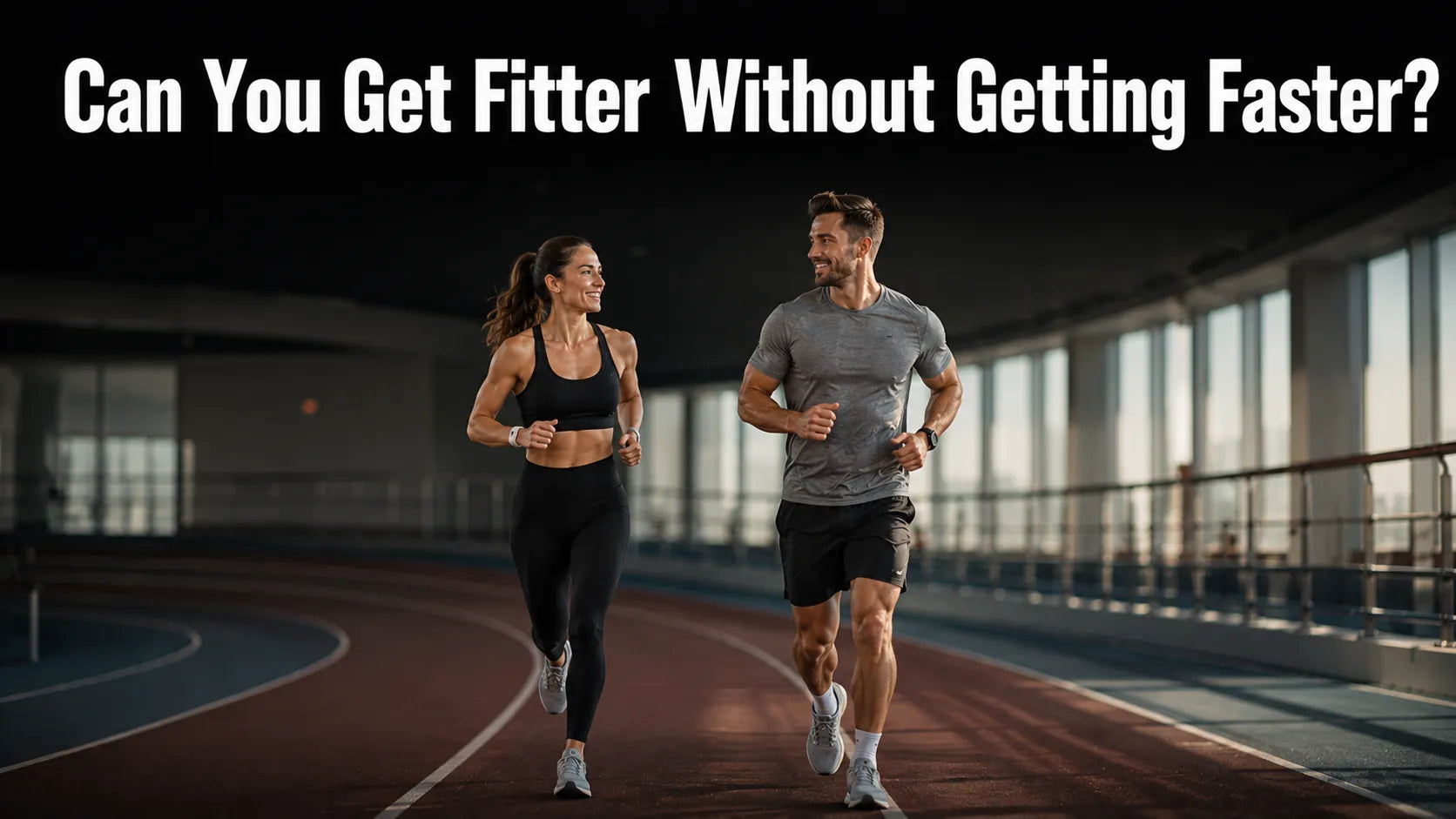
For many people, fitness and speed seem to go hand in hand.
Run faster.
Cycle faster.
Row faster.
Swim faster.
It's easy to assume that if your pace isn't improving, your fitness isn't either.
Fortunately, that's not how the human body works.
Speed is only one way of measuring performance.
In reality, fitness is far broader than simply moving faster from one point to another.
You can become significantly fitter while maintaining exactly the same running pace.
You can improve your heart health without setting personal bests.
You can increase your endurance without feeling any quicker.
Fitness is about how efficiently your body performs—not just how quickly it moves.
Understanding that distinction helps you train more effectively and avoid becoming discouraged when the stopwatch doesn't seem to be changing.
Let's explore what being fit really means.
1. What Does Being Fit Really Mean?
Fitness isn't defined by one number.
It's a combination of several different physical qualities working together.
These include:
- cardiovascular endurance
- muscular strength
- muscular endurance
- mobility
- flexibility
- recovery capacity
- coordination
Someone may be extremely strong but struggle to run long distances.
Another person may complete a marathon but find heavy squats challenging.
Both individuals are fit—just in different ways.
Improving fitness means becoming better at the specific physical demands you place on your body.
That's why your definition of fitness should always match your personal goals.

2. Does Fitness Always Mean More Speed?
No.
Speed is only one possible outcome of improved fitness.
Many adaptations happen inside your body long before they become visible on a stopwatch.
As your fitness improves, your body gradually becomes better at:
- delivering oxygen to working muscles
- producing energy efficiently
- recovering between efforts
- controlling your breathing
- maintaining exercise for longer
These improvements may allow you to exercise more comfortably at your current pace before they eventually make you faster.
For many recreational exercisers, feeling less exhausted after a workout is actually a better sign of improving fitness than running a few seconds quicker.
Progress isn't always obvious.
But it's still happening.
3. Can Strength Improve Fitness?
Absolutely.
Strength training isn't just about building bigger muscles.
It also improves your ability to perform everyday tasks and many forms of cardiovascular exercise more efficiently.
Stronger muscles require less effort to produce the same amount of work.
That means activities like:
- climbing stairs
- hiking
- rowing
- cycling
- running
can begin to feel easier as your strength increases.
Resistance training also improves:
- posture
- joint stability
- movement efficiency
- muscular endurance
Per4m Plant Protein – 2kg provides a convenient source of high-quality plant protein, making it easier to meet your daily protein requirements and support muscle recovery while improving overall fitness through resistance training.


Building strength doesn't automatically make you faster.
It often makes everything feel easier.
4. How Does Cardio Build Fitness?
Cardiovascular exercise challenges your heart, lungs and circulatory system.
Over time, regular cardio encourages your body to become more efficient at transporting oxygen throughout the body.
Your heart gradually adapts by becoming more effective at pumping blood.
Your muscles improve their ability to use oxygen.
Your breathing often becomes more controlled.
These adaptations help explain why everyday activities eventually require less effort.
Whether you choose:
- brisk walking
- cycling
- swimming
- rowing
- jogging
the goal isn't always maximum speed.
The goal is improving your body's ability to sustain activity comfortably over time.

5. Can Your Heart Get Fitter Without Speed?
Yes—and this surprises many people.
Heart fitness isn't measured solely by how fast you move.
It's measured by how efficiently your cardiovascular system supports physical activity.
You may notice improvements such as:
- a lower resting heart rate
- quicker recovery after exercise
- easier breathing
- reduced fatigue
- longer exercise sessions
All of these indicate improved cardiovascular fitness, even if your pace remains largely unchanged.
Hydration also plays an important role in maintaining cardiovascular performance.
Optimum Nutrition Electrolyte – 264g can naturally support hydration during longer or more demanding training sessions, helping replace key electrolytes lost through sweating as part of an overall fitness routine.


Becoming fitter often means your body is working smarter—not necessarily moving faster.
Intermission
So far we've explored what fitness really means, why becoming fitter doesn't always make you faster, how strength training contributes to overall fitness, the role of cardiovascular exercise in improving endurance, and how your heart can become more efficient even when your speed stays the same.
In Part 2, we'll examine which measures of progress matter most, which supplements naturally support performance, the mistakes that slow fitness improvements, who benefits most from training without chasing speed, and the smartest long-term strategy for building lasting fitness.
Part 2
6. What Progress Should You Measure?
If speed isn't your primary goal, there are plenty of other ways to measure improving fitness.
Many of them are actually better indicators of long-term health and performance.
Look for improvements such as:
- recovering your breath more quickly
- completing longer workouts comfortably
- lifting heavier weights
- performing more repetitions
- lower resting heart rate
- feeling less tired during everyday activities
These changes show your body is adapting, even if your running pace hasn't changed.
Progress isn't always measured in miles per hour.
Sometimes it's measured by how much easier life begins to feel.

7. Which Supplements Support Performance?
Improving fitness starts with consistent training, good nutrition and adequate recovery.
Supplements can't replace those foundations, but they can support them.
Applied Nutrition Body Fuel Energy Shot 12 × 60ml can naturally support demanding workouts by helping maintain energy and focus during exercise, making it easier to complete high-quality training sessions.


Remember that no supplement improves fitness on its own.
Fitness is built one workout at a time through consistent effort.
8. What Mistakes Slow Fitness Gains?
Many people unknowingly make their progress harder than it needs to be.
Common mistakes include:
- increasing intensity too quickly
- skipping recovery days
- inconsistent training
- poor nutrition
- inadequate hydration
- comparing yourself with others
Another mistake is believing every workout must leave you completely exhausted.
Some sessions should be challenging.
Others should focus on technique, endurance or recovery.
Fitness improves through balanced training rather than maximum effort every single day.
9. Who Benefits Most From This Approach?
Almost everyone.
Improving fitness without obsessing over speed is particularly valuable for:
- beginners
- older adults
- people returning after injury
- those training for general health
- busy professionals
- recreational gym-goers
For these groups, improving cardiovascular health, strength and endurance often matters far more than running faster.
Supporting your overall nutrition can also help maintain consistent training habits.
Applied Nutrition Critical Greens – 250g can naturally complement a balanced diet by helping increase your daily intake of greens alongside healthy eating and regular exercise.

Long-term fitness is about building sustainable habits—not chasing personal bests every week.

10. What's the Best Way to Improve Fitness?
The most effective fitness plan combines several different forms of training.
Aim to include:
- resistance training
- cardiovascular exercise
- regular walking or daily movement
- mobility work
- adequate recovery
- quality nutrition
Consistency almost always beats perfection.
Rather than asking yourself, "Am I getting faster?"
Ask:
- Am I recovering more quickly?
- Am I feeling stronger?
- Can I train for longer?
- Does everyday movement feel easier?
Those are often the signs that matter most.
Reflex Nutrition Acetyl-L-Carnitine 90 Caps can naturally complement an active lifestyle as part of a well-rounded nutrition plan, alongside consistent training, recovery and healthy eating habits.

Real fitness isn't about becoming the fastest person in the room.
It's about becoming healthier, stronger and more capable than you were yesterday.
Conclusion
Getting fitter doesn't always mean getting faster.
While speed is one measure of fitness, it's far from the only one.
Your heart can become stronger.
Your endurance can improve.
Your muscles can become more efficient.
Your recovery can get quicker.
All without dramatically changing your pace.
Whether your goal is better health, improved gym performance or simply having more energy throughout the day, focus on consistent progress rather than chasing speed alone.
The best fitness journey is the one you can maintain for years—not just weeks.
FAQ
1. Can you get fitter without getting faster?
Yes. Improvements in cardiovascular health, endurance, strength and recovery can all occur without increasing your speed.
2. Does getting fitter always make you faster?
Not necessarily. Many fitness adaptations improve your efficiency and endurance before they noticeably affect speed.
3. Can strength training improve cardiovascular fitness?
Yes. Resistance training improves muscular endurance, movement efficiency and overall physical capacity, contributing to better fitness.
4. How do you know if your fitness is improving?
Look for signs such as quicker recovery, lower resting heart rate, longer workouts, improved strength and reduced fatigue.
5. Does your heart get fitter without running faster?
Absolutely. Your heart can pump blood more efficiently and recover more quickly even if your pace remains the same.
6. Which supplements support performance?
Hydration products, protein supplements and balanced nutritional support can complement a structured fitness programme.
7. Who benefits from training without focusing on speed?
Beginners, older adults, recreational exercisers and anyone training for long-term health often benefit from this approach.
8. What's the best way to improve fitness?
Combine resistance training, cardiovascular exercise, good nutrition, proper recovery and consistency over the long term.


