


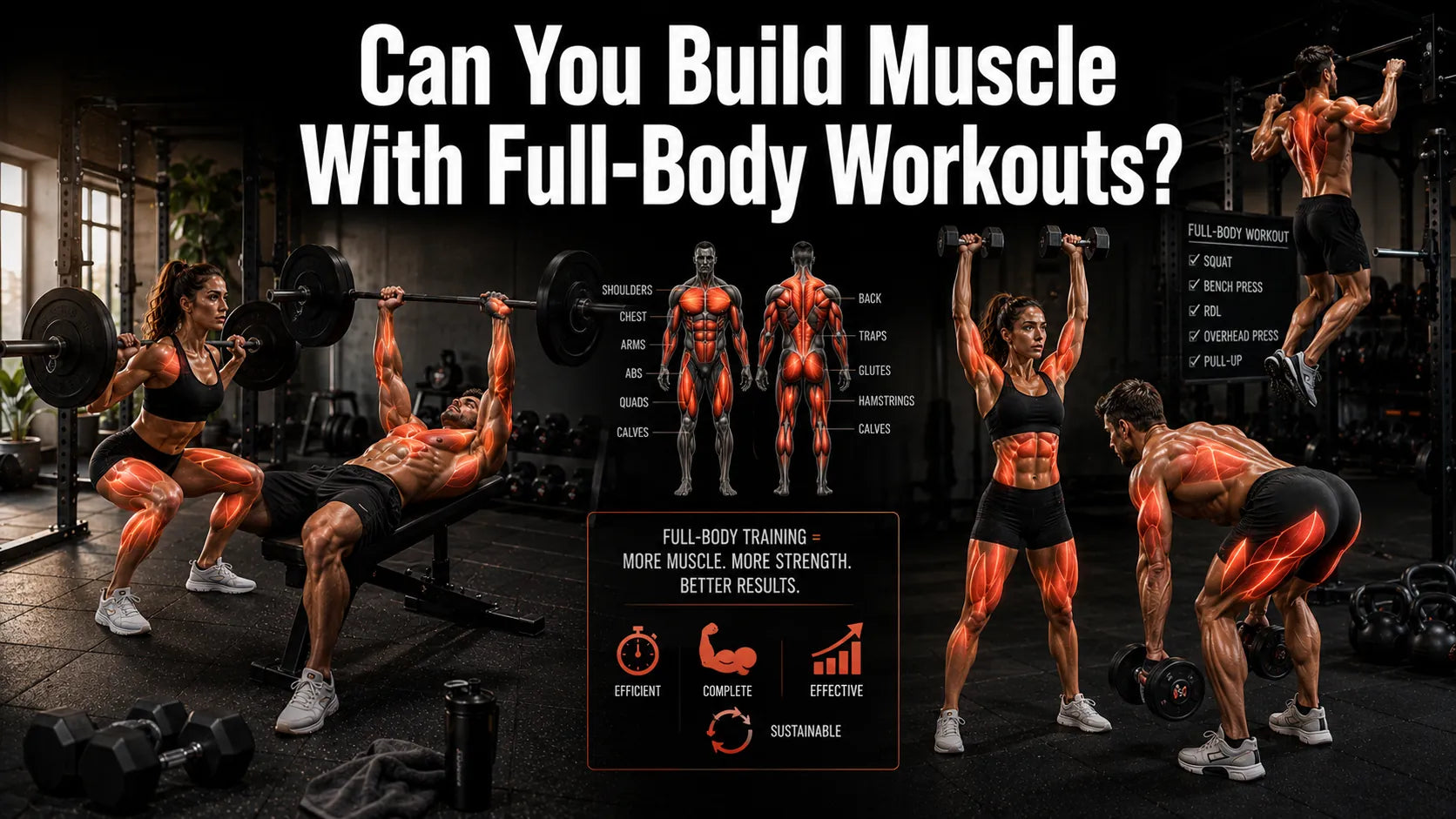
For years, bodybuilding magazines promoted the idea that every muscle needed its own dedicated day.
Monday was chest.
Tuesday was back.
Wednesday was legs.
That approach still works well for many people.
But it's far from the only way to build muscle.
In fact, many lifters have built outstanding physiques using nothing but full-body workouts.
Whether you're training three days a week or following a structured full-body programme, muscle growth comes down to the same principles.
Your muscles need:
- progressive overload
- sufficient training volume
- quality recovery
- adequate nutrition
- consistency
How you organise those principles matters far less than most people think.
Let's look at why full-body training has become increasingly popular for both beginners and experienced lifters.
1. Do Full-Body Workouts Build Muscle?
Absolutely.
Every time you challenge a muscle, you create the opportunity for it to adapt and grow.
Full-body workouts simply train more muscle groups during each session.
A well-designed workout might include:
- squat
- bench press
- row
- overhead press
- Romanian deadlift
- pull-up
Together, these movements stimulate almost every major muscle group.
Rather than waiting an entire week to train your chest or legs again, you'll usually stimulate them multiple times throughout the week.
For many people, this increased training frequency can support excellent muscle-building results.
Your muscles don't count training days.
They respond to quality stimulation followed by recovery.

2. Are Full-Body Workouts Better Than Splits?
Neither approach is automatically superior.
Each has advantages.
Full-body training often works well because it allows you to practise the major lifts more frequently.
That means more opportunities to improve:
- technique
- strength
- coordination
- confidence
Split routines, on the other hand, usually allow greater training volume for individual muscle groups within a single workout.
For someone training six days each week, a split may make more sense.
For someone training three or four days each week, full-body sessions are often extremely efficient.
The best programme is usually the one you can perform consistently for months—not just a few weeks.
3. How Often Should You Train?
Recovery determines how often you should train.
Most people make excellent progress with:
- two
- three
- or four
full-body workouts each week.
Training every day isn't necessary for muscle growth.
In fact, constantly training without allowing recovery often slows progress.
Every workout creates fatigue.
Recovery is where adaptation happens.
Rather than asking, "How often can I train?"
A better question is:
"How often can I recover well enough to perform at my best?"
Quality sessions always beat excessive ones.
4. Which Exercises Should You Prioritise?
The best full-body workouts revolve around compound exercises.
These movements train multiple muscles simultaneously while allowing progressive overload.
Some of the best choices include:
- squats
- Romanian deadlifts
- bench press
- overhead press
- pull-ups
- bent-over rows
- lunges
Mastering these exercises provides far more benefit than constantly searching for unusual variations.
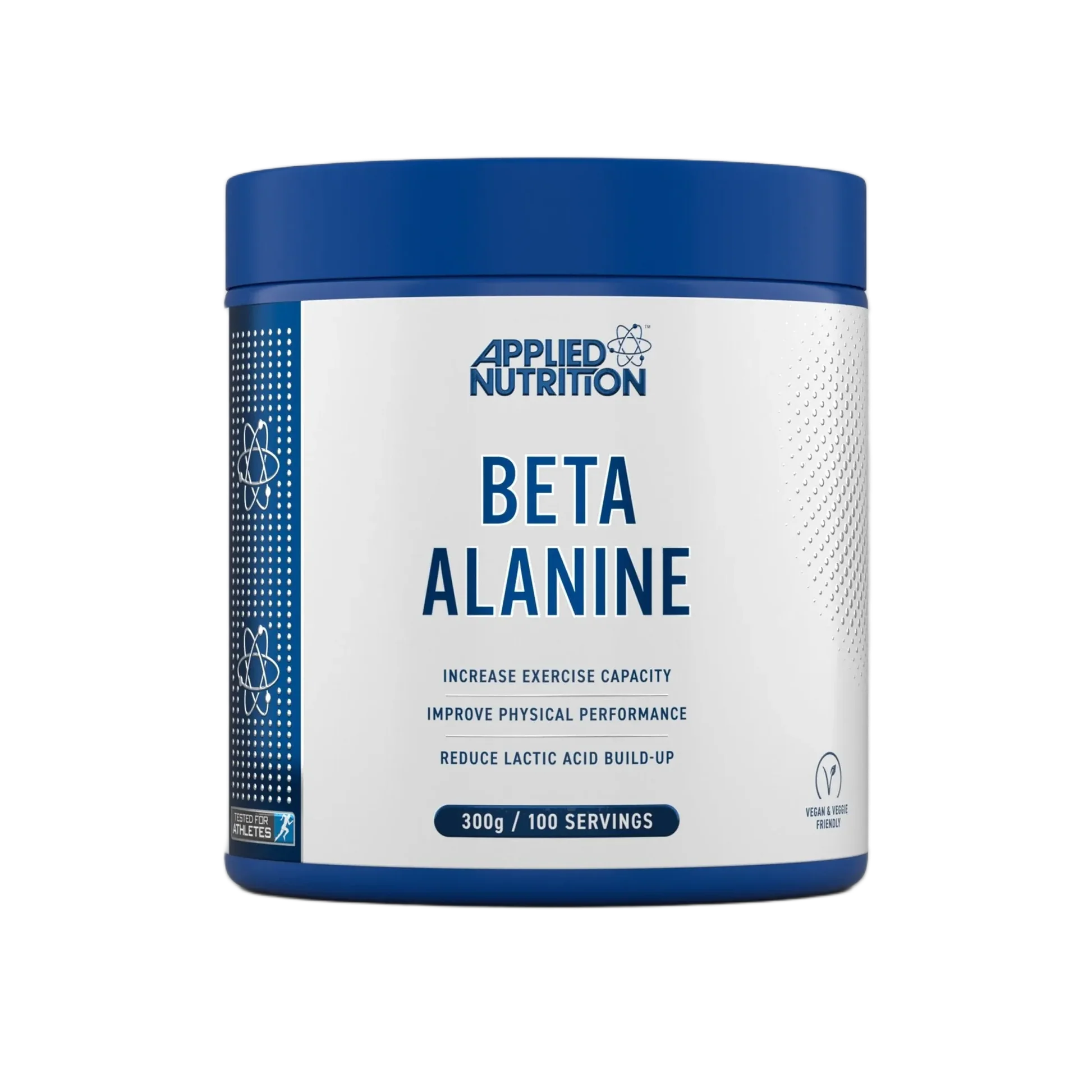
Applied Nutrition Beta-Alanine 300g can naturally support demanding training sessions built around these compound lifts, helping you maintain quality and intensity as your workouts become progressively more challenging.
Strong programmes aren't built around fancy exercises.
They're built around doing the fundamentals exceptionally well.

5. Can Beginners Grow Faster This Way?
In many cases, yes.
Beginners often respond exceptionally well to full-body training.
Because they're practising the major lifts multiple times each week, they improve both:
- strength
- movement quality
very quickly.
This increased practice often leads to faster technical improvements, allowing heavier weights to be used safely over time.
Nutrition also plays a major role during this stage.
Applied Nutrition Critical Mass Original 6kg can naturally support beginners or hard gainers who struggle to consume enough calories and carbohydrates to support muscle growth alongside consistent training.
Good programming accelerates progress.
Good nutrition helps sustain it.
Intermission
So far we've explored why full-body workouts are highly effective for building muscle, compared them with split routines, looked at ideal training frequency, identified the compound exercises that deliver the best results, and explained why beginners often thrive on full-body programmes.
In Part 2, we'll cover why recovery is so important, which supplements naturally support muscle growth, the mistakes that slow progress, how long muscle growth typically takes, and how to structure an effective full-body workout routine.
Part 2
6. How Important Is Recovery?
Recovery is where muscle growth actually happens.
Training provides the stimulus.
Recovery allows your body to adapt.
Without enough recovery, fatigue begins to accumulate faster than progress.
That often leads to:
- declining strength
- sore muscles
- reduced motivation
- poorer performance
- slower muscle growth
The advantage of full-body training is that each muscle receives regular stimulation without being completely exhausted in a single workout.
However, that only works if you're recovering properly between sessions.
Recovery should always include:
- adequate calories
- enough protein
- quality sleep
- hydration
- planned rest days
USN Muscle Fuel Anabolic 4kg can naturally support recovery for people with higher calorie and protein requirements, helping meet nutritional targets after demanding full-body workouts.


Better recovery almost always leads to better training.

7. Which Supplements Support Muscle Growth?
No supplement builds muscle on its own.
Consistent training and good nutrition remain the foundations.
Once those are in place, certain supplements can help support long-term progress.
Naughty Boy Prime Creatine 450g can naturally support strength and repeated high-intensity performance, making it easier to continue applying progressive overload over weeks and months.
As your lifts gradually improve, your muscles receive a greater training stimulus.
That's what drives long-term growth.
Supplements don't replace effort.
They simply support it.
8. What Mistakes Slow Progress?
Many people assume their programme is the problem.
In reality, it's often their habits.
Common mistakes include:
- skipping workouts
- changing programmes too frequently
- avoiding progressive overload
- eating too little
- poor exercise technique
- not recovering properly
Another common mistake is expecting dramatic changes within a few weeks.
Muscle growth takes time.
The people who build impressive physiques usually stick with simple programmes for months, steadily improving rather than constantly starting over.
Consistency almost always beats perfection.
9. How Long Until You See Results?
Everyone progresses at a different rate.
Factors such as:
- genetics
- nutrition
- sleep
- training quality
- recovery
- consistency
all influence how quickly muscle develops.
Most beginners notice:
- increased strength within the first few weeks
- improved technique shortly afterwards
- visible muscle development over the following months
The key is measuring progress over months rather than days.
Building muscle is a long-term investment.
Those who stay patient almost always outperform those searching for shortcuts.

10. What's the Best Full-Body Routine?
A simple programme often produces the best results.
An effective full-body workout could include:
- Barbell Squat
- Bench Press
- Romanian Deadlift
- Pull-Up
- Overhead Press
- Bent-Over Row
- Walking Lunges
- Plank
Train two to four times each week.
Aim to gradually improve:
- weight lifted
- repetitions
- technique
- training quality
Optimum Nutrition Opti-Men can naturally complement a balanced diet by helping support your daily micronutrient intake, reinforcing the importance of overall nutrition alongside structured training and recovery.


You don't need dozens of exercises.
You need a programme you can consistently improve.
Conclusion
Full-body workouts are one of the most effective ways to build muscle.
They allow you to train the major movement patterns regularly, practise important lifts more often and apply progressive overload consistently.
Whether you're a beginner or an experienced lifter, success still comes down to the same fundamentals:
- train hard
- recover well
- eat enough
- progressively overload your muscles
- stay consistent
You don't need a complicated split routine to build an impressive physique.
A well-designed full-body programme can deliver outstanding results for years.
FAQ
1. Can full-body workouts build as much muscle as split routines?
Yes. When training volume, effort and recovery are matched, full-body workouts can be just as effective for muscle growth.
2. How many full-body workouts should I do each week?
Most people make excellent progress with two to four sessions per week, depending on experience and recovery.
3. Are full-body workouts good for beginners?
Absolutely. They allow beginners to practise the main lifts frequently and develop strength and technique quickly.
4. Which exercises should every full-body workout include?
Compound movements such as squats, presses, rows, pull-ups and Romanian deadlifts should form the foundation of most programmes.
5. Can advanced lifters use full-body workouts?
Yes. Many experienced lifters continue using full-body training successfully by adjusting training volume and intensity.
6. Which supplements support muscle growth?
Protein, creatine and sensible nutritional support can complement a structured training programme and balanced diet.
7. How long does it take to build muscle with full-body workouts?
Most people notice strength improvements within a few weeks, while visible muscle growth generally develops over several months of consistent training.
8. Are rest days important with full-body training?
Yes. Recovery is essential for repairing muscle tissue and allowing your body to adapt between workouts.


