


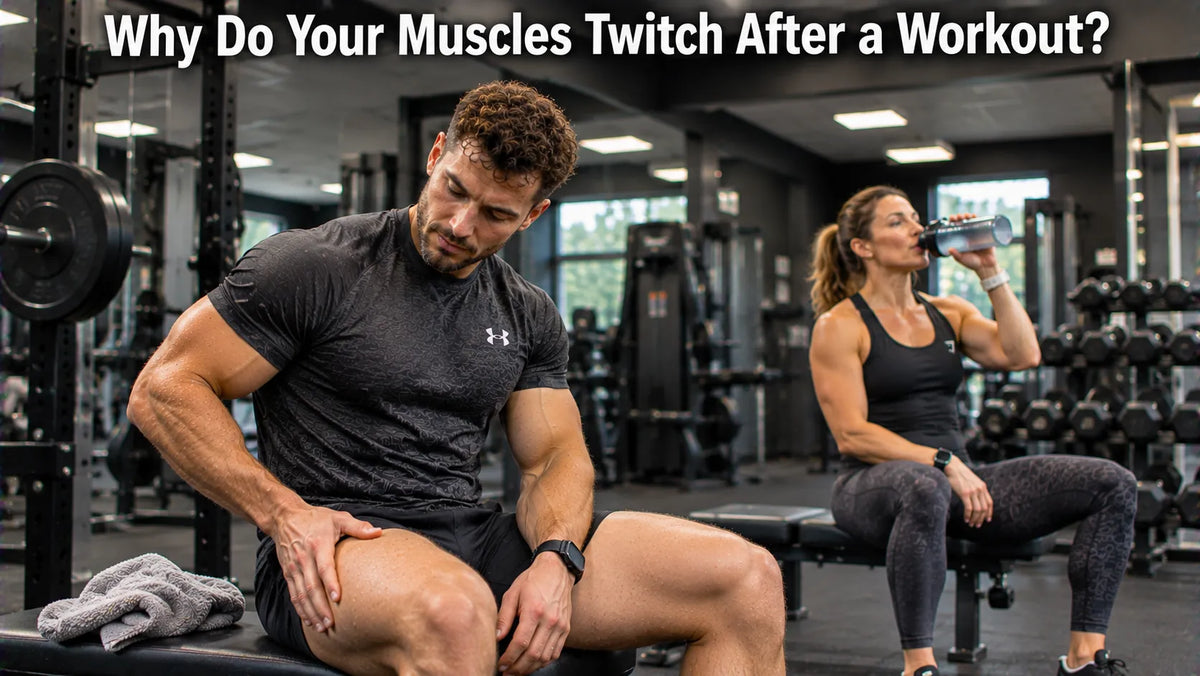
You've finished your workout, put the weights away and finally sat down. Then something strange happens. A small section of your thigh begins fluttering beneath the skin. Your calf gives an occasional jump. Perhaps your triceps starts twitching while you're watching television.
It's an odd sensation, particularly when the muscle seems to be moving without your permission. And if you've just pushed yourself through a demanding gym session, it's natural to wonder whether you've overdone it.
Muscle twitching after a workout is often harmless. Exercise-related fatigue, caffeine, stress and poor sleep are among the factors that can make involuntary muscle movements more noticeable. But twitching isn't always caused by exercise, and it shouldn't automatically be blamed on dehydration or a magnesium deficiency.
Most brief, isolated twitches settle without treatment. Persistent symptoms, particularly when accompanied by genuine muscle weakness or wasting, deserve a different level of attention.
So why do your muscles twitch after exercise, what's happening inside the nervous system, and how can you tell the difference between an ordinary post-gym annoyance and something worth discussing with your GP?
1. Why Do Your Muscles Twitch After a Workout?
Muscles can twitch after exercise because the nerves controlling them remain electrically active, even when you're no longer deliberately contracting the muscle.
These small, involuntary contractions are commonly called fasciculations. They may appear as a ripple, flutter or tiny jump beneath the skin, often without pain.
To understand why this happens, consider how muscles normally work.
Your nervous system sends electrical signals through motor neurons, which activate groups of muscle fibres. Together, a motor neuron and the muscle fibres it controls form a motor unit.
During exercise, thousands of these motor units are recruited to produce coordinated movement. The harder the exercise, the greater the demands placed on the neuromuscular system.
Afterwards, some motor units may fire involuntarily, producing a visible twitch even though you aren't trying to move.
Several factors can contribute:
- Muscle fatigue: Particularly after unfamiliar or demanding exercise.
- Stimulants: Caffeine can increase nervous-system stimulation and make twitching more likely in susceptible individuals.
- Poor sleep: Tiredness is a recognised trigger for benign muscle twitching.
- Stress: Anxiety and increased awareness of bodily sensations can make twitching more noticeable.
- Fluid or electrolyte disturbances: These may contribute in some circumstances, especially after substantial fluid losses, but are not the explanation for every twitch.
Muscle twitching can also occur in people who haven't exercised at all.
The NHS notes that most twitches are not caused by a serious medical condition and often disappear on their own.
Nevertheless, the pattern of symptoms matters more than the mere presence of a twitch. Occasional painless fluttering is very different from progressive weakness, loss of muscle bulk or difficulty performing ordinary movements.

2. What Is a Muscle Twitch and How Is It Different From a Cramp?
The terms muscle twitch, spasm and cramp are often used interchangeably, but they don't describe exactly the same experience.
A muscle fasciculation is a brief, involuntary contraction involving a motor unit. It may create a small movement beneath the skin without moving an entire joint.
A muscle cramp is typically a sudden, sustained and painful contraction of a muscle or muscle group. Calf cramps, for example, may make the muscle feel hard and temporarily difficult to relax.
The word spasm is broader and can describe different involuntary muscle contractions, which is why it isn't always a precise medical description.
| Feature | Muscle twitch | Muscle cramp |
|---|---|---|
| Sensation | Fluttering, flickering or a small jump | Sudden tightening or gripping sensation |
| Pain | Usually painless | Often painful |
| Visible movement | Small localised movement beneath the skin | A larger muscle may visibly tighten |
| Duration | Individual contractions are brief and may recur | Often lasts seconds to minutes |
| Typical response | Often settles without intervention | Gentle stretching may help relieve the contraction |
Another sensation worth distinguishing is the tingling caused by beta-alanine, an ingredient found in some pre-workout supplements.
Beta-alanine can produce temporary pins-and-needles or prickling sensations known as paraesthesia. That sensation is not the same as a visible muscle fasciculation.
Similarly, delayed onset muscle soreness, or DOMS, is the aching and tenderness that can develop after unfamiliar exercise. It isn't itself a form of twitching.
Identifying what you're actually experiencing is the first step towards understanding what might be causing it.
3. Can Muscle Fatigue Cause Twitching After Exercise?
Yes. Muscle fatigue and strenuous physical activity are recognised associations of benign muscle twitching.
Fatigue isn't simply a matter of running out of energy. It involves complex changes in muscle function, nerve signalling and the ability to sustain force.
During demanding exercise, the nervous system must coordinate repeated muscle contractions while the muscle fibres themselves experience substantial metabolic and mechanical demands.
Afterwards, changes in neuromuscular excitability may contribute to involuntary motor-unit activity.
That helps explain why someone might notice a calf twitch after a long run, a quadriceps twitch after repeated squats or an occasional arm twitch after an unfamiliar upper-body session.
However, a twitch is not a reliable measurement of how fatigued a muscle is.
Some people experience noticeable twitching after relatively ordinary activity, while others can complete exhausting sessions without a single visible fasciculation.
It also doesn't mean the muscle is growing, repairing itself faster or receiving a particularly effective training stimulus.
There is no good reason to use twitching as a marker of workout quality.
If twitching repeatedly follows unusually demanding sessions, consider whether your training has increased too quickly.
Sudden changes in training volume, intensity or exercise selection can make recovery more challenging.
A sensible response may be to reduce the next session's workload, allow sufficient recovery and return to progressive training rather than repeatedly pushing through exhaustion.
4. Does Heavy Strength Training Make Muscle Twitching More Likely?
Heavy strength training can be associated with post-workout twitching, particularly when the session is unusually demanding or involves substantial muscular fatigue.
Consider the difference between performing a few comfortable repetitions and completing multiple challenging sets close to muscular failure.
The latter places greater demands on muscle recruitment and the nervous system.
That doesn't mean lifting heavy weights directly causes a medical problem, nor does it mean every twitch following strength training is caused by the workout.
But training circumstances can make benign twitching more noticeable.
Examples include:
- Sudden increases in volume: Adding several sets or exercises without allowing time to adapt.
- Training close to failure: Repeatedly performing demanding sets with very little reserve.
- Unfamiliar exercises: Challenging muscles in ways they aren't accustomed to.
- Insufficient recovery: Combining hard sessions with inadequate sleep or repeated fatigue.
- High stimulant intake: Using caffeine to push through sessions despite feeling exhausted.
It is tempting to label every post-workout symptom as overtraining, but true overtraining syndrome is a more complex condition involving sustained performance decline and other symptoms.
One difficult leg session followed by calf twitching does not establish overtraining syndrome.
Instead, look for broader patterns. Are your lifts declining? Are you struggling to recover? Has sleep deteriorated? Are you feeling persistently fatigued?
If so, your programme may need adjustment regardless of whether the twitching itself is serious.
Progressive overload should increase your capacity over time, not leave you permanently exhausted.

5. Can Dehydration or Electrolyte Imbalances Contribute to Muscle Twitching?
Fluid and electrolyte balance are essential for normal nerve and muscle function.
Minerals including sodium, potassium, calcium and magnesium contribute to electrical signalling, muscle contraction and other physiological processes.
Significant disturbances in these electrolytes can affect neuromuscular function and may produce symptoms including cramps, weakness or involuntary muscle activity.
However, there is an important distinction between a genuine electrolyte imbalance and the assumption that every post-workout twitch is caused by one.
Most isolated muscle twitches do not prove that you're dehydrated or deficient in magnesium.
During exercise, you lose water and electrolytes through sweat. The amount depends on factors including temperature, humidity, clothing, exercise duration and individual sweating rate.
Someone completing a short workout in a cool gym may have very different replacement needs from someone running for two hours in hot conditions.
For most ordinary gym sessions, drinking water and eating regular meals will usually be sufficient.
Longer sessions, repeated workouts or substantial sweating may justify more deliberate attention to fluid and sodium replacement.
For example, Applied Nutrition Hydration+ contains sodium, potassium, calcium and magnesium, making it relevant to situations where someone wants an electrolyte-containing drink as part of their hydration routine.


That does not mean it treats muscle fasciculations, and its mineral content should not be taken as evidence that an unexplained twitch is caused by an electrolyte deficiency.
People with kidney disease, prescribed fluid restrictions or medicines that affect electrolyte balance should seek professional advice before routinely using electrolyte supplements.
HYDRATION: WHAT ACTUALLY MATTERS?
- Ordinary gym session: Water and normal meals are generally adequate.
- Long or very sweaty session: Consider fluid losses and whether additional sodium is appropriate.
- Persistent twitching: Don't assume dehydration without other evidence.
- Severe symptoms: Significant weakness, confusion, fainting or other concerning symptoms require medical assessment rather than self-treatment with supplements.
Hydration matters for health and performance, but it is only one possible piece of the twitching puzzle.
6. Does Caffeine or Pre-Workout Increase Muscle Twitching?
Yes. Caffeine is a recognised trigger for muscle twitching in some people.
Caffeine stimulates the central nervous system, increasing alertness and reducing perceived tiredness.
That can be useful before exercise, but higher intakes may also cause jitteriness, anxiety, disturbed sleep and other unwanted effects.
For someone who is sensitive to caffeine, those effects may accompany or aggravate muscle twitching.
The total amount consumed matters more than whether the caffeine comes from coffee, an energy drink or a supplement.
For example, ABE All Black Everything Ultimate Pre-Workout contains 200mg of caffeine per serving.
That is a substantial amount from one product, particularly if someone also drinks several coffees or energy drinks throughout the day.
Individual tolerance varies, and some people experience unpleasant stimulant effects at much lower intakes than others.
Although commonly cited caffeine limits for healthy adults provide general context, they are not a guarantee that a particular dose will be comfortable or appropriate for every person.
It is also worth distinguishing caffeine-related twitching from other pre-workout sensations.
Beta-alanine can cause temporary tingling or prickling, which may feel unusual but is different from an involuntary muscle contraction.
If twitching becomes more noticeable after introducing a caffeinated pre-workout, a useful first step is to review the timing and total amount of caffeine consumed.
Reducing or avoiding caffeine may help, especially if it is also affecting sleep.
More stimulation doesn't automatically mean a better workout, and a pre-workout should never be used to disguise chronic exhaustion.

7. Can Poor Sleep and Stress Make Muscle Twitching Worse?
Sleep deprivation and stress are among the common factors associated with benign muscle twitching.
That connection makes sense when you consider how closely muscle activity is linked to the nervous system.
Sleep supports physical recovery and normal neurological function. Stress can influence arousal, muscle tension and how strongly we notice sensations occurring in the body.
Someone who is sleeping poorly, working long hours and training intensely may notice more twitching than usual.
And once a twitch becomes noticeable, it's easy to begin monitoring it.
You feel a flutter in your calf, look down, wait for it to happen again and start wondering what it means.
That attention can make the sensation feel more prominent, even when the underlying twitch is harmless.
However, stress should not be used as an automatic explanation for persistent or progressive neurological symptoms.
A useful recovery routine might include:
- Keeping reasonably consistent sleeping and waking times.
- Allowing enough time for sleep, generally seven to nine hours for most adults.
- Reducing caffeine later in the day.
- Scheduling lighter training when unusually fatigued.
- Including enjoyable, low-pressure activities such as walking.
- Taking breaks from repeatedly checking or filming harmless-looking twitches.
Sleep and stress management are worthwhile even if they do not eliminate every twitch.
If twitching persists despite better rest, or if other symptoms develop, arrange a medical review rather than continuing to attribute everything to anxiety.
8. How Long Does Post-Workout Muscle Twitching Normally Last?
There is no single duration that defines normal post-workout twitching.
An individual fasciculation is brief, but repeated twitches can come and go over minutes, hours or longer.
Some people notice occasional fluttering shortly after training. Others experience intermittent twitches while resting later that evening or over the following days.
The duration alone cannot identify the cause.
Benign twitching may recur intermittently, sometimes for extended periods, but persistent symptoms still deserve appropriate assessment.
The NHS advises seeing a GP if a twitch lasts for more than two weeks.
It also recommends assessment when twitching affects more than one place or when the affected area feels weak or stiff.
That doesn't mean a twitch continuing for two weeks is necessarily dangerous. It means the symptom should no longer be dismissed without review.
Pay attention to the broader picture:
- Does the twitching settle after rest or a lighter training period?
- Is it consistently linked to caffeine or poor sleep?
- Is it isolated or occurring in several muscle groups?
- Is there genuine loss of strength rather than ordinary post-workout tiredness?
- Are there changes in muscle size, coordination or everyday function?
These observations may help a healthcare professional assess the situation, but they are not a substitute for examination.
A brief painless twitch is usually less concerning than twitching accompanied by progressive weakness or loss of muscle function.
9. What Can You Do to Reduce Muscle Twitching After Exercise?
When twitching appears after a demanding workout and there are no concerning accompanying symptoms, simple changes to your recovery routine may be reasonable.
The aim isn't to suppress every involuntary contraction. It's to address plausible triggers and avoid unnecessary strain.
Start by reviewing your recent training.
Have you suddenly increased the number of sets? Returned to the gym after a long break? Started training to failure more frequently?
If so, reducing intensity or volume temporarily may be more useful than adding another supplement.
Next, consider your sleep, hydration and stimulant intake.
For people who regularly use caffeinated pre-workout, switching to a caffeine-free training routine may be one way to assess whether stimulants are contributing.
ABE All Black Everything PUMP is a caffeine-free pre-workout, making it a relevant example for someone who wants to avoid caffeine while maintaining a pre-training supplement routine.


However, a caffeine-free formula is not automatically side-effect-free. This product contains beta-alanine, which can produce temporary tingling, and other ingredients may not suit everyone.
More importantly, no pre-workout supplement is necessary for recovery or proven to treat muscle twitching.
If you are investigating unexplained symptoms, temporarily avoiding pre-workout products altogether may be a simpler approach than immediately switching formulas.
| Possible contributor | Practical adjustment | Important limitation |
|---|---|---|
| Training fatigue | Reduce unusually high volume or intensity temporarily | Doesn't establish that exercise caused the twitch |
| Caffeine | Reduce total intake or avoid stimulant supplements | Not every twitch is caffeine-related |
| Insufficient sleep | Prioritise regular, adequate sleep | Persistent symptoms still need review |
| Fluid losses | Replace fluids appropriately after sweating | Avoid assuming an electrolyte deficiency |
| Stress | Use relaxation, breaks and manageable activity | Don't dismiss progressive symptoms as stress |
Gentle movement or stretching may feel comfortable, particularly if muscles are stiff, but stretching is not an established cure for fasciculations.
If twitching is painless and your strength and coordination are normal, you may be able to continue exercising while reducing unusually demanding sessions.
However, avoid pushing through new weakness, severe pain or unexplained loss of function.
The most useful approach is usually to adjust obvious triggers, monitor the pattern and seek medical advice when symptoms persist or change.

10. When Should Muscle Twitching Be Checked by a Healthcare Professional?
Most muscle twitches are harmless, but some symptoms require assessment because they can indicate a neurological, metabolic or other medical problem.
According to NHS guidance, you should arrange a GP appointment if:
- Twitching lasts for more than two weeks.
- It occurs in more than one area of the body.
- The affected area feels weak or stiff.
Medical review is also important if twitching is accompanied by progressive loss of strength, visible muscle wasting, persistent sensory changes or difficulty with coordination.
There is an important difference between feeling tired after exercise and experiencing genuine muscle weakness.
For example, struggling to complete another set of squats immediately after a hard leg session is ordinary exercise fatigue.
Increasing difficulty lifting your foot while walking, repeatedly dropping objects or noticing a persistent decline in everyday strength is different and warrants assessment.
Some medicines and medical conditions can also contribute to twitching. A clinician may review symptoms, medication, neurological function and whether blood tests or further investigations are appropriate.
WHEN TO SEEK HELP
Usually less concerning: An occasional painless twitch after exercise, with normal strength and no other symptoms, which settles.
Arrange a GP appointment: Twitching lasting longer than two weeks, affecting multiple areas or accompanied by weakness, stiffness, muscle wasting or other persistent changes.
Seek urgent medical assessment: New or rapidly worsening weakness, significant difficulty walking, or severe symptoms following strenuous exercise such as marked muscle pain and dark urine.
Call 999 for emergencies: Sudden one-sided weakness, facial drooping, speech problems, severe breathing difficulty or other signs of a medical emergency.
Very occasionally, muscle twitching can occur alongside serious neurological conditions, but twitching by itself is not a reliable sign of any particular diagnosis.
Repeatedly searching for the most serious possible explanation can be distressing and is rarely a useful substitute for clinical assessment.
Equally, persistent symptoms should not be dismissed simply because someone regularly attends the gym.
The sensible approach is neither panic nor denial: recognise common triggers, pay attention to meaningful changes and seek professional advice when appropriate.
Conclusion
Why do your muscles twitch after a workout? In many cases, the explanation is relatively ordinary.
Demanding exercise, muscle fatigue, caffeine, inadequate sleep and stress can all contribute to involuntary muscle activity. Fluid and electrolyte disturbances may also matter in some situations, particularly when exercise involves substantial sweating or other physiological stresses.
But not every twitch is caused by dehydration, and there is no evidence that routinely adding magnesium or electrolyte supplements will resolve all post-workout fasciculations.
Occasional painless twitching, without weakness or other concerning symptoms, is commonly harmless.
The practical priorities are to train progressively, recover properly, review stimulant intake and avoid turning every minor muscle movement into a medical emergency.
At the same time, persistent twitching, genuine weakness, muscle wasting or other neurological changes should be assessed by a healthcare professional.
A healthy training routine should leave you stronger over time — not guessing whether you need another supplement every time your calf flickers.
Frequently Asked Questions
1. Is muscle twitching after exercise normal?
Occasional painless muscle twitching after exercise is common and often harmless. Muscle fatigue, caffeine, tiredness and stress may contribute, although symptoms should be assessed if they persist or are accompanied by weakness.
2. Why do my legs twitch after the gym?
Leg twitching may be associated with recent muscular exertion, fatigue or other triggers such as caffeine and poor sleep. The location of a twitch alone cannot establish its cause.
3. Can muscle fatigue cause twitching?
Yes. Strenuous exercise and muscular fatigue can be associated with benign fasciculations, although not everyone who experiences muscle fatigue will develop visible twitching.
4. Can dehydration cause muscle twitching?
Significant fluid and electrolyte disturbances can affect neuromuscular function, but isolated twitching does not automatically indicate dehydration. Most routine workouts do not require electrolyte supplements.
5. Does caffeine make muscles twitch?
It can. Caffeine is a recognised trigger for muscle twitching in some individuals, particularly when intake is high or combined with poor sleep and stress.
6. Can pre-workout cause muscle twitching?
Caffeinated pre-workouts may contribute to twitching in susceptible people. Beta-alanine can also cause temporary tingling, but that sensation is different from a muscle fasciculation.
7. How long does muscle twitching last after exercise?
Individual twitches are brief, but they may recur intermittently. The NHS recommends seeing a GP if twitching lasts longer than two weeks.
8. Should you exercise if your muscles are twitching?
Occasional painless twitching without weakness may not prevent ordinary exercise, but reducing unusually demanding training may be sensible. Seek medical advice if symptoms persist or involve weakness or other concerning changes.
9. Can poor sleep and stress make twitching worse?
Yes. Tiredness and stress are common associations of benign muscle twitching. Improving sleep and managing stress may help reduce symptoms for some people.
10. When should you worry about muscle twitching?
Arrange medical assessment for twitching that persists beyond two weeks, affects multiple areas or occurs with weakness, stiffness or muscle wasting. Sudden neurological symptoms require urgent emergency assessment.


