


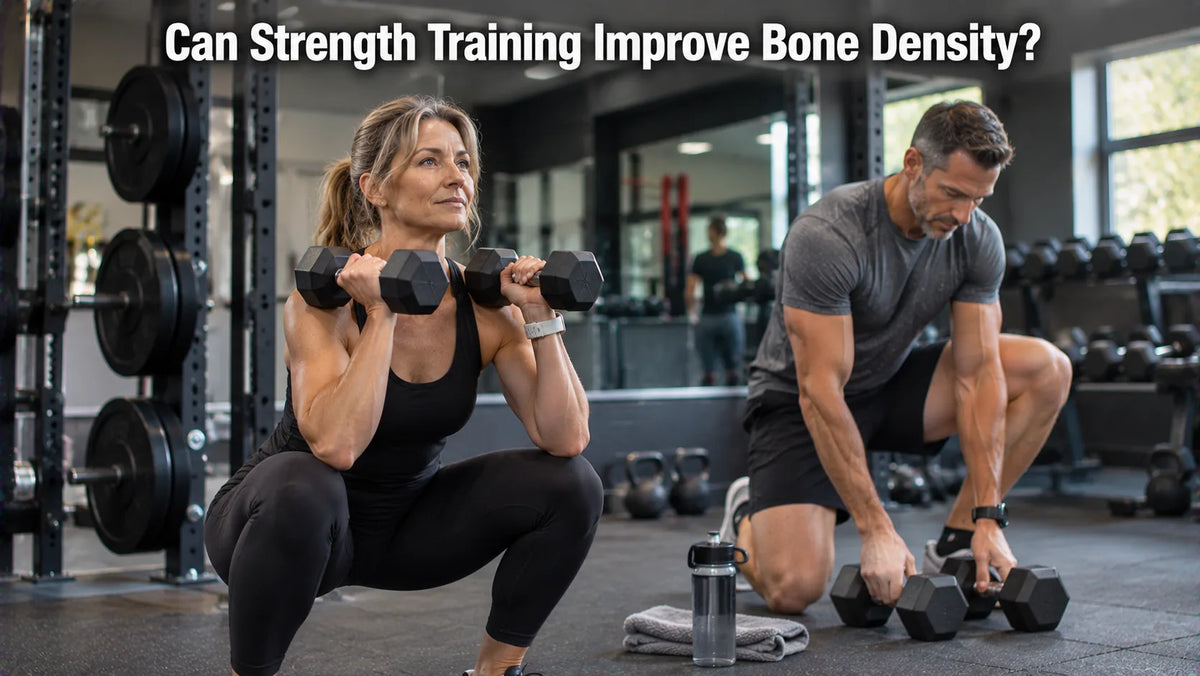
When most people walk into a gym, they're thinking about building muscle, getting stronger or improving how they look. Few are thinking about their skeleton. Yet underneath every squat, deadlift and loaded carry, something rather interesting is happening: your bones are responding to the demands placed upon them.
Strength training can help maintain and, in some circumstances, improve bone mineral density. It can also develop muscle strength, balance and physical confidence — qualities that become increasingly important as we age.
That matters because bone loss is often silent. You cannot necessarily feel your bones becoming less dense, and osteoporosis may go unnoticed until a fracture occurs.
Fortunately, bone health isn't determined by genetics and ageing alone. Exercise, nutrition, hormonal changes and lifestyle all influence skeletal health throughout adulthood.
But not every exercise challenges the skeleton in the same way, and lifting heavier weights isn't automatically safer or more effective. For people with osteoporosis or previous fragility fractures, appropriate technique and exercise selection are especially important.
So, can strength training improve bone density? Let's explore how bones adapt to resistance exercise, which movements are most useful, and how to build a sustainable routine that supports stronger bones for the long term.
1. Can Strength Training Improve Bone Density?
Yes. Resistance training can improve or help preserve bone mineral density, particularly when the exercise provides sufficient mechanical loading and is performed consistently over time.
Bones are living tissues. They constantly undergo a process of renewal, responding to factors including hormones, nutrition, ageing and physical activity.
When muscles contract against resistance, they exert forces on the bones to which they attach. Weight-bearing movements also expose the skeleton to forces generated by gravity and ground contact.
These forces can stimulate the biological processes involved in maintaining bone structure.
Research involving older adults and postmenopausal women has found that appropriately designed resistance-training programmes can produce modest improvements in bone mineral density at certain skeletal sites.
However, results are not identical across studies. Training intensity, exercise selection, programme duration and participants' starting bone health all influence outcomes.
It is also important to distinguish three different benefits:
- Improving bone mineral density: Increasing the mineral content measured at a particular skeletal site.
- Slowing bone loss: Helping preserve bone density that might otherwise decline with ageing.
- Reducing fracture risk: Supporting bone strength while also improving muscle function, balance and fall prevention.
These outcomes overlap, but they are not interchangeable.
A person can become substantially stronger without seeing a large change in their bone density scan. That strength improvement may still be valuable because it can improve mobility and reduce the likelihood of falling.
The goal isn't simply to produce a better number on a scan. It's to build a stronger, more capable body that protects the skeleton over time.

2. What Is Bone Density and Why Does It Matter?
Bone mineral density, often abbreviated to BMD, describes the amount of mineral present in a measured area of bone.
Calcium and phosphorus contribute to the mineral structure that gives bones much of their rigidity, while collagen and other components help provide flexibility and toughness.
Bone strength depends on more than mineral density alone. Bone geometry, internal architecture and material quality also matter.
Nevertheless, bone mineral density is an important clinical measure because lower BMD is associated with increased fracture risk.
A commonly used test is a DXA scan, sometimes written as DEXA, which measures bone mineral density at sites such as the hip and lumbar spine.
For postmenopausal women and men aged 50 or older, results are often interpreted using a T-score. In younger adults, clinicians generally place more emphasis on Z-scores and the broader clinical context.
| DXA T-score | Classification | What it means |
|---|---|---|
| -1.0 or above | Normal bone density | Within the conventional normal range |
| Below -1.0 and above -2.5 | Low bone mass (osteopenia) | Lower density, with fracture risk depending on other factors too |
| -2.5 or below | Osteoporosis | Meets the conventional densitometric threshold for osteoporosis |
These thresholds are not a complete assessment of fracture risk. Age, previous fractures, medication, family history and other clinical factors also influence decisions about treatment.
Tools such as FRAX may be used by healthcare professionals to estimate fracture probability.
Bone density typically increases during childhood and adolescence, reaches peak levels in early adulthood, and can gradually decline later in life.
The rate of decline varies. Menopause, prolonged inactivity, inadequate nutrition, certain medications and medical conditions can accelerate bone loss.
Because osteoporosis frequently develops without obvious symptoms, people with significant risk factors should discuss assessment with a healthcare professional rather than relying on how strong or fit they feel.
3. How Does Resistance Training Stimulate Bone Adaptation?
To understand how weight training supports bone health, it helps to recognise that the skeleton is not a static framework.
Bone tissue is continuously maintained through a process known as bone remodelling.
Specialised cells called osteoclasts break down older bone tissue, while osteoblasts contribute to the formation of new bone.
Another type of bone cell, the osteocyte, helps detect mechanical loading and coordinates responses to the forces experienced by the skeleton.
When you perform resistance exercise, muscle contractions and external loads create mechanical strain within bones.
That strain can stimulate signalling pathways involved in bone adaptation.
For example, a squat exposes the hips and lower limbs to forces associated with body weight, muscle contraction and any additional resistance.
A loaded carry challenges the skeleton through the combined demands of supporting external weight, maintaining posture and moving under load.
However, bone adaptation is site-specific. An exercise that challenges the legs does not necessarily produce equivalent benefits in the wrist or spine.
Bone also responds to the characteristics of loading, including magnitude, rate, direction and novelty.
Repeating the same easy exercise indefinitely may provide less stimulus than a progressively challenging programme.
But progressive overload does not mean adding weight as quickly as possible.
Muscles may become stronger faster than bone tissue adapts, and excessive loading or poor technique can increase injury risk.
Bone changes are generally measured over months rather than days. Consistency, recovery and gradual progression matter far more than a single demanding workout.
4. Is Lifting Weights Better for Bone Health Than Walking or Swimming?
Different forms of exercise contribute to bone health in different ways.
Resistance training creates substantial muscular forces and can directly load important skeletal sites, making it particularly useful for maintaining strength and supporting bone density.
Walking is weight-bearing because the skeleton supports body weight against gravity. It also improves mobility, cardiovascular fitness and general physical activity.
However, ordinary walking may not provide a sufficiently challenging stimulus to produce substantial increases in bone density at every skeletal site, especially in people already accustomed to walking.
Swimming offers excellent cardiovascular and muscular benefits, but buoyancy reduces the weight-bearing forces acting through the skeleton.
That makes swimming less effective as a stand-alone bone-loading activity, although it can remain valuable for fitness, joint comfort and overall health.
Higher-impact activities can provide additional bone-loading stimuli for suitable individuals, but they are not appropriate for everyone.
| Exercise | Main bone-related contribution | Consideration |
|---|---|---|
| Progressive resistance training | Muscle-generated forces and targeted skeletal loading | Requires appropriate technique and progression |
| Walking | Weight-bearing activity, mobility and general health | May provide limited stimulus for increasing BMD alone |
| Swimming | Muscle conditioning and cardiovascular fitness | Relatively low skeletal impact loading |
| Impact exercise | Ground-reaction forces can stimulate bone adaptation | Impact level must suit fracture risk and physical ability |
Rather than declaring one exercise universally superior, a sensible bone-health programme combines activities with complementary benefits.
For many adults, that means resistance training alongside regular weight-bearing movement and balance work.
For people with osteoporosis or previous fractures, the choice and intensity of these activities should be individualised.

5. Which Strength Training Exercises Are Most Effective for Bone Health?
The most useful exercises are those that challenge relevant muscle groups and skeletal regions while remaining appropriate for the person's strength, mobility and fracture risk.
Multi-joint resistance exercises can be particularly practical because they recruit substantial amounts of muscle and load several regions of the body.
Examples include:
- Squats and sit-to-stands: Challenge the hips, thighs and lower body. Beginners may start with a chair or supported variation.
- Step-ups: Strengthen the legs and challenge balance during a functional movement.
- Hip hinges and deadlift variations: Develop the hips and posterior chain when performed with suitable technique and loading.
- Rows: Strengthen upper-back muscles and support postural control.
- Chest presses: Train upper-body pushing strength.
- Loaded carries: Challenge grip, trunk control and whole-body strength where appropriate.
- Back-extension and postural exercises: Support spinal extensor strength and upright posture.
Not every exercise will produce the same bone-density response, and there is no single movement that guarantees stronger bones.
For example, squats can challenge the hip region, but that does not mean performing bodyweight squats alone will necessarily reverse osteoporosis.
The training stimulus needs to be appropriate, progressive and sustained.
IMPORTANT FOR PEOPLE WITH OSTEOPOROSIS
People with osteoporosis, particularly those with vertebral fractures or previous fragility fractures, may need to modify exercises involving loaded spinal bending, repeated end-range forward flexion, twisting or high impact.
A physiotherapist or suitably qualified exercise professional can help select safe variations. The goal is to remain active while managing fracture risk — not to avoid all resistance exercise.
For a healthy beginner without known bone disease, learning controlled movement patterns and gradually increasing resistance is a sensible starting point.
For someone with established osteoporosis, the best exercise may initially be a supported sit-to-stand, resistance-band row or supervised machine movement rather than a heavy barbell lift.
The most effective exercise is one that creates a useful stimulus without exposing the person to unnecessary risk.
6. Can Strength Training Help Prevent Age-Related Bone Loss?
Ageing affects both bone and muscle.
As people grow older, bone remodelling can become less favourable to maintaining skeletal mass, while muscle strength and physical activity may decline.
Reduced muscle strength can make everyday tasks more difficult and increase the risk of falls.
Resistance training addresses several of these problems simultaneously.
It can improve muscle strength, support physical function and provide mechanical loading that helps maintain bone health.
Studies in older adults suggest that appropriately designed resistance exercise can help slow bone loss and, in some circumstances, produce modest improvements in bone mineral density.
However, not every participant experiences a measurable increase, and exercise does not completely eliminate age-related changes.
Nutrition also matters, particularly when older adults struggle to consume sufficient protein or overall energy.
For example, Per4m Advanced Whey Protein provides a convenient source of protein that can help someone meet their daily protein requirements alongside ordinary meals and resistance training.
Protein contributes to the growth and maintenance of muscle mass. Maintaining muscle strength can support mobility and functional independence, both of which are relevant to healthy ageing.
However, a protein shake should not be presented as a direct treatment for low bone density.
People can obtain adequate protein from foods such as eggs, dairy products, fish, meat, beans, lentils and soy products without using supplements.
The most valuable long-term approach combines regular physical activity, adequate nutrition and attention to factors that increase fracture risk.

7. Is Resistance Training Beneficial During and After Menopause?
Menopause is a particularly important period for bone health because declining oestrogen levels can accelerate bone loss.
Oestrogen plays a role in regulating bone remodelling. As levels fall, bone breakdown can exceed bone formation, increasing the risk of osteoporosis over time.
Postmenopausal women are therefore an important population in research examining resistance exercise and bone mineral density.
Appropriately supervised strength training can help preserve muscle strength and may improve or maintain bone density at certain skeletal sites.
One notable trial, known as LIFTMOR, investigated high-intensity resistance and impact training in postmenopausal women with low bone mass.
The supervised programme produced improvements in lumbar spine bone mineral density and several physical performance measures compared with a low-intensity home exercise programme.
These findings are encouraging, but they should not be interpreted as permission for everyone with osteoporosis to begin heavy lifting or jumping independently.
The trial used carefully selected participants, qualified supervision and a structured programme.
For someone approaching or going through menopause, useful priorities include:
- Developing a consistent resistance-training routine.
- Including appropriate weight-bearing activity.
- Maintaining adequate dietary calcium, vitamin D and protein.
- Practising balance and functional strength exercises.
- Discussing osteoporosis risk factors and screening with a healthcare professional.
Menopausal hormone therapy and osteoporosis medications may also be relevant for some individuals, but those decisions require medical assessment.
Strength training is a valuable part of the picture, not a substitute for appropriate osteoporosis diagnosis or treatment.
8. How Often Should You Strength Train to Support Bone Density?
For most adults, strength training on at least two days each week is a useful foundation.
UK osteoporosis exercise guidance recommends muscle-strengthening activity on two or three days per week, with progressive resistance training used where appropriate.
Programmes often involve exercises covering the major muscle groups, with resistance increased gradually as technique and strength improve.
For people with osteoporosis, expert guidance describes working towards resistance that can be lifted for approximately eight to twelve repetitions, building up to three sets, while beginning with lighter loads to establish safe technique.
That is a progression goal, not a requirement for a beginner's first session.
| Training element | Practical starting approach |
|---|---|
| Frequency | Two or three strength-training days weekly |
| Exercise selection | Major muscle groups, including legs, hips and back |
| Resistance | Start comfortably and progress as technique improves |
| Repetitions | Often progress towards sets of 8–12 repetitions |
| Progression | Gradual increases in resistance, challenge or complexity |
Bone adaptation is slow, so improvements in measured bone density may require six to twelve months or longer to become apparent.
Changes in strength and balance may occur sooner.
It is also worth remembering that DXA measurements have a degree of variability. Small changes should be interpreted by a clinician rather than assumed to represent definite bone gain or loss.
Consistency over months and years matters more than occasional bursts of intense training.
9. Can Diet, Calcium and Vitamin D Support the Effects of Strength Training?
Resistance exercise provides mechanical stimulation, but bone maintenance also depends on adequate nutrition.
Calcium contributes to the maintenance of normal bones, while vitamin D supports normal calcium absorption and utilisation.
Protein is also important for maintaining muscle mass and supporting the broader musculoskeletal system.
In the UK, adults generally need around 700mg of calcium daily, although some people with osteoporosis or specific medical circumstances may receive different recommendations from their healthcare team.
Food sources include milk, yoghurt, cheese, calcium-fortified alternatives, calcium-set tofu and certain fish eaten with their bones.
Vitamin D can be obtained from limited dietary sources, supplements and production in the skin following sunlight exposure.
Because sunlight is insufficient for reliable vitamin D production during much of the UK autumn and winter, NHS guidance recommends that adults consider a daily supplement containing 10 micrograms of vitamin D during these months.
For people whose diets do not consistently provide sufficient micronutrients, Applied Nutrition Multi-Vitamin Complex contains calcium and vitamin D alongside other vitamins and minerals.
Its published formula lists 495mg of calcium and 25 micrograms of vitamin D3 per stated serving. However, a multivitamin should not automatically be considered necessary if dietary intake is already adequate.
Some people may need a dedicated vitamin D supplement because of low vitamin D status or individual risk factors.
For example, Applied Nutrition Vitality Vitamin D3 provides 75 micrograms (3,000 IU) of vitamin D3 per capsule.

This is a high-strength formulation, not the standard NHS 10-microgram daily recommendation.
Although 75 micrograms is below the commonly cited adult tolerable upper intake level of 100 micrograms per day, that does not mean everyone should take 75 micrograms routinely.
Excess vitamin D can lead to harmful calcium accumulation, and taking multiple supplements together may unintentionally increase total intake.
People with kidney disease, high blood calcium, certain medical conditions or relevant medication use should seek professional advice before taking higher-dose vitamin D.
BONE-HEALTH NUTRITION: THE PRACTICAL PRIORITIES
- Calcium: Aim to meet your individual requirement, preferably through food where practical.
- Vitamin D: Follow UK seasonal guidance or individual clinical advice.
- Protein: Consume sufficient amounts to support muscle maintenance and training adaptation.
- Overall diet: Avoid chronic under-eating, which can undermine musculoskeletal health.
Neither calcium nor vitamin D supplementation should be marketed as a guaranteed way to increase bone density in someone who already has adequate nutritional status.
Exercise and nutrition work together, but established osteoporosis may also require medical treatment.

10. How Can Beginners Build a Safe Strength Training Routine for Bone Health?
Starting strength training for bone health does not require a complicated programme or immediate access to heavy barbells.
For beginners, the priority is learning movements that develop strength and confidence while gradually increasing the challenge.
A sensible routine might begin with two non-consecutive strength sessions each week.
Each session can include a selection of lower-body, upper-body and postural exercises.
For example:
| Movement | Beginner-friendly option | Main purpose |
|---|---|---|
| Squat pattern | Chair sit-to-stand | Leg strength and functional movement |
| Hip movement | Supported hip hinge | Hip control and lifting technique |
| Upper-body pull | Resistance-band row | Back and shoulder strength |
| Upper-body push | Wall press-up | Pushing strength |
| Balance | Supported single-leg stance | Balance confidence and fall prevention |
Start with a manageable number of repetitions, rest between exercises and focus on smooth, controlled technique.
As movements become easier, resistance or difficulty can be increased gradually.
For people without known bone disease, this may eventually involve dumbbells, resistance machines, heavier free weights or more demanding functional exercises.
For people with osteoporosis, previous fragility fractures or significant balance problems, a physiotherapist or suitably qualified professional should help determine appropriate starting exercises and progression.
Particular care may be needed with loaded spinal flexion, forceful twisting and high-impact activities in those at increased vertebral fracture risk.
It is also important to consider the wider routine.
Walking, appropriate weight-bearing activity and balance practice complement resistance training. Adequate food intake and recovery help make the programme sustainable.
And if you are concerned about osteoporosis because of age, menopause, previous fractures, medication or family history, ask your GP whether a formal fracture-risk assessment or DXA scan is appropriate.
Building stronger bones is a long-term project. Start with movements you can perform safely, progress steadily and make strength training part of your ordinary life.
Conclusion
Can strength training improve bone density? The evidence suggests that it can, particularly when exercise is appropriately challenging, progressive and maintained over time.
Resistance training creates mechanical forces that stimulate bone adaptation, while also improving muscle strength and physical function.
Those benefits become increasingly important with age, especially during and after menopause when bone loss can accelerate.
However, bone density is only one part of fracture prevention. Balance, mobility, nutrition, fall risk and appropriate medical care also matter.
For most adults, a combination of resistance training, weight-bearing movement and sufficient calcium, vitamin D and protein provides a sensible foundation for skeletal health.
People with osteoporosis or previous fragility fractures may need tailored exercise guidance, but remaining active is generally preferable to avoiding movement altogether.
Strength training isn't just about building the muscles you can see. It's also about supporting the bones that carry you through everyday life.
Frequently Asked Questions
1. Can strength training improve bone density?
Yes. Appropriately designed resistance training can help maintain or modestly improve bone mineral density at certain skeletal sites, particularly when performed consistently over time.
2. Does lifting weights strengthen bones?
Weight training exposes bones to mechanical forces generated by muscle contractions and external resistance. These forces can stimulate processes involved in bone maintenance and adaptation.
3. What exercises are best for bone density?
Progressive resistance exercises, suitable weight-bearing activities and balance training can all contribute. The most appropriate exercises depend on fitness, bone health and fracture risk.
4. Is walking or weight lifting better for bone density?
Resistance training generally provides a more targeted and progressive bone-loading stimulus. Walking remains valuable for mobility, cardiovascular health and weight-bearing activity.
5. Can exercise reverse osteoporosis?
Exercise may improve bone density in some people and can support strength and fall prevention, but it cannot be relied upon to reverse osteoporosis. Medical assessment and treatment may also be needed.
6. How often should you lift weights for bone health?
Two or three resistance-training sessions per week is a useful general target. Exercise selection and intensity should be adjusted to individual ability and fracture risk.
7. Is strength training safe for older adults?
Yes, when appropriately designed and progressed. Older adults can benefit from improved strength, mobility and balance, although some may require supervision or modified exercises.
8. Does strength training help bone density after menopause?
It can. Research involving postmenopausal women suggests that supervised resistance-training programmes can help preserve or improve bone mineral density and physical function.
9. How long does it take to improve bone density with exercise?
Bone changes are generally slow. Measurable changes in bone mineral density may require six to twelve months or longer, and results vary between individuals.
10. Do calcium and vitamin D improve bone density?
Calcium and vitamin D are essential for normal bone maintenance. Correcting inadequate intake or deficiency is important, but supplements do not guarantee increased bone density in people who already have sufficient levels.


