


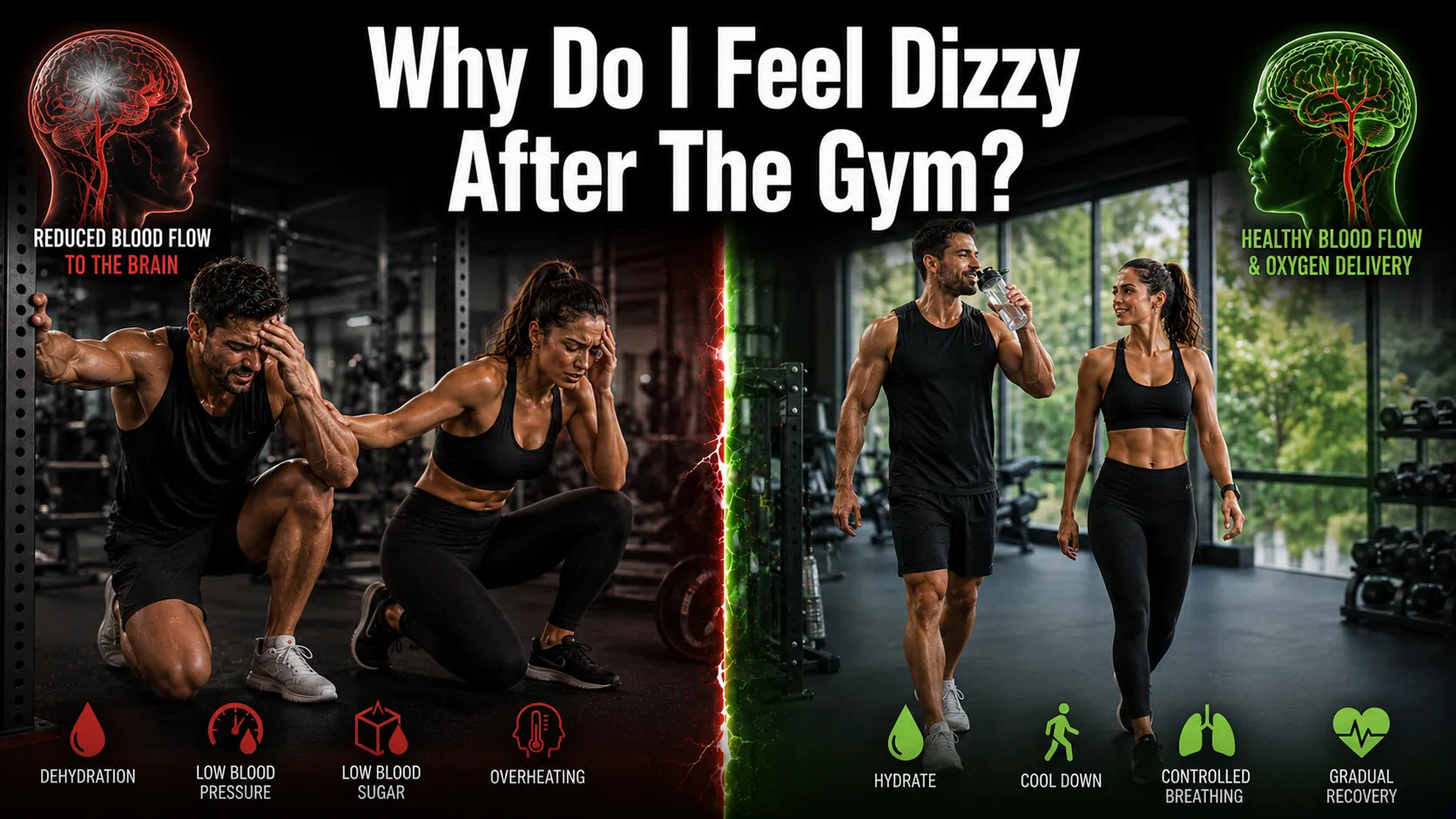
Finishing a tough workout should leave you feeling accomplished.
Your breathing gradually settles.
Your muscles feel worked.
Your heart rate slowly returns to normal.
But for some people, the end of a workout brings something completely different.
Dizziness.
Light-headedness.
Feeling faint.
Sometimes the room even seems to spin.
It can be alarming, especially if you've trained hard and thought everything was going well.
The good news is that post-workout dizziness is usually caused by something simple and temporary.
More often than not, it comes down to factors such as:
- dehydration
- low energy availability
- breathing patterns
- blood pressure changes
- recovery habits
Understanding which one is affecting you is the first step towards preventing it from happening again.
Let's start with the most common causes.
1. Is Feeling Dizzy After Exercise Normal?
Occasionally, yes.
Many people experience brief dizziness after particularly demanding workouts.
As you exercise, your heart works harder to deliver oxygen-rich blood to your muscles.
When you suddenly stop moving, your circulation needs a few moments to adjust.
If blood temporarily pools in your legs instead of returning efficiently to your heart and brain, you may briefly feel lightheaded.
Short-lived dizziness that disappears after sitting down, walking slowly or drinking some water is usually nothing to worry about.
However, if dizziness is severe, happens every workout or is accompanied by chest pain or loss of consciousness, it should never be ignored.

2. Could Dehydration Be the Cause?
One of the biggest causes of post-workout dizziness is dehydration.
Even relatively small fluid losses can reduce blood volume.
That makes it harder for your heart to circulate blood efficiently after exercise.
Signs of dehydration can include:
- dizziness
- headaches
- fatigue
- dry mouth
- muscle cramps
Heavy sweating during:
- long workouts
- hot weather
- intense strength sessions
can all increase your fluid requirements.
Optimum Nutrition Electrolyte – 264g provides electrolytes that can help support hydration after demanding training sessions where significant fluid losses occur.


Hydration isn't something to think about once you've finished training.
It starts before your workout even begins.
3. Is Low Blood Sugar Making You Dizzy?
Your body relies heavily on carbohydrates during exercise.
If you begin training without enough available energy—or you're dieting aggressively—you may simply run low on fuel.
Low blood sugar can contribute to symptoms such as:
- dizziness
- shakiness
- weakness
- poor concentration
- sudden fatigue
This is especially common during long workouts or early morning training after an overnight fast.
Applied Nutrition Critical Mass Original 6kg can naturally help increase calorie and carbohydrate intake for people who struggle to consume enough energy to support demanding training.


The goal isn't eating excessively.
It's making sure your body has enough fuel to perform well.
4. Can Pre-Workout Make You Lightheaded?
Sometimes.
Pre-workout supplements aren't designed to make you dizzy.
However, certain ingredients may affect people differently.
Large amounts of caffeine or other stimulants can occasionally contribute to:
- feeling jittery
- increased heart rate
- temporary light-headedness
This is more likely if you:
- train on an empty stomach
- consume too much caffeine elsewhere
- are sensitive to stimulants
ABE All Black Everything – Ultimate Pre-Workout is designed to support training performance, but like any pre-workout, it's important to follow the recommended serving size and assess your own tolerance rather than assuming more is always better.
More stimulant doesn't automatically mean a better workout.

5. Are You Breathing Properly During Lifts?
Breathing is something many people don't think about until something feels wrong.
During heavy lifts it's normal to brace your core.
The problem comes when people hold their breath for too long.
Doing this repeatedly can temporarily affect blood pressure and reduce blood flow to the brain.
That can leave you feeling:
- dizzy
- lightheaded
- unsteady
Learning proper breathing techniques during exercises such as squats, deadlifts and overhead presses can make a significant difference.
Generally speaking, you should brace effectively while continuing to breathe appropriately throughout each repetition.
Good breathing isn't just about lifting more weight.
It's about training more safely.
Intermission
So far we've explored why occasional dizziness after exercise is often normal, how dehydration and low blood sugar can affect performance, whether pre-workout supplements contribute to light-headedness, and why breathing technique during heavy lifts matters more than many people realise.
In Part 2, we'll look at the role of blood pressure, which supplements may support recovery, when dizziness could be a warning sign, practical ways to prevent it in future, and how to build the ideal recovery routine after training.
Part 2
6. Does Low Blood Pressure Play a Role?
Yes.
Blood pressure naturally changes during and after exercise.
When you suddenly stop moving after an intense workout, your blood vessels remain widened for a short period.
If blood pressure drops too quickly, you may notice:
- dizziness
- blurred vision
- feeling faint
- weakness
This is more likely if you:
- stop exercising abruptly
- become dehydrated
- haven't eaten enough beforehand
Instead of finishing your final set and immediately sitting down, spend a few minutes walking slowly and allowing your heart rate to return to normal.
A proper cool-down helps your body transition from exercise back to resting conditions much more comfortably.

7. Which Supplements Support Better Recovery?
Supplements won't prevent dizziness on their own.
If you're dehydrated, under-fuelled or overtraining, those issues need addressing first.
Once the basics are covered, certain supplements can complement your recovery routine.
Chaos Crew ZMA – 30 Capsules can naturally become part of an evening routine that prioritises recovery and quality sleep between training sessions.

Better recovery often leads to better performance the next day.
Reflex Nutrition Acetyl-L-Carnitine 90 Caps can also fit into a well-structured training plan by supporting mental focus and helping you stay consistent during demanding periods of training.

As always, supplements work best when they support an already solid routine built around good nutrition, hydration and recovery.
8. When Is Dizziness a Warning Sign?
Most episodes of post-workout dizziness disappear within a few minutes.
However, there are occasions when dizziness shouldn't be ignored.
Seek medical advice if dizziness is:
- severe
- becoming more frequent
- accompanied by chest pain
- associated with fainting
- linked with difficulty breathing
- accompanied by confusion or blurred vision that doesn't improve
While exercise-related dizziness is often harmless, persistent or severe symptoms deserve proper assessment.
It's always better to be cautious when symptoms don't improve quickly.
9. How Can You Prevent Post-Workout Dizziness?
Fortunately, preventing dizziness is usually straightforward.
Focus on the fundamentals.
That means:
- staying hydrated
- eating enough before training
- avoiding sudden stops after exercise
- breathing correctly during heavy lifts
- managing training volume
- getting enough sleep
Planning your recovery before your workout even starts often makes the biggest difference.
Small improvements to your routine can dramatically reduce the chances of feeling dizzy afterwards.

10. What's the Best Recovery Routine After Training?
The most effective recovery routine doesn't need to be complicated.
Start with a gradual cool-down rather than stopping suddenly.
Replace the fluids you've lost.
Eat a balanced meal containing protein and carbohydrates.
Allow your body time to recover before your next demanding session.
Optimum Nutrition Electrolyte – 264g can naturally support your post-workout hydration routine by helping replace electrolytes lost through sweating.
Good recovery isn't about one magic product.
It's about consistently looking after the fundamentals.
When you recover well, you'll usually perform better, feel stronger and dramatically reduce the chances of experiencing dizziness after training.
Conclusion
Feeling dizzy after the gym can be unsettling, but it's often caused by simple factors that are easy to address.
For many people, improving:
- hydration
- nutrition
- recovery
- breathing technique
- workout pacing
is enough to prevent future episodes.
Rather than ignoring dizziness, treat it as useful feedback from your body.
Small adjustments today can lead to safer, stronger and more enjoyable training tomorrow.
If dizziness is persistent, severe or accompanied by worrying symptoms, don't hesitate to seek medical advice.
FAQ
1. Is it normal to feel dizzy after the gym?
Yes. Brief dizziness after intense exercise is relatively common and is often linked to dehydration, changes in blood pressure or insufficient recovery.
2. Can dehydration cause dizziness after exercise?
Absolutely. Losing fluids through sweat reduces blood volume and can make you feel lightheaded after training.
3. Can low blood sugar make you dizzy during or after a workout?
Yes. Training without enough available energy can contribute to dizziness, weakness and shakiness.
4. Can pre-workout supplements make you feel lightheaded?
They can in some people, particularly if taken on an empty stomach or if you're sensitive to stimulants.
5. Should I stop exercising if I feel dizzy?
Yes. Stop exercising, sit or lie down if necessary, hydrate, and allow your symptoms to settle before deciding whether to continue.
6. How can I stop feeling dizzy after the gym?
Stay hydrated, fuel your workouts properly, cool down gradually, breathe correctly during lifts and prioritise recovery.
7. Which supplements may support post-workout recovery?
Hydration products and recovery-focused supplements can complement a balanced routine but shouldn't replace good nutrition and adequate rest.
8. When should I seek medical advice about dizziness?
If dizziness is severe, recurrent, accompanied by chest pain, fainting, breathing difficulties or doesn't improve after resting, seek medical assessment.


