


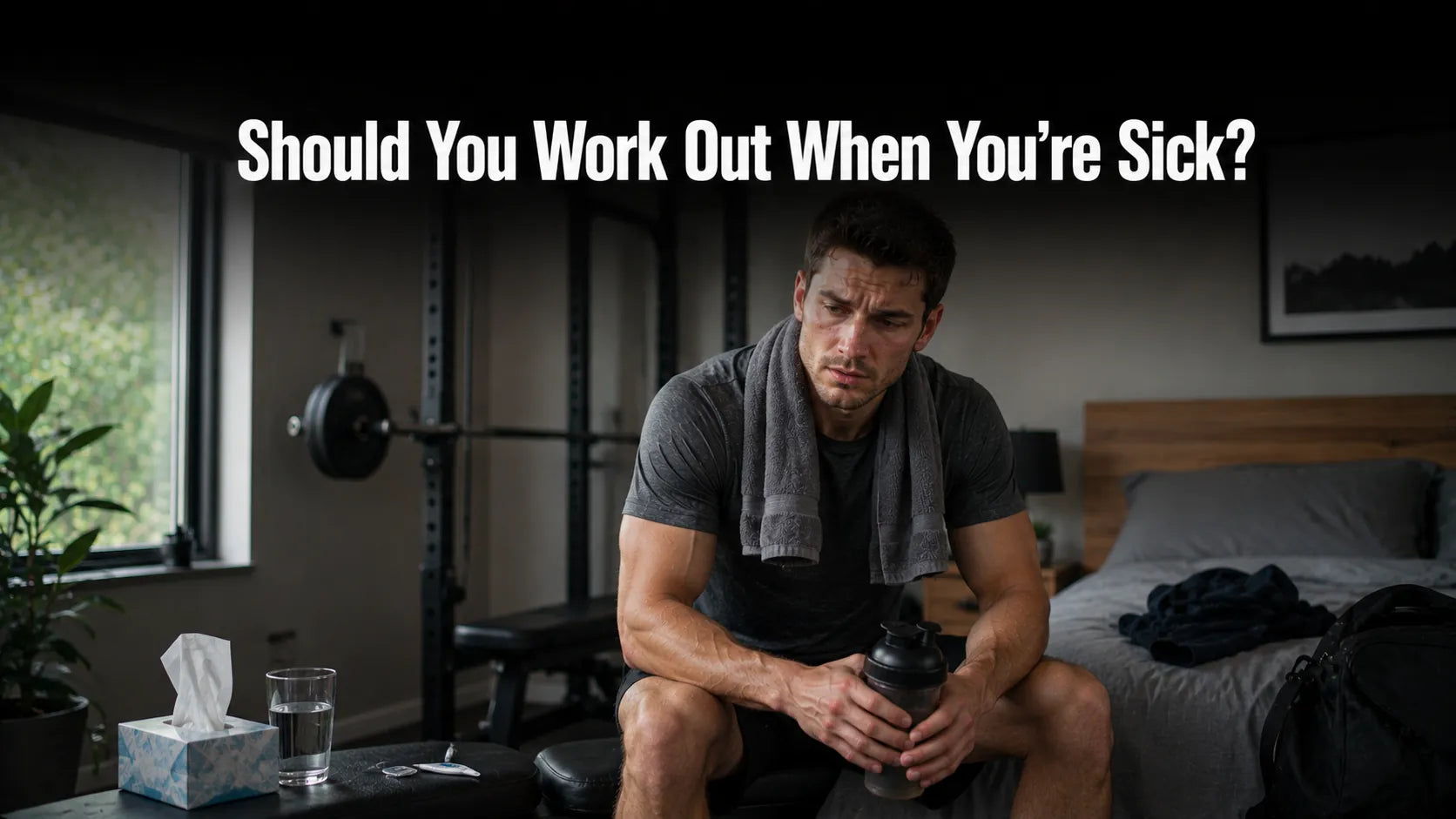
Every gym-goer eventually faces the same internal argument.
You wake up feeling rough:
- Sore throat
- Blocked nose
- Low energy
- Mild cough
- Headache
- General fatigue
…and immediately start negotiating with yourself.
“Maybe I can still train.”
“I’ll just do something light.”
“I don’t want to lose progress.”
For people who train consistently, missing workouts often feels mentally harder than physically necessary.
But illness changes the equation completely.
Because once the immune system is under pressure, training stress affects the body differently.
Sometimes light movement is completely fine.
Other times, pushing through illness can:
- Prolong recovery
- Worsen symptoms
- Increase fatigue
- Reduce performance significantly
The difficult part is knowing the difference.
1. Should you work out with a cold or flu?
A mild cold and a genuine flu are very different situations.
This is where people often make bad decisions.
A mild cold usually involves:
- Runny nose
- Mild congestion
- Slight sore throat
without major systemic symptoms.
In some cases, light exercise may still feel manageable here.
But flu-like symptoms are a completely different category.
Things like:
- Fever
- Chills
- Deep fatigue
- Body aches
- Chest congestion
usually mean the body needs recovery—not more stress.
Training hard while fighting a proper illness often makes recovery slower because the immune system is already heavily taxed.
And most people notice performance drops massively anyway.
The body simply doesn’t perform normally when sick.

2. When should you definitely skip the gym?
There are certain situations where training becomes a genuinely bad idea.
Fever is one of the clearest examples.
A raised temperature already increases physiological stress significantly.
Adding intense exercise on top can increase:
- Fatigue
- Dehydration
- Recovery demand
even further.
You should also strongly consider skipping training if you have:
- Severe fatigue
- Dizziness
- Chest symptoms
- Significant weakness
- Body aches
- Persistent coughing
Because at that point, the body is prioritising immune defence—not performance.
A hard workout won’t suddenly “sweat the illness out.”
Usually it just increases recovery demand on a system that’s already struggling.
3. Can exercise make illness worse?
Absolutely.
Especially intense exercise.
Hard training temporarily increases:
- Recovery demand
- Nervous system stress
- Systemic fatigue
Normally the body adapts well to that.
But when sick, resources are already being diverted toward immune function.
That’s why workouts often feel dramatically harder during illness.
People commonly notice:
- Reduced strength
- Poor endurance
- Faster fatigue
- Elevated heart rate
- Poor coordination
The body is effectively trying to fight illness and recover from training simultaneously.
And sometimes it simply can’t manage both efficiently.
This is also why many people feel:
“I tried to train and immediately felt worse afterwards.”
Because recovery capacity was already overloaded.
4. Will you lose muscle if you stop training for a few days?
Almost certainly not.
This fear causes more unnecessary sick workouts than almost anything else.
People panic that:
- Missing 3–5 days
- Skipping one week
- Taking recovery time
will suddenly erase muscle mass.
That’s not how muscle loss works.
Real muscle loss takes:
- More time
- More inactivity
- More severe under-eating
than most people realise.
In fact, resting properly often helps preserve long-term progress because the body can actually recover fully instead of staying trapped in prolonged fatigue.
Maintaining protein intake still matters during illness though.
For example:
- Applied Nutrition Marine Collagen can be a lighter, easier-to-consume recovery-focused protein option when appetite is lower during illness
Because the goal during illness is usually:
- Recovery
- Maintenance
- Supporting the body
not maximising gym performance temporarily.

5. Is light exercise okay when sick?
Sometimes yes.
Low-intensity movement can occasionally help people feel:
- Less sluggish
- Less stiff
- More mentally refreshed
especially during very mild illness.
But intensity matters massively.
There’s a huge difference between:
-
A light walk
and - Heavy squats to failure
The problem is that many gym-goers struggle to genuinely reduce intensity.
They say:
“I’ll just train lightly.”
Then still end up:
- Pushing hard
- Chasing performance
- Increasing fatigue unnecessarily
If exercise leaves you feeling noticeably worse afterwards, the body is usually telling you recovery should take priority.
Hydration matters heavily here too.
For example:
- Per4m Hydrate Electrolyte Mix helps support hydration and electrolyte balance during periods where illness, sweating, or reduced appetite may affect recovery quality
- BetterYou Magnesium Water – Hydrate can support fluid and magnesium intake when energy and hydration feel noticeably lower
Because illness often affects hydration far more than people realise.
Intermission
So far, we’ve covered:
- Working out with colds vs flu
- When to completely avoid training
- Whether exercise can worsen illness
- Muscle loss fears during time off
- And whether light exercise is ever okay while sick
In Part 2, we’ll break down:
- Rest and immune recovery
- Intense training and immune suppression
- Supplements that support recovery
- Returning to training safely
- And warning signs you’re pushing too hard while ill
Part 2
6. Why is rest important for recovery and muscle growth?
Because recovery is where adaptation actually happens.
A lot of people think progress only comes from:
- Training harder
- Pushing more
- Never missing sessions
But muscle growth and immune recovery both depend heavily on the body having enough resources to repair itself properly.
When sick, the immune system already demands:
- Energy
- Nutrients
- Recovery capacity
Adding heavy training on top can sometimes push fatigue even higher.
This is why illness often creates:
- Poor sleep
- Elevated fatigue
- Reduced appetite
- Lower recovery quality
Trying to “power through” that aggressively usually backfires.
Rest is not weakness.
Sometimes it’s the smartest performance decision available.
Nutrition matters during this period too.
For example:
- Applied Nutrition Multi-Vitamin Complex supports general micronutrient intake during periods where appetite and food quality may become less consistent
- Applied Nutrition Vitality Vitamin D3 fits naturally into recovery-focused routines because vitamin D plays an important role in immune system function overall
Because recovery is not just about avoiding the gym.
It’s about giving the body enough support to actually recover fully.

7. Can intense workouts weaken your immune system?
Temporarily, yes.
This doesn’t mean exercise is “bad” for immunity overall.
Consistent training is generally associated with:
- Better health
- Better resilience
- Better long-term recovery capacity
But extremely intense training creates short-term stress on the body.
Normally this is manageable.
But when combined with:
- Poor sleep
- High stress
- Illness
- Excessive fatigue
recovery can start struggling significantly.
This is one reason people often get sick after:
- Overreaching training blocks
- Extremely stressful periods
- Poor recovery phases
The immune system and recovery systems are deeply connected.
When total stress load becomes excessive, the body often becomes more vulnerable overall.
8. What supplements help support recovery when sick?
No supplement magically cures illness.
But some products can support:
- Hydration
- Nutrient intake
- Recovery quality
- General immune support
during periods where eating and recovery become more difficult.
Hydration becomes especially important because illness often increases:
- Fluid loss
- Fatigue
- Headaches
- Weakness
For example:
- Per4m Hydrate Electrolyte Mix supports hydration and electrolyte intake during illness or periods of reduced recovery quality
- BetterYou Magnesium Water – Hydrate supports fluid intake and magnesium support when fatigue and low energy become more noticeable
Micronutrient intake matters too.
Especially when appetite drops.
That’s where:
fit naturally into recovery-focused routines.
The important thing is understanding that supplements support recovery.
They do not replace proper rest.
9. How long should you wait before training again?
Usually until:
- Energy levels improve
- Symptoms calm down
- Recovery feels stable again
The mistake many people make is returning too aggressively too quickly.
They go from:
-
Completely ill
straight back into - Max-effort training
The body often isn’t ready for that yet.
This is why the first few sessions back should usually feel:
- Controlled
- Moderate
- Easier than normal
especially after:
- Fever
- Significant fatigue
- Flu-like symptoms
A gradual return almost always works better than trying to “make up for lost time.”
Because forcing intensity too early often prolongs recovery even further.

10. What are the warning signs you’re pushing too hard?
Usually the body tells you fairly clearly.
Common warning signs include:
- Dizziness
- Extreme fatigue
- Elevated heart rate
- Chest tightness
- Worsening symptoms
- Persistent weakness
- Feeling dramatically worse after training
If workouts consistently make illness feel worse, recovery should take priority.
A lot of gym-goers struggle with this psychologically.
They fear:
- Losing progress
- Falling behind
- Missing momentum
But training hard while the body is struggling often creates worse long-term outcomes anyway.
The people who maintain progress best long-term are usually the ones who understand when to:
-
Push hard
and when to - Recover properly
Because both are necessary for progress.
Conclusion
Working out while sick depends heavily on:
- The severity of symptoms
- Recovery quality
- Overall fatigue levels
Very mild illness may allow for lighter movement sometimes.
But flu symptoms, fever, chest issues, and major fatigue usually mean the body needs recovery—not harder training.
The biggest mistake many people make is assuming a few missed workouts will destroy progress.
In reality, short recovery periods rarely cause meaningful muscle loss.
But pushing aggressively through illness can absolutely prolong fatigue and delay recovery.
Sometimes the smartest training decision is simply allowing the body to recover fully before pushing hard again.
FAQ
1. Should you work out with a cold?
Sometimes light exercise is okay during mild cold symptoms.
2. Should you train with flu symptoms?
Usually no—flu symptoms often require proper rest.
3. Can exercise make illness worse?
Yes, especially intense workouts during poor recovery.
4. Will I lose muscle if I stop training for a week?
Almost certainly not.
5. Is light exercise okay while sick?
Sometimes, depending on symptom severity and intensity.
6. Can hard training weaken the immune system?
Excessive training stress can temporarily affect recovery and immunity.
7. What supplements help recovery while sick?
Hydration, electrolytes, vitamin D, and micronutrient support can help.
8. When should I return to training after illness?
Once energy, recovery, and symptoms improve consistently.


