


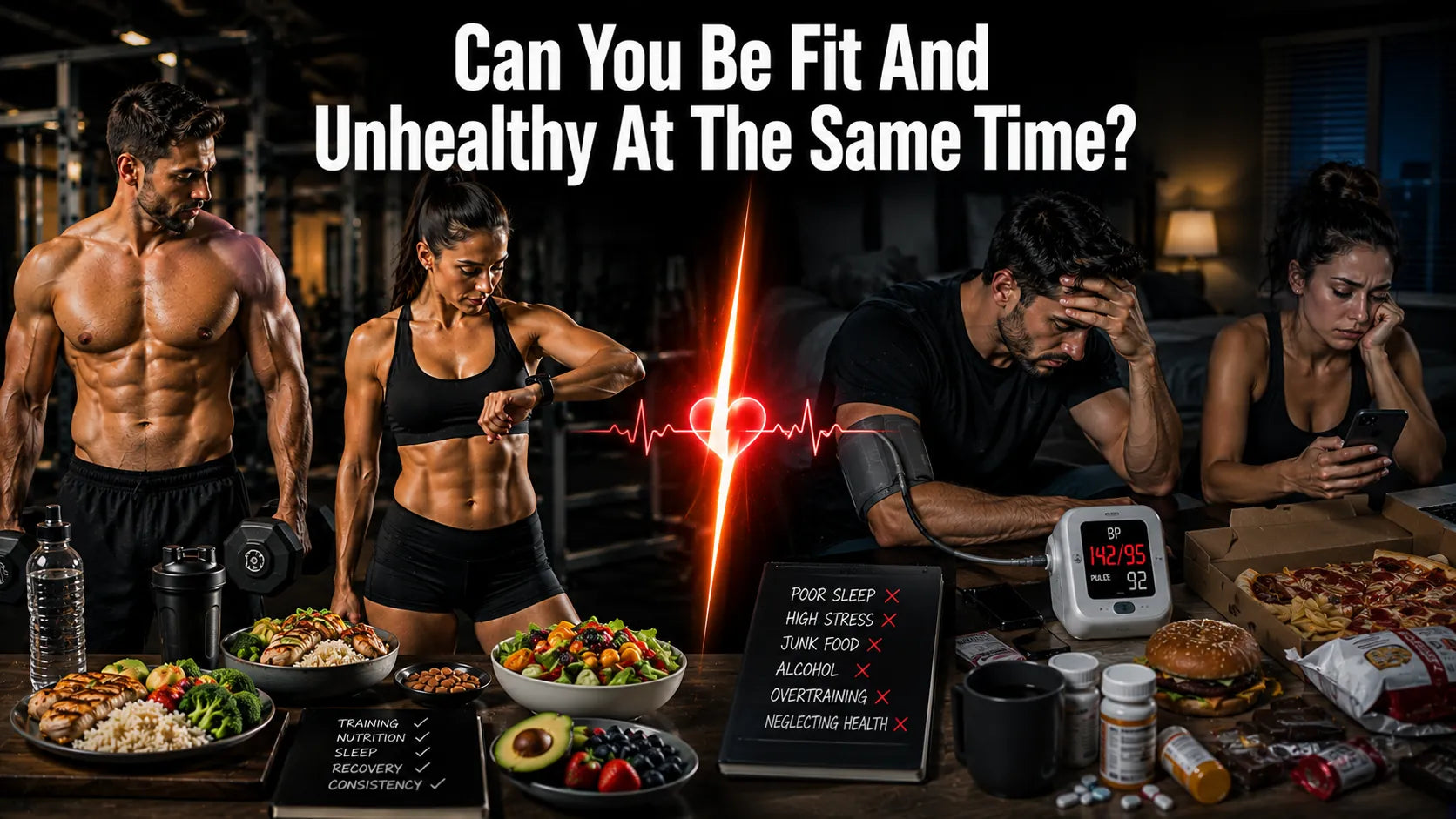
Most people assume fitness and health are the same thing.
If someone looks lean, muscular, athletic, or performs well in the gym, we naturally assume they're healthy.
Likewise, if someone doesn't look particularly athletic, people often assume they're unhealthy.
But the reality is far more complicated.
Fitness and health are closely related.
However, they are not identical.
In fact, it's entirely possible to:
- look fit but be unhealthy
- appear healthy but have poor fitness
- perform well physically while ignoring important health markers
This is one reason many health professionals now encourage people to look beyond appearance alone.
Because true health involves much more than visible muscle definition or low body fat.
It includes:
- cardiovascular health
- recovery
- nutrition
- sleep
- stress management
- metabolic health
The body is incredibly complex.
And sometimes what appears healthy on the outside doesn't tell the full story.
Let's explore why.
1. What Does Being Fit Actually Mean?
Fitness is often misunderstood.
Many people define fitness purely by appearance.
If someone has visible abs or a muscular physique, they're considered fit.
While appearance can sometimes reflect fitness, it doesn't define it.
True fitness generally refers to the body's ability to perform physical tasks efficiently.
This can include:
- strength
- endurance
- mobility
- cardiovascular fitness
- athletic performance
A marathon runner may be extremely fit.
A powerlifter may be extremely fit.
A cyclist may be extremely fit.
Yet all three could look completely different.
This is why fitness is best viewed as performance rather than appearance.
It's about what the body can do.
Not simply what it looks like.

2. Can You Look Fit but Be Unhealthy?
Absolutely.
And it's more common than many people realise.
Some people maintain impressive physiques while neglecting important areas of health.
Examples might include:
- poor sleep
- excessive stress
- poor nutrition
- smoking
- excessive alcohol consumption
A person may appear healthy in photographs while still experiencing problems with:
- blood pressure
- cholesterol
- recovery
- cardiovascular health
This is why appearance alone can be misleading.
A lean physique does not automatically guarantee good health.
Nor does carrying some body fat automatically indicate poor health.
Health is influenced by many factors that aren't visible in the mirror.
3. Why Appearance Doesn't Always Reflect Health
The fitness industry often rewards appearance.
Social media certainly does.
As a result, many people focus heavily on visible outcomes while ignoring invisible ones.
But health markers don't always show up physically.
Someone can appear healthy while experiencing issues with:
- blood sugar control
- cholesterol levels
- blood pressure
- sleep quality
- stress management
Likewise, someone may not look like a fitness influencer while still maintaining excellent health habits.
This is one reason health assessments should involve more than appearance.
Looking healthy and being healthy are not always the same thing.
The body is far more complicated than a photograph.
4. How Important Is Cardiovascular Fitness?
Extremely important.
Cardiovascular fitness is one of the strongest indicators of overall health and longevity.
Yet it's often overlooked.
Many people focus entirely on:
- weight
- body fat
- muscle size
while ignoring how well their heart and lungs function.
Cardiovascular fitness influences everyday life more than many people realise.
It affects:
- energy levels
- endurance
- recovery
- long-term health
Activities such as:
- walking
- cycling
- swimming
- running
can all contribute to cardiovascular improvements.
The goal isn't becoming an elite endurance athlete.
It's maintaining a heart and cardiovascular system capable of supporting a healthy, active life.

5. Can Exercise Cancel Out a Poor Diet?
Not completely.
Exercise is incredibly powerful.
But it isn't magic.
Many people attempt to compensate for poor nutrition by simply exercising more.
Unfortunately, health doesn't work like a simple maths equation.
Regular exercise can certainly improve:
- fitness
- strength
- cardiovascular health
- mental wellbeing
However, nutrition still plays a major role.
A poor diet may negatively influence:
- recovery
- energy levels
- nutrient intake
- long-term health outcomes
This is where products such as Applied Nutrition Critical Greens – 250g can fit naturally into a broader health-focused routine. While no supplement replaces a balanced diet, improving nutritional quality remains an important part of supporting overall wellbeing.

The healthiest approach usually combines:
- regular exercise
- sensible nutrition
- adequate recovery
rather than relying on one area to compensate for another.
Intermission
So far we've explored what fitness actually means, whether someone can look fit while being unhealthy, why appearance can be misleading, the importance of cardiovascular fitness, and whether exercise can truly make up for a poor diet.
In Part 2, we'll look at the role of sleep and stress, supplements that support overall health, key health markers worth monitoring, warning signs of hidden health issues, and what true fitness really looks like beyond appearance alone.
Part 2
6. Why Sleep and Stress Matter More Than You Think
Many people focus heavily on training and nutrition while largely ignoring sleep and stress.
Unfortunately, the body doesn't separate these factors.
Everything is connected.
Poor sleep can negatively affect:
- recovery
- energy levels
- appetite control
- training performance
- mood
Likewise, chronic stress can influence:
- blood pressure
- recovery
- food choices
- overall wellbeing
This is why someone can be exercising regularly yet still struggle to feel healthy.
Fitness isn't simply about what happens during a workout.
It's also about what happens during the other twenty-three hours of the day.
Recovery matters.
And recovery starts with adequate sleep and effective stress management.

7. Which Supplements Support Overall Health?
No supplement can replace:
- quality nutrition
- regular exercise
- good sleep
- healthy habits
However, some products can support a broader health-focused lifestyle.
For example, Applied Nutrition Probiotic Advanced Multi-Strain Formula can fit naturally into a wellness routine that prioritises digestive health and overall wellbeing.

Nutritional quality also matters.
This is where Applied Nutrition Critical Greens – 250g may be used alongside efforts to increase fruit and vegetable intake.
Micronutrient support is another consideration.
Products such as Applied Nutrition Multi-Vitamin Complex
and Opti-Men


are commonly included in routines designed to support overall nutritional intake.
Heart health is equally important.
Per4m Advanced Omega 3 90 Caps fits naturally into discussions around long-term wellness because omega-3 fatty acids are often associated with cardiovascular health and healthy ageing.

The important point is that supplements support healthy habits.
They don't replace them.
8. What Health Markers Should You Monitor?
Many people judge their health using only:
- body weight
- body fat percentage
- appearance
But these are only part of the picture.
Some of the most useful health markers include:
- blood pressure
- resting heart rate
- cholesterol levels
- blood glucose levels
- cardiovascular fitness
These indicators often provide a far better understanding of overall health than appearance alone.
This is why routine health checks can be valuable.
You may feel healthy.
You may look healthy.
But objective measurements often provide important information that isn't visible in the mirror.
The healthiest people tend to monitor more than just their physique.
9. What Are the Signs of Hidden Health Problems?
One challenge with health is that problems aren't always obvious.
Many conditions develop gradually.
Sometimes people feel completely normal while underlying issues are already developing.
Potential warning signs can include:
- unusual fatigue
- poor recovery
- shortness of breath
- persistent sleep issues
- elevated blood pressure
- declining fitness levels
Of course, these symptoms don't automatically indicate serious illness.
But they can be useful signals that something deserves attention.
This is one reason relying purely on appearance can be misleading.
Someone may look incredibly fit while still experiencing health issues that deserve investigation.
Health is much deeper than aesthetics.

10. What Does True Fitness Really Look Like?
True fitness goes far beyond visible abs or a low body-fat percentage.
It combines multiple elements working together.
A truly fit individual is often someone who:
- moves well
- has good cardiovascular fitness
- maintains healthy habits
- recovers effectively
- supports their health long-term
They don't simply look good.
They function well.
They have energy.
They sleep well.
They perform well.
And importantly, they support their health outside the gym too.
The goal shouldn't simply be building a body that looks impressive.
The goal should be building a body that performs well and remains healthy for years to come.
That's a far more meaningful definition of fitness.
Conclusion
Can you be fit and unhealthy at the same time?
Yes.
Fitness and health are closely connected, but they are not identical.
A person can appear fit while neglecting important aspects of health such as:
- nutrition
- sleep
- stress management
- cardiovascular health
- metabolic health
Likewise, someone may not look like a fitness model while still maintaining excellent overall health.
The healthiest approach is to focus on both.
Train regularly.
Eat well.
Sleep properly.
Manage stress.
Monitor important health markers.
Because true fitness isn't just about appearance.
It's about creating a body that performs well, feels good, and supports a healthy life for years to come.
FAQ
1. Can you be fit and unhealthy at the same time?
Yes. Someone can appear fit or perform well physically while still having poor health habits or underlying health issues.
2. Does being fit automatically mean you're healthy?
No. Fitness and health overlap, but they are not exactly the same thing.
3. Can you look healthy but have health problems?
Absolutely. Many health issues are not visible from appearance alone.
4. How important is cardiovascular fitness?
Very important. Cardiovascular fitness is strongly linked to overall health and longevity.
5. Can exercise make up for a poor diet?
Not completely. Exercise helps significantly, but nutrition remains a major factor in health.
6. What health markers should I monitor?
Blood pressure, resting heart rate, cholesterol levels, blood glucose, and cardiovascular fitness are useful indicators.
7. Why are sleep and stress important for health?
Both influence recovery, energy levels, appetite regulation, and long-term wellbeing.
8. What does true fitness look like?
True fitness combines physical capability, cardiovascular health, healthy habits, good recovery, and long-term wellbeing.


