


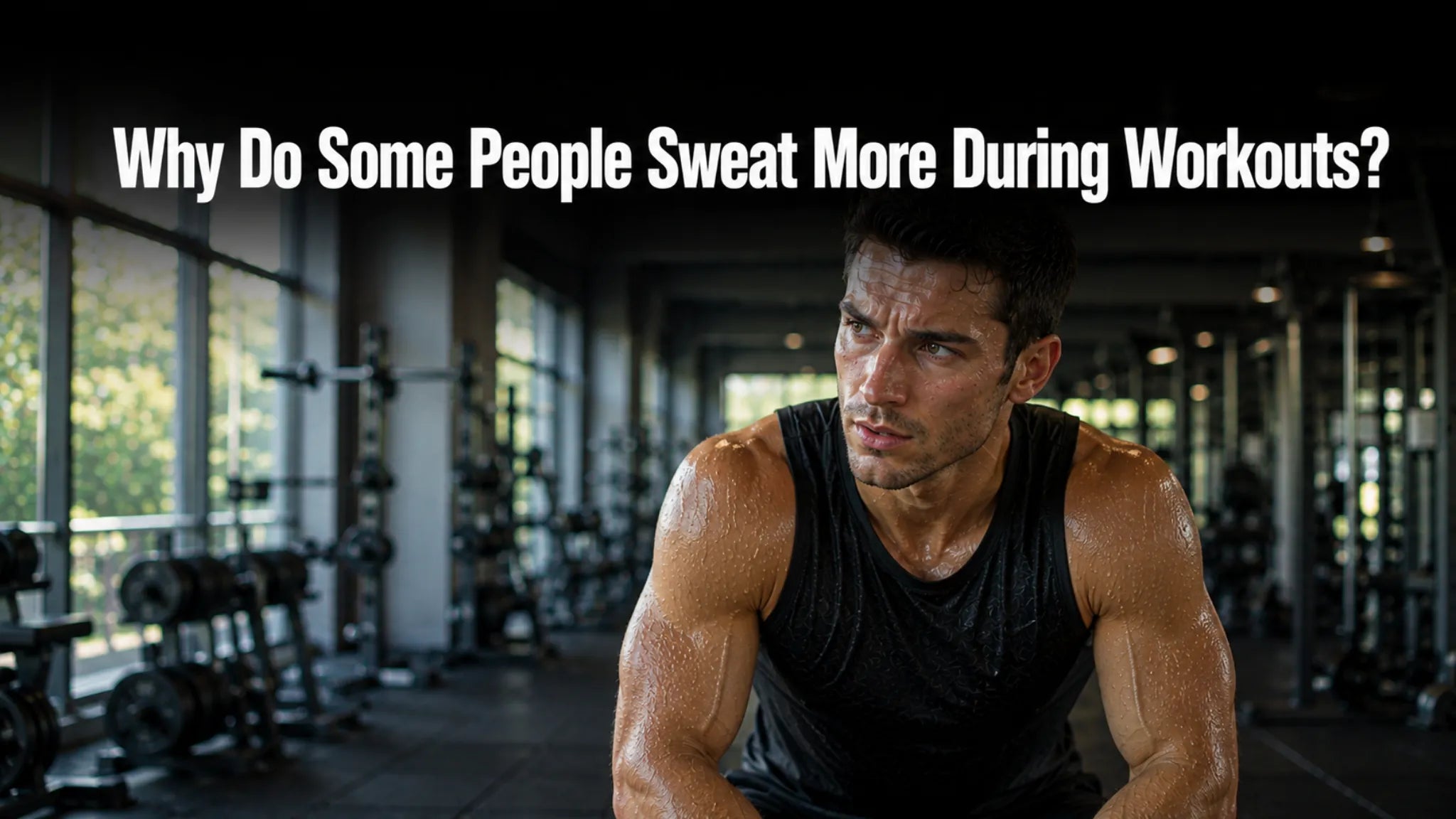
Some people leave the gym looking completely normal.
Others look like they just walked through a rainstorm after ten minutes on the treadmill.
It creates a lot of confusion because people often assume sweating must mean something specific:
- Better fitness
- Harder training
- More calories burned
- Faster metabolism
But sweating is more complicated than most people realise.
Because the amount you sweat during exercise depends on a mix of:
- Body temperature
- Genetics
- Fitness level
- Hydration
- Muscle mass
- Environment
- Stimulant intake
That’s why two people doing the exact same workout can have completely different sweat responses.
And interestingly, sweating more doesn’t automatically mean your workout was “better.”
1. Does sweating more mean you’re fitter?
Not necessarily.
Sweating is primarily your body’s cooling system.
Its job is to help regulate temperature during physical activity.
Some fitter people actually sweat more because their bodies become more efficient at cooling themselves during exercise.
But sweating heavily doesn’t automatically mean:
- Better conditioning
- More calories burned
- Greater effort
It simply means your body is trying to regulate heat.
That’s why sweating levels vary massively between individuals.
Someone can:
-
Sweat heavily and be unfit
or - Sweat lightly and still be extremely athletic
The important thing is how your body manages temperature and hydration overall—not how dramatic your sweat levels look.

2. Why do some people barely sweat at all?
Usually because of individual differences in thermoregulation.
Some people naturally:
- Produce less sweat
- Heat up differently
- Tolerate temperature changes better
Environmental conditions matter too.
For example:
- Air conditioning
- Cooler gym temperatures
- Lower workout intensity
can all reduce visible sweating significantly.
Body size also plays a role.
Smaller people often generate:
- Less overall heat
- Lower total sweat output
That’s why sweating isn’t a reliable way to judge:
- Workout quality
- Fitness level
- Calorie burn
Some people simply sweat less naturally.
And that’s completely normal.
3. Does sweating burn more calories?
No—this is one of the biggest gym myths.
Sweating itself does not directly burn fat.
Sweat loss is primarily:
-
Fluid loss
not - Fat loss
This is why people can lose several pounds after intense training or sauna sessions, then regain it quickly after rehydrating.
The body is simply replacing:
- Water
- Electrolytes
- Glycogen-associated fluid
This misunderstanding is one reason “sweating more = better workout” became so popular.
People associate temporary weight loss with fat loss.
But they’re not the same thing.
4. Can genetics affect how much you sweat?
Absolutely.
Genetics strongly influence:
- Sweat gland activity
- Heat tolerance
- Thermoregulation
- Body composition
Some people are simply wired to sweat more than others.
That’s why you’ll often see:
-
One person drenched during training
while - Someone beside them barely sweats at all
even during similar workouts.
Genetics can also influence:
- Skin temperature
- Circulation
- Overall heat production
This is one reason comparing your sweat levels to other people is basically pointless.
Your body regulates heat differently from theirs.

5. Why do pre-workouts make some people sweat more?
Usually because stimulants increase:
- Heart rate
- Body temperature
- Nervous system activity
Caffeine-heavy formulas can make people feel:
- Hotter
- More stimulated
- More thermally activated during training
That often increases sweating significantly.
For example:
- ABE Ultimate Pre-Workout contains stimulant ingredients designed to increase energy and training intensity, which can naturally raise sweating levels during sessions
- EHP Labs OxyShred Ultra Energy Drink creates a similar effect because stimulant-based energy products often increase thermogenic response and heat production
This is especially noticeable during:
- Cardio
- High-volume training
- Warmer gym environments
The key thing to remember is that more sweating from stimulants does not automatically mean:
-
More fat loss
or - Better workouts
Sometimes it simply means your nervous system is more stimulated.
Intermission
So far, we’ve covered:
- Whether sweating means fitness
- Why some people barely sweat
- The myth of sweating and calorie burn
- Genetics and sweat response
- Why stimulants increase sweating during workouts
In Part 2, we’ll break down:
- Electrolytes and sweat loss
- Excessive sweating during exercise
- Body size and muscle mass
- Warning signs of over-sweating
- And how to stay hydrated during hard training
Part 2
6. Can electrolytes affect sweating levels?
Indirectly, yes.
Electrolytes don’t necessarily determine how much you sweat…
…but they heavily influence how your body handles fluid balance during training.
When you sweat, you lose:
- Water
- Sodium
- Potassium
- Magnesium
- Other minerals involved in muscle and nerve function
The heavier you sweat, the more important replacing those losses becomes.
This is why some people start feeling:
- Flat
- Weak
- Cramp-prone
- Fatigued
during longer or harder sessions.
Not because sweating itself is dangerous—but because fluid and electrolyte balance starts shifting too much.
That’s where hydration support products fit naturally.
For example:
- Applied Nutrition Hydration Powder helps replace electrolytes lost through sweating during harder sessions
- Per4m Hydrate Electrolyte Mix supports fluid balance during high-output training, especially for people who naturally sweat heavily
Because hydration isn’t just about drinking water.
It’s about maintaining the balance your body needs to keep performing properly.

7. Is excessive sweating during workouts normal?
Sometimes yes.
Heavy sweating during:
- Intense workouts
- Cardio
- Hot environments
can be completely normal.
Some people are simply naturally heavier sweaters.
But context matters.
If sweating suddenly becomes:
- Extreme
- Unusual
- Accompanied by dizziness or nausea
then it’s worth paying attention to.
Excessive sweating can sometimes reflect:
- Overheating
- Dehydration
- Excessive stimulant intake
- Environmental stress
Most of the time, though, gym sweating alone isn’t automatically a problem.
Especially if:
- Performance remains good
- Recovery feels normal
- Hydration stays adequate
8. Does body size or muscle mass affect sweating?
Yes—quite a lot.
Larger bodies usually:
- Produce more heat
- Require more cooling
- Sweat more during activity
More muscle mass can increase heat production too because muscle tissue is metabolically active during exercise.
That’s why bigger lifters often sweat far more than smaller athletes doing similar workouts.
Intensity matters as well.
Heavier individuals may:
- Work harder during movement
- Generate more total body heat
- Lose more fluid overall
Again, though, this doesn’t automatically mean:
-
Better fitness
or - Better workouts
It’s mainly a thermoregulation difference.
9. What are signs you’re sweating too much?
The biggest issue isn’t usually the sweat itself.
It’s the symptoms that come with excessive fluid loss.
Common warning signs include:
- Dizziness
- Cramping
- Headaches
- Extreme thirst
- Weakness
- Reduced performance
This becomes more common when people:
- Train hard in hot environments
- Use heavy stimulants
- Ignore hydration completely
For example:
- Stimulant-heavy products like ABE Ultimate Pre-Workout can increase sweating and heat production, making hydration even more important during intense sessions
Recovery matters afterwards too.
Heavy sweating often increases overall recovery demand because fluid balance affects:
- Performance
- Recovery quality
- Muscle function
That’s one reason post-workout nutrition and recovery support still matter after harder sessions.
For example:
- Per4m Advanced Whey Protein supports muscle recovery after intense training where fluid loss and fatigue are higher
Because recovery starts becoming harder when:
- Hydration drops
- Fatigue accumulates
- Recovery quality suffers

10. How can you stay hydrated during intense training?
The biggest mistake people make is waiting until they already feel dehydrated.
Good hydration usually starts:
-
Before training
not - During an emergency halfway through the workout
Consistency matters more than chugging huge amounts at once.
The goal is maintaining fluid balance steadily throughout the day.
This becomes even more important when:
- Training hard
- Sweating heavily
- Using stimulants
- Training in hot environments
Electrolytes can help significantly because water alone isn’t always enough during heavy sweat loss.
Especially during:
- Long sessions
- Cardio-heavy training
- High-temperature gyms
The best approach is usually:
- Consistent hydration
- Electrolyte support when needed
- Managing stimulant intake intelligently
Not simply forcing more water endlessly.
Conclusion
Some people naturally sweat far more during workouts than others.
That difference is influenced by:
- Genetics
- Body size
- Fitness level
- Heat regulation
- Stimulant intake
- Environment
But sweating more doesn’t automatically mean:
- Better workouts
- More fat loss
- Superior fitness
Sweat is mainly your body’s cooling system.
The real priority is managing:
- Hydration
- Electrolytes
- Recovery
- Training intensity
Because once fluid balance drops too far, performance usually drops with it.
FAQ
1. Does sweating more mean you’re fitter?
Not necessarily—sweating mainly reflects heat regulation.
2. Why do some people barely sweat?
Genetics, body size, and environmental factors all affect sweat response.
3. Does sweating burn more calories?
No, sweating mainly causes fluid loss—not fat loss.
4. Can genetics affect sweating?
Yes, genetics strongly influence sweat production and thermoregulation.
5. Why do pre-workouts make me sweat more?
Stimulants increase nervous system activity and body temperature.
6. Is excessive sweating during workouts normal?
Sometimes, especially during intense training or hot conditions.
7. Do larger people sweat more?
Usually yes, because they generate more overall body heat.
8. How can I stay hydrated during workouts?
Maintain consistent fluid intake and replace electrolytes when needed.


