



Almost everyone who has spent time in the gym has noticed it.
One muscle group seems to explode with growth after only a few weeks of training, while another barely changes despite months of hard work.
Perhaps your arms have grown quickly, but your chest refuses to fill out.
Maybe your shoulders have become noticeably broader, while your calves seem determined to stay exactly the same size.
For others, it's the opposite.
Strong legs come naturally, but building an impressive back feels almost impossible.
These differences often leave people wondering whether they're simply "bad" at training certain muscles.
Fortunately, that's rarely the case.
Muscle growth is influenced by far more than simply lifting weights.
Genetics, muscle structure, training technique, exercise selection, recovery, nutrition and even your ability to activate a muscle all contribute to how quickly different body parts develop.
The good news is that while you can't change your genetics, you can control almost everything else.
Understanding why certain muscles respond differently allows you to train smarter instead of simply training harder.
Let's explore why some muscles grow rapidly while others demand considerably more patience.
1. Why Do Some Muscle Groups Grow Faster Than Others?
Not every muscle in your body responds to training in exactly the same way.
Each muscle differs in several important characteristics, including:
- size
- fibre composition
- daily usage
- leverage
- recovery rate
- genetics
These differences explain why some muscles appear to grow almost effortlessly while others require months—or even years—of focused training.
For example, your quadriceps are involved every time you stand up, climb stairs or walk.
Your biceps, on the other hand, experience far less daily loading outside the gym.
Some muscles naturally tolerate more training volume because they recover quickly.
Others accumulate fatigue much faster.
Mechanical tension also varies depending on the exercise.
A well-executed squat creates tremendous tension throughout the lower body.
A poorly performed squat may shift much of that workload away from the muscles you're actually trying to develop.
Even something as simple as limb length influences muscle growth.
Someone with shorter arms may find pressing exercises easier than someone with unusually long limbs.
Neither person is necessarily stronger.
Their body simply creates different mechanical advantages.
Understanding these natural differences helps explain why comparing your progress directly with someone else's is rarely useful.
Every physique tells a different story.

2. Do Genetics Affect Muscle Growth?
Yes.
Genetics influence almost every aspect of muscle development.
However, they're often misunderstood.
Genetics don't decide whether you can build muscle.
They influence:
- how quickly you build it
- where you build it
- how easily certain muscles respond
- your natural muscle shape
- recovery ability
- hormone levels
One of the biggest genetic differences is muscle insertions.
Two people can have identical arm measurements while appearing completely different because their muscles attach to the bones differently.
Long muscle bellies often create a fuller appearance.
Shorter insertions may produce more pronounced peaks.
Neither is objectively better.
They're simply different.
Genetics also influence muscle fibre composition.
Some individuals naturally possess a higher percentage of fast-twitch fibres, allowing them to respond particularly well to heavy resistance training.
Others have more slow-twitch fibres, which often excel during endurance activities.
Even recovery varies genetically.
Some people comfortably recover from frequent heavy training.
Others require considerably more rest between hard sessions.
Although genetics influence your starting point, they don't determine your destination.
Consistent training still produces remarkable improvements regardless of your natural advantages.
3. Which Muscles Usually Grow the Fastest?
Although everyone is different, certain muscle groups commonly respond well to resistance training.
Quadriceps
Large muscles with tremendous loading potential.
Heavy squats, leg presses and split squats provide enormous growth stimuli.
Glutes
Modern training programmes place far greater emphasis on glute development than ever before.
Exercises such as squats, Romanian deadlifts and hip thrusts allow significant progressive overload.
Back
The back contains numerous large muscles that respond extremely well to heavy rows and pull-ups.
Many people notice significant improvements in back thickness during their first year of training.
Chest
When pressing technique is effective, the chest often responds quickly to progressive overload.
However, some lifters unintentionally shift too much work towards the shoulders and triceps.
Shoulders
Front deltoids receive stimulation from many pressing movements, allowing steady development.
Side and rear delts often require additional attention later in a training career.
Remember, these are general trends rather than guarantees.
Individual genetics still play a major role.
4. Why Are Some Muscle Groups Harder to Build?
If fast-growing muscles exist, naturally there are also muscles that seem unusually stubborn.
The most commonly reported include:
- calves
- rear deltoids
- lateral deltoids
- upper chest
- forearms
- hamstrings
Several factors contribute.
Daily Activity
Calves work almost constantly while walking.
Because they're already accustomed to frequent activity, they often require particularly challenging training to continue adapting.
Poor Exercise Selection
Sometimes the muscle isn't stubborn.
The exercise simply isn't loading it effectively.
Many people struggle to grow their upper chest because flat pressing dominates their training.
Weak Mind-Muscle Connection
Feeling a muscle working isn't everything, but poor movement control often reduces the quality of muscle stimulation.
Learning to control an exercise properly frequently produces better long-term results than immediately adding more weight.
Recovery
Some muscles simply recover more slowly than others.
Increasing volume before recovery has been completed often reduces overall progress rather than improving it.
Patience becomes particularly important when training slower-growing body parts.

5. Does Exercise Selection Influence Muscle Growth?
Absolutely.
Exercise selection may be one of the most overlooked factors influencing uneven muscle development.
Two exercises that appear similar can load muscles very differently.
Consider chest training.
A flat bench press primarily develops the mid-chest while also heavily recruiting the shoulders and triceps.
An incline press shifts more emphasis towards the upper chest.
Cable flyes provide continuous tension throughout the movement.
Each exercise contributes differently.
The same principle applies across the body.
Rows performed with different grips alter upper-back recruitment.
Foot position changes squat mechanics.
Grip width influences pressing patterns.
Choosing exercises that genuinely challenge your weaker muscles often produces better results than simply increasing training volume.
Applied Nutrition Body Fuel Energy Shot – 12 × 60ml naturally complements demanding workouts by providing a convenient source of energy before training, helping you maintain focus and intensity when targeting stubborn muscle groups that require precise exercise execution.


Rather than asking,
"Which exercise is best?"
a more useful question is,
"Which exercise best challenges the muscle I'm trying to improve?"
Intermission
So far, we've explored why different muscles grow at different rates, how genetics influence muscle development, which muscles typically respond the fastest, why some body parts prove more stubborn than others, and how choosing the right exercises can dramatically improve muscle growth.
In Part 2, we'll examine whether increasing training frequency helps lagging muscle groups, which supplements naturally support muscle growth and recovery, the common mistakes that stop certain muscles from growing, how to speed up development in stubborn areas, and the best long-term strategy for building a balanced, symmetrical physique.
Part 2
6. Can Training Frequency Help Stubborn Muscle Groups?
It certainly can.
One reason certain muscles lag behind is that they simply aren't receiving enough high-quality stimulation.
Rather than performing all of your weekly work in a single exhausting session, increasing training frequency allows you to spread that work across multiple workouts.
For example, instead of performing:
- 16 shoulder sets every Monday
you might complete:
- 8 sets on Monday
- 8 sets on Thursday
The total weekly volume remains exactly the same.
However, each session begins with fresher muscles and lower fatigue, allowing:
- better technique
- heavier loads
- stronger mind-muscle connection
- higher repetition quality
This approach works particularly well for muscle groups such as:
- side deltoids
- rear deltoids
- calves
- arms
Many experienced lifters also begin workouts with their weakest muscle group while energy levels are highest.
Giving stubborn muscles priority often produces better long-term improvements than simply adding endless extra sets.
Sometimes the solution isn't training harder.
It's training smarter.

7. Which Supplements Support Muscle Growth and Recovery?
Recovery is where muscle growth actually happens.
Every productive workout creates the stimulus.
Recovery allows adaptation.
One supplement that naturally supports demanding training programmes is Per4m Glutamine – 400g.

Glutamine is commonly used by active individuals as part of their overall recovery routine following resistance training, helping support consistency between hard training sessions.
Supporting connective tissues also becomes increasingly important as training loads increase.
Applied Nutrition Marine Collagen – 300g provides hydrolysed marine collagen that can naturally complement an active lifestyle alongside regular resistance training and a balanced diet.


Neither supplement directly builds muscle on its own.
Instead, they help support the recovery habits that allow consistent high-quality training.
The biggest contributors to muscle growth remain:
- progressive overload
- sufficient protein
- adequate calories
- quality sleep
- consistent recovery
Supplements simply support those foundations.
8. What Mistakes Stop Certain Muscles From Growing?
Often, the muscle itself isn't the problem.
The training approach is.
Some of the most common mistakes include:
Copying Someone Else's Programme
The routine that works brilliantly for one person may not suit another.
Different genetics, limb lengths and recovery abilities all influence exercise selection.
Using Too Much Weight
Chasing heavier loads often shifts tension away from the target muscle.
Good technique almost always wins over poor form.
Never Prioritising Weak Muscles
Many lifters always begin with their favourite exercises.
Unfortunately, this usually means lagging muscles are trained when fatigue is already high.
Inconsistent Recovery
Muscles don't grow during workouts.
They grow afterwards.
Poor sleep, inadequate nutrition and inconsistent recovery quickly slow progress.
Expecting Symmetry Too Quickly
Perfectly balanced physiques take years to develop.
Minor differences between muscle groups are completely normal.
Patience is often one of the most overlooked training tools.
9. Can You Speed Up Growth in Lagging Muscle Groups?
You can't completely override your genetics.
You can, however, maximise your own potential.
The most effective strategies include:
- improving exercise technique
- prioritising weaker muscles first
- increasing training frequency
- selecting better exercises
- maintaining progressive overload
- allowing sufficient recovery
Nutrition also plays a significant role.
Building muscle requires enough energy and sufficient daily protein to support muscle protein synthesis.
USN Muscle Fuel Anabolic – 4kg can naturally help support individuals working towards higher calorie and protein intakes, particularly during periods focused on increasing lean muscle mass.


Perhaps the biggest improvement comes from consistency.
Small improvements repeated every week for months produce remarkable changes over time.
There are very few shortcuts.
But there are many opportunities to become more consistent.

10. What's the Best Strategy for Building a Balanced Physique?
Building an impressive physique isn't about making your strongest muscles even stronger.
It's about reducing weaknesses until every major muscle group develops proportionally.
The best long-term strategy includes:
- progressive overload
- excellent exercise technique
- balanced exercise selection
- prioritising lagging muscles
- consistent recovery
- sensible nutrition
- patience
Avoid comparing your physique with someone whose genetics, training history and body structure differ completely from yours.
Instead, compare yourself with where you were six months ago.
Supporting training quality can also make a meaningful difference.
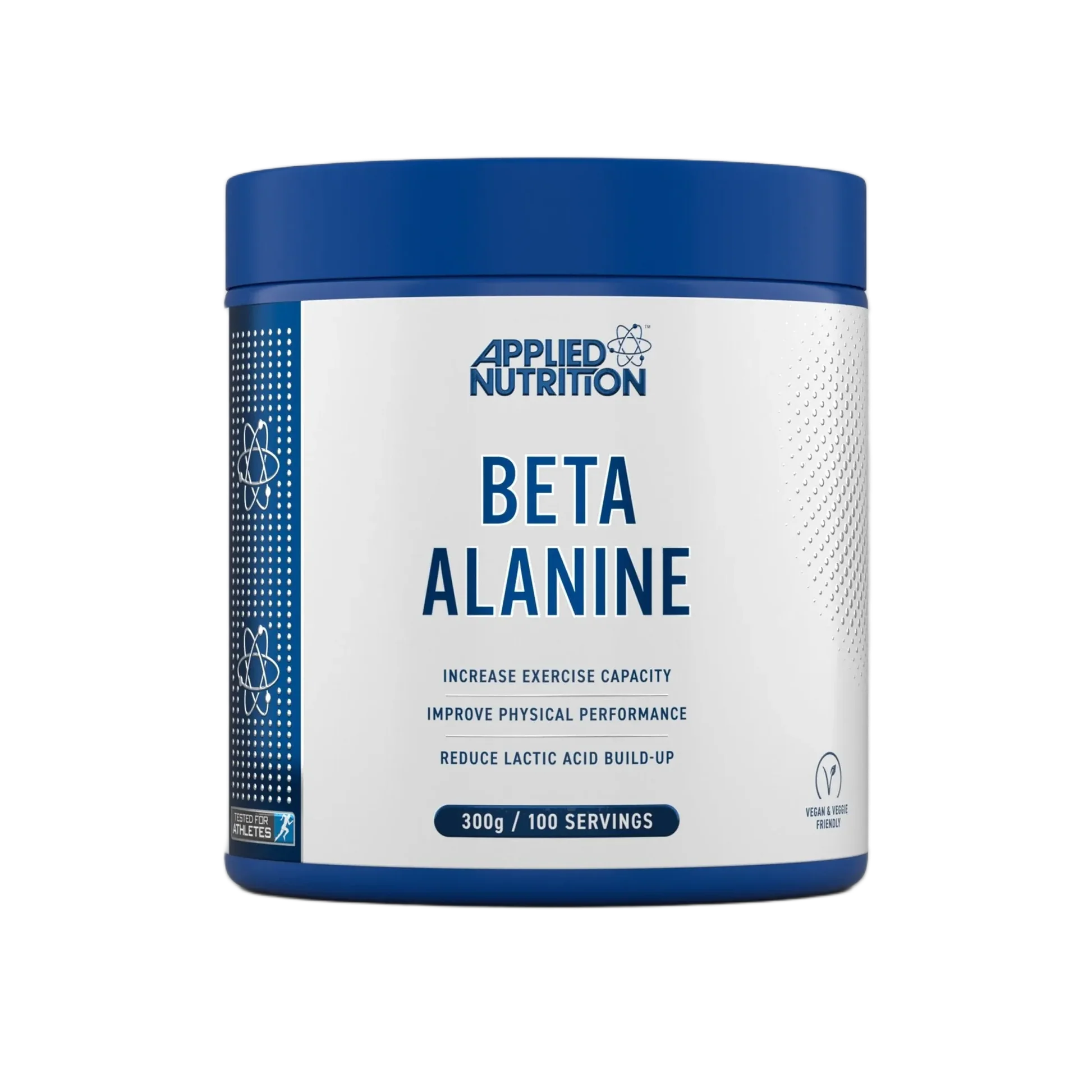
Applied Nutrition Beta-Alanine – 300g naturally complements high-quality hypertrophy training by supporting muscular endurance during demanding sets, helping maintain consistent effort throughout your workouts.
Balanced physiques aren't built by accident.
They're built through intelligent programming, gradual progression and years of consistent training.
Conclusion
So, why do some muscles grow faster than others?
The answer is a combination of genetics, muscle structure, exercise selection, recovery and training quality.
Some muscle groups naturally respond more quickly because of their fibre composition, leverage or daily use. Others require greater attention, more precise programming and considerably more patience.
Fortunately, while you can't change your genetics, you can control how you train.
Choosing the right exercises, prioritising weaker muscles, maintaining progressive overload and recovering properly all help maximise your own muscle-building potential.
The goal isn't to build someone else's physique.
It's to build the best version of your own.
FAQ
1. Why do some muscles grow faster than others?
Muscle growth varies because of genetics, muscle fibre composition, exercise selection, recovery ability and training quality.
2. Do genetics affect muscle growth?
Yes. Genetics influence muscle shape, recovery, fibre type distribution and how quickly different muscles respond to resistance training.
3. Which muscles usually grow the fastest?
Many people find their quadriceps, glutes, back and chest respond well to progressive resistance training, although individual differences are common.
4. Why are my arms growing faster than my chest?
Exercise technique, genetics, muscle activation and training volume can all influence why one muscle group develops faster than another.
5. Can training frequency help stubborn muscle groups?
Yes. Training weaker muscles more frequently often improves exercise quality and provides additional growth opportunities.
6. How do you grow lagging muscle groups?
Prioritise them early in workouts, use appropriate exercise selection, maintain progressive overload and recover consistently.
7. Can supplements help stubborn muscles grow faster?
Supplements support nutrition and recovery but cannot replace progressive overload, adequate protein and consistent training.
8. What's the best way to build a balanced physique?
Focus on improving weaker muscles while maintaining balanced training, good recovery and long-term consistency.


