


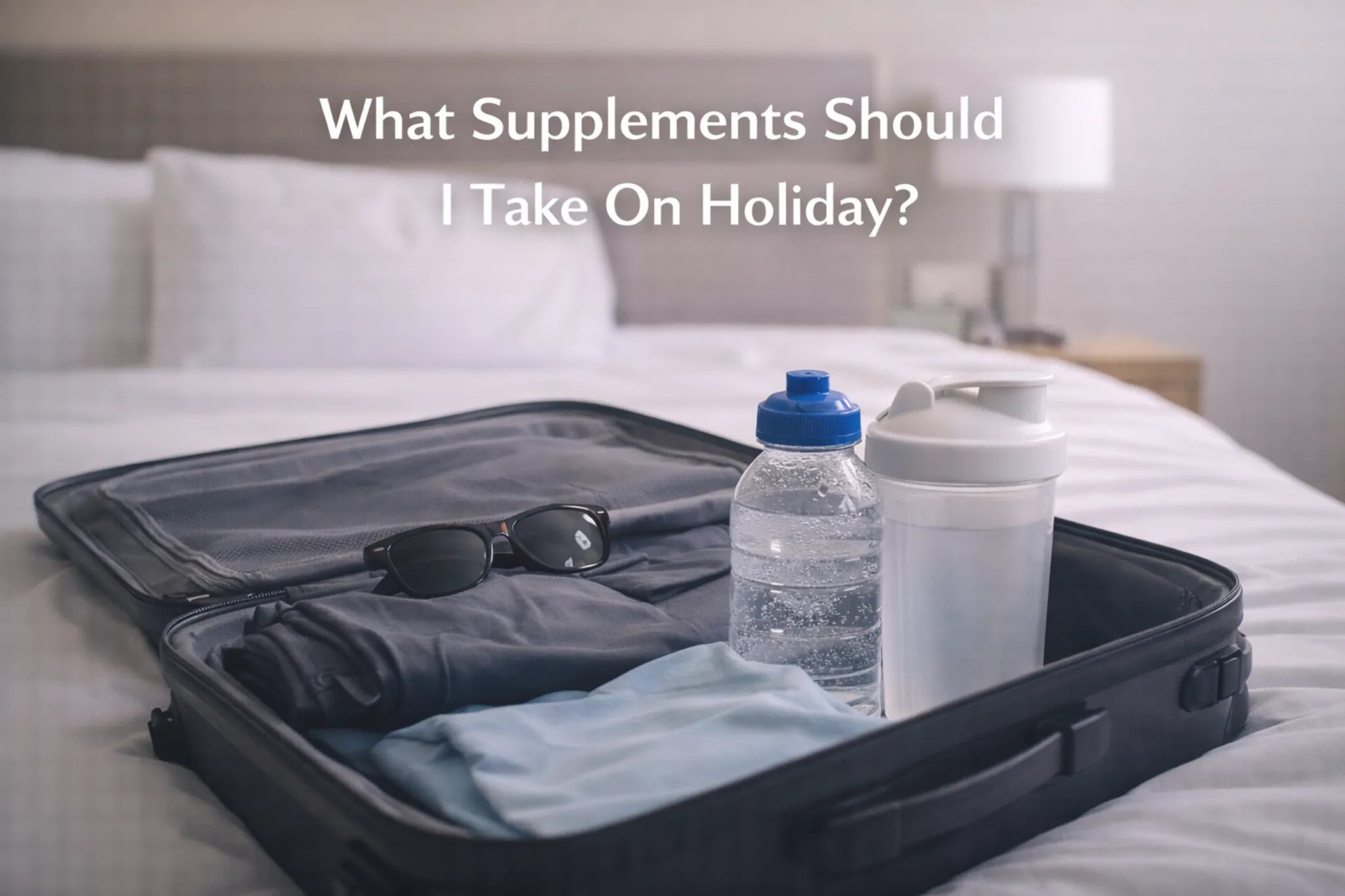
Holidays are meant to feel freeing — new places, new food, less structure — but your body doesn’t switch off just because you’ve switched locations. Travel changes hydration levels, sleep patterns, food quality, activity levels, and immune exposure all at once. That’s why many people feel unusually tired, dehydrated, bloated, or run down within days of arriving.
The goal isn’t to pack half your supplement cupboard. It’s to bring the few essentials that keep your body stable while everything else changes.
Done right, a small travel stack can help you maintain energy, avoid dehydration, support immunity, and return home feeling refreshed rather than needing a recovery week.
1. What Supplements Help Maintain Energy Levels While Travelling?
Travel fatigue isn’t just about sleep. It’s a combination of disrupted routines, dehydration, long periods of sitting, time zone changes, and inconsistent nutrition.
Energy drops often come from:
-
dehydration during flights
-
irregular meals and nutrient gaps
-
poor sleep quality
-
increased physical activity
-
stress from travel logistics
A foundational supplement like Applied Nutrition Multi Vitamin Complex helps maintain micronutrient intake when meals become unpredictable. Restaurant food, airport snacks, and convenience meals often lack the vitamins and minerals needed for consistent energy production.
At the same time, maintaining hydration is critical. Even mild dehydration can cause fatigue, headaches, and sluggishness that people mistake for jet lag.
Energy on holiday isn’t about stimulants — it’s about maintaining the systems that keep your body functioning smoothly.

2. Should You Take Electrolytes to Stay Hydrated on Holiday?
Most people underestimate how dehydrating travel is.
Airplane cabins operate at extremely low humidity levels, causing fluid loss through breathing and skin. Add coffee, alcohol, and limited water intake, and dehydration can begin before you even land.
Once you arrive, hot climates and increased walking compound fluid loss.
Electrolytes help your body retain and distribute fluid properly. Sodium regulates fluid balance, potassium supports muscle function, and magnesium supports neuromuscular signalling.
Using Per4m Hydrate during flights or after arrival helps restore hydration and reduce symptoms like:
-
headaches
-
fatigue
-
dizziness
-
muscle stiffness
In hotter destinations or during long sightseeing days, hydration support helps maintain energy and comfort.
Hydration isn’t glamorous, but it’s often the difference between feeling energised and feeling drained.
3. Which Supplements Support Immunity When Flying or Changing Climates?
Air travel exposes you to crowded spaces, recycled air, altered sleep patterns, and new environmental pathogens — all of which can challenge immune function.
On top of that, stress hormones rise during travel, which can temporarily suppress immune response.
Maintaining micronutrient intake helps support immune resilience, particularly when diet quality fluctuates.
Applied Nutrition Multi Vitamin Complex provides broad-spectrum vitamin and mineral support, helping cover nutritional gaps when routine eating patterns change.
This isn’t about “boosting” immunity overnight. It’s about preventing deficiencies that make the immune system work harder under travel stress.
Sleep, hydration, and nutrient intake together determine how well you stay healthy while abroad.

4. Can Probiotics Help Prevent Stomach Issues While Abroad?
Digestive discomfort is one of the most common travel complaints. New cuisines, unfamiliar bacteria, changes in water composition, and irregular eating patterns can disrupt gut balance.
While not everyone experiences digestive issues, risk increases when:
-
trying unfamiliar foods
-
travelling to regions with different food hygiene standards
-
consuming more alcohol than usual
-
eating at irregular times
Maintaining a balanced diet and staying hydrated reduces digestive stress. Electrolyte support can also help maintain fluid balance if digestion becomes unsettled.
Most importantly, avoiding extreme dietary swings in the first days abroad gives the gut time to adapt.
Your digestive system thrives on consistency — travel challenges that consistency.

5. What Vitamins Help Reduce Travel Fatigue and Jet Lag?
Jet lag is more than sleep disruption. It’s a circadian rhythm shift that affects hormone release, alertness, digestion, and energy levels.
Travel fatigue can be worsened by:
-
dehydration
-
disrupted sleep cycles
-
cabin pressure and low oxygen levels
-
long periods of immobility
Magnesium-rich foods, hydration, and micronutrient support all contribute to restoring normal body rhythms.
Maintaining hydration with Per4m Hydrate and supporting nutrient intake with Applied Nutrition Multi Vitamin Complex helps your body adapt more smoothly to new time zones.
Jet lag recovery isn’t instant, but supporting the body’s basic needs shortens adjustment time significantly.
Part 1 Intermission
So far we’ve covered:
• maintaining energy while travelling
• preventing dehydration during flights and hot climates
• supporting immune resilience in transit
• reducing digestive stress abroad
• minimising jet lag and travel fatigue
In Part 2, we’ll explore:
✔ whether to continue your normal supplement routine
✔ how electrolytes help during long flights and heat
✔ staying active without losing strength
✔ whether sun exposure replaces vitamin needs
✔ the smartest supplements to pack for a healthy trip
Because a great holiday shouldn’t require a recovery period when you get home.
Part 2
6. Should You Continue Your Normal Supplement Routine on Holiday?
Holidays break routine — that’s part of the appeal. But your physiology still relies on consistency. Sleep changes, meal timing shifts, activity levels fluctuate, and stress levels rise during travel. Maintaining a simple supplement routine helps keep internal systems stable while your environment changes.
You don’t need everything you normally take. But maintaining your foundational support can prevent the common post-holiday slump.
Worth continuing:
-
multivitamin → covers nutrient gaps when diet changes
-
creatine → maintains muscle saturation and performance
-
hydration support → prevents fatigue and dehydration
-
omega-3 → supports recovery and inflammation balance
Easy to pause:
-
pre-workouts
-
fat burners
-
non-essential performance boosters
Keeping basics consistent helps you return home feeling normal rather than depleted.

7. Are Magnesium and Electrolytes Useful for Long Flights and Heat?
Long flights and hot climates both place stress on hydration and circulation.
Aircraft cabins have extremely low humidity, accelerating fluid loss. Sitting for extended periods can also lead to stiffness and sluggish circulation. When you add hot weather after landing, dehydration risk increases further.
Electrolytes help maintain fluid balance and nerve function, reducing symptoms such as:
-
headaches
-
fatigue
-
dizziness
-
muscle tightness
-
sluggishness after arrival
Using Per4m Hydrate during flights or after arrival helps restore hydration levels more effectively than water alone.
In hot climates, increased sweating accelerates sodium and mineral loss. Replacing fluids without electrolytes may not fully restore hydration balance, particularly after long days outdoors.
Hydration support doesn’t just improve performance — it improves how you feel.
8. What Supplements Help Recovery if You’re Staying Active on Holiday?
Many holidays involve more physical activity than daily life:
-
walking 15,000+ steps exploring cities
-
hiking and excursions
-
swimming and water sports
-
carrying luggage and backpacks
Even without structured workouts, physical demand increases.
Maintaining creatine saturation with Naughty Boy Prime Creatine helps preserve muscle performance and prevent the flat, weaker feeling some people notice when they return to training after time away.
Omega-3 fatty acids in Per4m Omega 3 support recovery by helping regulate inflammation and supporting joint comfort — especially useful when daily activity suddenly increases.
An active holiday should feel energising, not physically draining.
9. Do You Need Vitamin D if You’re Spending Time in the Sun?
Sun exposure can support vitamin D production, but several factors affect how much your body actually produces:
-
sunscreen use
-
time spent indoors during peak UV hours
-
clothing coverage
-
skin pigmentation
-
travel season and latitude
If you’re spending extended time outdoors in strong sunlight, vitamin D synthesis may increase naturally. However, if your holiday involves limited sun exposure or indoor activities, supplementation may still be beneficial.
A multivitamin such as Applied Nutrition Multi Vitamin Complex helps maintain baseline nutrient intake regardless of sun exposure variability.
Consistency matters more than assumptions about sunlight.

10. What Are the Best Supplements to Pack for a Healthy Trip?
The best travel supplements aren’t about performance — they’re about maintaining balance while routines change.
Smart travel essentials:
Hydration support
→ Per4m Hydrate
Supports fluid balance during flights and heat.
Muscle & performance maintenance
→ Naughty Boy Prime Creatine
Prevents loss of muscle saturation while away.
Nutritional coverage
→ Applied Nutrition Multi Vitamin Complex
Fills dietary gaps when meals vary.
Recovery & inflammation support
→ Per4m Omega 3
Supports joint comfort and recovery during active trips.
Enhanced hydration for demanding days
→ EHP Labs Hydreau
Ideal for hot climates and high activity levels.
Pack supplements in capsule or powder form for airport convenience, and keep hydration sachets in your carry-on for long flights.
A small, smart stack supports energy, hydration, and recovery without overpacking.
Conclusion
Travel challenges the body in subtle ways: dehydration, disrupted sleep, dietary changes, increased activity, and immune exposure all happen at once. That’s why people often feel unusually tired, sluggish, or run down while abroad.
The goal isn’t to over-supplement — it’s to maintain balance while routines change.
Hydration support helps prevent fatigue.
Creatine maintains muscle performance.
A multivitamin fills nutritional gaps.
Omega-3 supports recovery and joint comfort.
Used strategically, these essentials help you enjoy your holiday fully — and return home feeling refreshed instead of depleted.
FAQ
Do I really need supplements on holiday?
Not necessarily, but a small travel stack can help maintain energy, hydration, and recovery.
Should I take electrolytes on flights?
Yes. Cabin air is extremely dry, increasing dehydration risk.
Do I need creatine if I’m not training?
Yes — maintaining saturation prevents performance drops when you return.
Can travel weaken the immune system?
Stress, poor sleep, and exposure to new environments can temporarily challenge immunity.
Will electrolytes help in hot climates?
Yes. They replace minerals lost through sweat and support hydration.
Do I need omega-3 while travelling?
It supports recovery, joint comfort, and inflammation balance during active trips.
Should I stop my supplements while away?
Keep foundational supplements; pause non-essential performance products.
Can supplements prevent travel fatigue?
They support hydration, nutrition, and recovery — key contributors to energy levels.
How do I avoid dehydration on holiday?
Hydrate regularly and use electrolyte support during flights and hot weather.
What’s the most important supplement to bring?
Hydration support is often the most impactful during travel.


