


Coffee has been fuelling early starts for a very long time.
Pre-workout, by comparison, is the purpose-built newcomer: colourful tubs, measured servings and formulas specifically designed to be taken before training.
Put the two beside each other and the comparison seems obvious.
Surely the dedicated gym supplement must be better for the gym?
Not necessarily.
Is pre-workout better than coffee? depends largely on what you actually want from your pre-training drink.
If you're mainly looking for caffeine, increased alertness and a potential performance boost, coffee can be remarkably effective. Caffeine itself has substantial evidence behind it as an exercise-performance aid, and coffee can provide a meaningful dose of it.
A pre-workout can go further by combining caffeine with other ingredients intended to support different aspects of training, such as muscular endurance, high-intensity performance, focus or blood flow.
But more ingredients don't automatically make something better.
Your caffeine tolerance matters. The actual formula matters. Your training matters. The time of day matters. And if you're training late enough that a powerful stimulant keeps you staring at the ceiling at midnight, the most impressive ingredient panel in the world may not be doing your recovery any favours.
So this isn't really a battle between a coffee cup and a supplement tub.
It's a question of whether you need caffeine alone or whether a properly formulated pre-workout offers something useful beyond it.
1. Is Pre-Workout Better Than Coffee?
Pre-workout can be better than coffee for some training situations, but it isn't automatically the better choice.
Both can contain the ingredient responsible for much of the immediate stimulation people associate with a pre-gym boost:
caffeine.
Caffeine can increase alertness and reduce perceived effort, and research supports benefits across several types of exercise performance. That means coffee isn't merely a weaker imitation of a sports supplement. A suitably caffeinated coffee can itself be a legitimate pre-training option.
The difference is that a multi-ingredient pre-workout can be designed to do more than deliver caffeine.
Optimum Nutrition Platinum Pre-Workout is a useful example of that distinction: you're choosing a dedicated pre-workout formulation rather than simply choosing a caffeinated drink.


Whether that makes it better depends on whether the additional formula actually suits what you're trying to achieve.
If you simply want to feel more awake before a morning session, coffee may do everything you need.
If you specifically want a pre-workout formula containing caffeine alongside other performance-focused ingredients, the supplement may make more sense.
There's also consistency to consider.
A labelled pre-workout provides a defined serving and ingredient quantities according to its formulation. Coffee can vary considerably in caffeine content depending on the bean, brewing method, serving size and preparation.
That doesn't make coffee inferior.
It simply makes it less predictable unless you know roughly what you're drinking.
Pre-workout isn't automatically better because it was designed for exercise. Coffee isn't automatically worse because people also drink it at breakfast.
The better option is the one that delivers what you need without unnecessary ingredients, excessive stimulation or unwanted side effects.

2. What’s the Main Difference Between Pre-Workout and Coffee?
The simplest difference is this:
Coffee is a caffeinated beverage. Pre-workout is a supplement category.
Coffee is chemically much more complicated than caffeine alone, but from a gym perspective, caffeine is usually the main reason somebody deliberately drinks it before training.
Pre-workout can contain caffeine too, but it may also contain ingredients such as:
- beta-alanine
- citrulline or citrulline malate
- amino acids
- choline-containing ingredients
- electrolytes
- other stimulant or non-stimulant compounds
Formulas vary enormously, so you can't talk about every pre-workout as though they're nutritionally identical.
Some are highly stimulant-focused.
Some emphasise pump ingredients.
Some use comparatively modest caffeine doses.
Others are caffeine-free altogether.
Coffee is simpler from the user's perspective.
You drink it, primarily obtain caffeine for the purpose we're discussing, and go train.
That simplicity can be an advantage.
If caffeine is the only ingredient you're interested in, paying for an extensive pre-workout formula may not give you anything you particularly value.
But if the additional ingredients are relevant to your training, coffee cannot reproduce the entire formulation merely because both options contain caffeine.
There's another difference that's easy to overlook: dose certainty.
A scoop of a properly labelled supplement tells you how much caffeine the stated serving contains. The caffeine in a cup of coffee is inherently more variable.
For casual use, that may not matter.
For somebody deliberately managing caffeine intake around training, it can.
So coffee vs pre-workout isn't simply natural versus synthetic, drink versus powder or weak versus strong.
It's primarily a comparison between a variable caffeinated beverage and a formulated pre-exercise supplement.
3. Does Pre-Workout Give You More Energy Than Coffee?
It can feel like it does, but that doesn't mean pre-workout contains some fundamentally different form of energy.
When people say a pre-workout gives them "energy", they're often describing increased alertness, stimulation, motivation or a reduced perception of fatigue.
Caffeine plays a major role in that sensation.
If your pre-workout contains considerably more caffeine than your coffee, it's hardly surprising if it feels stronger.
But that's partly a dose comparison, not proof that pre-workout caffeine possesses special properties.
ABE All Black Everything – Ultimate Pre-Workout demonstrates why the comparison needs more nuance: a dedicated pre-workout can combine a measured caffeine dose with other ingredients intended for the training environment rather than relying on caffeine alone.
That can create a different overall experience from drinking coffee.
Some pre-workouts may feel more intense.
Some may produce noticeable tingling from beta-alanine.
Some may be formulated around focus or pump alongside stimulation.
But feeling more stimulated isn't automatically the same as performing better.
More caffeine can also mean more chance of unwanted effects such as:
- jitters
- restlessness
- anxiety in susceptible people
- rapid or uncomfortable heartbeat sensations
- gastrointestinal discomfort
- difficulty sleeping later
There is therefore no sensible reason to chase the strongest possible sensation before every workout.
Research on caffeine and exercise generally finds benefits at moderate doses, while pushing the dose higher doesn't guarantee greater performance and can increase side effects.
Your habitual caffeine intake matters too.
If you already drink several caffeinated drinks throughout the day, adding a high-caffeine pre-workout on top can produce a very different total intake from somebody whose only caffeine is their pre-training serving.
The best pre-workout isn't necessarily the one you can feel the most. And the best coffee isn't necessarily the biggest one the café sells.
Use enough stimulation to support the session without turning stimulation itself into the objective.
4. Is the Caffeine in Pre-Workout Different From Coffee?
The caffeine molecule doesn't become a different stimulant because one serving came from coffee and another came from a sports supplement.
Caffeine is caffeine.
What can differ is the source, dose, concentration, accompanying ingredients and how quickly you consume it.
Coffee contains caffeine within a complex beverage containing many other naturally occurring compounds. Its caffeine content can also vary substantially between drinks.
A pre-workout or another formulated caffeinated product can provide a more explicitly measured amount.
Applied Nutrition Body Fuel Energy Shot provides a useful comparison because it demonstrates how a sports-nutrition product can deliver caffeine as part of a defined formula alongside other ingredients rather than relying on the naturally variable caffeine content of brewed coffee.


That predictability can be useful.
If one coffee gives you 80 mg of caffeine and another gives you substantially more, saying "I always have one coffee before training" doesn't necessarily describe a consistent caffeine strategy.
The same warning applies in the opposite direction.
Don't assume one scoop of every pre-workout contains the same amount of caffeine.
It doesn't.
Always read the actual label.
You should also consider caffeine from the rest of your day:
- coffee
- tea
- energy drinks
- pre-workouts
- energy shots
- some soft drinks
- other caffeinated supplements
Those sources don't exist independently once they're inside your body.
Your total caffeine intake accumulates.
So if you're asking "is caffeine from coffee the same as pre-workout?", the useful answer is that the caffeine itself acts as caffeine, but the dose and everything accompanying that caffeine can differ considerably.

5. Does Pre-Workout Improve Performance More Than Coffee?
Not necessarily.
This is where it's important to separate the evidence for caffeine from the marketing of pre-workout as a category.
Caffeine itself has substantial evidence supporting improvements in aspects of exercise performance for many people.
That includes potential benefits across endurance, muscular endurance, strength, power and sport-specific performance, although the size of the effect varies between individuals and activities.
Coffee can provide caffeine.
Therefore, coffee can support exercise performance too.
Research specifically examining coffee has found that it can improve performance across different exercise durations and types, although results aren't identical in every study.
A pre-workout can potentially provide additional benefits if it contains other ingredients at useful doses.
But there's an important catch:
the presence of an ingredient on a label doesn't automatically mean the complete formula will outperform caffeine or coffee.
Different ingredients work through different mechanisms and, importantly, not all of them are acute.
Beta-alanine is a perfect example.
People associate it strongly with pre-workout because the tingling sensation can appear shortly after taking it.
But the performance rationale for beta-alanine is based primarily on increasing muscle carnosine through repeated supplementation over time—not on the tingles suddenly making that day's workout better.
That means judging a pre-workout purely by how dramatic it feels can be misleading.
Citrulline is another ingredient commonly associated with pre-training formulas, particularly around blood flow and exercise performance, but again the usefulness depends on the actual dose and context.
So does pre-workout work better than coffee?
Sometimes it may offer more. That doesn't mean every pre-workout will outperform an appropriately caffeinated coffee for every person and every workout.
If caffeine is doing most of what you want, coffee may already be enough.
Intermission
At this point, one thing should be clear:
pre-workout and coffee overlap, but they aren't identical.
Both can provide caffeine.
Both can increase alertness.
Both can potentially support exercise performance.
But a pre-workout can package caffeine alongside ingredients intended to address other aspects of training, while coffee provides a simpler and often cheaper route to caffeine.
That means neither option deserves an automatic victory.
If you're drinking coffee before the gym and your only goal is a useful caffeine boost, you may already have exactly what you need.
If you're choosing a pre-workout because its wider formulation genuinely suits your training, that can make sense too.
The decision gets even more interesting when we remove caffeine from the centre of the discussion.
Because the biggest difference between coffee and a properly formulated pre-workout may be what the pre-workout provides that has nothing to do with caffeine at all.
Part 2
6. Can Coffee Give You the Same Workout Boost as Pre-Workout?
If the "boost" you're looking for is primarily the effect of caffeine, coffee may get surprisingly close.
Caffeine can increase alertness and reduce perceived exertion, while evidence supports improvements in several areas of exercise performance.
That doesn't require a brightly coloured pre-workout powder.
A suitably caffeinated coffee can provide caffeine too.
But there are two reasons the experience may not be identical.
The first is dosage.
Coffee caffeine content varies. A particular pre-workout serving should provide a defined amount according to its label.
If your pre-workout contains substantially more caffeine than your normal coffee, the two obviously aren't equivalent doses.
The second difference is everything else in the formula.
If your pre-workout contains appropriately dosed ingredients that serve purposes beyond stimulation, coffee doesn't magically acquire those ingredients simply because you drink it before squats.
This is why asking whether coffee can replace pre-workout requires another question:
What are you trying to replace?
If the answer is caffeine, potentially yes.
If the answer is caffeine plus a specific combination of other performance-focused ingredients, no—a plain coffee isn't the same formulation.
There are practical differences too.
Some people enjoy the ritual of coffee before a morning workout.
Others don't want a hot drink before heavy training.
Some tolerate coffee perfectly.
Others find it uncomfortable on their stomach before exercise.
And some simply prefer a cold flavoured pre-workout mixed with water.
None of those preferences makes one option scientifically superior.
If coffee provides the effect you want, at a caffeine dose you tolerate, there is no rule saying you must graduate to pre-workout.

7. What Does Pre-Workout Provide That Coffee Doesn’t?
This is where pre-workout has its clearest potential advantage.
Coffee can provide caffeine very effectively.
What it doesn't naturally provide is a purpose-built combination of the other ingredients commonly found in pre-workout supplements.
A product such as Naughty Boy Menace V2 illustrates the point: a multi-ingredient pre-workout can combine stimulation with ingredients selected for other training-related purposes, creating a fundamentally different formula from a cup of coffee.


One of the most recognisable examples is beta-alanine.
Applied Nutrition Beta-Alanine demonstrates why caffeine vs pre-workout isn't the whole comparison. Beta-alanine isn't another source of caffeine at all; it's a separate ingredient with a different mechanism and a different reason for being used.
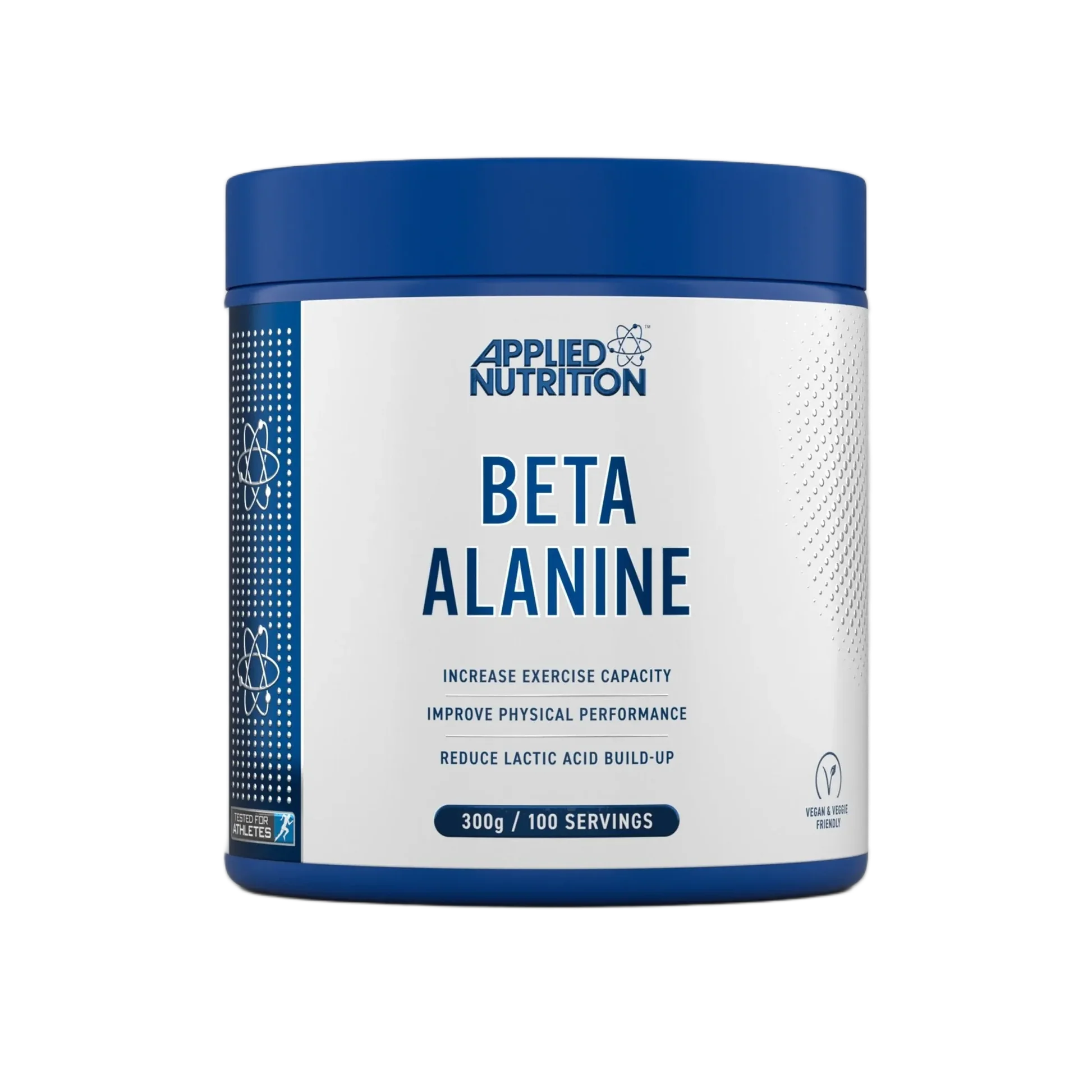
Beta-alanine supplementation can increase muscle carnosine concentrations over time. Carnosine contributes to buffering the accumulation of hydrogen ions during certain forms of high-intensity exercise, which is why beta-alanine is particularly associated with repeated or sustained hard efforts.
And that's an important lesson:
not everything useful in a pre-workout needs to produce an immediate stimulant sensation.
Likewise, citrulline is commonly included in formulas because of its relationship with nitric oxide production and blood flow.
Other formulations may include compounds aimed at focus, hydration or different aspects of exercise performance.
But you still need to read the label critically.
A long ingredient list doesn't guarantee an effective product.
Dose matters.
Evidence matters.
And your reason for taking the ingredient matters.
There's little point paying for six additional ingredients if you don't particularly need them or if they're present in trivial quantities.
That's the fairest answer to "what does pre-workout have that coffee doesn't?"
Potentially quite a lot—but whether those extras are useful depends entirely on the formula and the person taking it.
8. Is Coffee Better If You Only Want Caffeine Before Training?
Quite possibly.
If you've looked at everything a pre-workout can contain and concluded:
"I genuinely just want caffeine."
Then coffee is an obvious option.
It's widely available, familiar, relatively inexpensive and something many people already enjoy drinking.
You also avoid paying for additional ingredients that aren't relevant to what you want.
But coffee still isn't a perfectly measured caffeine-delivery system.
The amount of caffeine in a cup can vary with:
- coffee species and blend
- amount of coffee used
- brewing method
- extraction
- serving size
So if precise caffeine dosing matters to you, a labelled product can be easier to quantify.
There's also no requirement to consume the amount of caffeine commonly used in research simply because it has been studied.
Individual responses vary considerably.
Some people feel good and train well after a modest caffeine intake.
Others experience unpleasant stimulation at doses somebody else tolerates easily.
Your caffeine habits outside the gym matter as well.
A morning coffee, another at work, an afternoon energy drink and a pre-workout before training can quietly produce a very high daily intake.
Looking only at the caffeine in your pre-gym drink misses the bigger picture.
If coffee gives you the alertness you want without unwanted effects, there's nothing inherently incomplete about using coffee as pre-workout.
Sometimes the simpler option really is enough.
9. Which Is Better for Morning and Evening Workouts?
The time of your workout can completely change the answer.
For a morning session, both coffee and caffeinated pre-workout can be practical.
Coffee has an obvious cultural advantage: plenty of people already want one in the morning.
It can provide caffeine while fitting naturally into an existing routine.
A pre-workout may suit someone who wants a more predictable caffeine dose or additional performance-focused ingredients.
Evening training is different.
Now sleep enters the equation.
Caffeine doesn't stop affecting you when the workout ends.
Its effects can persist for hours, and consuming it too close to bedtime can interfere with sleep in susceptible people.
That matters because sleep isn't separate from your training programme.
Sleep supports recovery, wellbeing and your ability to train effectively again.
So taking a powerful stimulant at 8pm to improve one session can become a poor trade if you're still wide awake long after you intended to sleep.
Importantly, coffee isn't automatically the safe evening choice.
If it contains caffeine, the same fundamental problem remains.
A smaller coffee may contain less caffeine than a strong pre-workout, but that's a dose difference—not evidence that coffee caffeine somehow switches off at night.
For later sessions, sensible options may include:
- using less caffeine
- choosing a caffeine-free pre-workout if its other ingredients suit your needs
- training without a stimulant
- moving caffeine earlier where practical
There's no universal cut-off time that works perfectly for everyone because caffeine metabolism, sensitivity, habitual intake and sleep schedules vary.
Research does, however, give good reason to take the relationship between caffeine timing and subsequent sleep seriously.
For morning workouts, choose according to the effect you want. For evening workouts, choose according to both the session you're about to perform and the sleep you need afterwards.

10. Who Is Better Suited to Pre-Workout Than Coffee?
Pre-workout makes the most sense when you actually value what distinguishes it from coffee.
That may include somebody who:
- wants a clearly labelled caffeine dose
- wants specific non-caffeine performance ingredients
- doesn't enjoy drinking coffee before exercise
- prefers a cold drink before training
- wants a formula designed specifically around their training needs
- understands the ingredients and has chosen them deliberately
Coffee may be better suited to someone who:
- primarily wants caffeine
- already enjoys coffee
- doesn't need additional pre-workout ingredients
- wants a simple and inexpensive option
- tolerates coffee comfortably before exercise
And there's a third group that's easy to forget:
people who don't particularly need either.
You don't have to be stimulated before every workout.
If you've slept well, eaten appropriately, hydrated yourself and feel ready to train, caffeine isn't compulsory.
Becoming psychologically convinced that a workout can't happen until you've consumed a particular drink isn't an especially useful place to end up.
The same applies to escalating caffeine because your usual amount no longer produces a dramatic sensation.
The absence of a huge buzz doesn't automatically mean your workout will be poor.
Ultimately, pre-workout is better suited to someone who has looked beyond the word "energy" and identified genuine reasons for wanting the wider formulation.
If all of those additional ingredients are irrelevant to you, coffee becomes a much stronger competitor.
Choose pre-workout because you want what the formula provides—not because gym culture has convinced you coffee suddenly stops working once you pick up a barbell.
Conclusion
So, is pre-workout better than coffee?
Sometimes.
But not simply because it says "pre-workout" on the tub.
Coffee can provide caffeine, and caffeine has strong evidence supporting its ability to improve several aspects of exercise performance in many people.
If caffeine and alertness are all you want before training, coffee may be completely sufficient.
Pre-workout becomes more interesting when you want something beyond caffeine.
A well-chosen formula can combine a known amount of caffeine with other ingredients intended to support different aspects of training.
That can make it more comprehensive than coffee.
It doesn't automatically make it more effective for you.
You still need to consider dose, ingredient quality, caffeine tolerance, total daily intake and the time you're training.
Morning session?
Coffee or pre-workout can both make sense.
Late evening session?
The caffeine decision deserves much more thought because the workout isn't the final part of your recovery.
Sleep comes next.
And if you don't need caffeine or additional ingredients at all, neither option is compulsory.
Coffee is an excellent competitor when you mainly want caffeine. Pre-workout earns its place when the rest of the formula genuinely adds something useful to your training.
FAQ
1. Is pre-workout better than coffee?
Not automatically. Coffee can provide caffeine and may improve exercise performance, while pre-workout can combine caffeine with additional performance-focused ingredients. The better choice depends on what you want from your pre-training drink.
2. Can you use coffee as a pre-workout?
Yes. Coffee can be used before exercise, particularly if caffeine and alertness are your main objectives. The caffeine content of coffee can vary considerably, however, so one cup isn't always equivalent to another.
3. Can coffee replace pre-workout?
If you primarily use pre-workout for caffeine, coffee may provide much of what you're looking for. It won't reproduce additional ingredients contained in a multi-ingredient pre-workout formula.
4. Does pre-workout give you more energy than coffee?
It may feel stronger if it contains more caffeine or additional stimulant ingredients, but greater stimulation doesn't automatically mean greater exercise performance. Compare actual caffeine doses rather than assuming every pre-workout is stronger than every coffee.
5. Is caffeine from coffee the same as caffeine in pre-workout?
The caffeine molecule acts as caffeine regardless of whether it came from coffee or a supplement. What can differ is the dose, source, accompanying ingredients and consistency of the amount consumed.
6. Does coffee improve workout performance?
It can. Coffee contains caffeine, and research indicates that coffee can improve aspects of physical and cognitive performance in many people. Individual responses and the amount of caffeine consumed can vary.
7. What does pre-workout have that coffee doesn't?
Depending on the formula, pre-workout may contain ingredients such as beta-alanine, citrulline and compounds intended to support focus, hydration or other aspects of performance. Formulations vary, so always check the actual ingredient quantities.
8. Is coffee enough before a workout?
It can be. If you simply want caffeine and tolerate coffee well, there may be no need for a multi-ingredient supplement. Good nutrition, hydration, sleep and an effective training programme remain far more fundamental.
9. Is coffee or pre-workout better for evening workouts?
Neither caffeinated option is automatically ideal late in the day. Caffeine consumed too close to bedtime can disrupt sleep in some people, so dose, timing and individual sensitivity should be considered. A lower-caffeine or caffeine-free option may be more appropriate for some evening sessions.
10. Is pre-workout worth it if you already drink coffee?
It can be if you specifically want ingredients provided by the pre-workout beyond caffeine. If caffeine is your only priority and coffee already provides the effect you want, a pre-workout may offer little additional value for your needs.


