


EAAs and BCAAs sit side by side in the sports nutrition world, often sold in similar tubs, mixed into similar drinks and marketed towards people doing similar workouts.
That makes them look more interchangeable than they really are.
So when it comes to EAA vs BCAA, what's the difference?
The simplest answer is this:
BCAAs are part of the EAA family.
There are nine essential amino acids that your body cannot manufacture in sufficient quantities and therefore needs to obtain through the diet. Three of those nine—leucine, isoleucine and valine—are the branched-chain amino acids, or BCAAs.
That means an EAA supplement containing all nine essential amino acids should also provide the three BCAAs. A standalone BCAA supplement, however, doesn't provide all nine EAAs.
That distinction becomes particularly important when people start talking about muscle protein synthesis, recovery and whether one supplement is "better" for building muscle.
Leucine is an important anabolic signal. But signalling your body to build muscle protein and supplying all of the essential amino acids required to construct that protein aren't quite the same thing.
And there's an even bigger question lurking behind the EAA vs BCAA debate:
If you're already eating plenty of high-quality protein, do you actually need either supplement?
Let's sort out the amino-acid alphabet soup.
1. What’s the Difference Between EAAs and BCAAs?
The main EAA vs BCAA difference is the number and range of essential amino acids you're getting.
EAAs are the nine essential amino acids:
- histidine
- isoleucine
- leucine
- lysine
- methionine
- phenylalanine
- threonine
- tryptophan
- valine
BCAAs are just three members of that group:
- leucine
- isoleucine
- valine
Products such as MyProtein Impact BCAA 2:1:1 therefore provide a much narrower amino-acid mixture than a complete EAA formula.

The familiar 2:1:1 description refers to the relative proportions of leucine, isoleucine and valine.
That doesn't make BCAAs unimportant.
They're essential amino acids themselves, and leucine in particular has an important role in signalling pathways involved in muscle protein synthesis.
But if you're directly comparing essential amino acids vs branched-chain amino acids, EAAs provide a more complete collection of the amino acids the body cannot manufacture sufficiently itself.
Think of it this way:
Every complete EAA blend contains BCAAs. A BCAA-only blend does not contain every EAA.
That's the foundation for almost everything else in this comparison.

2. What Are Essential Amino Acids (EAAs)?
Amino acids are the building blocks used to construct proteins.
Some amino acids can be produced by the body. The nine essential amino acids are different because they need to be supplied through your diet.
You don't need an EAA supplement to obtain them.
Complete dietary proteins can provide the full range of essential amino acids, which is one reason total protein intake matters so much when discussing muscle growth and recovery.
A whey product such as Per4m Advanced Whey Protein, for example, supplies dietary protein that is subsequently digested into amino acids, including essential amino acids.
This distinction is important because the word "EAA" can make essential amino acids sound like something created specifically for sports supplements.
They're not.
You consume EAAs whenever you eat appropriate protein-containing foods.
What an EAA supplement does is provide those amino acids in free-form or otherwise readily available form without requiring you to consume a conventional protein-rich meal or shake.
For someone comparing EAA or BCAA specifically for amino-acid coverage, that's the key advantage of EAAs: you're providing all nine essential amino acids rather than isolating three of them.
3. What Are Branched-Chain Amino Acids (BCAAs)?
BCAAs are leucine, isoleucine and valine.
They're called branched-chain amino acids because of the branched structure of their side chains—not because they're a completely separate class from essential amino acids.
All three BCAAs are EAAs.
Leucine receives the most attention in muscle-building discussions because it plays an important role in activating signalling associated with muscle protein synthesis.
Isoleucine and valine are also essential amino acids with their own metabolic roles.
A straightforward product such as Warrior BCAA 2:1:1 provides these three branched-chain amino acids rather than attempting to provide the entire essential amino-acid profile.

Research does show that BCAA ingestion can stimulate anabolic signalling and can increase muscle protein synthesis compared with a placebo in certain circumstances.
But there's an important limitation.
Building new muscle protein requires more than leucine, isoleucine and valine.
The remaining essential amino acids still have to come from somewhere.
That's why saying "BCAAs stimulate muscle protein synthesis" and saying "BCAAs provide everything required to maximise muscle protein synthesis" are two very different claims.
4. Do EAAs Contain BCAAs?
Yes.
If you're using a complete EAA formula containing all nine essential amino acids, leucine, isoleucine and valine should already be part of it.
This is perhaps the most important fact to understand when comparing EAAs vs BCAAs.
BCAAs aren't an alternative group sitting outside the EAAs.
They're a subset of them.
Imagine a box containing nine tools.
The BCAAs are three particularly interesting tools from that box. A BCAA supplement takes those three out and gives them to you separately. A complete EAA supplement gives you the full set of nine.
That also explains why taking a complete EAA supplement and then automatically adding a separate BCAA supplement can be redundant.
You're adding more of amino acids that are already included.
That doesn't automatically make the combination dangerous, nor does it mean there could never be a reason to manipulate individual amino-acid quantities.
It simply means that:
"EAAs plus BCAAs" doesn't equal two completely different amino-acid categories.
Check the actual formula before stacking them.

5. Are EAAs Better Than BCAAs for Building Muscle?
If the comparison is specifically between an isolated EAA supplement and isolated BCAAs, EAAs have the stronger nutritional logic for supporting muscle protein synthesis because they provide all of the essential amino acids required for the process.
BCAAs still matter.
Leucine acts as an important signal involved in initiating muscle protein synthesis, and BCAA ingestion has been shown to stimulate muscle protein synthesis after resistance exercise compared with placebo.
But starting construction isn't the same as supplying all of the building materials.
If the other essential amino acids aren't sufficiently available, you eventually encounter a limitation.
This is why research comparing BCAAs with more complete amino-acid or protein sources requires context. A BCAA drink can produce a biological response without necessarily producing the same response as a complete source of essential amino acids.
There's also a much bigger determinant of muscle growth than the label on your intra-workout bottle:
your overall diet.
Muscle gain still depends on appropriate resistance training, sufficient energy and protein intake, recovery and consistency over time.
Neither an EAA nor BCAA drink compensates for an inadequate diet and poor training programme.
Intermission
So far, the hierarchy is fairly straightforward.
There are nine essential amino acids.
Three of them are BCAAs.
Therefore:
EAAs = the complete essential group.
BCAAs = leucine, isoleucine and valine.
But that doesn't automatically answer whether you should buy either one.
Supplement decisions rarely happen in a nutritional vacuum.
Someone training first thing in the morning without eating is in a different situation from someone who ate a protein-rich meal two hours ago.
Someone struggling to reach their daily protein requirement is in a different situation from someone consistently consuming plenty of high-quality protein.
And someone trying to improve recovery needs to look beyond a single amino-acid drink.
That's where the EAA vs BCAA comparison becomes much more useful.
Part 2
6. Are EAAs or BCAAs Better for Muscle Recovery?
"Recovery" is an enormous word in fitness.
It can mean soreness, restoration of performance, muscle protein remodelling, glycogen replenishment, hydration, sleep or simply feeling ready to train again.
So claiming that either EAAs or BCAAs are universally "best for recovery" is too simplistic.
There is research suggesting BCAA supplementation can reduce muscle soreness or certain markers associated with muscle damage following demanding exercise under some conditions.
That doesn't establish BCAAs as a complete recovery strategy.
If we're thinking specifically about rebuilding and remodelling muscle protein, availability of all essential amino acids matters. This again gives a complete EAA source an advantage over supplying only the three BCAAs when the comparison is made in isolation.
But your normal diet may already be doing that job.
A proper recovery strategy should consider:
- total daily protein
- overall calorie intake
- carbohydrate availability where appropriate
- hydration
- sleep
- training volume and frequency
- time between sessions
A flavoured amino-acid drink can fit inside that picture.
It shouldn't become the whole picture.

7. Are EAAs or BCAAs Better for Fasted Training?
This is one situation where the comparison becomes more interesting.
If you've eaten a protein-containing meal before training, amino acids from that meal can remain available during the training period.
Training genuinely fasted creates a different nutritional environment.
If someone specifically wants amino acids around a fasted session, providing all of the essential amino acids offers a more complete amino-acid profile than consuming BCAAs alone.
But there's a conceptual catch:
Once you consume amino acids, you're no longer doing the session in a strict zero-nutrient fasted state.
Whether that matters depends entirely on why you're training fasted.
An amino-acid-based training drink such as Optimum Nutrition Amino Energy + Electrolyte RTD also demonstrates why you need to read beyond the word "amino" on the front of a product. Amino-acid drinks can include additional functional ingredients, so they shouldn't automatically be treated as interchangeable with a dedicated EAA or BCAA formula.


If your priority is maximising the availability of essential amino acids around training, a complete protein source is another obvious option.
And if you're training fasted purely because you prefer exercising before breakfast, you can also simply train and eat a protein-rich meal afterwards.
Not every fasted workout requires an intra-workout supplement.
8. Do You Need BCAAs If You Already Take EAAs?
Usually, there is substantial overlap.
A complete EAA supplement already contains leucine, isoleucine and valine.
Adding a BCAA supplement therefore means consuming additional amounts of three amino acids you're already getting from the EAA formula.
That doesn't automatically provide a meaningful additional benefit.
If you're considering combining them, turn both tubs around and compare the amino-acid profiles.
Ask:
What am I actually adding?
If the answer is simply "more leucine, isoleucine and valine", you should have a specific reason for wanting those additional amounts rather than assuming two supplements must outperform one.
The same principle applies to other amino-acid supplements.
Glutamine, for example, is an amino acid, but it isn't one of the three BCAAs and isn't one of the nine essential amino acids in healthy adults.
So a product labelled glutamine shouldn't be mentally placed into the EAA or BCAA category just because all three products involve amino acids.
Amino acid supplement is a broad description.
EAA and BCAA have specific meanings.
9. Do You Need EAAs or BCAAs If You Eat Enough Protein?
This may be the most important question in the entire article.
If you're already consuming enough high-quality protein across the day, you're already consuming essential amino acids—including BCAAs.
Chicken contains BCAAs.
Eggs contain BCAAs.
Dairy contains BCAAs.
Whey contains BCAAs.
Soya and other protein-rich plant foods also contribute essential amino acids, although amino-acid profiles and digestibility differ between protein sources.
Your muscles don't award bonus points because leucine arrived in a colourful intra-workout drink rather than through food.
That's why daily protein intake has to be considered before deciding whether amino-acid supplements are worth taking.
If you're consistently meeting your protein needs using good-quality protein sources distributed sensibly through the day, the additional muscle-building benefit of adding standalone EAAs or BCAAs may be relatively small.
They can still be convenient in particular situations.
Perhaps you don't want a full meal around training. Perhaps you enjoy an amino drink during long sessions. Perhaps your dietary circumstances make protein intake more difficult.
Those are practical reasons.
But don't reverse the hierarchy.
Get your overall protein intake right first. Then decide whether an amino-acid supplement solves a real problem.

10. Should You Choose EAAs or BCAAs for Your Training?
If you're choosing purely between EAA or BCAA and your goal is to obtain a broad spectrum of essential amino acids, EAAs are the more complete option.
They contain all nine essential amino acids, including the three BCAAs.
If you specifically want leucine, isoleucine and valine, a BCAA supplement provides those three directly.
But your decision doesn't have to stop at those two tubs.
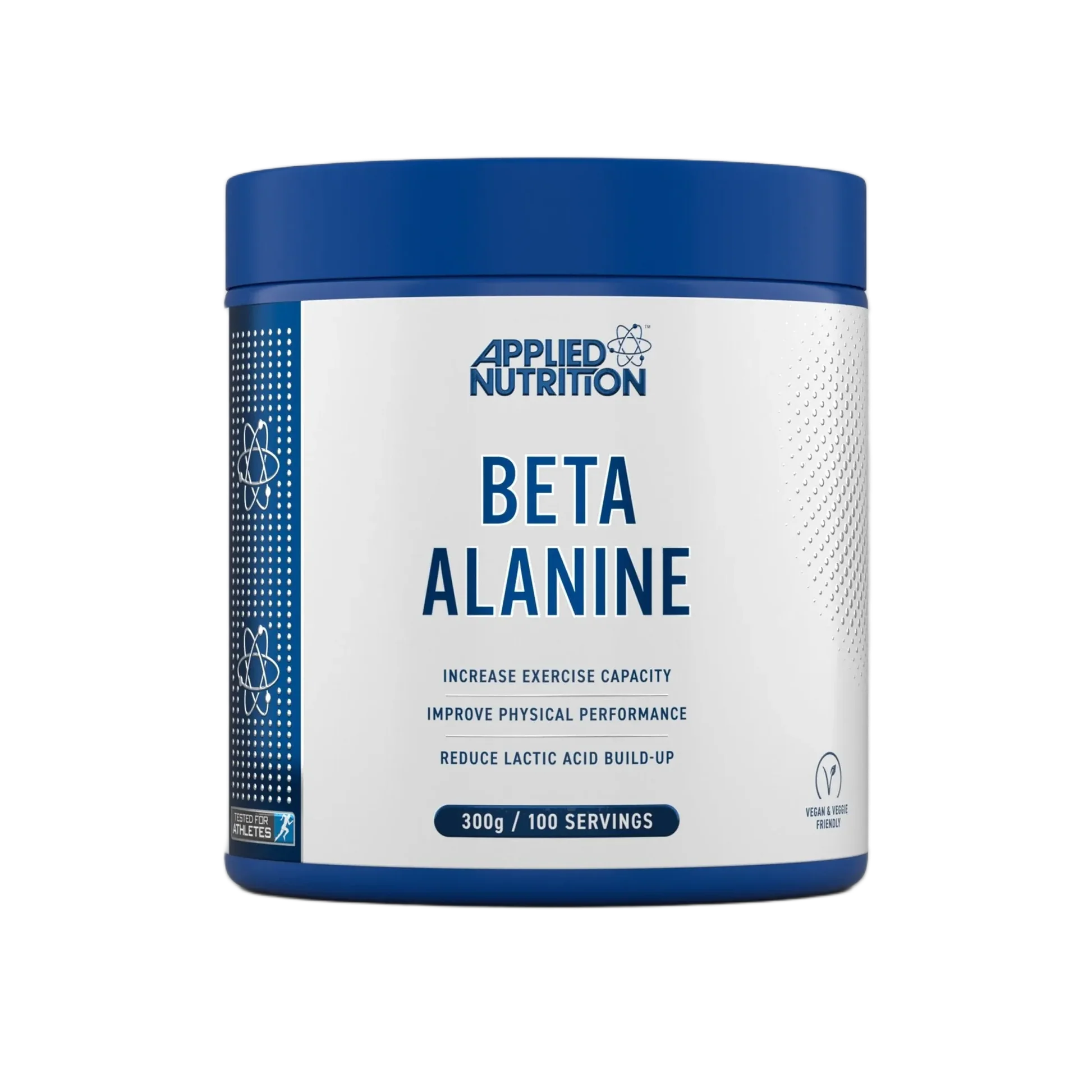
Sports nutrition contains numerous amino-acid supplements that serve entirely different purposes. Applied Nutrition Beta-Alanine, for example, is neither an EAA formula nor a BCAA supplement. Beta-alanine is used for a different nutritional purpose, most notably as a precursor involved in increasing muscle carnosine concentrations.
That's why choosing supplements by the vague category of "amino acids" isn't particularly helpful.
Choose according to the outcome you're actually trying to achieve.
If you want a simple decision framework:
- Want all nine essential amino acids? Choose an EAA formula.
- Specifically want leucine, isoleucine and valine? That's what BCAA supplements provide.
- Already eating sufficient high-quality protein? You may not need either.
- Considering another individual amino acid? Judge it according to its own evidence and purpose rather than treating it as another version of EAAs or BCAAs.
And remember that supplements sit on top of your diet.
They don't replace it.
Conclusion
So, EAA vs BCAA: what's the difference?
It's simpler than the supplement shelves make it look.
EAAs are the nine essential amino acids your body needs to obtain through the diet.
BCAAs—leucine, isoleucine and valine—are three members of that nine-amino-acid group.
That means complete EAAs already include BCAAs, while a BCAA-only supplement doesn't provide the full essential amino-acid profile.
For stimulating and supporting muscle protein synthesis in isolation, having the complete set of essential amino acids makes more nutritional sense than providing only three. BCAAs can still participate in anabolic signalling and may have applications around training and recovery, but they're not all of the raw materials required to construct new muscle protein.
Most importantly, neither supplement should distract you from dietary protein.
If you're already consuming sufficient high-quality protein, your diet is already supplying EAAs and BCAAs every day.
Choose EAAs when you specifically want a complete essential amino-acid supplement. Choose BCAAs when you specifically want the three branched-chain amino acids. And choose neither simply because somebody told you every workout needs an amino drink.
FAQ
1. What is the difference between EAA and BCAA?
EAAs are the nine essential amino acids that need to be supplied through the diet. BCAAs are three of those nine: leucine, isoleucine and valine. Therefore, BCAAs are a subgroup of EAAs rather than a completely separate category.
2. Do EAAs contain BCAAs?
A complete EAA formula should contain the three BCAAs—leucine, isoleucine and valine—alongside the other six essential amino acids.
3. Are EAAs better than BCAAs?
EAAs provide a more complete essential amino-acid profile than BCAAs alone. Whether that makes an EAA supplement useful to you depends on your diet, protein intake, training and reason for supplementing.
4. Are EAAs better than BCAAs for muscle growth?
When comparing the supplements in isolation, EAAs provide all of the essential amino acids needed for muscle protein synthesis, whereas BCAAs provide only three. However, adequate total dietary protein and resistance training remain much more important to long-term muscle growth.
5. Do BCAAs help build muscle?
BCAAs, particularly leucine, can stimulate anabolic signalling, and research has found that BCAA ingestion can increase muscle protein synthesis compared with placebo under certain conditions. However, a complete supply of essential amino acids is required to construct new muscle protein.
6. Are EAAs or BCAAs better for recovery?
Both have been studied in relation to exercise recovery, and some research suggests BCAAs may reduce soreness under certain conditions. If the objective is supplying amino acids for muscle protein synthesis and remodelling, a complete EAA profile provides a broader range of essential amino acids. Recovery also depends heavily on overall nutrition, sleep and training management.
7. Are EAAs better than BCAAs for fasted training?
If you specifically want amino acids during a fasted training session, EAAs provide all nine essential amino acids rather than only three. However, consuming amino acids means the session is no longer strictly nutrient-free, and many people can simply eat sufficient protein before or after training instead.
8. Do you need BCAAs if you take EAAs?
Usually there is considerable overlap because a complete EAA formula already provides leucine, isoleucine and valine. Adding BCAAs therefore means adding more of three amino acids already contained in your EAA supplement.
9. Do you need EAAs or BCAAs if you eat enough protein?
Not necessarily. High-quality dietary protein already supplies essential amino acids, including BCAAs. If you're consistently meeting your protein requirements, additional isolated amino-acid supplementation may offer limited extra benefit.
10. Can you take EAAs and BCAAs together?
You can consume them together, but that doesn't automatically make the combination more effective. Because EAAs already include the three BCAAs, check both formulas and consider whether adding the second product actually serves a useful purpose.


