


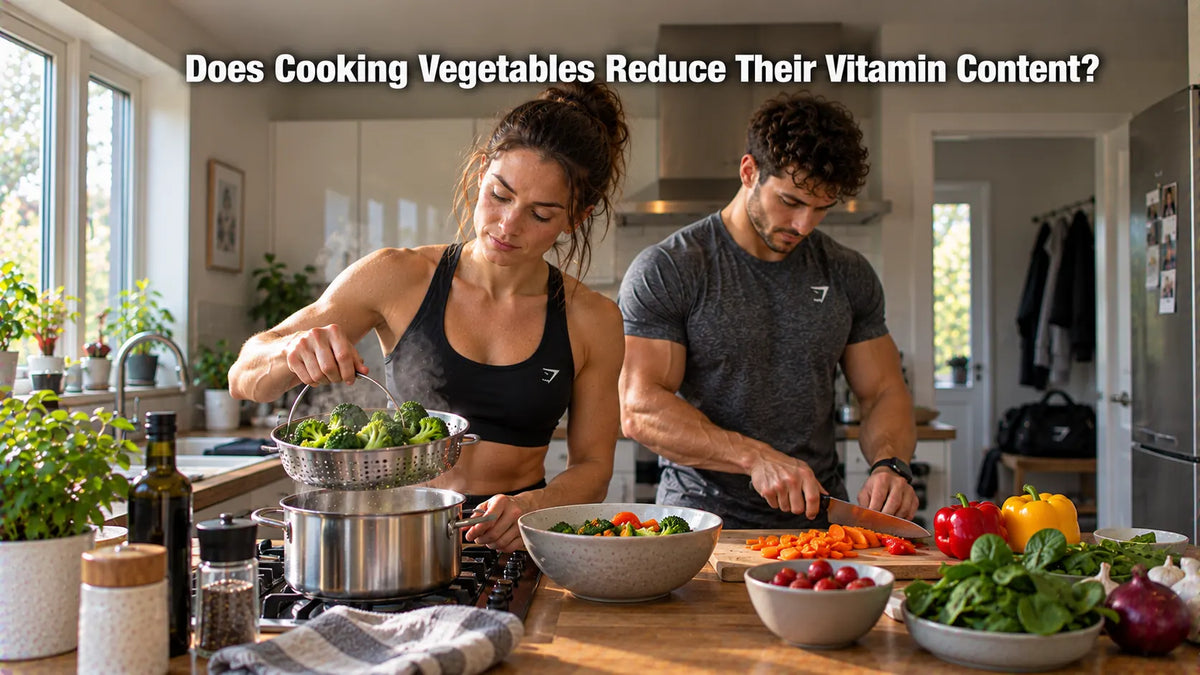
You've bought the broccoli, chopped the carrots and filled your plate with spinach. On paper, it's a nutritional success. But then comes a question that can make even a simple Sunday roast feel surprisingly complicated: does cooking vegetables reduce their vitamin content?
You've probably heard that boiling destroys nutrients, steaming is healthier and raw vegetables are always best. Yet you've also heard that cooked tomatoes and carrots can actually be more nutritious than their raw counterparts.
So which version is true?
Both contain an element of truth, but neither tells the whole story.
Cooking can reduce certain vitamins, particularly vitamin C and some B vitamins. However, it can also make specific nutrients easier for your body to access and absorb. The outcome depends on the vegetable, the nutrient and how you prepare it.
For anyone trying to eat well, fuel training or simply get more vegetables into their diet, that distinction matters. Nutrition isn't just about how many vitamins remain on a laboratory test. It's also about what your body can use, how much food you actually eat and whether your meals are enjoyable enough to become a habit.
Here's what happens when vegetables meet heat, how different cooking methods compare and why the healthiest approach rarely involves eating everything raw.
1. Does Cooking Vegetables Reduce Their Vitamin Content?
Yes, cooking vegetables can reduce their vitamin content, but the amount lost varies considerably.
Some vitamins are sensitive to heat, oxygen or water. Others are relatively stable during ordinary cooking, while certain plant compounds may become more accessible after heating.
Consider broccoli. It contains vitamin C, folate, fibre and various plant compounds. Boiling it in a large pan of water may reduce some water-soluble vitamins because they move into the cooking liquid or degrade during heating.
Steam the same broccoli briefly, and more of those vitamins may remain in the vegetable.
But even that comparison doesn't mean steamed broccoli is always nutritionally superior in every respect. Cooking can change different nutrients in different ways.
Three processes are especially important:
- Heat-related degradation: Some vitamins undergo chemical changes when exposed to elevated temperatures.
- Leaching: Water-soluble nutrients can move from vegetables into cooking water.
- Changes in bioavailability: Cooking can soften plant tissues and make certain nutrients easier to release and absorb.
The crucial point is that nutrient retention and nutrient absorption aren't identical.
A raw vegetable may contain more of one vitamin, while a cooked version may provide better access to another compound.
Research comparing boiling, steaming, microwaving and blanching confirms that nutrient retention differs by both vegetable and cooking method. There is no single method that preserves every vitamin equally well.
THE IMPORTANT DISTINCTION
Nutrient content: How much of a nutrient remains in the food.
Nutrient bioavailability: How much can be released from the food and potentially absorbed.
Overall nutritional value: The combination of nutrients, fibre, food quantity and how the vegetable fits into your diet.
So cooking vegetables doesn't simply switch their nutritional value off. It changes it, sometimes positively and sometimes negatively.

2. What Happens to Vitamins and Minerals When Vegetables Are Cooked?
When vegetables are heated, several physical and chemical changes happen at once.
Plant cell walls soften, water moves through tissues, enzymes become less active and some compounds break down or move into surrounding liquid.
These changes explain why cooked spinach becomes softer, carrots become easier to bite and broccoli changes colour and texture.
They also help explain differences in nutrient retention.
Water-soluble vitamins, including vitamin C and several B vitamins, are particularly vulnerable when vegetables are boiled and the cooking water is discarded.
Folate is a useful example. A study examining foods important to the UK diet found substantial folate losses when spinach and broccoli were boiled, whereas steaming produced no statistically significant decrease under the tested conditions.
Minerals behave differently.
Iron, calcium, potassium and magnesium aren't destroyed by ordinary cooking heat. They are chemical elements, so heating doesn't make them disappear.
However, minerals can move into cooking water. If that liquid is thrown away, some of the mineral content may be lost from the finished dish.
This is why boiling vegetables for soup is different from boiling them and pouring the water down the sink. In a soup, some nutrients that have entered the liquid remain part of the meal.
Fat-soluble vitamins and carotenoids behave differently again. Cooking can disrupt plant structures, sometimes improving the accessibility of compounds such as beta-carotene.
What Happens During Cooking?
Softens plant tissues but can degrade sensitive vitamins.
Can draw water-soluble vitamins and minerals into cooking liquid.
May improve access to certain carotenoids and other compounds.
Simplified illustration; the balance of effects varies between vegetables, nutrients and cooking methods.
Cooking is a trade-off between preserving sensitive nutrients and making food easier to digest, prepare and enjoy.
3. Which Vitamins Are Most Sensitive to Heat?
Vitamin C is one of the best-known heat-sensitive nutrients.
It's water-soluble and can be affected by heat, oxygen and prolonged cooking. This makes vitamin C losses particularly relevant when vegetables are boiled for extended periods.
Folate, also known as vitamin B9, is another important example. Leafy greens and broccoli can provide folate, but cooking methods influence how much remains in the finished portion.
Other B vitamins can also be lost during preparation, although their stability differs. It's inaccurate to assume that every B vitamin responds to heat in exactly the same way.
Fat-soluble vitamins such as A, E and K have different properties. They don't leach into water in the same way as vitamin C, but they aren't universally immune to cooking-related changes.
Research on vegetable cooking has found that vitamin retention varies substantially across both individual vitamins and vegetables.
| Nutrient | Relevant cooking issue | Practical consideration |
|---|---|---|
| Vitamin C | Sensitive to heat, oxygen and water loss | Avoid prolonged boiling |
| Folate (B9) | Can leach into cooking water | Brief steaming may improve retention |
| Other B vitamins | Variable heat and water sensitivity | Limit unnecessary cooking time |
| Vitamin K | Retention varies by vegetable and method | No single universal rule |
| Beta-carotene | Plant structure affects accessibility | Cooking may improve availability |
For readers assessing their overall micronutrient intake, Applied Nutrition Multi-Vitamin Complex contains vitamin C, folic acid and several other B vitamins. It's a relevant example of a supplement that provides these nutrients in measured amounts.
However, a multivitamin doesn't prevent cooking losses and isn't automatically necessary because someone eats cooked vegetables.
Vegetables also supply fibre, water and numerous plant compounds that a capsule cannot fully reproduce.
The practical goal is to preserve nutrients where possible while continuing to eat a varied diet — not to eliminate cooking.
4. Does Boiling Vegetables Remove More Nutrients Than Steaming?
For many water-soluble vitamins, boiling can cause greater losses than steaming, particularly when vegetables are cooked for a long time in plenty of water.
There are two main reasons.
First, vitamins such as vitamin C and folate may degrade during heating.
Second, some of these nutrients can move into the boiling water. If you discard the liquid, those nutrients no longer form part of the meal.
Steaming generally exposes vegetables to less direct contact with water, reducing opportunities for leaching.
A UK-focused study reported folate retention of approximately 49% in boiled spinach and 44% in boiled broccoli under its tested conditions. Steaming those vegetables did not produce a statistically significant folate decrease in the same study.
Those figures illustrate the potential difference, but they shouldn't be treated as universal values for every kitchen.
Cooking duration, vegetable variety, portion size and preparation all affect the outcome.
For example, briefly boiling whole vegetables may produce a different result from finely chopping them and simmering them for half an hour.
Boiling also isn't nutritionally pointless.
If you're making vegetable soup, stew or a sauce and consume the cooking liquid, some nutrients that leach into the water remain available in the dish.
There are also occasions when boiling is simply the most practical method, particularly for certain root vegetables.
Rather than banning it, use it thoughtfully.
- Use only as much water as needed.
- Avoid unnecessarily long cooking times.
- Keep vegetable pieces reasonably large when practical.
- Use cooking liquid in soups or sauces where suitable.
- Consider steaming for vegetables such as broccoli and leafy greens.
Steaming often has an advantage for vitamin retention, but sensible boiling still has a place in a healthy kitchen.

5. Is Steaming the Best Way to Preserve Vitamins in Vegetables?
Steaming is one of the most reliable methods for limiting the loss of water-soluble vitamins, but calling it the single healthiest method for every vegetable would be an exaggeration.
Its main advantage is straightforward: vegetables cook without being submerged in water.
That reduces the opportunity for soluble nutrients to escape into a liquid that may later be discarded.
Steaming can also be relatively quick, particularly for vegetables that only need a little softening.
Broccoli, green beans, spinach and similar vegetables are often well suited to this approach.
However, cooking time still matters.
Steaming broccoli until it's just tender is different from steaming it until it becomes extremely soft and dull in colour.
And microwaving vegetables with very little water can also preserve nutrients effectively.
One comparative study found that microwaving generally retained vitamin C better than boiling in the vegetables tested, although individual vitamin responses varied.
This is why cooking-method rankings can be misleading.
Different methods may preserve one nutrient particularly well while changing another.
There are also practical considerations beyond laboratory nutrient measurements.
A method that produces vegetables you enjoy eating regularly may contribute more to your overall diet than a theoretically optimal technique you rarely use.
For busy households, steaming frozen vegetables can be a convenient option. Frozen vegetables are often processed soon after harvesting and can make nutritious meals easier to prepare.
Steaming is an excellent default, but it's a useful option rather than a nutritional commandment.
6. Are Raw Vegetables Always More Nutritious Than Cooked Vegetables?
No. Raw vegetables aren't automatically healthier than cooked vegetables.
Raw vegetables can be excellent sources of vitamin C, folate, fibre and other nutrients, especially when they are fresh and handled appropriately.
Cooking may reduce some of those compounds.
But heat can also soften plant cell walls and improve access to certain carotenoids.
Carrots provide a useful example. They contain beta-carotene, which the body can convert into vitamin A.
Cooking and processing carrots can make beta-carotene more accessible by disrupting the structures that contain it.
Tomatoes offer another example. Cooking can improve the bioavailability of lycopene, a carotenoid responsible for much of their red colour.
That doesn't mean cooked carrots or tomatoes always contain more of these compounds by weight. It means the body may be able to access a greater proportion under certain conditions.
Spinach illustrates the trade-off particularly well.
Raw spinach provides folate and vitamin C. Cooking it may reduce some of those nutrients, while also shrinking its volume dramatically, making it easier to consume a larger quantity.
It also contains oxalates, which can influence mineral availability. Cooking methods may change oxalate content, although that doesn't mean every mineral in cooked spinach suddenly becomes fully absorbable.
It's useful to remember that vitamins A, C, E and K have different roles and properties.
For example, Per4m Multi Vita+min contains both water-soluble vitamins, such as vitamin C and several B vitamins, and fat-soluble vitamins, including A, E and K.

This combination helps illustrate why different nutrients cannot be discussed as though they respond identically to cooking.
The supplement itself doesn't reproduce the fibre, volume and varied phytochemicals supplied by vegetables, and it isn't a reason to choose capsules over food.
| Vegetable | Potential raw advantage | Potential cooked advantage |
|---|---|---|
| Broccoli | Retention of heat-sensitive vitamins | Softer texture and easier preparation |
| Carrots | Crunchy texture and no cooking-related vitamin loss | Improved accessibility of beta-carotene |
| Tomatoes | Fresh vitamin C and other compounds | Potentially improved lycopene bioavailability |
| Spinach | Avoids cooking-related folate and vitamin C losses | Reduced volume and changes in some antinutritional compounds |
A mixture of raw and cooked vegetables offers a practical way to benefit from both approaches.

7. Can Cooking Actually Improve the Absorption of Certain Nutrients?
Yes — and this is where the familiar claim that cooking destroys nutrition becomes particularly misleading.
Some nutrients are trapped within plant structures that limit how easily they can be released during digestion.
Cooking can soften or disrupt those structures, improving the accessibility of certain compounds.
Beta-carotene in carrots and lycopene in tomatoes are well-known examples.
Heating and processing can increase the proportion of these carotenoids that becomes available for absorption, although the effect depends on the food and preparation method.
Fat also plays a role.
Carotenoids are fat-soluble compounds, so eating carotenoid-rich vegetables alongside a modest amount of dietary fat can support their absorption.
That might mean serving cooked carrots with a little olive oil or adding a suitable dressing to a salad.
There is no need to drown vegetables in oil, and adding fat increases the energy content of the dish.
The point is simply that nutrient bioavailability depends on more than the amount present in the uncooked food.
Cooking may also improve digestibility by softening fibrous tissues and reducing certain naturally occurring compounds.
However, improved access to one nutrient doesn't guarantee an overall increase in every nutrient.
A tomato sauce may offer more accessible lycopene than raw tomatoes while containing less vitamin C after prolonged heating.
Both observations can be true.
For people who exercise regularly, the practical message is reassuring: a balanced meal containing cooked vegetables still provides valuable micronutrients, fibre and plant compounds.
You don't need to eat everything raw to make your food worthwhile.
Cooking can reduce some nutrients while improving access to others. Good nutrition is about the complete meal, not one isolated laboratory measurement.
8. Does Roasting or Microwaving Vegetables Destroy Vitamins?
Neither roasting nor microwaving automatically destroys the vitamins in vegetables.
Both methods can change nutrient content, but the outcome depends on temperature, duration, moisture and the vegetable itself.
Microwaving is often unfairly criticised.
Microwave ovens heat food using electromagnetic energy that causes water and other molecules to generate heat. They don't introduce a special form of nutrient destruction that makes vegetables inherently less healthy.
In fact, microwaving can be relatively quick and may require very little added water.
Those characteristics can help preserve water-soluble vitamins compared with prolonged boiling.
However, microwaving isn't automatically superior for every vitamin or vegetable.
Roasting presents a different set of trade-offs.
It typically involves dry heat and can expose vegetables to relatively high temperatures, particularly at their surfaces.
Prolonged roasting may reduce heat-sensitive vitamins, but roasting also develops flavour and can make vegetables more appealing.
That's not a trivial benefit.
If roasted cauliflower, carrots or peppers encourage someone to eat vegetables more regularly, they can make a meaningful contribution to dietary quality.
Stir-frying is another option. It often uses relatively short cooking times and limited water, although temperature and added oil vary.
The biggest mistake is assuming that one cooking method has a fixed nutritional effect regardless of how it's used.
| Method | Main consideration | Practical approach |
|---|---|---|
| Boiling | Water-soluble nutrients can leach out | Use less water and avoid overcooking |
| Steaming | Limited direct contact with water | Cook until just tender |
| Microwaving | Often quick with little water | Use suitable containers and avoid excessive cooking |
| Roasting | Higher temperatures and longer exposure may affect sensitive vitamins | Avoid unnecessary charring and overcooking |
| Stir-frying | Short cooking time with added fat | Use appropriate heat and moderate oil |
For most households, brief steaming and microwaving with minimal water are sensible options for preserving many water-soluble vitamins.
But roasted and stir-fried vegetables can absolutely belong in a healthy diet.
9. How Can You Reduce Nutrient Loss When Preparing Vegetables?
You don't need specialist equipment or a complicated cooking routine to protect the nutritional value of vegetables.
Small changes in preparation can make a difference.
Start by avoiding unnecessary soaking.
Washing vegetables is important for hygiene, but leaving chopped vegetables submerged in water for long periods may encourage water-soluble nutrients to move into the liquid.
Next, consider how finely you cut them.
Smaller pieces expose more surface area, which can influence nutrient losses during cooking.
There are good reasons to chop vegetables, of course. The aim isn't to cook everything whole, but to avoid excessive preparation when it serves no purpose.
Cooking duration is another important factor.
Vegetables that are tender after a few minutes don't necessarily benefit from another twenty minutes in the pan.
For broccoli, green beans and leafy vegetables, shorter cooking times can help limit unnecessary nutrient loss.
When boiling, use the cooking liquid where practical.
Soup, stew and sauces can retain some nutrients that would otherwise be discarded.
Storage matters too.
Vitamins can change during storage before cooking even begins. Fresh vegetables that have been sitting around for an extended period aren't automatically nutritionally superior to frozen vegetables.
Frozen vegetables are convenient, often affordable and can help reduce food waste.
Finally, don't overlook dietary variety.
Eating a range of vegetables gives you access to different nutrients and plant compounds, reducing the importance of achieving perfect retention from any single ingredient.
Six Practical Ways to Protect Vegetable Nutrients
Clean vegetables thoroughly, but don't leave chopped pieces sitting in water unnecessarily.
Prepare manageable pieces without creating unnecessary exposed surface area.
Cook vegetables until pleasantly tender rather than automatically cooking them for longer.
Steam or microwave where suitable, or use less water when boiling.
Incorporate suitable cooking water into soups and sauces rather than discarding it.
Mix raw, steamed, roasted and other preparations across the week.
Consistency and variety are more important than trying to eliminate every possible vitamin loss.

10. What's the Healthiest Way to Cook Vegetables for Maximum Nutrition?
If you want a simple answer, start with brief steaming or microwaving using minimal water.
Both methods can preserve many water-soluble vitamins effectively, especially when vegetables aren't overcooked.
But the healthiest approach is broader than selecting one appliance.
Some vegetables are excellent raw. Others become more enjoyable, digestible or nutritionally accessible after cooking.
A varied routine might include raw peppers in a salad, lightly steamed broccoli alongside dinner, roasted carrots with a Sunday meal and tomatoes cooked into a sauce.
Each contributes something useful.
Remember that dietary fat can also help the absorption of carotenoids and other fat-soluble nutrients.
A modest amount of olive oil alongside suitable vegetables can therefore be part of a nutritious meal, rather than something to avoid automatically.
What about supplements?
For people with particular dietary needs, restricted food choices or identified nutrient gaps, supplements may sometimes have a role.
For example, Optimum Nutrition Opti-Women contains vitamin C, folic acid and other micronutrients in a formulation designed for adult women.


However, its presence in a nutrition routine doesn't make vegetables optional, and it doesn't reverse vitamin losses caused by cooking.
It's also important not to stack several multivitamins without checking their combined nutrient amounts. Some vitamins and minerals can be harmful in excessive quantities.
People who are pregnant, planning pregnancy, taking medication or managing a medical condition should seek appropriate advice about supplement suitability.
For everyone else, the biggest gains are likely to come from everyday habits.
Buy vegetables you enjoy. Store them appropriately. Cook them in ways that preserve reasonable nutritional quality. And eat them regularly.
A plate of vegetables you actually enjoy eating is more useful than a perfectly steamed portion that never makes it onto your plate.
Conclusion
Does cooking vegetables reduce their vitamin content?
Yes, it can — particularly when heat-sensitive and water-soluble vitamins are exposed to prolonged cooking or large amounts of water.
Vitamin C and folate are important examples, while minerals may move into cooking liquid without being destroyed by heat.
But the idea that cooking simply removes nutrition is incomplete.
Heating can soften plant structures and improve the availability of certain carotenoids, including beta-carotene from carrots and lycopene from tomatoes.
Steaming and microwaving with minimal water are often effective choices for retaining water-soluble vitamins, while roasting, stir-frying and sensible boiling can also contribute to a healthy diet.
Raw vegetables have advantages, but they aren't automatically superior to cooked vegetables in every respect.
For most people, the best approach is straightforward: eat a variety of vegetables, use different preparation methods and avoid unnecessary overcooking.
Nutrition doesn't require every vegetable to be raw, every pan to be a steamer or every meal to be perfect.
It requires a balanced diet you can maintain.
Frequently Asked Questions
1. Does cooking vegetables destroy vitamins?
Cooking can reduce some vitamins, particularly vitamin C and folate, but it doesn't destroy all vitamins. The effect depends on the vegetable, nutrient, temperature, cooking time and amount of water used.
2. Which vitamins are most sensitive to heat?
Vitamin C is particularly sensitive to heat and oxidation. Folate and some other B vitamins can also be lost during cooking, especially when vegetables are boiled and the water is discarded.
3. Does boiling vegetables remove more nutrients than steaming?
Often, yes, particularly for water-soluble vitamins. Boiling allows nutrients to move into cooking water, whereas steaming reduces direct contact with water. Results still vary between vegetables.
4. Are raw vegetables healthier than cooked vegetables?
Not always. Raw vegetables may retain more heat-sensitive vitamins, while cooking can improve the accessibility of certain carotenoids. Eating both raw and cooked vegetables is a practical approach.
5. Does cooking spinach reduce its nutritional value?
Cooking spinach can reduce some vitamin C and folate, especially through boiling. However, cooking also reduces its volume and may change certain compounds that influence mineral availability.
6. Are cooked carrots more nutritious than raw carrots?
Cooking carrots can improve access to beta-carotene, but that doesn't mean every nutrient increases. Raw and cooked carrots can both contribute to a healthy diet.
7. Does cooking tomatoes improve lycopene absorption?
Cooking and processing tomatoes can improve lycopene bioavailability by changing the food's structure. Consuming tomato products with some dietary fat may further support carotenoid absorption.
8. Does microwaving vegetables destroy vitamins?
Microwaving can cause some nutrient changes, but it often preserves water-soluble vitamins well because cooking times can be short and little water is required. It isn't inherently more destructive than other methods.
9. Do minerals disappear when vegetables are boiled?
No. Minerals aren't destroyed by ordinary cooking heat, but some can move into boiling water. Discarding that water may reduce the mineral content of the finished vegetable portion.
10. What's the healthiest way to cook vegetables?
Brief steaming and microwaving with minimal water are useful options for preserving many water-soluble vitamins. However, a varied diet containing raw, steamed, roasted and other vegetable preparations is more important than relying on one method.


