



You walk into the gym ready for a heavy bench press session.
The empty bar goes up first.
Then 40kg.
Then 60kg.
Then 80kg.
Finally, you reach the weight you'll actually use for your hard sets.
By that point, you might have already performed 30 or 40 repetitions.
So do any of them count?
If you're tracking weekly training volume, should those warm-up sets go into your programme alongside your working sets? And if your muscles have already been lifting weights for several sets, surely they're contributing something towards muscle growth?
Potentially.
But that doesn't mean every set you perform should be treated equally.
Warm-up sets and working sets have fundamentally different jobs.
A good warm-up prepares your muscles, joints and nervous system for the harder work that's coming without creating unnecessary fatigue. Your working sets then provide the challenging stimulus you're actually trying to progress.
Some sufficiently demanding warm-up sets could contribute a small amount towards hypertrophy.
Most deliberately shouldn't.
Because if your warm-up becomes hard enough to resemble your working sets, you may arrive at the most important part of your workout already fatigued.
The goal isn't to turn every kilogram you lift into a muscle-building set.
It's to arrive at your productive sets ready to perform.
1. What Is the Difference Between Warm-Up Sets and Working Sets?
A warm-up set is primarily preparation.
A working set is primarily training.
That distinction sounds simple, but it explains most of the confusion around whether warm-up sets "count."
Imagine your first exercise is a barbell squat.
Your session might progress something like this:
- empty bar × 10
- 40kg × 8
- 60kg × 5
- 80kg × 3
- 100kg × 8 working set
- 100kg × 8 working set
- 100kg × 7 working set
The early sets gradually expose you to heavier loads without requiring substantial effort.
You're rehearsing the movement.
You're preparing the tissues involved.
You're becoming comfortable under increasingly heavier weight.
And you're assessing how the exercise feels that day.
Your working sets are different.
They're sufficiently challenging that completing them creates meaningful muscular fatigue and provides a stimulus you can progressively overload over time.
The important difference therefore isn't simply whether a set occurs before or after another set.
It's how demanding that set actually is.
A so-called warm-up set performed extremely close to muscular failure starts looking remarkably similar to a working set.
And that's usually exactly what you don't want from a warm-up.

2. Do Warm-Up Sets Actually Build Muscle?
They potentially can.
But most properly structured warm-up sets probably contribute relatively little to hypertrophy compared with challenging working sets.
Muscle growth requires a sufficiently strong training stimulus.
If you can bench press 100kg for your working sets, performing 20 repetitions with an empty 20kg bar is unlikely to create anything approaching the same muscular challenge.
You might feel your chest working.
You might even develop a slight pump.
But muscle activation doesn't automatically mean you've created a meaningful hypertrophy stimulus.
As the warm-up becomes heavier, things become less clear-cut.
Suppose your final warm-up is 80kg for several repetitions before your 100kg working sets.
That set obviously creates more mechanical tension than the empty bar did.
If you performed enough repetitions to make it genuinely difficult, it could theoretically contribute towards muscle growth.
But there's a trade-off.
The closer your warm-up moves towards being a productive hypertrophy set, the more fatigue it creates.
And that fatigue can reduce your performance when you reach the working sets you actually intended to progress.
So while warm-up sets aren't somehow incapable of contributing to hypertrophy, making them muscle-building sets shouldn't usually be the objective.
Their job is to prepare you for better working sets.
3. Should Warm-Up Sets Count Towards Training Volume?
Usually, not in the same way as your working sets.
If your programme says you've performed 12 weekly sets for chest, that would normally refer to challenging working sets rather than every preparatory set performed beforehand.
Otherwise, training volume becomes misleading.
Imagine two people both record 15 "sets" of bench press.
The first performs:
- 5 warm-up sets
- 10 hard working sets
The second performs:
- 10 warm-up sets
- 5 hard working sets
Technically, both completed 15 sets.
Their hypertrophy stimulus is unlikely to be equivalent.
This is why simply counting every set performed doesn't tell you much about productive training volume.
The proximity of those sets to muscular failure, the load used, repetition range, exercise and overall effort all matter.
For practical workout tracking, it's generally much cleaner to record warm-ups separately and count your challenging working sets towards your programmed hypertrophy volume.
That doesn't mean warm-up work creates zero physical stress.
It means it shouldn't automatically be treated as equivalent to a productive working set.
When you're trying to determine whether you're doing enough—or too much—training volume, that distinction becomes extremely useful.
4. How Heavy Should Your Warm-Up Sets Be?
Heavy enough to prepare you.
Light enough not to tire you.
The exact loads depend heavily on the exercise and how much weight you'll eventually be lifting.
For an isolation exercise performed later in a workout, you may require very little additional preparation.
Before a heavy squat or bench press, several gradual ramp-up sets can make much more sense.
A simple principle is to increase the load while reducing repetitions.
For example, before a heavy working weight you might move through:
very light load → more repetitions
moderate load → fewer repetitions
heavier load → very few repetitions
working weight → programmed repetitions
As the weight increases, you don't need to repeatedly perform ten or fifteen reps.
Doing so simply creates additional fatigue.
Suppose you're preparing for a heavy squat.
Performing 15 repetitions at every stage on the way to your working weight could leave your legs exhausted before the actual workout begins.
Instead, those increasingly heavy warm-up sets can become shorter.
The final ramp-up set should make the working weight feel familiar without becoming a miniature working set itself.
You should finish your warm-up feeling more prepared, not more tired.

5. How Many Warm-Up Sets Should You Do Before Lifting?
There's no universal number.
Someone preparing to squat 180kg is likely to require a different warm-up from someone performing cable curls with 15kg.
Several factors influence how much preparation makes sense:
- exercise complexity
- working weight
- training experience
- previous exercises
- individual preference
- how you feel that day
Your first major compound exercise will generally require the most preparation.
If you're starting with heavy squats, you may perform several ramp-up sets before reaching your working load.
But imagine you then move onto leg press.
Your legs are already warm.
You've already performed heavy resistance training.
You probably don't need to repeat the entire warm-up process from scratch.
One or two preparatory sets may be enough to familiarise yourself with the new movement and load.
Later isolation exercises may require even less.
This is where rigid rules such as "always perform four warm-up sets" become unnecessarily restrictive.
Warm-ups should respond to what you're actually doing.
The objective is to reach your working sets feeling:
- physically prepared
- technically confident
- comfortable with the load
- mentally ready
- minimally fatigued
More warm-up sets aren't automatically better.
The right amount is whatever prepares you adequately without stealing performance from the training that follows.
Intermission
So far, we've established that warm-up sets and working sets serve different purposes. Warm-ups prepare you for demanding training, while working sets provide the primary hypertrophy stimulus you're trying to progressively overload.
A sufficiently difficult warm-up set could contribute towards muscle growth, but deliberately turning every warm-up into a hard set defeats much of its purpose. For practical training-volume tracking, it's therefore usually more useful to keep preparatory sets separate from your challenging working sets.
In Part 2, we'll look at whether excessive warm-ups can reduce performance, whether every exercise actually needs warm-up sets, how good ramp-up sets can help you perform better when the real work begins, which supplements can support training performance and the best way to structure warm-up sets when muscle growth is your primary goal.
Part 2

6. Can Too Many Warm-Up Sets Reduce Your Performance?
Yes.
A warm-up should prepare you for your working sets—not become a workout before the workout.
Every repetition creates at least some fatigue. When warm-up sets are appropriately light and kept comfortably away from failure, that fatigue is usually minimal.
But problems appear when lifters turn their ramp-up sets into increasingly difficult mini working sets.
Imagine your first working set on the bench press is 100kg for eight repetitions.
Before reaching it, you perform:
- empty bar × 20
- 40kg × 15
- 60kg × 12
- 70kg × 10
- 80kg × 8
- 90kg × 6
By the time 100kg reaches the bar, your chest, shoulders and triceps have already performed a substantial amount of work.
You've successfully warmed up.
You've also potentially reduced the performance of the sets that matter most.
A better approach is usually to decrease repetitions as the warm-up weight approaches your working load.
Your lighter sets can contain more repetitions because they're inexpensive from a fatigue perspective.
Your heavier ramp-up sets need very few.
Nutrition matters for overall training performance too. Someone regularly struggling through demanding sessions should ensure they're eating enough to support their training rather than immediately blaming their warm-up.
Applied Nutrition Critical Mass Original – 6kg can provide additional carbohydrates, protein and calories for someone whose goals genuinely require greater energy intake, although consuming more calories obviously won't fix an unnecessarily exhausting warm-up routine.


The principle remains simple:
Warm up enough to improve performance—not enough to reduce it.
7. Do You Need Warm-Up Sets for Every Exercise?
Usually not.
This is particularly true once you're several exercises into a workout.
Suppose your chest session begins with a heavy bench press.
You gradually ramp up to your working weight and complete several challenging sets.
Next, you move to an incline dumbbell press.
Your chest, shoulders, triceps and surrounding tissues are already thoroughly prepared for resistance training.
You might perform a lighter preparatory set to become comfortable with the new movement, but repeating your entire initial warm-up would generally be unnecessary.
Later, you move onto cable flyes.
Again, you probably don't need five ramp-up sets.
However, changing movement patterns can justify some additional preparation.
If you move from upper-body training to heavy squats, for example, being warm in a general sense doesn't mean you're adequately prepared to squat heavily.
Exercise complexity matters too.
Heavy compound exercises such as:
- squats
- deadlifts
- bench presses
- overhead presses
usually justify more preparation than straightforward isolation exercises.
The question shouldn't be:
"How many warm-up sets do I have to do for every exercise?"
It should be:
"How much preparation do I need before performing this exercise effectively?"
Sometimes that's several sets.
Sometimes it's one.
Sometimes you're already prepared.
8. Can Warm-Up Sets Help You Lift More on Your Working Sets?
That's exactly what a good warm-up should help you do.
The objective isn't simply to become physically warmer.
Ramp-up sets allow you to rehearse the movement you're about to perform while gradually exposing yourself to heavier loads.
This can help you establish:
- technique
- positioning
- movement confidence
- readiness for heavier loads
- how you're performing that day
Consider the difference between walking into the gym and immediately placing your working weight on the bar versus gradually building towards it.
The second approach gives you several opportunities to practise the exact movement before the demanding sets begin.
Warm-ups can also provide useful feedback.
Maybe the bar feels unusually heavy.
Maybe your shoulder doesn't feel quite right.
Maybe your technique feels excellent and you're particularly strong that day.
You discover this before committing to your hardest sets.
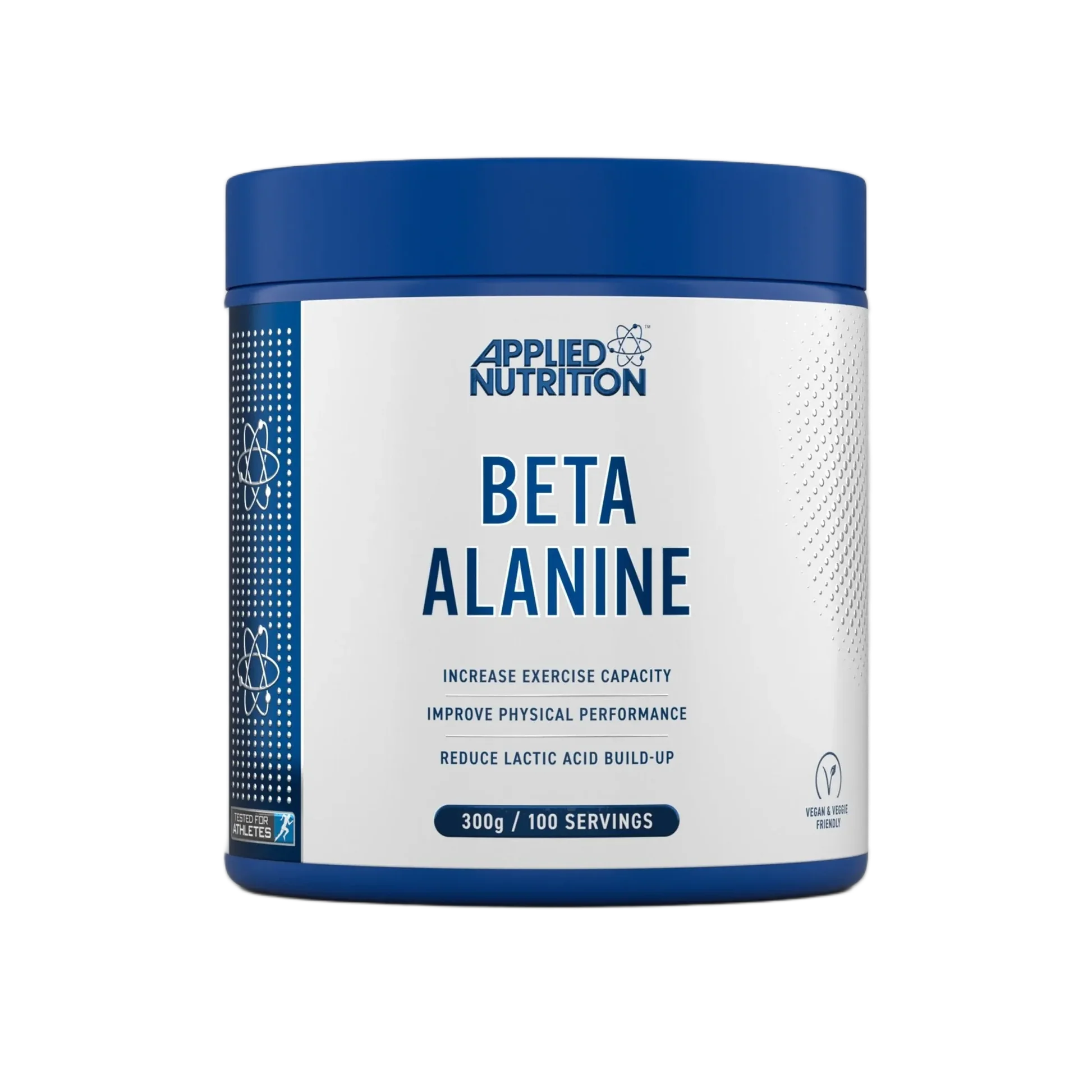
Applied Nutrition Beta-Alanine – 300g can support high-intensity exercise performance as part of a consistent supplementation routine, but it doesn't replace this physical preparation.
The warm-up itself should leave you feeling ready to produce force.
If your first working set consistently feels dramatically better than your warm-ups, that's fine.
If your best performance doesn't arrive until your third working set, you might benefit from slightly better preparation.
If your performance declines before you've even started your working sets, you've probably gone too far in the opposite direction.
9. Which Supplements Can Support Training Performance and Warm-Ups?
No supplement replaces warming up.
A pre-workout can't prepare your joints for a heavy squat.
Creatine can't rehearse your bench press technique.
Electrolytes can't familiarise you with today's working weight.
But supplements can support some of the broader factors that contribute to training performance.
ABE All Black Everything – PUMP Pre Workout 500g can fit into a pre-training routine for someone looking to support workout performance, while the actual ramp-up sets still provide the exercise-specific preparation.


Hydration also matters.
Arriving at the gym poorly hydrated isn't an ideal starting point for a demanding resistance-training session.
Per4m Hydrate provides a convenient option for supporting fluid and electrolyte intake, particularly around demanding exercise or periods of heavier sweating.


More broadly, training performance depends on:
- adequate nutrition
- sufficient hydration
- sleep
- recovery
- intelligent programming
- appropriate warm-ups
Supplements sit around those fundamentals.
They don't replace them.
You don't need an elaborate pre-workout ritual before every gym session.
You need to arrive adequately fuelled, hydrated and recovered, then prepare specifically for the exercises you're about to perform.

10. What's the Best Way to Structure Warm-Up Sets for Muscle Growth?
The best hypertrophy warm-up achieves something slightly counterintuitive:
It does enough without doing too much.
You want to prepare the target muscles and practise the movement while preserving as much performance as possible for your productive working sets.
For your first heavy compound movement, a sensible structure might look something like:
Warm-Up 1: Very light weight, approximately 8–12 controlled repetitions.
Warm-Up 2: Increase the load, approximately 5–8 repetitions.
Warm-Up 3: Increase again, approximately 3–5 repetitions.
Final Ramp-Up: Relatively close to your working load, perhaps 1–3 repetitions.
Working Sets: Begin your programmed hypertrophy work.
These numbers aren't rigid rules.
Someone lifting extremely heavy weights may require additional jumps.
Someone using a relatively light working weight may need fewer.
As you move through the workout, the amount of preparation required will generally decrease because you've already been training.
You can then use lighter preparatory sets where necessary rather than automatically repeating the entire sequence.
And remember that your broader nutritional routine still supports your ability to train consistently. Animal Daily Greens – 30 Packs can complement an otherwise varied diet, but it doesn't make warm-up sets more effective or directly increase hypertrophy.

The actual muscle-building strategy remains remarkably straightforward:
Prepare.
Perform your productive sets.
Progress them over time.
Warm-up sets don't need to exhaust your muscles to have done their job.
If they allow you to reach your working sets feeling confident, technically sharp and capable of producing your best performance, they've already been valuable.
Conclusion
So, do warm-up sets count towards muscle growth?
Potentially—but most shouldn't count for very much.
A sufficiently heavy warm-up performed close enough to failure could provide some hypertrophy stimulus.
But that's usually missing the point.
The primary purpose of warm-up sets is to prepare you for the challenging working sets that follow.
They allow you to rehearse technique, gradually experience heavier loads and assess how your body is performing without creating unnecessary fatigue.
For practical training-volume tracking, it therefore makes sense to distinguish between warm-up sets and productive working sets rather than treating every set equally.
Don't try to turn your warm-up into bonus hypertrophy volume.
Use it to make your actual hypertrophy training better.
The best warm-up isn't the one that makes you feel exhausted.
It's the one that makes your first working set feel like you're ready for it.
FAQ
1. Do warm-up sets count towards muscle growth?
They can contribute somewhat if they're sufficiently challenging, but most properly structured warm-up sets are too easy to provide the same hypertrophy stimulus as working sets.
2. Do warm-up sets count as working sets?
Generally, no. Warm-up sets are primarily preparatory, while working sets are deliberately challenging sets programmed to provide the main training stimulus.
3. Should warm-up sets count towards training volume?
For practical hypertrophy programming, it's usually more useful to track challenging working sets separately rather than counting every warm-up set towards weekly volume.
4. How heavy should warm-up sets be?
Start relatively light and gradually increase the load towards your working weight. As the weight increases, reduce the number of repetitions to minimise fatigue.
5. How many warm-up sets should you do?
It depends on the exercise, working weight and where the exercise appears in your workout. Heavy compound exercises performed first generally require more preparation.
6. Can too many warm-up sets cause fatigue?
Yes. Excessive repetitions or warm-up sets performed too close to failure can reduce performance during subsequent working sets.
7. Should you warm up before every exercise?
Not necessarily. Once you've completed several exercises for the same muscles, you may need only a brief preparatory set—or none at all—for simple movements.
8. Can warm-up sets help you lift more?
A well-structured warm-up can prepare you technically and physically for heavier working sets, potentially improving the quality of your performance.
9. How close to failure should warm-up sets be?
Most warm-up sets should remain comfortably away from muscular failure. Creating substantial fatigue defeats their primary purpose.
10. What's the best warm-up for hypertrophy?
Gradually increase load while reducing repetitions as you approach your working weight, using enough preparation to feel ready without compromising your productive sets.


