



If you've been training for a while, you've probably heard the advice:
"If you want more muscle, you need to do more sets."
It's a common belief in the fitness world. When progress slows, many people instinctively add another exercise, another set or another training day, assuming that more volume automatically means more muscle.
But does it?
Training volume is undoubtedly one of the key drivers of muscle hypertrophy. Perform too little work and your muscles may not receive enough stimulus to grow. Perform too much, however, and fatigue begins to outweigh recovery, making progress slower rather than faster.
The reality is that building muscle isn't simply about doing more.
It's about getting more from what you're already doing.
For many lifters, improving exercise quality, increasing training intensity and progressing their lifts consistently can produce better results than endlessly adding extra sets.
In fact, constantly increasing training volume without addressing technique, effort or recovery is one of the most common reasons people stop progressing.
So, can you continue building muscle while keeping your weekly training volume exactly the same?
In many cases, yes.
Let's look at why.
1. What Does Training Volume Actually Mean?
Training volume refers to the total amount of work performed during your workouts.
Although there are several ways to measure it, most hypertrophy programmes consider training volume as the number of challenging working sets performed for each muscle group over the course of a week.
For example, if you perform:
- 4 sets of bench press
- 4 sets of incline dumbbell press
- 4 sets of cable flys
your chest receives approximately 12 direct working sets.
Rather than chasing a specific number, it's more useful to think about effective training volume.
Not every set contributes equally to muscle growth.
A focused set performed close to muscular failure with excellent technique creates far more stimulus than a rushed set completed with poor form and plenty of repetitions left in reserve.
This is why two people can perform exactly the same number of weekly sets yet achieve completely different results.
The quality of those sets matters just as much as the quantity.
Understanding this distinction is essential before deciding whether you actually need to increase your training volume.

2. Can You Build Muscle Without Doing More Sets?
Absolutely.
Adding more sets is only one way to increase the stimulus your muscles receive.
There are several others.
You might build more muscle by:
- lifting slightly heavier loads
- performing additional repetitions with the same weight
- improving exercise technique
- slowing the eccentric phase
- increasing range of motion
- training closer to muscular failure
- reducing unnecessary momentum
Each of these changes increases the challenge placed upon your muscles without increasing weekly volume.
Imagine two lifters performing exactly 10 working sets for their chest every week.
The first rushes every repetition, cuts movements short and stops each set well before fatigue.
The second performs every repetition under control, achieves a deep stretch and finishes each set within one or two repetitions of failure.
Although both complete identical volume, the second lifter is likely producing a much stronger hypertrophy stimulus.
More sets aren't always the answer.
Better sets often are.
3. Does Progressive Overload Matter More Than Volume?
Progressive overload is ultimately what tells your muscles they need to grow.
Without progression, muscle development eventually slows regardless of how many sets you perform.
Progressive overload doesn't always mean adding weight to the bar.
It can also involve:
- improving technique
- increasing repetitions
- controlling tempo more effectively
- increasing range of motion
- reducing assistance
- improving consistency
These improvements all represent progress.
As your muscles encounter greater demands, they continue adapting.
This is where many lifters go wrong.
Instead of asking:
"How can I make this exercise better?"
they ask:
"How many more sets should I do?"
Adding volume can certainly be useful.
But if your current sets aren't improving from week to week, performing more of them rarely solves the underlying problem.
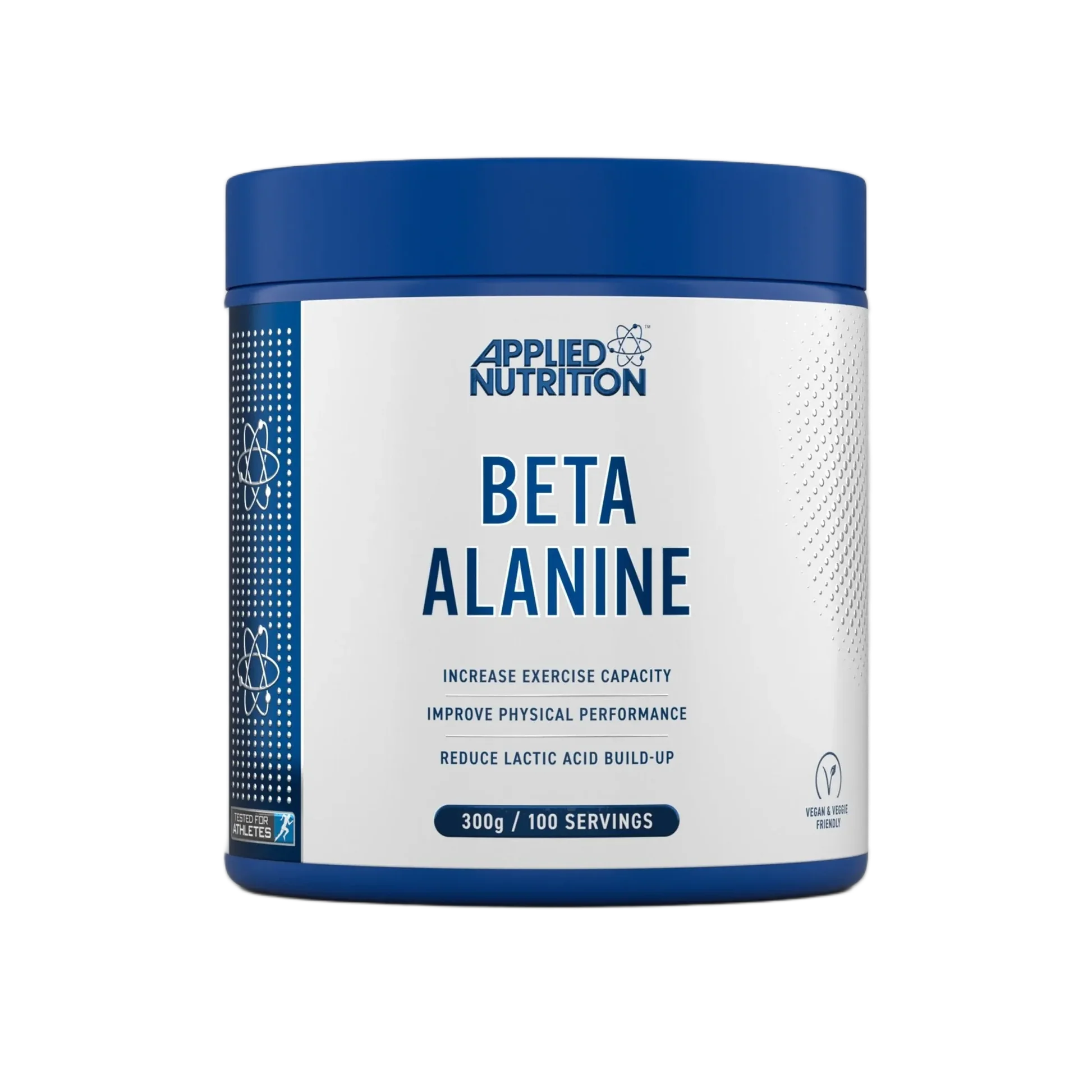
Applied Nutrition Beta-Alanine – 300g naturally complements this discussion because maintaining high training quality often becomes more valuable than simply performing more work. Supporting muscular endurance during demanding sets may help you maintain performance as progressive overload gradually increases.
Volume creates opportunity.
Progressive overload creates adaptation.
Both matter—but progression is what keeps muscle growth moving forward.
4. Can Better Exercise Technique Replace Extra Volume?
In many situations, yes.
Improving exercise execution often creates a larger increase in muscle stimulus than simply adding another few sets.
Consider a squat.
Someone who performs shallow repetitions with inconsistent depth may move impressive weight, but certain muscles receive less effective loading.
Compare that with someone performing:
- full depth
- controlled lowering
- stable positioning
- consistent tempo
- complete lockout
The second lifter is often placing far more meaningful tension on the target muscles despite performing the same number of sets.
The same applies to almost every exercise.
A bench press becomes more effective when the lifter controls the bar rather than bouncing it.
Rows become more productive when momentum is reduced and the upper back performs the work instead of the hips.
Pull-ups stimulate the lats more effectively when full range of motion is maintained.
Technique improves:
- mechanical tension
- muscle recruitment
- movement consistency
- progression tracking
- injury prevention
Rather than immediately increasing volume, many lifters would benefit from refining the quality of the repetitions they're already performing.
Sometimes one perfect set provides more growth than two average ones.

5. How Much Weekly Volume Is Enough for Muscle Growth?
One of the biggest misconceptions in bodybuilding is that there is a single magic number of weekly sets that guarantees muscle growth.
There isn't.
The ideal amount depends on factors including:
- training experience
- exercise selection
- recovery ability
- nutrition
- sleep quality
- workout intensity
- genetics
Most successful hypertrophy programmes generally fall within a moderate range of weekly working sets for each muscle group.
However, more isn't automatically better.
Once recovery capacity is exceeded, additional volume often produces diminishing returns.
Instead of stimulating more muscle growth, excessive volume can increase:
- fatigue
- soreness
- recovery time
- performance decline
Many experienced coaches therefore recommend finding the minimum effective volume that allows consistent progress before considering additional work.
If you're building muscle with your current programme, there's little reason to immediately increase training volume.
Improve the quality of your existing sessions first.
Only add more work when genuine progress begins to plateau.
Intermission
So far, we've explored what training volume actually means, why you can continue building muscle without constantly adding more sets, how progressive overload often drives growth more effectively than volume alone, why improving exercise technique can increase muscle stimulus, and how much weekly volume is generally needed to support hypertrophy.
In Part 2, we'll examine whether beginners require less training volume than advanced lifters, which supplements naturally support recovery from high-quality training, the mistakes that commonly stop progress when volume stays the same, when increasing training volume becomes worthwhile, and the best long-term strategy for building muscle without endlessly adding more work.
Part 2
6. Do Beginners Need Less Training Volume Than Advanced Lifters?
Generally, yes.
One of the biggest mistakes beginners make is copying the training routines of advanced bodybuilders.
At first glance, it seems logical. If elite lifters perform 20 or more weekly sets for a muscle group, surely doing the same will produce better results.
In reality, the opposite is often true.
Beginners respond extremely well to relatively modest training volumes because almost every workout provides a new stimulus. Their nervous system is learning movement patterns, coordination improves rapidly and muscles adapt quickly to resistance training.
As a result, beginners often make excellent progress with fewer high-quality working sets.
Advanced lifters are different.
Years of consistent training mean their bodies have already adapted to lower training volumes. To continue growing, they may require:
- more weekly sets
- greater exercise variation
- higher training intensity
- more precise recovery
- better fatigue management
However, even experienced lifters don't benefit from endlessly increasing volume.
Every additional set carries a recovery cost.
Eventually, the body reaches a point where more work simply creates more fatigue instead of more muscle.
The goal isn't to perform the highest possible volume.
It's to perform the highest volume you can consistently recover from.

7. Which Supplements Support Recovery From High-Quality Training?
When your focus shifts from doing more work to performing better work, recovery becomes increasingly important.
Every high-quality session depends on your ability to recover before the next one.
One of the biggest priorities is consuming sufficient daily protein.
Per4m Whey Hydrate – 1.8kg provides a high-quality source of protein that can help support muscle repair following demanding resistance-training sessions. Its combination of protein and hydration-focused formulation makes it particularly useful after hard workouts where both recovery and fluid replacement matter.


Hydration itself is equally important.
Applied Nutrition Hydration Powder – 240g can naturally support fluid and electrolyte intake before, during or after training, helping maintain workout quality throughout demanding sessions.


Neither supplement directly builds muscle.
Instead, they support the recovery processes that allow you to train consistently over weeks, months and years.
Ultimately, recovery still depends on the fundamentals:
- adequate protein
- quality sleep
- balanced nutrition
- hydration
- consistent training
Supplements simply help reinforce those habits.
8. What Mistakes Stop Progress When Volume Stays the Same?
Maintaining training volume doesn't automatically mean maintaining progress.
Several common mistakes prevent lifters from continuing to build muscle despite performing the same number of weekly sets.
Never Increasing Intensity
Repeating identical workouts with the same effort eventually leads to stagnation.
Your muscles need a reason to continue adapting.
Ignoring Technique
Poor movement quality reduces mechanical tension on the target muscles.
Improving execution often provides more benefit than adding another exercise.
Recovering Poorly
Sleep, nutrition and hydration determine how effectively your body adapts after training.
Even the best programme struggles if recovery is neglected.
Applied Nutrition Vitality Vitamin D3 can naturally complement a balanced diet by supporting overall health alongside consistent resistance training, particularly for individuals who may spend limited time outdoors.

Constantly Changing Exercises
Many people switch programmes every few weeks.
Progressive overload becomes almost impossible when exercises never remain consistent long enough to measure improvement.
Confusing Fatigue With Progress
Feeling exhausted after every workout doesn't necessarily mean you've stimulated more muscle growth.
The goal is productive training—not simply accumulating fatigue.
9. When Should You Increase Training Volume?
Although increasing volume isn't always necessary, there are times when it becomes beneficial.
You might consider adding more weekly work if:
- strength has plateaued for several weeks
- recovery remains excellent
- workouts feel consistently easy
- progress has genuinely stalled
- nutrition and sleep are already well managed
Even then, increasing volume should be gradual.
Rather than doubling your workload overnight, adding just one or two quality sets per muscle group each week is often sufficient.
This allows your body to adapt without dramatically increasing fatigue.
It's also worth asking an important question before adding more work:
Have you truly maximised the quality of your current training?
If the answer is no, improving effort, technique or exercise execution will often produce greater returns than immediately increasing volume.
Volume should be treated as a tool—not a default solution.

10. What's the Best Strategy for Building Muscle Without Adding More Volume?
The most effective long-term strategy is to maximise the quality of every repetition before increasing the quantity.
Focus on:
- progressive overload
- excellent exercise technique
- controlled repetitions
- consistent training
- sufficient recovery
- appropriate nutrition
- patience
Small improvements accumulated over months create remarkable long-term progress.
Supporting your overall nutritional consistency is equally valuable.
Applied Nutrition Probiotic Advanced Multi-Strain Formula – 60 Capsules can naturally complement a balanced diet as part of an overall recovery-focused lifestyle while you prioritise training quality over simply increasing workload.

Remember that muscle growth isn't determined by how many sets appear in your workout log.
It's determined by how effectively those sets challenge your muscles.
Sometimes doing the same amount of work—just better—is exactly what your body needs.
Conclusion
So, can you build muscle without increasing training volume?
Absolutely.
Training volume plays an important role in hypertrophy, but it's only one piece of the puzzle. Progressive overload, exercise technique, training intensity, recovery and consistency often have a greater influence on long-term muscle growth than simply adding more sets.
For beginners, moderate training volume is frequently enough to produce excellent results.
For experienced lifters, increasing volume may eventually become necessary—but only after the quality of their current training has been fully optimised.
Rather than asking, "How can I do more?"
Ask yourself,
"How can I make every set count?"
More often than not, that's where your next phase of muscle growth begins.
FAQ
1. Can you build muscle without increasing training volume?
Yes. Improving progressive overload, exercise technique and training intensity can continue driving muscle growth without adding more weekly sets.
2. Is progressive overload more important than training volume?
Both are important, but progressive overload provides the ongoing stimulus that encourages muscles to continue adapting over time.
3. Can fewer sets still build muscle?
Yes. High-quality sets performed close to muscular failure often produce excellent results, especially when combined with consistent progression.
4. How much training volume do you need for muscle growth?
The ideal amount varies between individuals, but moderate weekly volume combined with effective training and recovery is sufficient for many lifters.
5. Can beginners build muscle with lower training volume?
Yes. Beginners typically respond very well to relatively modest training volumes because their bodies adapt quickly to resistance training.
6. Does more volume always mean more muscle?
No. Excessive volume can create unnecessary fatigue and eventually reduce performance if recovery can't keep pace.
7. When should you increase training volume?
Consider increasing volume only after strength and muscle gains have genuinely plateaued while nutrition, recovery and training quality remain consistently high.
8. What's the best strategy for building muscle without adding more volume?
Prioritise progressive overload, excellent technique, recovery, sufficient protein and consistent training before considering additional sets.


