


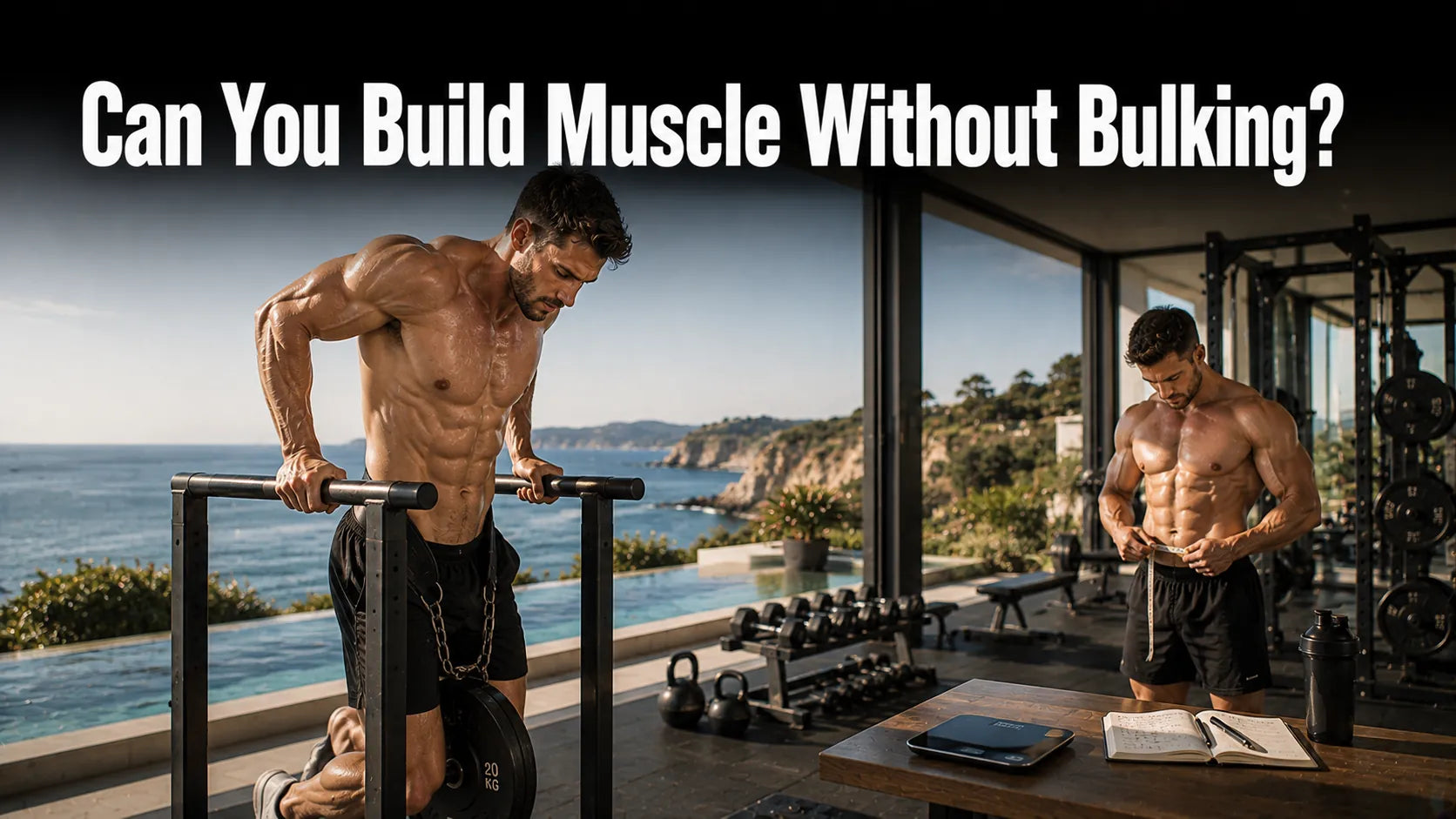
For years, muscle building has been sold as a two-stage process.
First, you bulk.
Then, you cut.
You spend months deliberately eating more food, watch the scales climb, accept some additional body fat as collateral damage and eventually diet it away to reveal the muscle underneath.
It works.
But that doesn't mean everyone who wants more muscle needs to spend half the year deliberately getting heavier.
For many people—particularly beginners, returning lifters and anyone with meaningful body fat already available—muscle growth can happen without a traditional bulk at all.
You can train around maintenance calories.
You can become stronger.
You can add lean muscle.
And depending on your starting point, you may even become leaner at the same time.
The trade-off is usually speed.
A well-controlled calorie surplus can create excellent conditions for maximising muscle gain. Refusing to gain any weight whatsoever can eventually make progress slower, particularly once you're experienced and relatively lean.
But there's a huge difference between saying a calorie surplus can optimise muscle growth and saying you must bulk to build muscle.
You don't.
Here's what actually matters.
1. Do You Actually Need to Bulk to Build Muscle?
No.
Bulking is a strategy for building muscle—not a biological requirement for muscle growth.
Your muscles grow when resistance training creates a sufficient stimulus and your body has the resources required to respond to it.
That process depends heavily on:
- progressive resistance training
- sufficient protein
- adequate energy availability
- recovery
- consistency
A calorie surplus can make those conditions easier to maintain because additional energy is readily available.
But your body isn't incapable of building new muscle simply because yesterday's calorie intake happened to match yesterday's energy expenditure.
This distinction matters because traditional bulking can sometimes encourage people to eat far more than necessary.
More calories don't produce unlimited muscle growth.
There's a limit to how quickly your body can construct new muscle tissue. Once you've provided sufficient energy to support that process, substantially increasing calorie intake doesn't suddenly multiply your rate of hypertrophy.
Instead, more of the additional weight is likely to come from body fat.
That's why someone wanting to stay relatively lean shouldn't assume they need an enormous surplus.
For some lifters, no deliberate surplus is required at all.

2. Can You Build Muscle at Maintenance Calories?
Yes, under the right circumstances.
Maintenance calories simply describe an energy intake that keeps your average body weight broadly stable over time.
That doesn't mean nothing inside your body can change.
You might gain muscle while losing fat.
You might store different amounts of glycogen and water.
Your measurements might change dramatically while your scale weight barely moves.
This is essentially the principle behind body recomposition.
The crucial factor is providing your muscles with a reason to adapt.
If you begin resistance training and progressively become stronger, your body receives a powerful signal that additional muscle tissue would be useful.
Combine that stimulus with sufficient dietary protein and recovery, and muscle growth can occur even without deliberately pushing calories upwards.
However, your ability to do this isn't unlimited.
The closer you get to your muscular potential—and the leaner you become—the more difficult gaining additional muscle at maintenance generally becomes.
A beginner and an advanced natural bodybuilder are therefore dealing with very different situations.
For one, maintenance calories might produce months of excellent progress.
For the other, a modest surplus may eventually become the more productive option.
3. Who Can Gain Muscle Without a Calorie Surplus?
Some people are particularly well suited to gaining muscle without a conventional bulk.
Beginners
Beginners have one enormous advantage: almost everything is new.
Resistance training creates such a powerful stimulus that substantial adaptations can occur relatively quickly.
This is why someone's first year of intelligent training can produce changes that become increasingly difficult to replicate later.
People Returning to Training
If you've previously carried more muscle but stopped training for an extended period, regaining it can happen much faster than building it originally.
Muscle memory makes returning lifters excellent candidates for gaining muscle without a large calorie surplus.
People With Higher Body-Fat Levels
Stored body fat represents stored energy.
Someone carrying greater energy reserves may be able to support muscle development while simultaneously reducing body fat, provided training and protein intake are appropriate.
People Who Previously Trained Poorly
Years of gym membership don't necessarily make someone an advanced lifter.
If your previous programme lacked progressive overload, consistency or appropriate intensity, improving your training can effectively create a new stimulus.
Experienced, Lean Lifters?
This is where things become harder.
If you're already muscular, relatively lean and have trained intelligently for years, squeezing out additional muscle becomes increasingly difficult.
You might still progress without bulking.
But deliberately maintaining exactly the same body weight can eventually become an unnecessary constraint.
4. How Much Protein Do You Need to Build Muscle Without Bulking?
If you're not deliberately increasing calories, protein becomes particularly important.
Protein supplies the amino acids your body needs for muscle protein synthesis and tissue repair.
A practical target for many resistance-trained adults is around 1.6–2.2g of protein per kilogram of body weight per day.
For someone weighing 80kg, that's approximately:
128–176g of protein per day.
You don't necessarily need to live at the very top of that range.
What matters more is consistently consuming an appropriate amount across your diet.
Protein-rich foods can include:
- chicken
- turkey
- eggs
- fish
- lean meat
- dairy
- tofu
- legumes
- protein powders
When calories aren't deliberately being pushed upwards, protein supplements can be useful simply because they make hitting a protein target easier without requiring another large meal.
Per4m Plant Protein – 2kg can provide a convenient plant-based protein source alongside a balanced diet, making it easier to maintain protein intake while keeping overall calorie intake appropriate for your goals.


But don't fall into the trap of viewing protein in isolation.
Muscle building still requires energy.
If you're eating dramatically below maintenance while trying to maximise hypertrophy, simply adding more protein won't necessarily solve the problem.
The objective is to provide sufficient nutrition without assuming that "more food" automatically means "more muscle."

5. Can You Stay Lean While Building Muscle?
Yes—and for many recreational lifters, this is arguably a more attractive goal than repeatedly swinging between aggressive bulks and cuts.
Staying lean while building muscle generally means accepting a slower, more controlled rate of progress.
Instead of trying to gain several kilograms quickly, you're watching for subtler improvements:
- shoulders gradually becoming broader
- arms becoming more developed
- legs filling out
- strength increasing
- waist measurements remaining relatively stable
- body-fat levels staying controlled
This approach requires patience.
The scales may barely move.
Your physique might not look dramatically different every month.
But over a year, those small changes can accumulate into a substantial transformation.
It also avoids one of the biggest problems with aggressive bulking: eventually having to spend months dieting away unnecessary body fat.
If staying lean matters to you, judge progress using more than body weight.
Track:
- gym performance
- progress photographs
- body measurements
- waist circumference
- average weekly weight
If strength and muscular measurements are gradually increasing while your waist remains reasonably stable, that's far more informative than simply asking whether you've gained five kilograms.
Building muscle doesn't need to mean becoming noticeably softer first.
For many people, slow and controlled progress is the better long-term strategy.
Intermission
So far, we've established that bulking is a useful muscle-building strategy rather than an unavoidable requirement. Beginners, returning lifters and people with more available body fat can often gain muscle around maintenance calories, while sufficient protein and progressive resistance training remain fundamental.
We've also seen why staying lean while building muscle is possible—but usually requires accepting slower, more measured progress instead of chasing rapid changes on the scales.
In Part 2, we'll look at whether progressive overload matters more than simply eating additional calories, which supplements can support muscle growth without bulking, the mistakes that prevent lean muscle gain, how to recognise muscle growth without accumulating body fat and, finally, when a traditional calorie-surplus bulk genuinely becomes the better strategy.
Part 2
6. Does Progressive Overload Matter More Than Eating More Calories?
If you had to choose between improving your training and simply eating more food, improving your training would win.
Muscle doesn't grow because calories somehow tell it to become bigger.
It grows because resistance training creates a reason to adapt.
A calorie surplus can provide additional energy to support that adaptation, but without a sufficiently challenging training stimulus, those extra calories don't automatically become muscle.
This is where progressive overload becomes so important.
Progressive overload can involve:
- gradually lifting heavier weights
- performing additional repetitions
- improving exercise technique
- increasing range of motion
- performing more productive training volume
- gaining better control of the same load
You don't necessarily need to increase something every workout. Progress becomes slower as you gain experience, and performance naturally fluctuates.
What matters is the longer-term trend.
If you can perform 70kg for eight controlled repetitions today and eventually perform 70kg for twelve—or move onto a heavier load with equally good technique—your muscles have adapted.
That's meaningful progression.
Eating another 500 calories without improving your training doesn't provide the same stimulus.
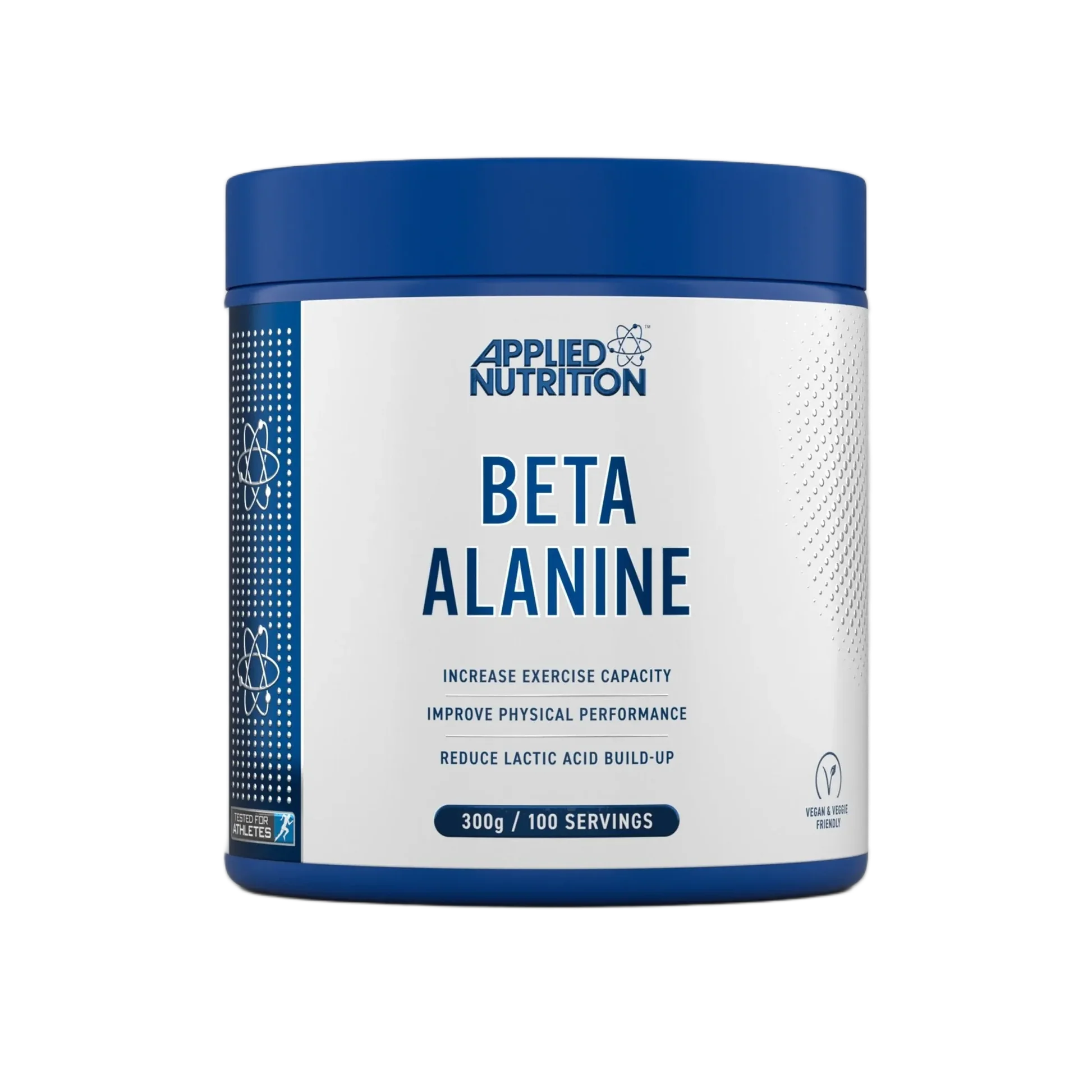
Applied Nutrition Beta-Alanine – 300g can fit naturally alongside demanding training by supporting high-intensity exercise performance, but the supplement itself isn't the progression. The increasingly productive training is.
Food supports the process.
Training initiates it.

7. Which Supplements Support Muscle Growth Without Bulking?
The phrase "muscle-building supplements" can sometimes create the wrong impression.
There isn't a supplement that allows you to ignore calories, protein, resistance training and recovery while somehow adding significant amounts of lean muscle.
Supplements are most useful when they address something practical within an already good routine.
Protein supplements can make daily protein targets easier to achieve.
Creatine can support high-intensity training performance.
Pre-workout products can support demanding sessions when appropriate.
Vitamins and minerals can complement a balanced diet where required.
For someone deliberately avoiding a traditional bulk, the goal shouldn't be to collect as many supplements as possible.
It should be to make good training and nutrition easier to maintain.
Applied Nutrition Multi-Vitamin Complex – 90 Capsules can complement a varied diet by supporting everyday vitamin and mineral intake while you focus on the fundamentals of resistance training, sufficient protein and recovery.
The hierarchy matters.
Get your training right first.
Then your calories.
Then your protein.
Then your recovery.
Supplements belong around those foundations—not above them.
8. What Mistakes Stop You Building Muscle Without a Bulk?
Building muscle without deliberately bulking can work extremely well.
But because you're not creating a large energy surplus, there is less room for sloppy execution.
Several mistakes can quickly bring progress to a halt.
Eating Too Little
"Not bulking" doesn't mean "dieting aggressively."
If you're consistently eating far below maintenance calories, maximising muscle growth becomes much harder.
Someone trying to stay lean can accidentally become so frightened of gaining fat that they simply don't provide enough energy to train and recover effectively.
Underestimating Protein
If calories are controlled, protein should remain a priority.
Build meals around reliable protein sources rather than hoping you'll accidentally reach an appropriate intake by the end of the day.
Training Without Enough Intensity
Maintenance calories don't excuse maintenance-level effort.
Your muscles still require a challenging resistance-training stimulus.
Optimum Nutrition Platinum Pre-Workout – 420g can fit into a performance-focused routine when appropriate, but no pre-workout compensates for a programme lacking progression, consistency or genuine effort.


Programme Hopping
Changing your workout every few weeks makes progressive overload unnecessarily difficult to measure.
Keep productive exercises long enough to become genuinely good at them.
Trying to Stay Exactly the Same Weight
This is a subtle but important mistake.
You can build muscle without bulking, but that doesn't mean your body weight must remain frozen to the nearest 100 grams.
Small fluctuations are normal.
And if you gain a small amount of weight over several months while your waist remains controlled and your strength improves significantly, that isn't automatically failed lean gaining.
The objective is improving your physique—not winning an argument with your bathroom scales.
9. How Can You Tell If You're Gaining Muscle Without Gaining Fat?
This is where better progress tracking becomes invaluable.
Scale weight alone can't tell you whether you've gained muscle, fat, water or glycogen.
Instead, combine several measurements.
Your Strength Is Increasing
If you're gradually becoming stronger across your major exercises while maintaining good technique, that's an encouraging sign.
Your Muscular Measurements Are Increasing
Arms, shoulders, chest and thighs may gradually become larger even when your waist remains similar.
Your Waist Remains Stable
A rapidly expanding waist alongside rapidly increasing body weight may indicate that your calorie intake is unnecessarily high.
A relatively stable waist combined with improving muscular measurements tells a very different story.
Progress Photos Improve
Take photographs under similar conditions every few weeks.
Don't compare Monday morning with Tuesday evening.
Compare several months.
Your Clothes Fit Differently
A T-shirt becoming tighter around your shoulders and arms without your trousers becoming tighter around the waist is a surprisingly useful real-world indicator.
None of these measurements is perfect individually.
Together, however, they provide a much clearer picture.
And remember: lean muscle gain is slow.
Don't expect obvious visual changes every seven days.

10. When Does a Traditional Bulk Actually Make Sense?
Despite everything we've discussed, bulking isn't bad.
Used intelligently, it can be extremely effective.
A controlled calorie surplus becomes particularly useful when you're:
- already relatively lean
- an experienced lifter
- struggling to increase strength
- recovering well but no longer gaining muscle
- comfortable gaining some body weight
- specifically prioritising maximum muscle development
At this stage, insisting on staying at exactly the same weight can become counterproductive.
Your body has already collected much of the easy muscle available from beginner adaptations.
Further progress becomes slower and more demanding.
A modest calorie surplus can provide additional energy for training, recovery and muscle growth.
The important word is modest.
A productive gaining phase doesn't require eating everything you can find.
If your calorie surplus dramatically exceeds what your body needs to support growth, the additional energy doesn't simply become additional muscle.
Some will be stored as body fat.
This is where a higher-calorie product such as USN Muscle Fuel Anabolic – 4kg makes more sense: within a deliberate gaining phase for someone who genuinely struggles to consume sufficient calories and protein through their normal diet.


That's very different from assuming everyone who enters a gym needs a mass gainer.
Bulking is a tool.
Use it when your circumstances justify it.
Conclusion
So, can you build muscle without bulking?
Absolutely.
A traditional bulk isn't the entry fee for muscle growth.
Beginners can often gain substantial muscle around maintenance calories. Returning lifters can take advantage of muscle memory. People carrying more body fat may be able to gain muscle while simultaneously becoming leaner.
And even intermediate lifters can often make slow, controlled progress without dramatically increasing body weight.
The fundamentals remain remarkably consistent:
Train progressively.
Consume enough protein.
Eat enough to support performance.
Recover properly.
Stay consistent.
As you become leaner, stronger and more experienced, a small calorie surplus may eventually become the more efficient strategy.
But that's very different from aggressively gaining weight simply because you're trying to build muscle.
You don't need to become noticeably fatter to become noticeably more muscular.
Build first-class training habits.
Let your nutrition support them.
And use the scales as one measurement of progress—not the definition of it.
FAQ
1. Can you build muscle without bulking?
Yes. Muscle growth can occur without a traditional bulk, particularly in beginners, returning lifters and people capable of body recomposition.
2. Do you need to bulk to build muscle?
No. A calorie surplus can make muscle gain easier, particularly for experienced lifters, but it isn't universally required.
3. Can you build muscle at maintenance calories?
Yes. Building muscle around maintenance calories is possible, particularly when resistance training, protein intake and recovery are well managed.
4. Can you gain muscle while staying lean?
Yes. A slower, controlled approach to muscle gain can allow you to remain relatively lean while gradually developing more muscle.
5. How much protein do you need to build muscle without bulking?
Around 1.6–2.2g of protein per kilogram of body weight per day is a useful general range for many resistance-trained adults.
6. Can beginners gain muscle without bulking?
Yes. Beginners are among the people most likely to experience significant muscle growth without deliberately entering a calorie surplus.
7. Can you build muscle without gaining fat?
It can be possible, particularly through body recomposition. However, experienced lean lifters may eventually benefit from accepting a small amount of weight gain to maximise muscle development.
8. Is progressive overload more important than eating more calories?
Progressive resistance training provides the stimulus for muscle growth. Additional calories can support that process, but simply eating more without productive training won't maximise muscle development.
9. How can you tell whether you're gaining muscle instead of fat?
Track strength, progress photographs, muscular measurements, waist circumference and average body weight together rather than relying on the scales alone.
10. When should you start bulking?
A controlled bulk may make sense once you're relatively lean, experienced and struggling to continue gaining muscle or strength around maintenance calories.


