


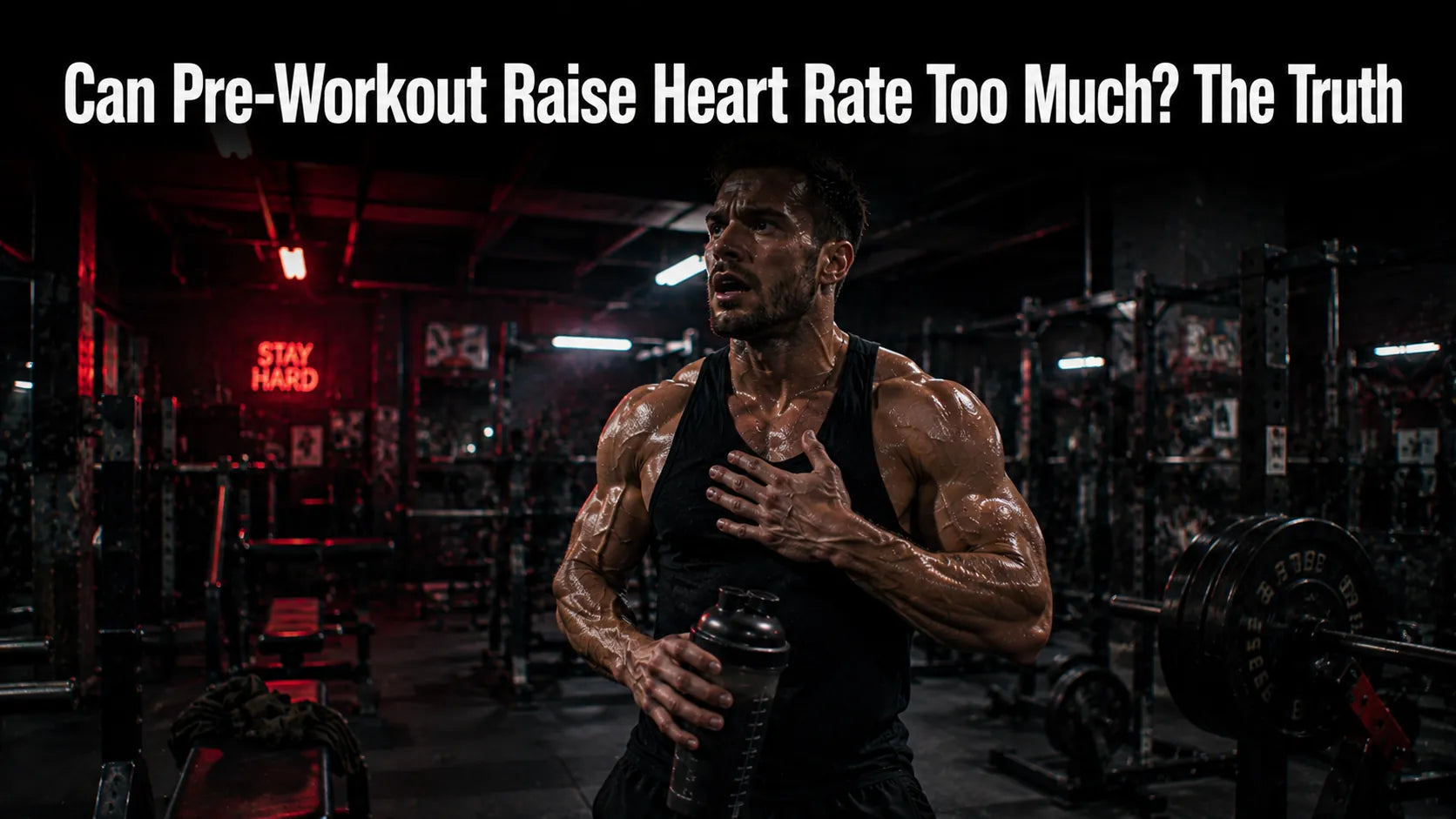
For a lot of people, the feeling starts the same way.
About 20 minutes after taking pre-workout, energy suddenly spikes. Focus sharpens. Music sounds louder. The body feels warmer. Training intensity starts climbing before the workout has even properly begun.
Then sometimes something else kicks in.
The heartbeat suddenly feels:
harder
faster
heavier
more noticeable
And that’s usually the moment people start wondering:
“Is this normal… or have I taken too much?”
Modern pre-workouts have become extremely aggressive compared to what existed even a few years ago. What used to be considered a strong formula is now mild compared to some of the high-stim products dominating gym culture today.
The problem is that many people now associate:
maximum stimulation
with:
maximum performance
So stimulant intake gradually escalates:
- stronger formulas
- bigger scoops
- energy drinks alongside pre-workout
- fasted training
- caffeine multiple times daily
until the nervous system is constantly running at a level the body was never really designed to sustain comfortably.
That’s where the heart-rate conversation becomes important.
Because yes—pre-workout absolutely can increase heart rate.
But that does not automatically mean:
dangerous
And this is where nuance matters.
A higher heart rate during training is completely normal. Exercise itself raises heart rate naturally. Caffeine and stimulants increase nervous system activation too. The real issue is understanding the difference between:
productive stimulation
and:
excessive overstimulation
Because eventually there’s a point where more caffeine stops improving performance and simply starts increasing stress on the body instead.
1. Why can pre-workout increase heart rate in the first place?
Primarily because most pre-workouts are built around stimulants.
Ingredients like caffeine work by stimulating the central nervous system, increasing alertness and adrenaline activity throughout the body. That stimulation can improve:
- focus
- motivation
- perceived energy
- reaction speed
- workout intensity
which is exactly why pre-workouts became so popular in the first place.
But stimulation also naturally increases:
- heart rate
- blood pressure
- nervous system activity
to varying degrees depending on:
- dosage
- tolerance
- body size
- hydration
- overall stress levels
This is why many people feel their heartbeat more noticeably after taking strong pre-workouts, especially before training even starts.
The important thing is understanding that an increased heart rate during exercise itself is not automatically abnormal. Training already places higher demands on the cardiovascular system.
The problem usually begins once stimulant intake becomes excessive relative to what the body can comfortably tolerate.

2. Which ingredients in pre-workout are most likely to affect your heart rate?
Caffeine is the biggest one by far.
Especially once doses start becoming:
- very high
- rapidly absorbed
- or stacked with additional stimulant products
because caffeine directly increases nervous system stimulation.
This is why products like Naughty Boy Menace V2 - 420g can feel extremely intense for some people. High-stim formulas are specifically designed to create stronger energy and aggression before training, but the downside is that they also increase the likelihood of:
- elevated heart rate
- shakiness
- sweating
- anxiety
- overstimulation
especially in sensitive users.


Other ingredients can contribute too.
Compounds commonly used in aggressive pre-workouts may further amplify:
- adrenaline response
- blood pressure
- nervous system activation
which is why some products feel dramatically stronger than others even at similar caffeine numbers on paper.
This is also why two people can react completely differently to the exact same formula.
3. Is a faster heart rate during training always dangerous?
Not automatically.
This is where internet conversations often become overly dramatic.
Exercise itself increases heart rate. That’s a completely normal physiological response. A hard leg session, sprint workout, or intense conditioning circuit naturally places significant demands on the cardiovascular system even without stimulants involved.
The issue is more about:
- how extreme the response becomes
- how the body feels overall
- and whether symptoms start becoming excessive
A lot of people panic the first time they truly feel their heartbeat strongly during training after taking pre-workout.
But there’s a major difference between:
noticeable stimulation
and:
severe distress
The body often gives fairly obvious warning signs when stimulant intake becomes too aggressive, and ignoring those signs because “hardcore gym culture” normalises excessive stimulation is usually where problems begin.
4. Can high-stim pre-workouts push caffeine intake too far?
Absolutely.
This is probably one of the biggest problems in modern supplement culture.
A lot of people no longer consume caffeine only from pre-workout. They’re also consuming:
- coffee
- energy drinks
- fat burners
- caffeinated soft drinks
- “focus” products
- energy shots
throughout the day as well.
So what starts as:
“just one scoop”
often becomes a very large total stimulant load once everything is combined together.
This is why products like ABE All Black Everything – Ultimate Pre-Workout can feel completely manageable for one experienced stimulant user while feeling overwhelmingly intense for someone else with lower tolerance or poorer recovery habits.
The nervous system doesn’t really care whether caffeine came from:
- coffee
- energy drinks
- pre-workout
- or another stimulant source
It all contributes to the total load the body has to process.
And over time, many people slowly drift into constantly escalating dosage because tolerance gradually builds.
That’s where performance enhancement slowly starts becoming dependency instead.

5. Why do some people react more strongly to stimulants than others?
Because stimulant tolerance is incredibly individual.
Some people naturally metabolise caffeine faster and barely feel moderate doses at all. Others remain highly sensitive even with regular use.
Things like:
- genetics
- body size
- sleep quality
- hydration
- stress levels
- anxiety sensitivity
- overall caffeine exposure
all heavily influence how someone responds to pre-workout.
This is why one person can take a strong formula and feel:
focused and productive
while another feels:
shaky, anxious, sweaty, and overstimulated.
Recovery quality matters massively too.
Someone already running on:
- poor sleep
- high stress
- dehydration
- under-eating
- excessive caffeine intake
usually tolerates stimulants far worse overall because the nervous system is already under pressure before the workout even begins.
Intermission
So far, we’ve covered why pre-workout increases heart rate in the first place, which ingredients drive the strongest stimulant effects, whether elevated heart rate during training is automatically dangerous, how high-stim formulas can push caffeine intake too far, and why stimulant tolerance varies so dramatically between different people.
In Part 2, we’ll break down fasted training risks, dehydration and heart palpitations, the difference between normal stimulation and excessive caffeine intake, warning signs your dosage is too high, and the safest way to use strong pre-workouts more responsibly.
Part 2
6. Does taking pre-workout on an empty stomach make side effects worse?
Very often, yes.
This is one of the fastest ways to make a high-stim pre-workout feel overwhelming.
When caffeine hits an empty stomach, absorption tends to happen much faster and more aggressively. That often amplifies:
- heart rate increases
- jitters
- shakiness
- sweating
- anxiety
- nausea
especially in people who already have lower stimulant tolerance.
A lot of people in gym culture intentionally train fasted because it feels:
more intense
more aggressive
more “hardcore”
But intensity and effectiveness are not always the same thing.
For many people, fasted high-stim training simply creates unnecessary stress on the nervous system before the workout has even properly started.
This is where pre-workout fuelling matters massively. Something simple and easy to digest before training often helps smooth out stimulant response dramatically.
For example, Applied Nutrition Cream Of Rice - 1kg works well before training because it provides quick, digestible carbohydrates that help create more stable energy rather than relying purely on adrenaline and caffeine to power the session.


Sometimes the body doesn’t need:
more stimulants
It needs:
more fuel.

7. Can dehydration increase the risk of heart palpitations during workouts?
Absolutely.
This is one of the most overlooked parts of the entire pre-workout conversation.
A lot of people blame pre-workout alone when the real issue is actually the combination of:
- high stimulants
- dehydration
- poor recovery
- poor sleep
- inadequate nutrition
all stacking together simultaneously.
Hydration strongly affects:
- cardiovascular function
- electrolyte balance
- muscular contractions
- blood pressure regulation
- nervous system stability
When hydration becomes poor, stimulants often feel dramatically harsher on the body.
This is why people commonly notice:
- stronger heartbeats
- dizziness
- palpitations
- headaches
- shakiness
becoming much worse during:
- hot weather
- sweaty sessions
- fasted cardio
- low-carb dieting phases
- poor hydration habits
Products like BetterYou Magnesium Water – Focus fit naturally into this conversation because hydration and nervous system regulation become increasingly important once stimulant intake starts climbing higher.

A lot of people try solving overstimulation by adding:
even more caffeine
when the body is actually asking for:
- water
- electrolytes
- food
- recovery
instead.
8. What’s the difference between normal stimulation and too much caffeine?
Good pre-workout stimulation should feel:
focused
energised
controlled
productive
You should still feel physically comfortable and mentally in control during training.
Once caffeine intake becomes excessive, workouts often start feeling:
shaky
anxious
chaotic
overwhelming
instead of performance-enhancing.
This is where many people cross the line from:
improved workout intensity
into:
nervous system overload
And interestingly, gym culture often glorifies this feeling.
People assume that:
- racing heartbeats
- tunnel vision
- sweating excessively
- trembling hands
mean the pre-workout is:
“working properly.”
But in reality, those symptoms often suggest the body is struggling to regulate the stimulant load comfortably.
The best workouts rarely feel chaotic.
They usually feel:
- stable
- controlled
- repeatable
- sustainable
9. Are there warning signs that your pre-workout dosage is too high?
Usually the body gives pretty obvious warning signs.
The problem is that many people ignore them because they become psychologically attached to the:
“hardcore stim” feeling.
Common signs stimulant intake is becoming excessive include:
- persistent anxiety
- shakiness
- poor sleep
- elevated resting heart rate
- nausea
- headaches
- dependency on caffeine to train
- heart palpitations
- worsening recovery quality
Some people eventually reach the point where pre-workout stops feeling:
exciting
and starts feeling:
necessary just to feel normal in the gym.
That’s usually where stimulant use starts becoming unhealthy rather than performance-focused.
And interestingly, once recovery quality drops hard enough, performance often declines anyway despite higher and higher caffeine intake.

10. What’s the safest way to use strong pre-workouts responsibly?
Usually by treating them like occasional tools rather than something the nervous system needs every single day.
A lot of problems begin when people:
- escalate dosage constantly
- stack multiple caffeine products together
- train fasted repeatedly
- ignore hydration
- sacrifice sleep
- use maximum-stim formulas daily
because the body never really gets a chance to recover properly from constant stimulation.
For most people, a smarter approach looks more like:
- starting with lower dosages
- assessing tolerance honestly
- eating before training
- staying hydrated
- limiting caffeine stacking
- occasionally reducing stimulant intake altogether
And interestingly, many experienced lifters eventually discover they actually train better once they stop chasing maximum stimulation constantly.
That’s one reason products like Optimum Nutrition Platinum Pre-Workout – 420g often appeal to people wanting a more balanced performance experience instead of the “face-melting stim” culture dominating parts of modern supplementation.


Because ultimately, good pre-workout should support training quality—not make your nervous system feel like it’s under attack.
Conclusion
Pre-workout can absolutely raise heart rate.
That’s a normal part of how stimulants and exercise affect the body.
The real issue is understanding when:
productive stimulation
starts becoming:
excessive overstimulation
Because eventually there’s a point where more caffeine stops improving performance and simply starts increasing stress, anxiety, recovery problems, and cardiovascular strain instead.
For some experienced stimulant users, stronger formulas may feel manageable. For others, they can quickly become overwhelming depending on:
- tolerance
- hydration
- food intake
- sleep
- stress levels
- overall caffeine exposure
The smartest approach is usually not chasing the strongest possible pre-workout.
It’s learning how to create:
- stable energy
- controlled focus
- sustainable performance
- and strong recovery
without constantly needing more stimulation to get through every session.
FAQ
1. Can pre-workout raise heart rate too much?
Yes, especially when stimulant intake becomes excessive relative to your tolerance.
2. Is a faster heart rate during training always dangerous?
Not automatically. Exercise itself naturally raises heart rate too.
3. Can high-stim pre-workouts cause heart palpitations?
They can in some people, particularly when combined with dehydration or excessive caffeine intake.
4. Is taking pre-workout fasted more risky?
Usually yes, because stimulant absorption becomes faster and harsher.
5. Can dehydration worsen pre-workout side effects?
Absolutely. Poor hydration often amplifies palpitations, dizziness, and shakiness.
6. What are signs of too much caffeine intake?
Anxiety, poor sleep, headaches, shakiness, elevated heart rate, and dependency are common warning signs.
7. Do stronger pre-workouts always improve performance?
Not necessarily. Excessive stimulation often worsens recovery and workout quality over time.
8. What’s the safest way to use strong pre-workouts?
Lower dosages, proper hydration, eating before training, and avoiding caffeine stacking usually help massively.


