


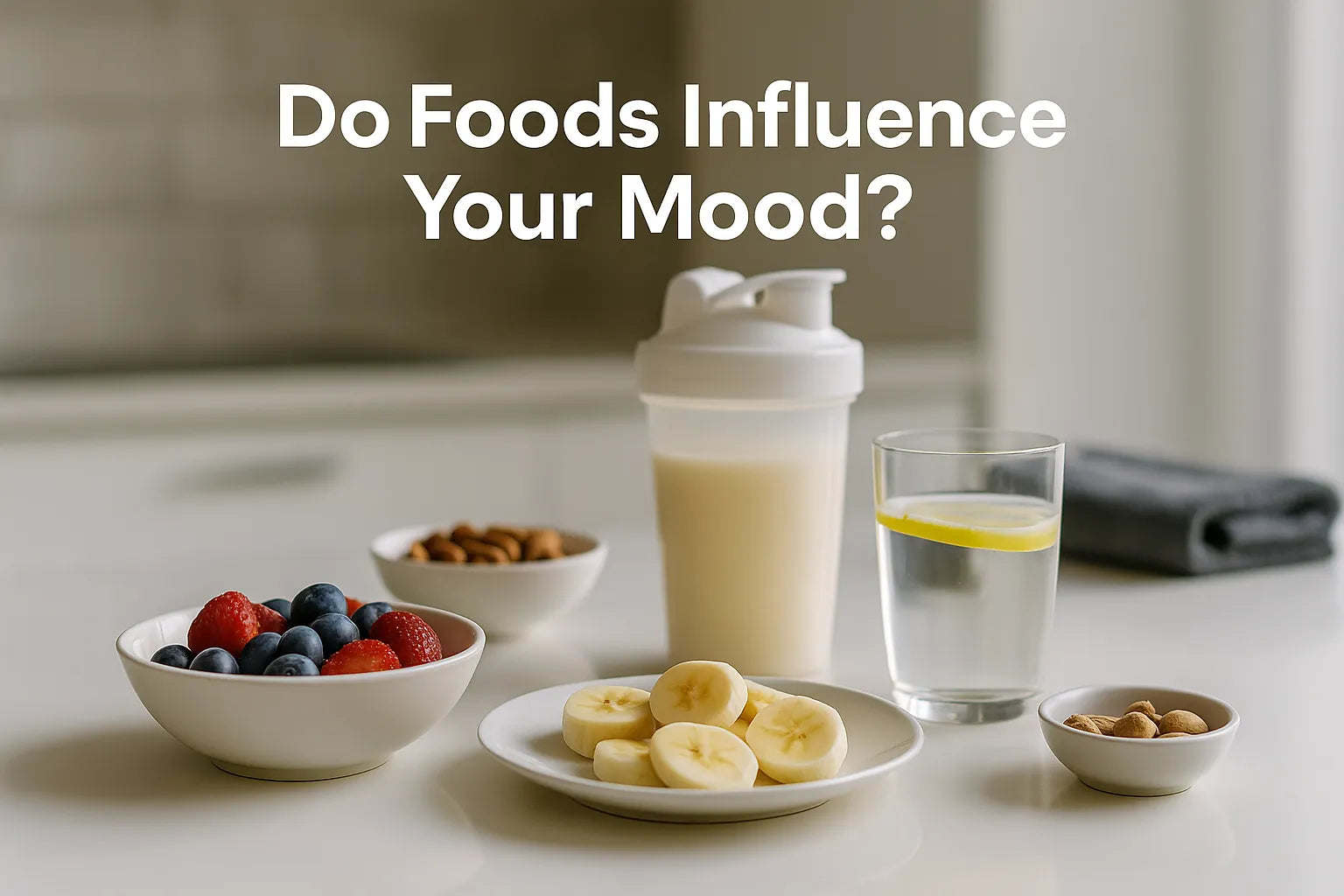
1. The Food–Mood Connection: Why What You Eat Shows Up in How You Feel
Most people think mood is purely emotional — shaped by sleep, work stress, relationships, or training. But mood is also biochemical, and the food you eat daily is one of the biggest drivers behind how stable, calm, energised, or irritable you feel.
Every meal you eat nudges your brain chemistry in one direction or another. That’s because food affects:
-
Neurotransmitters like serotonin and dopamine
-
Blood sugar stability, the foundation of mental steadiness
-
Cortisol, the body’s stress regulator
-
Gut bacteria, which influence inflammation and emotional balance
-
Micronutrient availability, which fuels every psychological process
If you eat in a way that constantly spikes and crashes your blood sugar — think pastries, energy drinks, cereal, or overly processed snacks — your brain struggles to regulate mood. You become more reactive, more drained, and more susceptible to anxiety and low motivation.
Meanwhile, meals rich in protein, fibre, hydration, electrolytes, omega-3 fatty acids and micronutrients help keep your emotional baseline steady. This is why gym-goers who clean up their nutrition often report feeling “happier,” “clearer,” and “less stressed” — often before they even notice visual physique changes.
This is also where daily micronutrients shine. A high-quality multi-vitamin such as Applied Nutrition Multi-Vitamin Complex fills nutritional gaps so your brain can produce neurotransmitters consistently. On days where your diet isn’t perfect, it’s the safety net that stops mood from dipping.

2. Blood Sugar Stability: The Hidden Cause of Mood Swings Nobody Talks About
If you’ve ever eaten a high-sugar snack, felt great for 20 minutes, and then suddenly crashed into irritability, exhaustion, or brain fog… that’s blood sugar dysregulation at work.
Your brain lives on glucose — but it thrives on stable, slow, consistent glucose. Not spikes. Not crashes.
High-sugar meals and “carb-only” snacks do three things:
-
Cause rapid glucose spikes → you feel energised, buzzy, upbeat.
-
Then insulin pulls it down fast → mood tanks and you feel tired, unfocused, or agitated.
-
Cravings kick in → you reach for more sugar or caffeine, repeating the cycle.
This is why meals containing a mix of protein, healthy fats and slow-digesting carbs keep your emotional state stable for hours. Think: yoghurt with berries, eggs and toast, chicken and rice, clear whey protein with fruit.
This is also why gym-goers who rely on pure caffeine or sugary snacks often feel “off” emotionally by midday — because they haven’t stabilised their blood sugar from the start.
Even hydration affects this. Mood plummets when electrolyte balance drops, which is where products like Per4m Hydrate and Optimum Nutrition Electrolyte Powder offer fast, reliable support. When your hydration is stable, your cognitive clarity and mood stability increase dramatically.
3. Gut Health, Inflammation & Mood: Why Your Stomach Might Be Running Your Emotions
Around 90% of your serotonin — the neurotransmitter most associated with happiness, emotional stability and calm — is made in the gut. Not the brain.
This means your gut microbiome (the bacteria living in your digestive system) plays a central role in mood:
-
A balanced gut → high, stable mood
-
An inflamed gut → irritability, low mood, anxiety signals
Everything from processed food, alcohol, stress, poor hydration, lack of fibre, and inconsistent protein can disrupt your gut. Over time, inflammation builds and emotional stability declines.
This is why athletes who clean up their diet often say:
“I didn’t expect my mood to improve this much.”
Hydration helps the gut stay functional. Electrolytes such as Applied Nutrition Hydration Powder help the digestive system move nutrients properly and reduce digestive stress — and when your gut is calmer, your mood is calmer too.
Protein timing matters too. Clear whey, like Applied Nutrition Clear Whey, digests more easily than heavy dairy-based shakes, meaning fewer mood-altering digestive spikes.

4. Micronutrients & Mood: The Vitamins and Minerals That Shift Emotional State
If you’re tired, irritable, easily stressed or low in motivation, it’s often not personality — it’s biochemistry.
Several vitamins directly affect mood:
-
B Vitamins → energy production and stress resilience
-
Vitamin D → emotional balance, serotonin regulation
-
Magnesium → reduces anxiety and supports nervous system calm
-
Omega-3s → lowers inflammation and supports neurotransmitter function
-
Zinc → cognitive clarity, hormone support
-
Iron → prevents fatigue and low energy mood crashes
When even one of these runs low, mood follows.
This is where a product like Applied Nutrition Multi-Vitamin Complex can play a meaningful role. For many people, it’s the difference between “unexplained low mood” and “consistent baseline energy.”
And omega-3s? They’re so effective for mood support that they’re commonly recommended by both sports nutritionists and psychologists. Supplement Needs Omega 3, which you stock, is a powerful tool in reducing inflammation that contributes to anxiety and irritation.

5. Mood-Balancing Foods: What to Eat for Calm, Energy and Focus
Certain foods have repeatedly been shown to boost mood — not in a sugary “quick high,” but in a stable, neurological way.
The strongest mood-improving foods include:
-
Berries — antioxidants for brain efficiency
-
Salmon, tuna, mackerel — omega-3 for neurotransmitter health
-
Eggs — choline for brain function
-
Bananas — natural dopamine precursors
-
Greek yoghurt — probiotics + protein stability
-
Leafy greens — magnesium, folate, mineral density
-
Nuts & seeds — healthy fats for emotional regulation
-
Clear whey protein — balances blood sugar and keeps energy stable
And one more big one:
Consistent hydration.
When your electrolytes are depleted, emotional instability appears quickly:
-
Irritability
-
Brain fog
-
Low motivation
-
Anxiety-like symptoms
This is why gym-goers who sip Optimum Nutrition Electrolyte Powder, Per4m Hydrate, or Applied Nutrition Hydration Powder throughout the day often report feeling “mentally calmer” and “more stable.”
Your mood is chemical — so when you control the chemical inputs, you control the emotional output.
In Part 2 we’ll cover;
-
Foods that worsen mood
-
The psychology of hunger vs happiness
-
The role of protein timing
-
Mood-boosting hydration strategies
-
Supplement stack for emotional balance
- FAQ’s
PART 2
6. Which Vitamins or Nutrients Help Boost Happiness? (The Underrated Mood Stack)
A lot of people assume mood is purely emotional, but biologically it’s far more chemical than we realise. Happiness depends on a delicate orchestra of neurotransmitters — serotonin, dopamine, adrenaline, GABA — and each of them relies on nutrients as raw materials. When any of those nutrients drop, your mood isn’t just “low.” It’s mechanically compromised.
Vitamin B-complex is the engine behind this entire system. B6 converts the amino acid tryptophan into serotonin. B12 helps create the myelin sheaths that protect nerve cells. Folate (B9) drives methylation — the chemical process your brain uses to turn nutrients into neurotransmitters. If you’re even slightly deficient in any of these, you’ll feel it as irritability, poor motivation, low resilience, and a shorter emotional fuse.
Magnesium is another heavy hitter — often called the “original chill pill.” It regulates nerve excitability, calms the stress response, and supports deep sleep. When you’re low in magnesium, your nervous system behaves like a frayed phone charger: inconsistent, reactive, easily overwhelmed.
Finally, omega-3 fatty acids, especially DHA, are used in the construction of your brain’s cellular membranes. Low intake is linked to low mood, poor stress tolerance, and slower emotional processing. It’s not magic. It’s architecture — your brain can’t transmit signals smoothly if the structure itself is compromised.
This is why many people feel better within 2–4 weeks of upgrading their nutrient intake.
You’re not fixing motivation.
You’re fixing the chemistry that creates motivation.
And for gym-goers? These nutrients determine how well you cope with training stress — physically and emotionally. Better nutrient status means steadier mood, fewer low-energy days, better recovery, and clearer focus.

7. Are There Foods You Should Avoid for Better Mood?
Some foods don’t just fail to support your mood — they actively damage it. Not because they’re “bad,” but because they create biochemical instability. The biggest culprit is high-sugar, low-fibre foods that dump glucose into your bloodstream too quickly.
A rapid blood sugar spike feels great for about 20 minutes. Then insulin does its job, blood sugar drops sharply, and your brain — which depends on constant glucose — interprets that drop as danger. You feel it as irritability, anxiety, shakiness, cravings, and emotional flatness. Not because you’re weak — but because your brain is under-fuelled.
Ultra-processed foods also contain additives and fats that don’t support gut health. When the gut becomes inflamed or dysregulated, serotonin production drops — because 90% of serotonin is made in the gut. That’s why certain “comfort foods” can make you feel worse the next day.
Alcohol is another mood disruptor. Its impact on sleep architecture — specifically REM sleep — leaves your brain less emotionally regulated the next morning. Anxiety spikes. Cortisol rises. Dopamine drops. And cravings for high-sugar foods kick in.
It’s not that you need to avoid these foods entirely.
But mood stability comes from consistency, not chaos.
If your day swings from sugary breakfast → caffeine crash → ultra-processed lunch → late-night craving → poor sleep…
No supplement or mindset quote will fix that pattern.
8. What Fruit Is Considered a Mood Booster?
Fruit has a better PR team for physical health than mental health, but certain fruits genuinely nudge mood upwards.
Bananas are the obvious one. They provide vitamin B6 for serotonin production, fast-digesting carbs for quick brain fuel, and small amounts of tryptophan. That’s why a banana before training feels like an instant stabiliser — it feeds your muscles and your nervous system.
Berries are the antioxidant kings. Blueberries in particular have been shown to increase brain-derived neurotrophic factor (BDNF) — a protein associated with learning, memory, and emotional resilience. More BDNF = better mood.
Oranges and kiwis provide huge amounts of vitamin C, which reduces cortisol and supports dopamine synthesis. Low vitamin C levels correlate strongly with fatigue and low mood, yet the fix can be as simple as adding citrus to your day.
And don’t overlook pineapple. Its combination of quick-digesting carbs, hydration, manganese, and bromelain makes it a surprisingly effective “feel good” food, especially after tough workouts when cortisol is elevated.
The takeaway?
Fruit isn’t just carbs.
Fruit is fuel for emotional stability.

9. Which Foods Increase or Reduce Depression Symptoms?
We’re not making medical claims here — depression is complex and multifactorial — but the scientific evidence is clear: certain foods support the brain, and others create biochemical environments that make low mood more likely.
Foods shown to improve mood states include:
-
High-omega-3 foods (salmon, sardines, chia)
-
High-polyphenol foods (berries, cocoa, olive oil)
-
Fermented foods (yogurt, kefir, sauerkraut)
-
High-fibre foods (vegetables, legumes, whole grains)
-
High-magnesium foods (leafy greens, nuts, seeds)
These foods support neurotransmitter production, reduce inflammation, keep the gut microbiome healthy, and provide a steady energy supply to the brain.
Foods that may worsen mood symptoms include:
-
High-sugar, low-fibre snacks
-
Ultra-processed foods
-
Excess caffeine
-
Alcohol
-
Extremely low-carb diets (for some people)
Again, not because these foods are morally bad — but because your brain chemistry is sensitive. Feed it volatility, and it behaves unpredictably. Feed it stability, and it performs predictably.
Food can’t replace professional help, therapy, medication, or clinical interventions — but it absolutely shapes the terrain your brain operates in.
FAQ’s
1. Can what I eat genuinely change my mood?
Yes — your food directly affects blood sugar, hormones, neurotransmitters, and gut health, all of which influence mood.
2. Why does sugar make my mood crash?
A rapid spike is followed by a rapid drop in blood glucose, which the brain interprets as stress.
3. Are carbs good or bad for mood?
Carbs are essential for mood stability — but fibre-rich, slow-digesting carbs work best.
4. Which foods reduce stress fast?
Berries, dark chocolate, bananas, oats, and omega-3 rich foods reduce cortisol and support serotonin.
5. Why does my mood get worse when I don’t eat enough?
Low calorie intake lowers blood sugar, dopamine, serotonin and increases irritability and fatigue.
6. Can foods help with anxiety?
Foods high in magnesium, omega-3s, and polyphenols can support calmer brain chemistry.
7. Are there foods that make mood swings worse?
Yes — sugary snacks, processed foods, alcohol, and excessive caffeine.
8. What fruit is best for mood?
Bananas, oranges, pineapple, berries.
9. Does gut health affect mood?
Absolutely — 90% of serotonin is made in the gut.
10. Can supplements help alongside diet?
Yes — especially omega-3, magnesium, probiotics, and multivitamins.


