


Part 1 — Supporting Physical Graft, Long Shifts, and Daily Recovery
Physical work isn’t the same as training for an hour in the gym. Blue collar jobs involve long hours, repeated lifting, carrying, climbing, digging, pushing, pulling — often with poor sleep, irregular meals, and limited recovery time.
Over time, that takes a toll. Fatigue builds, joints ache, sleep gets lighter, and energy dips become normal rather than occasional. Supplements won’t replace good food or rest, but the right ones can help support the body so each day doesn’t feel harder than the last.
1. Why Do Blue Collar Workers Have Different Supplement Needs?
Manual labour places a unique type of stress on the body. Unlike gym training, the workload is:
-
Repetitive
-
Long-duration
-
Often under-fuelled
-
Hard to recover from properly
The biggest issues tend to be:
-
Muscle fatigue that never fully clears
-
Cramping and dehydration
-
General wear-and-tear rather than acute injury
-
Feeling “flat” even after a day off
Supplement support for blue collar workers should focus on recovery, work capacity, hydration, and resilience, not peak performance or aesthetics.

2. Can Vitamin and Mineral Loss Make Physical Work Feel Harder Over Time?
Yes — and it happens quietly.
Sweating, physical stress, and long hours increase the loss of key minerals. When these aren’t replaced properly, people often notice:
-
More cramps
-
Heavier-feeling muscles
-
Slower recovery overnight
-
Poor sleep quality
This isn’t about being “deficient” on paper — it’s about the body running slightly underpowered day after day.
Hydration quality matters as much as quantity. Replacing fluids with electrolytes — for example using Applied Nutrition Hydration Powder — helps maintain nerve signalling, muscle function, and energy across long shifts.
3. How Does Creatine Help With Physically Demanding Jobs?
Creatine isn’t just for gym strength.
It supports:
-
Short bursts of strength
-
Repeated physical output
-
Reduced day-to-day fatigue
For manual labour, this means:
-
Lifting feels less draining
-
Repeated tasks don’t wear you down as quickly
-
Physical capacity holds up better across the week
This is why Naughty Boy Prime Creatine fits naturally for blue collar workers. It helps support work capacity and recovery without stimulants or crash-and-burn energy.

4. Is Protein Important Even If You’re Not Training for Muscle?
Yes — protein isn’t just about muscle size.
Protein supports:
-
Repair of muscle fibres stressed during work
-
Recovery from repetitive strain
-
Maintaining strength over time
When workdays are long and appetite is inconsistent, hitting protein targets through food alone can be difficult. This is where a straightforward option like Per4m Advanced Whey Protein becomes practical — not as a “gym supplement,” but as an easy way to support recovery when meals aren’t perfect.

5. How Do Stress and Long Shifts Affect Physical Recovery?
Physical work doesn’t just stress muscles — it stresses the nervous system.
Early starts, long days, pressure to perform, and limited downtime all increase stress hormones. When these stay elevated:
-
Recovery slows
-
Sleep quality drops
-
Fatigue carries over into the next day
Supporting stress resilience helps the body recover between shifts, not just after injuries. That’s where Applied Nutrition Ashwagandha fits — supporting stress adaptation and recovery from prolonged physical and mental load, rather than acting as a sedative.
End of Part 1
Part 2 will cover:
-
Magnesium for cramps and recovery
-
Timing supplements around long shifts
-
What to avoid before sleep
-
Whether supplements can improve sleep quality
-
How to build a simple, realistic stack for physical jobs
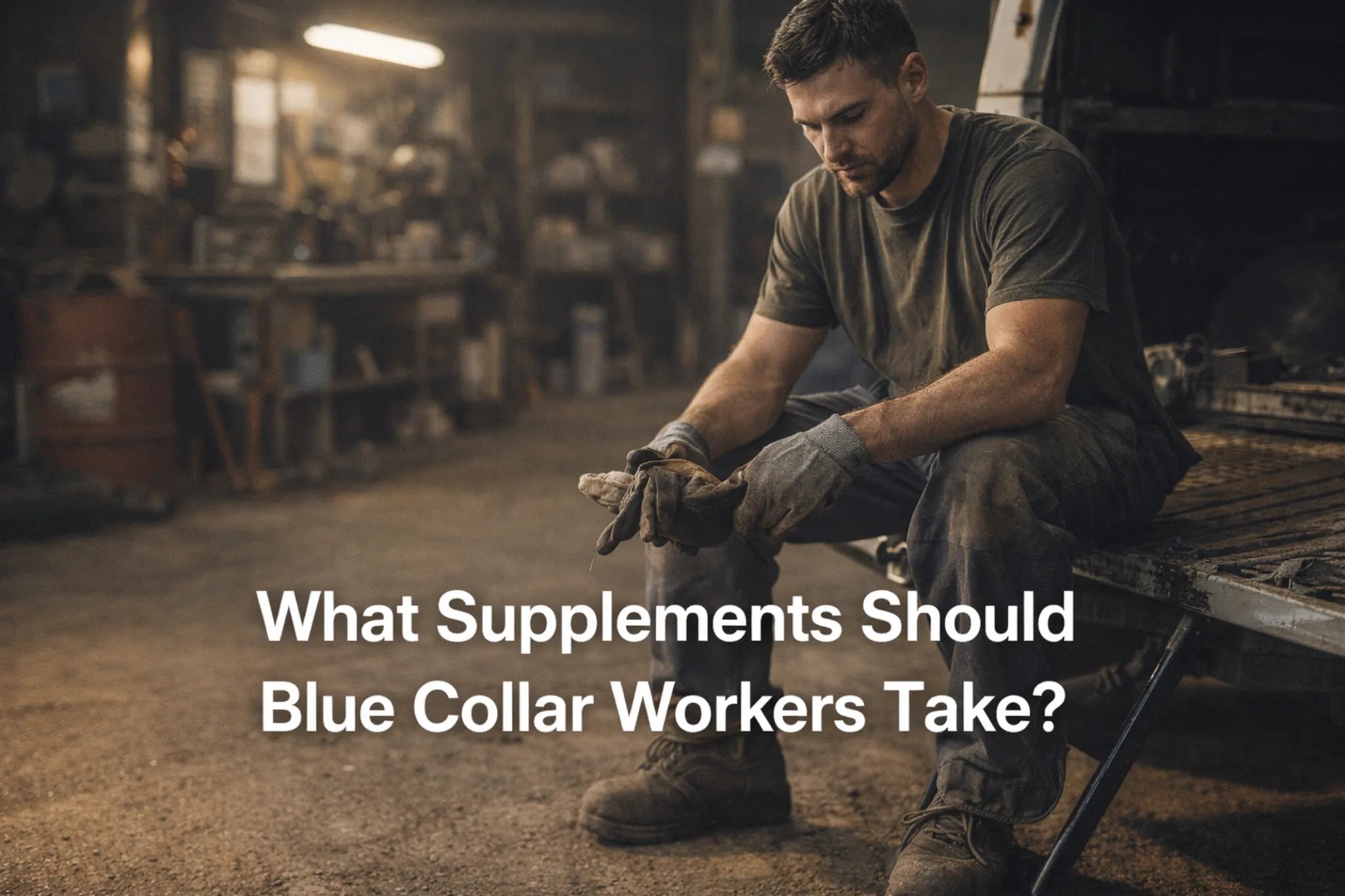
What Supplements Should Blue Collar Workers Take?
Part 2 — Recovery, Sleep, Timing, and What Actually Helps Long Term
If Part 1 focused on work capacity, hydration, and fatigue, Part 2 looks at what really determines whether physical work feels manageable over weeks and months — recovery, sleep quality, and timing.
This is where most people struggle, not because they’re lazy, but because their schedule makes recovery harder than it should be.
6. Is Magnesium Good for Muscle Cramps and Recovery After Physical Work?
Yes — and this is one of the most consistently useful nutrients for manual labour.
Magnesium supports:
-
Muscle relaxation
-
Nerve signalling
-
Recovery after repeated contractions
When magnesium intake is low, people often notice:
-
Night-time cramps
-
Twitching muscles
-
Difficulty switching off after work
This isn’t about relaxation for its own sake — it’s about allowing muscles and the nervous system to stand down after a long day. Options like BetterYou Magnesium Water are practical because they support hydration and magnesium intake together, without adding another capsule to the day.

7. What Time Should Blue Collar Workers Take Their Supplements?
Timing matters more for comfort than effectiveness.
A simple structure works best:
-
During work or breaks: hydration and electrolytes
-
After work: protein and creatine
-
Later in the day: magnesium and stress-support supplements
This spreads the load on digestion and supports recovery without interfering with energy or sleep.
Creatine, for example, doesn’t need to be taken pre-workout. Taking Naughty Boy Prime Creatine after work supports recovery and work capacity without overstimulating the system.
8. Are There Supplements Blue Collar Workers Should Avoid Before Bed?
Yes.
Stimulants — including high-dose caffeine and aggressive pre-workouts — are the most common issue. Even if taken earlier in the day, they can linger and:
-
Disrupt sleep
-
Increase night-time restlessness
-
Reduce recovery quality
Sleep is where physical repair actually happens. Anything that interferes with sleep quality undermines recovery, no matter how “effective” it feels during the day.
9. Can the Right Supplements Improve Sleep Quality for Physical Workers?
Indirectly, yes.
Better sleep doesn’t always mean “sleep aids.” It often means:
-
Fewer cramps
-
Less nervous system tension
-
Lower stress hormone levels
When recovery improves, sleep tends to improve with it. That’s where Per4m Sleep fits naturally — supporting deeper, more consistent rest without acting as a sedative or knockout product.
For people with early starts or rotating shifts, improving sleep quality often has a bigger impact than adding more daytime energy supplements.

10. How Do You Build a Simple, Sustainable Supplement Stack for Physical Jobs?
The mistake many people make is overcomplicating things.
A solid blue collar stack focuses on:
-
Hydration and electrolytes during work
-
Protein and creatine to support recovery
-
Magnesium and stress support to help the body switch off
That’s it.
This is where:
-
Applied Nutrition Hydration Powder supports fluid and mineral balance
-
Per4m Advanced Whey Protein supports muscle repair
-
Naughty Boy Prime Creatine supports work capacity
-
BetterYou Magnesium Water supports muscle relaxation
-
Applied Nutrition Ashwagandha supports stress resilience
Together, they support the realities of physical work without pretending to turn graft into something easy.
Final Takeaway
Blue collar work breaks people down slowly, not dramatically.
The goal isn’t optimisation — it’s keeping the body capable, recoverable, and resilient so the job doesn’t feel harder every year.
The right supplements don’t replace food or rest, but they can make physical work feel more manageable, more consistent, and less draining over time.
FAQ — Supplements for Blue Collar Workers
Do supplements really help with manual labour fatigue?
They can support recovery and reduce wear-and-tear, especially when sleep and meals aren’t perfect.
Is creatine safe for physical jobs?
Yes — it supports repeated physical output and recovery.
Do I need protein if I’m not training?
Yes. Physical work still breaks down muscle tissue.
Is magnesium really that important?
It’s one of the most commonly depleted minerals during physical stress.
Should supplements be taken every day?
Consistency matters more than timing or cycling.


