


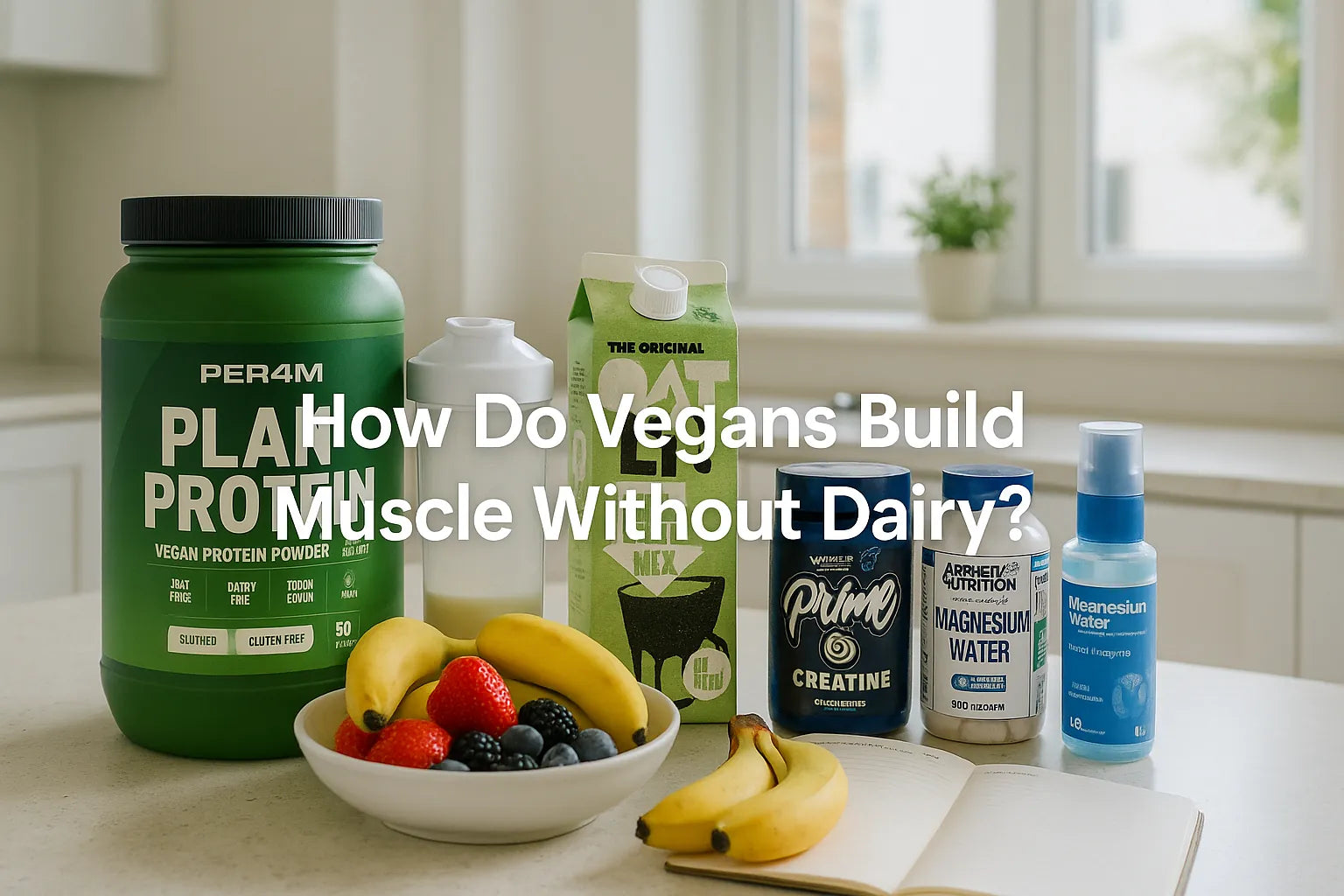
Part 1: The Science, Strategy & Supplements That Make It Possible
For decades, the fitness world clung to a simple formula: protein = muscle, and protein = dairy. Whey protein, casein, Greek yoghurt, milk — all cornerstones of a typical gym-goer’s diet. But as plant-based lifestyles have moved from fringe to mainstream, a new generation of athletes is proving that muscle growth doesn’t depend on dairy at all — it depends on strategy, recovery, and smart supplementation.
Whether you’ve ditched dairy for ethics, health, or digestion, building muscle as a vegan isn’t just possible — it’s perfectly achievable. You just need to understand how to fuel your body, compensate for what’s missing, and use supplements that fill nutritional gaps rather than complicate your diet.
1. Protein Without Milk: The Foundation of Vegan Gains
Protein remains the cornerstone of muscle growth, and while dairy-derived whey has long been the industry standard, it’s not the only source of high-quality amino acids.
Per4m Plant Protein steps up here — a premium blend of pea and brown rice proteins that delivers a complete amino acid profile. Each scoop fuels recovery and growth while staying easy on digestion.
Why it works:
-
Plant proteins can be as effective as whey when you hit your daily total (around 1.6–2.2 g of protein per kg of bodyweight).
-
Per4m Plant Protein is low in fat, naturally sweetened, and ideal post-workout when your body craves fast amino absorption.
-
Pairing complementary sources (pea + rice + soy) provides a similar leucine content to whey — crucial for triggering muscle protein synthesis (MPS).
Pro Tip: Blend your shake with oat or soy milk for an extra 8–10 g of protein and added calories if you’re bulking.

2. Creatine: The Equaliser for Vegan Strength
Creatine is naturally found in red meat and fish — which means many vegans start with lower baseline stores. This is where Naughty Boy Prime Creatine becomes indispensable.
Why creatine matters even more for vegans:
-
It replenishes ATP (your cells’ main energy currency) so you can lift heavier for longer.
-
Studies show vegan and vegetarian athletes experience greater performance improvements after supplementing creatine compared to omnivores.
-
It supports muscle fullness, strength, and even cognitive energy — ideal for long training days.
How to use it: 5 g daily, ideally post-workout or with a carbohydrate-rich meal. Creatine is completely vegan-friendly and stacks effortlessly with plant protein.
3. Micronutrients: The Silent Muscle Builders
One of the biggest challenges of dairy-free or vegan training isn’t macronutrients — it’s the micros. Nutrients like B12, iron, zinc, and vitamin D are often under-consumed on plant-based diets, and even slight deficiencies can hinder recovery and energy.
That’s where Applied Nutrition Multi-Vitamin Complex comes in. This comprehensive daily support formula helps plug the gaps by:
-
Boosting B-vitamin levels for energy metabolism.
-
Supporting iron absorption (especially important without red meat).
-
Strengthening immune and muscle repair function during tough training cycles.
Pro Tip: Take your multivitamin with your first main meal — micronutrients are better absorbed when eaten with healthy fats or carbohydrates.

4. Recovery Starts With Rest: Magnesium for Muscles
Sleep and muscle recovery are inseparable, and when you’re pushing through high-volume training without dairy-based magnesium sources (like yoghurt or milk), you’re more likely to feel fatigued or crampy.
Enter BetterYou Magnesium Water — a convenient and refreshing way to top up magnesium intake without pills. Magnesium plays a key role in:
-
Relaxing the muscles after contraction.
-
Supporting electrolyte balance.
-
Promoting deep, restorative sleep (where real growth happens).
Pair this with your evening wind-down or after an intense session for smoother recovery and less next-day soreness.

5. Stress, Cortisol & Plant-Powered Recovery
Building muscle isn’t just about lifting heavy — it’s also about managing cortisol, your body’s stress hormone. High stress can break down muscle tissue and blunt progress.
That’s why Applied Nutrition Ashwagandha deserves a place in your vegan recovery stack. This adaptogen has been clinically studied for its ability to:
-
Lower cortisol levels.
-
Improve sleep quality.
-
Support testosterone and strength output indirectly through reduced stress.
Ashwagandha’s benefits compound over time, making it one of the most valuable natural aids for athletes balancing work, training, and recovery.
✅ Recap of Part 1
So far, we’ve covered:
-
How vegan athletes can hit protein goals without dairy.
-
Why creatine is essential for plant-based lifters.
-
How micronutrients and magnesium influence performance.
-
Why stress control (via ashwagandha) underpins recovery.
Products mentioned in Part 1:
- Per4m Plant Protein
- Naughty Boy Prime Creatine
- Applied Nutrition Multi-Vitamin Complex
- BetterYou Magnesium Water
- Applied Nutrition Ashwagandha
🔜 Coming Up in Part 2:
We’ll explore:
-
The best vegan meal-timing strategies.
-
How to get 100 g of protein a day on plants.
-
Supplements that bridge gaps in recovery.
-
Smart stacking with electrolytes and creatine.
-
And the real-world vegan athlete blueprint for muscle growth.
Part 2: The Practical Blueprint for Growth, Recovery & Sustainability
6. How to Hit 100g of Protein a Day (Without Dairy or Meat)
Building muscle as a vegan isn’t a problem of availability — it’s a problem of efficiency. You can absolutely hit your daily protein target, but it requires combining sources strategically throughout the day.
Here’s what a realistic, dairy-free 100 g protein day could look like:
|
Time |
Meal |
Protein Source |
Approx. Protein |
|
7:30 am |
Breakfast smoothie |
1 scoop Per4m Plant Protein + oat milk + banana + chia seeds |
28 g |
|
10:30 am |
Snack |
Handful of almonds + apple |
6 g |
|
1:00 pm |
Lunch |
Quinoa, chickpeas, spinach, olive oil |
22 g |
|
4:00 pm |
Pre-workout |
Naughty Boy Prime Creatine (mixed with juice) + rice cakes + peanut butter |
5 g |
|
6:00 pm |
Post-workout shake |
1 scoop Per4m Plant Protein + water |
25 g |
|
8:00 pm |
Dinner |
Tofu stir-fry with mixed vegetables |
18 g |
Total: ~104 g
The key lies in variety: mixing legumes, grains, and plant proteins ensures all nine essential amino acids are covered. You don’t need to hit perfect ratios every meal — what matters is your total intake by bedtime.
7. Creatine & Recovery: The Long Game for Vegan Strength
You already know from Part 1 that Naughty Boy Prime Creatine is a vegan’s best friend. But it’s not just about boosting strength — it’s about what happens after the workout.
When you supplement creatine consistently:
-
Your muscle cells stay hydrated, creating a fuller appearance even in lean phases.
-
Recovery between sessions improves — meaning less DOMS, more volume, and better progression.
-
You may even see cognitive benefits, which helps focus during long training blocks.
Pro Tip: Pair creatine with a fast carbohydrate (like fruit juice or a banana) post-workout to improve uptake — especially useful when you’re skipping dairy-based shakes.

8. Beyond Protein: The Micronutrient Edge
Vegan athletes often master macronutrients but neglect the micros. Here’s where Applied Nutrition Multi-Vitamin Complex continues to shine.
Deficiencies in iron, vitamin D, zinc, or B12 can quietly sabotage progress by:
-
Slowing recovery time.
-
Increasing fatigue.
-
Lowering immune resilience (more colds = more missed workouts).
You can’t out-train poor nutrition, and for dairy-free lifters, that means putting micronutrient coverage on autopilot. Taking your multi daily with your main meal ensures consistency without overcomplication.
9. Hydration: The Overlooked Performance Factor
Dehydration slows nutrient transport and muscle recovery, yet dairy-free diets can lack electrolytes that milk naturally provides. That’s where BetterYou Magnesium Water bridges the gap.
Magnesium assists over 300 enzymatic reactions — including muscle contraction and relaxation. Without enough of it, cramps and fatigue set in faster.
Stack tip: Combine magnesium with Applied Nutrition Ashwagandha for an end-of-day recovery ritual. The magnesium relaxes muscles, the ashwagandha calms the nervous system, and you wake up feeling less inflamed and more balanced.

10. Plant Power: Why Recovery Isn’t Just Physical
Muscle recovery is as much psychological as it is physical. A vegan diet rich in antioxidants (berries, leafy greens, turmeric, ginger) helps combat oxidative stress from training — a crucial edge for consistency.
Adding Applied Nutrition Ashwagandha supports this mind–body connection by regulating cortisol levels and improving resilience to daily stress. Over time, you’ll notice:
-
Better focus during workouts.
-
Faster recovery between sessions.
-
Steadier energy across your training week.
Takeaway: Recovery starts in the gym but continues at the table — and even in how you manage stress and sleep.
11. Common Mistakes Vegan Lifters Make
Even with the right supplements, mistakes happen. The most common include:
-
Undereating calories. Plants are less calorie-dense, so vegans often struggle to hit a surplus.
-
Neglecting protein timing. Space your protein evenly across 3–5 meals for optimal synthesis.
-
Overreliance on carbs. They fuel workouts, but your ratio still needs adequate protein and fat.
-
Skipping creatine and multis. These two alone can dramatically improve vegan performance markers.
12. The Smart Vegan Stack for Real Results
If you’re building muscle without dairy, think of your stack like a recovery toolkit:
✅ Per4m Plant Protein – main protein source
✅ Naughty Boy Prime Creatine – strength & endurance
✅ Applied Nutrition Multi-Vitamin Complex – micronutrient support
✅ BetterYou Magnesium Water – hydration & muscle function
✅ Applied Nutrition Ashwagandha – stress & recovery balance
Stack tip: Keep it simple. Morning shake, pre-workout creatine, evening magnesium + ashwagandha — and you’re set.
Conclusion: Vegan Muscle Is Built on Strategy, Not Sacrifice
Building muscle without dairy isn’t about restriction — it’s about refinement. With the right balance of high-quality plant protein, recovery nutrients, and lifestyle consistency, vegan athletes can perform on par with anyone else in the gym.
What separates results from frustration isn’t what you exclude — it’s how well you plan what to include.
FAQ
1. Can I build muscle without dairy?
Yes—hit 1.6–2.2 g protein per kg bodyweight daily using plant protein (e.g., Per4m Plant Protein), whole foods, and consistent progressive overload.
2. Is creatine suitable for vegans?
Yes—creatine monohydrate like Naughty Boy Prime Creatine is vegan-friendly and helps strength, performance, and recovery when taken daily (5 g).
3. What’s the best vegan protein source for muscle?
A blend (pea + rice) such as Per4m Plant Protein gives a complete amino profile and solid leucine content to trigger muscle protein synthesis.
4. Do vegans need more protein than omnivores?
Not necessarily—total daily intake matters most. Many vegans find it easier to aim the top end of 1.6–2.2 g/kg to cover variability in amino profiles.
5. How do I get 100 g of protein on a vegan diet?
Combine shakes (Per4m Plant Protein), tofu/tempeh, legumes, quinoa, and snacks like soy yoghurt or edamame spaced across 3–5 meals.
6. Should vegans take a multivitamin?
A quality multi like Applied Nutrition Multi-Vitamin Complex helps cover common gaps (B12, vitamin D, zinc, iron) that can impact energy and recovery.
7. Does magnesium help recovery and sleep?
Yes—magnesium supports muscle relaxation and sleep quality; BetterYou Magnesium Water is an easy daily top-up to aid recovery.
8. Is ashwagandha useful for vegan athletes?
It can support stress management and sleep quality; Applied Nutrition Ashwagandha fits well in an evening recovery routine.
9. Do I need BCAAs if I use a complete plant protein?
Usually no—complete proteins (or blends like Per4m Plant Protein) already provide essential amino acids, including leucine.
10. Can I bulk as a vegan without getting overly full?
Yes—use energy-dense foods (nuts, nut butters, olive oil, dried fruit) and liquid calories (smoothies, shakes) to hit a small surplus comfortably.


