


Introduction – The Smart Way to Bulk Without the Bloat
Bulking season. For some, it’s an excuse to eat everything in sight. For others, it’s a terrifying gamble: gain muscle, yes—but not at the cost of definition. The truth is, staying lean while bulking isn’t about restriction—it’s about precision.
Your body doesn’t know you’re “bulking.” It just responds to signals—calorie surplus, training intensity, sleep quality, and nutrient balance. Nail those variables, and you can grow without layering on fat. Miss them, and you end up with soft muscle and a stubborn belly.
So how do you build size and stay lean? Let’s break down what a clean bulk really looks like, how to structure your nutrition, and the supplements that can make all the difference between a clean gain and a dirty one.
1. How Do You Stay Lean While Bulking?
The key lies in managing your calorie surplus. To build muscle, you need to eat more than you burn—but not too much more. A surplus of 200–300 calories per day above maintenance is usually enough to stimulate growth without storing fat.
Protein intake should remain high (1.6–2.2g per kg of bodyweight), while fats and carbs adjust around your training demands. You’re not eating for comfort; you’re eating for performance.
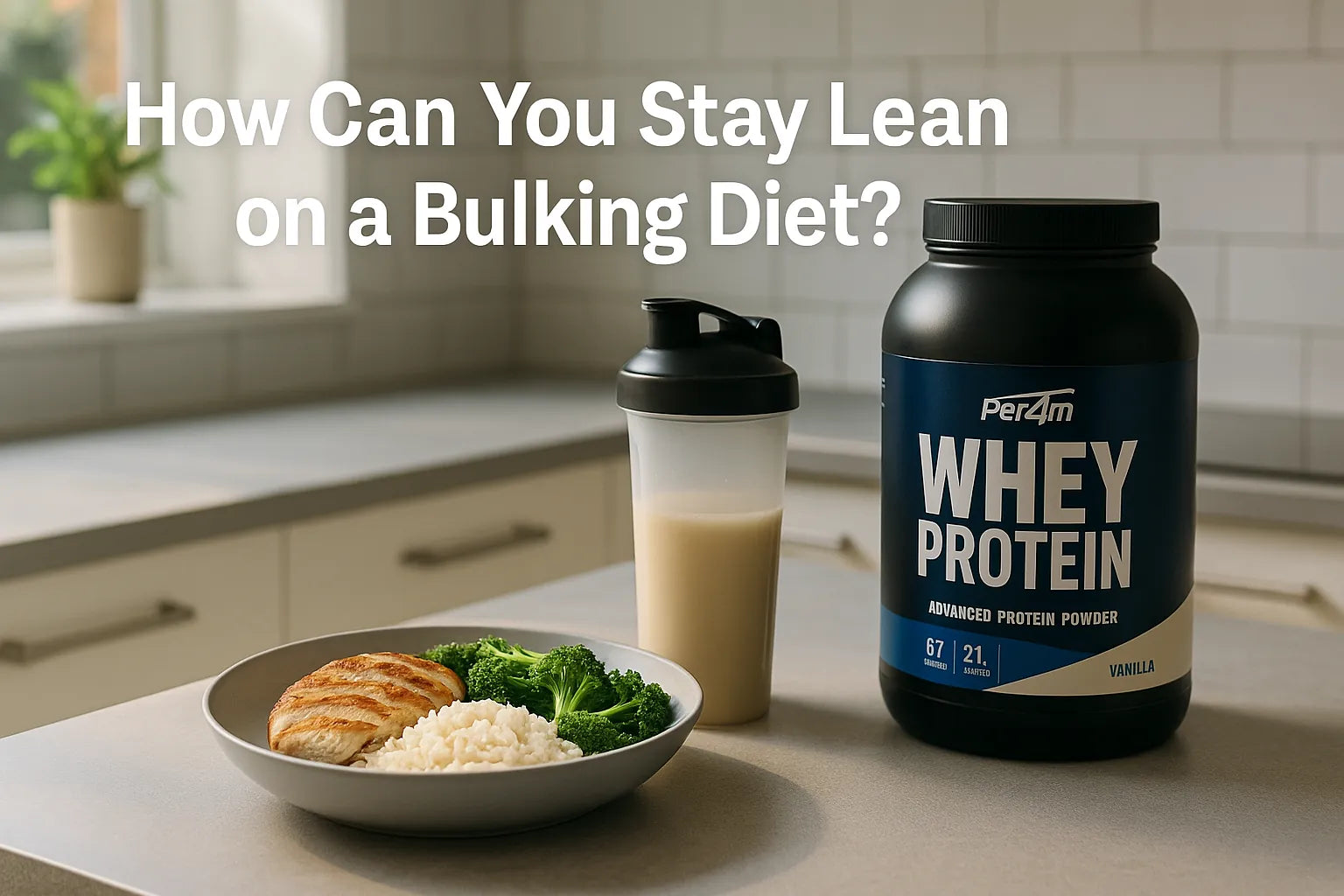
Per4m Whey Advanced Protein is perfect for this stage—each serving delivers around 20–25g of high-quality protein with minimal sugar and fat. It helps you hit your protein goals cleanly, without unnecessary calories from added fillers or oils.

2. How to Bulk Without Getting Belly Fat
Belly fat usually creeps in because of excessive calorie surpluses, too many processed carbs, and low daily movement outside the gym. The goal is to find your sweet spot of growth—where you’re recovering well and progressing in strength, but your waistline stays stable.
Strategic cardio can help. A couple of 20-minute sessions of light cycling or incline walking per week can keep your metabolism firing without eating into gains.
For a metabolic edge, EHP Labs OxyShred (Non-Stim) fits perfectly into a lean bulk. It helps your body use stored fat as energy while supporting calorie partitioning—so more of what you eat goes toward muscle repair instead of storage. Think of it as an internal thermostat keeping your bulk efficient.
3. Can I Stay Lean While Building Muscle?
Absolutely—but it requires discipline and consistency. The biggest mistake people make is trying to gain weight too quickly. Remember: true muscle growth happens slowly. Aim for 0.25–0.5kg per week, depending on your training experience and metabolism.
Hydration and digestion also play major roles. If your gut isn’t absorbing nutrients properly, your calorie surplus just becomes stored energy (read: fat). Applied Nutrition Probiotic Advanced Multi-Strain Formula helps optimise digestion and nutrient uptake during a bulk, ensuring your body uses every calorie effectively.
When your digestion is efficient, you can actually eat less and grow more—a subtle but powerful advantage in staying lean.

4. Is 100g of Fat Too Much on a Bulk?
That depends on your total calorie intake and macro ratios. For most people, 100g of fat is excessive unless you’re consuming over 3,500 calories a day. Dietary fat is calorie-dense (9 calories per gram), so small overages add up quickly.
A lean bulk typically keeps fat around 20–25% of total calories—enough to support hormones and recovery without blunting insulin sensitivity. When you consume too much fat, your body struggles to efficiently use carbohydrates for muscle repair.
This is why balance matters. Use moderate fats (avocado, olive oil, fatty fish) and prioritise lean protein sources. Combat Fuel Clear Whey Protein is a smart way to boost protein intake without the heaviness of dairy-based shakes. It’s refreshing, light, and perfect post-training when you want recovery without unnecessary calories.

5. Is 3000 Calories Good for a Lean Bulk?
The ideal calorie target depends on your body size, activity level, and metabolism—but 3000 calories is a common benchmark for active men aiming to gain lean mass.
Here’s the key: don’t just hit 3000 calories—earn them. Track your intake, monitor your weekly weight, and adjust by 100–200 calories at a time if progress stalls. Use strength gains and mirror feedback, not just the scale, as your indicators.
Applied Nutrition ABE Pump (Non-Stim Pre-Workout) helps maximise those workouts by improving endurance and muscle pump without excess caffeine or bloating. Better pumps mean better nutrient delivery to muscle tissue—so every calorie you eat post-workout goes exactly where it should.
End of Part 1
So far, we’ve learned that:
-
Staying lean while bulking means precision, not restriction.
-
Controlled calorie surplus and clean macros are essential.
-
Thermogenics like OxyShred can keep fat gain minimal.
-
Gut health and digestion (via Probiotic Advanced) matter as much as protein.
-
Quality supplements fine-tune your progress, not replace effort.
Products Featured in Part 1
- Per4m Whey Advanced Protein (2.01kg)
- EHP Labs OxyShred Thermogenic Fat Burner (Non-Stim)
- Applied Nutrition Probiotic Advanced Multi-Strain Formula
- Combat Fuel Clear Whey Protein (490g)
- Applied Nutrition ABE Pump (Non-Stim Pre-Workout)
Next in Part 2:
We’ll explore how to find your perfect macro split, the role of cardio, how to know when to stop bulking, and how creatine fits into a lean bulk without adding “water weight.”
How Can You Stay Lean on a Bulking Diet? (Part 2)
6. Is Cardio Killing My Bulk?
This is one of the most misunderstood parts of bulking. Cardio doesn’t kill muscle—it just exposes poor planning. The key is type and timing.
Steady-state cardio (like incline walking, cycling, or rowing) improves cardiovascular fitness, recovery, and nutrient delivery — all of which actually support muscle growth. The problem comes when you do too much, too intensely, or at the wrong times.
For lean bulking, 2–3 short sessions (20–30 minutes each) per week is ideal. Keep your heart rate moderate, and don’t do it immediately before heavy lifting. Think of cardio as maintenance for your metabolic engine, not a calorie-burning punishment.
To keep recovery balanced, Combat Fuel Clear Whey Protein is a smart post-cardio choice. It’s refreshing, easily digested, and helps repair muscle without adding heavy calories.

7. How Much Protein Do You Need to Stay Lean While Bulking?
Protein is the cornerstone of lean muscle gain. Aim for 1.6–2.2g of protein per kilogram of body weight per day. That’s enough to stimulate muscle protein synthesis while keeping fat gain minimal.
The timing of protein also matters. Split intake across 4–5 meals to maintain an anabolic environment throughout the day.
A great combo for hitting those numbers without bloating is to mix Per4m Whey Advanced Protein after your main workouts and use Combat Fuel Clear Whey later in the day for an easy, refreshing top-up. This dual approach keeps your diet varied while ensuring consistency.
To improve absorption, maintaining gut health is vital. Applied Nutrition Probiotic Advanced Multi-Strain Formula helps keep your digestion efficient — turning high-protein meals into actual muscle fuel instead of wasted calories.
8. Should I Stop Bulking If I Feel Fat?
This question separates smart lifters from stubborn ones. Feeling bloated or “puffy” doesn’t always mean you’re gaining fat — it could be water retention, increased glycogen, or simple digestion lag from higher food volume.
But if your waist measurement increases noticeably week after week, or your definition fades rapidly, it’s time to re-evaluate your surplus. Drop 200–300 calories and add a bit of movement until you stabilise.
If you feel sluggish or “off,” consider metabolic support. EHP Labs OxyShred (Non-Stim) can help tighten things back up without stalling growth. It supports fat oxidation and appetite control, keeping your body in a responsive, energetic state during long bulking phases.

9. What Are the Biggest Lean Bulking Mistakes?
The goal of a lean bulk is precision — but too many lifters turn it into a free-for-all. The top mistakes?
-
Overshooting calories – Eating “big to get big” doesn’t work if most of it turns to fat.
-
Neglecting fibre and micronutrients – A clean gut absorbs nutrients better.
-
Ignoring recovery – Sleep and stress management dictate how your body uses food.
-
Skipping cardio – A strong heart means better pumps, endurance, and nutrient delivery.
-
Inconsistent tracking – Guessing calories guarantees plateaus or fat gain.
To correct these, think structure, not restriction. Support your metabolism with Applied Nutrition ABE Pump (Non-Stim Pre-Workout) for improved blood flow and energy management. Combine it with Probiotic Advanced to keep digestion smooth.
You’ll grow cleaner, train harder, and stay leaner — all without cutting food groups or joy out of your diet.
10. Is It Possible to Bulk and Stay Lean?
Yes — if you master consistency and patience. A lean bulk isn’t about speed; it’s about strategy. You’re training your body to use food efficiently — turning calories into muscle, not fat.
When you combine smart nutrition with the right supplementation, staying lean while gaining becomes achievable.
Here’s the winning formula:
-
Protein: From Per4m Whey and Combat Fuel Clear Whey to support daily intake.
-
Fat control: Keep your diet clean, balanced, and moderate in oils and spreads.
-
Metabolic support: OxyShred Thermogenic (Non-Stim) keeps you burning efficiently.
-
Digestive efficiency: Probiotic Advanced Multi-Strain maximises nutrient use.
-
Performance boost: ABE Pump Non-Stim enhances training without unnecessary bloat.
Add hydration, discipline, and daily movement, and you’ll build dense, defined muscle instead of puffed-up weight.
Frequently Asked Questions
1. How do you build muscle without getting fat?
Use a small calorie surplus (200–300 kcal) and prioritise protein while keeping fats moderate.
2. Can you take creatine while trying to stay lean?
Yes — creatine supports muscle fullness and strength without adding body fat.
3. How much should I eat to bulk but stay lean?
Start 200–300 calories above maintenance and track progress weekly.
4. What supplements help with lean muscle gain?
Whey protein, probiotics, thermogenics like OxyShred, and non-stim pre-workouts like ABE Pump.
5. What’s the difference between lean bulk and dirty bulk?
A lean bulk prioritises nutrient-dense foods, controlled calories, and minimal fat gain. Dirty bulks rely on overeating and result in excess fat storage.
Conclusion – Grow Smart, Not Soft
Bulking doesn’t have to mean losing your abs. When you understand how to manage calories, balance macros, and keep your metabolism responsive, you can build muscle that’s dense, defined, and sustainable.
Your lean bulk toolkit: Per4m Whey Advanced Protein, Combat Fuel Clear Whey, EHP Labs OxyShred (Non-Stim), Applied Nutrition ABE Pump, and Probiotic Advanced Multi-Strain Formula. Each plays a unique role — from performance to digestion to fat management — helping you build muscle the right way.
Eat clean, train hard, recover smart, and you’ll stay lean long after the bulk is over.


