


Part 1 — The Hidden Power of Water-Rich Nutrition
Hydration is one of those fitness fundamentals everyone thinks they’ve nailed until they realise they haven’t. Most people assume dehydration is something that happens on heatwave hikes or after a savage spin class, but the truth is far sneakier: you can be dehydrated on a normal Tuesday, sitting at your desk, wondering why your energy has dipped and your focus has slipped.
What we drink matters, obviously. But what we eat matters too — far more than most people realise. Around 20–30% of your daily hydration comes from food, a number that often shocks people who think hydration begins and ends with a bottle of water.
This is where the question becomes genuinely interesting:
Can food actually boost hydration levels beyond what you drink?
And if so… how much does it really matter?
As it turns out — a lot.
Your diet can either support your hydration or sabotage it. Some foods deliver minerals that pull water into the bloodstream. Others practically drag water out of you. And some do both depending on timing.
This is a story about smart hydration — the kind that lives in your meals, not just your bottle.
Let’s break down the first half of the big picture.
1. What Food Gives You the Most Hydration?
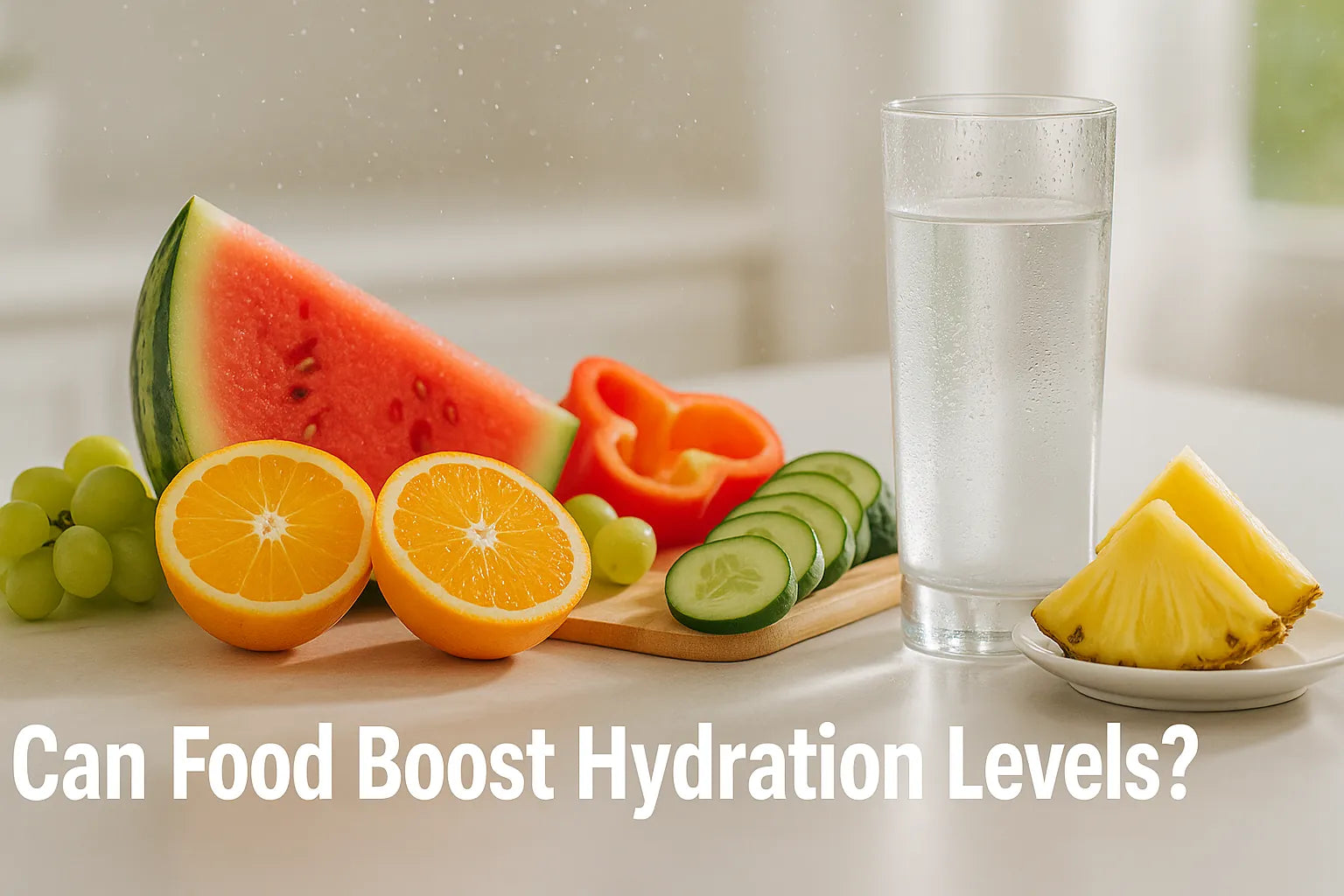
If hydration were a popularity contest, watermelons would win by a landslide. Not only are they about 92% water, but they’re also rich in potassium, which your body uses to balance fluids inside your cells. But watermelon isn’t alone — cucumbers, strawberries, tomatoes, lettuce, celery, oranges, and even peppers belong to the same hydrating elite.
These foods hydrate through two mechanisms:
-
Water content — obvious but powerful
-
Electrolyte content — the reason the water actually stays in your body
Think of electrolytes as the locksmiths of hydration. Without potassium, sodium, and magnesium, water simply passes through you. Hydrating foods work because they pair water with these minerals naturally.
This is where food-based hydration becomes surprisingly effective:
water + minerals = absorption.
Water without minerals = dilution.
Consider this simple example:
If you drink a litre of plain water after sweating heavily, you’ll rehydrate a bit, but your body also needs sodium and potassium to pull that water back into circulation. This is why so many people feel worse after “chugging water” — nausea, bloating, or even cramps can follow if the electrolyte balance isn’t right.
Food helps fill the gap.
Pair that with a hydration formula like Applied Nutrition Hydration Powder, and you’ve recreated the perfect environment for fluid uptake — water from food, minerals from electrolytes, and a bloodstream ready to absorb both efficiently.
Hydration isn’t about volume.
It’s about balance.
And food plays an enormous part in that balance.

2. Which Foods or Fruits Hydrate Better Than Water?
No food technically hydrates “more” than water — but foods can hydrate better because they keep water where it needs to be. That’s the crucial difference.
Water hydrates quickly, but it leaves quickly too.
Foods hydrate more slowly, but they hold water longer.
This is why you sometimes feel more refreshed after eating an orange than after drinking a glass of water. The combination of water + fibre + electrolytes creates a slow-release hydration effect, almost like nature’s IV drip.
The most effective hydrating foods include:
-
oranges
-
grapes
-
kiwi
-
cucumber
-
pineapple
-
berries
-
tomatoes
-
leafy greens
These don’t just contain water — they contain mineral density, particularly potassium and magnesium.
Hydration isn’t just water intake.
It’s water retention — in a good way.
Some athletes actually prefer food-based hydration for this exact reason. Before long training sessions, a bowl of pineapple or kiwi delivers both water and digestive-friendly electrolytes, while pairing it with a hydration mix like Per4m Hydrate keeps levels stable for longer sessions.
Then there’s coconut water — a naturally occurring electrolyte drink that pairs brilliantly with whole foods. And interestingly, this mirrors the logic behind EHP Labs Hydreau, which uses fruit-inspired hydration to mimic natural absorption patterns.
So yes, some foods feel like they hydrate “better” because they give your body the minerals it needs to actually use the water.
Water gets in fast.
Food keeps it there.
3. What Is the Fastest Way to Rehydrate Your Body?
The fastest way to rehydrate isn’t drinking more water — it’s restoring your electrolyte balance. Sodium regulates fluid levels outside your cells, potassium handles fluid inside your cells, and magnesium supports muscle function. If those aren’t in sync, hydration stalls.
This is why drinking plain water after sweating a lot can make you feel worse. You dilute your blood sodium levels without replacing what you lost. This can trigger headaches, sluggishness, dizziness, or even nausea — symptoms people often misinterpret as dehydration getting worse.
Effective rehydration always looks like this:
water + electrolytes + minerals
This is where good hydration supplements earn their place.
A formula like Optimum Nutrition Electrolytes takes the guesswork out by delivering sodium and potassium in the ratios your body can use immediately — no waiting, no bloating, no guesswork.
But food plays a major role too.
Foods like watermelon, cucumber, strawberries, and leafy greens pair beautifully with electrolyte formulas because they deliver water and the natural minerals your cells crave. The combination acts faster than water alone because you're restoring the system that absorbs the water.
Quick rehydration is about giving your body the tools it needs.
Not just the water — the whole kit: minerals, salts, fluids, and structure.

4. What Hydrates Your Body the Quickest?
Speed isn’t about volume — it’s about compatibility. Your body hydrates fastest when the fluid you ingest closely resembles the fluid you’ve lost.
That means:
-
the right sodium concentration
-
the right balance of potassium
-
enough magnesium to stabilise nerves and muscles
-
water that moves into cells efficiently
When your body is depleted, water alone is like posting a letter without a stamp. It will go somewhere, but not to the right place.
This is why the fastest hydration strategy is a combination approach:
Electrolytes first.
Hydrating foods second.
Water last.
Electrolytes start the engine.
Food adds water with minerals.
Water completes the cycle.
When you’ve trained hard and need rapid hydration, pairing fruit with an electrolyte formula like Per4m Hydrate or EHP Labs Hydreau creates a dual-speed system — fast absorption from the drink, slow-release hydration from the fruit.
Meanwhile, BetterYou Magnesium Water – Hydrate adds a layer of support most people overlook: magnesium plays a pivotal role in fluid distribution. When magnesium levels rise, your body absorbs and uses water far more efficiently.
Fast hydration isn’t one ingredient — it’s synergy.
And food is an essential part of that synergy.

5. Does Eating Certain Foods Help You Stay Hydrated?
Absolutely — and this is where the science gets interesting.
Foods with high water content hydrate you on two levels:
-
They deliver fluid directly
-
They provide nutrients that help your body hold and use that fluid
Potassium-rich foods like oranges, bananas, honeydew melon, and tomatoes help regulate intracellular hydration — the water inside your cells. Magnesium-rich foods such as leafy greens, nuts, and seeds help maintain muscle function and prevent cramping. Fibre slows digestion just enough to allow water to be absorbed at a steady rate.
Hydrating foods are not a replacement for water or electrolyte drinks — they are a partner system.
When you rely solely on drinks, especially during training, you risk a rollercoaster effect: sharp hydration spikes followed by dips. Foods stabilise the curve.
This is why many people feel significantly more energised when combining water-rich meals with proper electrolyte support. The equation becomes predictable:
Water + electrolytes + food = stable hydration
Water without food or minerals = inconsistent hydration
This is also why long-distance runners often pair electrolyte drinks with fruit like oranges at race stations — it’s a combination backed by physiology, not preference.
And in day-to-day life, pairing a hydration formula like Applied Nutrition Hydration Powder with water-rich snacks delivers a similar benefit: absorption plus retention, all working in harmony.
Part 2
The Second Half of the Hydration Story
By now, the myth that hydration relies solely on how much water you drink is long gone. Hydration is a relationship — between minerals, fluids, food, and your lifestyle. Water is only one piece. Diet quietly carries far more of the load than most people expect.
Part 2 pushes deeper into the practical side of hydration. What should you eat when dehydration sets in? Which foods hold you back? How do you tell the early warning signs? And when speed matters, which foods step in faster than a bottle?
Let’s finish the picture.
6. What Should You Avoid Eating When Dehydrated?
When you’re dehydrated, your body is already struggling to hold onto water. Certain foods make that battle harder. The most obvious culprit is salt — though not the kind inside electrolyte formulas. It’s the kind hiding in highly processed foods: crisps, takeaways, packet meals, and anything that leaves you feeling puffy or unusually thirsty afterward.
Salt itself doesn’t dehydrate you. But salt without potassium disrupts fluid balance. Processed foods overload sodium, leaving potassium behind — and without potassium, water struggles to move into cells. The result? You drink more, but hydrate less.
Another quiet offender is sugar. Not fruit — refined sugar. It pulls water from your tissues to aid digestion, temporarily worsening dehydration. That sluggish, foggy feeling after eating something overly sweet? Often a hydration dip.
Then there are diuretic foods — coffee, strong teas, alcohol — all of which encourage fluid loss. They don’t cause dehydration on their own, but they widen the gap when you’re already behind.
This is where supplements actually help you avoid a downward spiral. A quick dose of Applied Nutrition Hydration Powder or Optimum Nutrition Electrolytes resets the sodium–potassium ratio, preventing the “I’m drinking loads but not hydrating” effect. The key is balance, not restriction.
When you’re dehydrated, the foods you avoid matter just as much as the ones you choose.

7. Does Fruit Count as Water Intake?
Fruit doesn’t just “count” — it sometimes counts better than water.
Most fruits sit between 80–95% water, meaning every handful is effectively a structured hydration delivery system. But fruit also brings fibre, natural sugars, and electrolytes — all of which slow absorption just enough to stabilise hydration, rather than flooding your system at once.
Watermelon, oranges, kiwi, pineapple, strawberries — these don’t just add hydration, they anchor it. The potassium in fruit is the real hero. It helps create fluid balance inside cells, preventing the dehydration headaches or muscle heaviness you get when potassium drops too low.
This is also why pairing fruit with a hydration formula works so well. A simple pre-workout pairing — say, a bowl of pineapple with Per4m Hydrate or EHP Labs Hydreau — creates a two-phase hydration curve: quick restoration from electrolytes, slow-release hydration from fruit. Athletes use this trick without even realising they’re doing it.
So yes, fruit absolutely counts — and in many cases, it counts more than water alone.
8. What Are the Warning Signs of Dehydration?
Most people don’t spot dehydration until they’re already deep into it. Thirst is actually a late-stage symptom — the alarm your body rings when the damage has already begun.
The earlier signs are quieter:
-
a slight drop in focus
-
muscles feeling “off” or heavier
-
mild headaches behind the eyes
-
dry lips despite drinking
-
sudden irritability
-
faster breathing during light effort
-
skin losing elasticity
-
darker urine
-
dizziness when standing
These signs often appear during everyday activities, not workouts. A midday slump, a sudden ache in your calves, a wave of fatigue after eating something salty — dehydration hides in plain sight.
The body’s electrical system is deeply dependent on sodium, potassium, and magnesium. When they drift out of range, performance dips long before you feel thirst. This is why hydration support is so effective when used proactively rather than reactively.
For example, a few sprays of BetterYou Magnesium Water – Hydrate can help calm the neuromuscular system when dehydration edges into early cramping or tension. And during long training blocks, athletes often rely on Optimum Nutrition Electrolytes to prevent the concentration issues that dehydration triggers well before sweat even appears.
Recognising dehydration early isn’t just about avoiding thirst — it’s about protecting performance, mood, and recovery long before water becomes an emergency.

9. What Foods Are Best to Eat When You Need to Hydrate Quickly?
When hydration needs to happen fast — after a workout, during a heatwave, or after a night of poor sleep — the best foods combine water, electrolytes, and a texture that allows rapid digestion.
Three categories dominate:
Water-heavy fruits
Watermelon, oranges, pineapple, grapes.
They provide immediate water and minerals without burdening digestion.
Mineral-rich vegetables
Cucumber, tomatoes, celery, peppers.
They deliver potassium and magnesium quietly and effectively.
Smooth, easy-to-digest foods
Soups, broths, blended fruit bowls.
These provide hydration without dehydration-triggered digestive load.
Add electrolytes, and the effect compounds.
This is why many people instinctively reach for fruit right after training. Hydration is not just what you drink — it’s what you absorb. The combination of water-rich foods and electrolyte support (like Applied Nutrition Hydration Powder) restores balance in record time.
But this isn’t just about speed.
It’s about comfort.
When you’re dehydrated, digestion slows. Heavy meals make you feel worse. Light foods paired with clean electrolytes rehydrate faster because your body spends its energy absorbing fluid, not breaking down food.
Hydration isn't a race — but when you need to win, foods with high water content are the shortcut nature built for you.
10. Does Soup or Water-Rich Food Count Toward Hydration?
Absolutely — and often more effectively than plain water.
Soup is, at its core, salted water with nutrients suspended in it. It rehydrates because:
-
the sodium helps water move into the bloodstream
-
the vegetables add potassium
-
the warmth increases absorption
-
the liquid is already combined with electrolytes
Soups, stews, and broths have been hydration tools for centuries — not because they’re comforting, but because they work. Modern sports science simply confirms what earlier generations already knew.
Water-rich foods count too: yoghurt, oats, smoothies, vegetable dishes, fresh fruit — all add to your hydration levels. Even meals you think of as “dry,” like pasta or rice, are often 60–70% water after cooking.
Pair these foods with proper hydration support and you essentially build a layered system your body can use throughout the day. A midday bowl of fruit with EHP Labs Hydreau, or an evening soup after a long training session paired with Per4m Hydrate, creates a steady rhythm of fluid absorption that outperforms water alone.
Hydration is not just about quenching thirst.
It’s about feeding your cells exactly what they need to regulate fluid — salt, potassium, magnesium, and water working in unison.
Food anchors that balance more than most people realise.
FAQ’s
1. Can food alone keep you fully hydrated?
Food can support hydration but shouldn’t replace water or electrolytes entirely.
2. Is fruit better than sports drinks?
Not better — different. Fruit hydrates slowly; electrolyte drinks hydrate fast.
3. How much hydration comes from food?
Typically 20–30% of your daily intake comes from food.
4. What’s the best hydrating food?
Watermelon, cucumber, oranges, tomatoes, and pineapple are top-tier.
5. Can dehydration affect performance?
Yes — even 2% dehydration can reduce performance noticeably.
6. Are electrolytes always necessary?
Not daily, but essential during exercise, heat, sweating, or illness.
7. Is coconut water good for hydration?
Yes — it’s naturally rich in potassium.
8. Does soup count as hydration?
Yes — especially broths with both sodium and water.
9. Can magnesium improve hydration?
Yes, magnesium supports fluid balance and muscle function.
10. What’s the fastest rehydration method?
Electrolyte drink + water-rich food = fastest safe hydration.


