


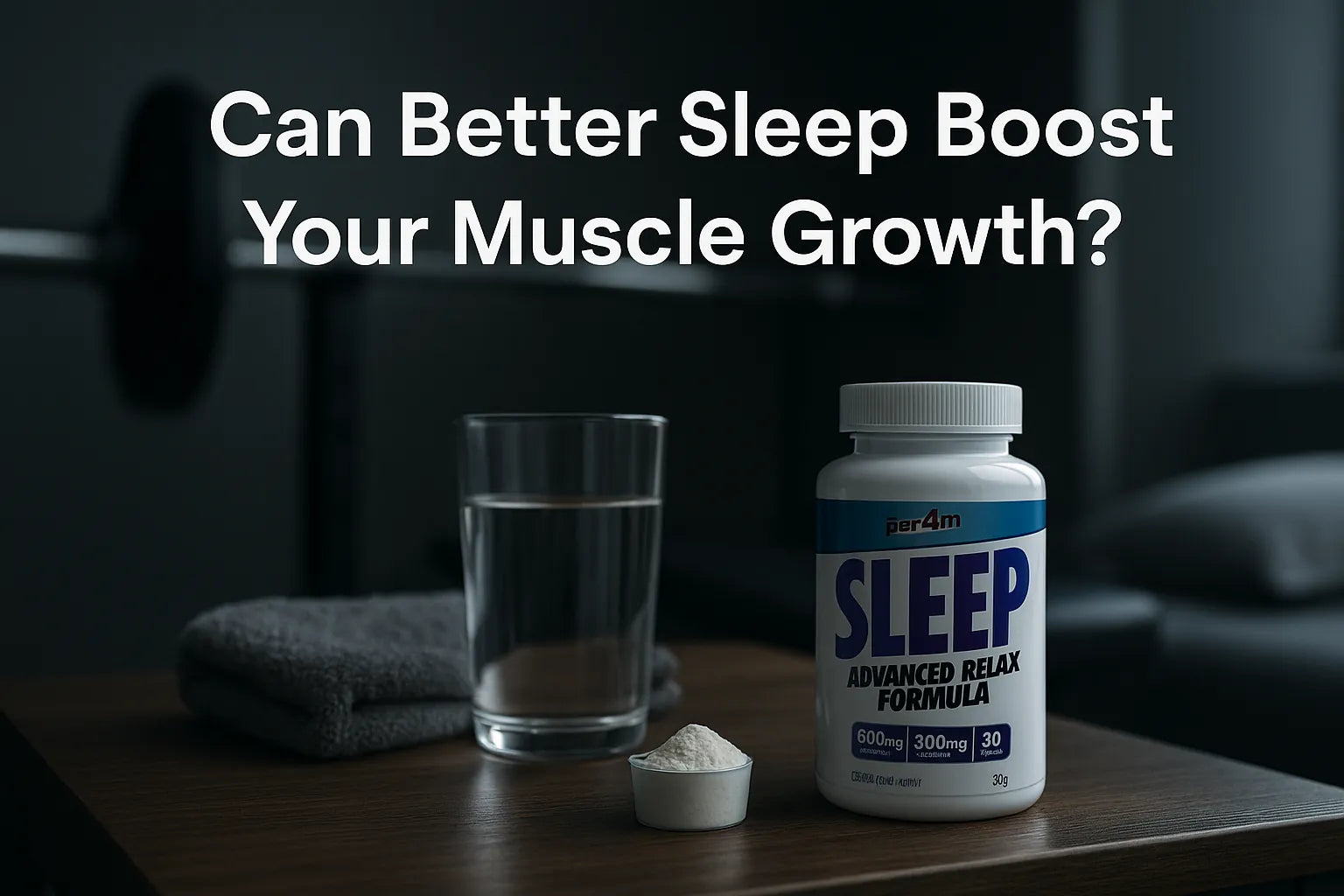
1. Why Sleep Isn’t Just ‘Rest’ — It’s an Anabolic Window Most Lifters Waste
Walk into any gym and you’ll see people obsessing over creatine timing, protein grams, perfect macros, hydration strategies, progressive overload percentages — yet the biggest anabolic tool they have is the one they do the least intentionally.
Sleep.
Not just “being unconscious.”
Not just “resting.”
Sleep is an endocrine event. A hormonal restructuring. A nightly performance enhancer. A recovery protocol baked into human biology.
It’s the difference between training hard and training effectively.
But here’s the uncomfortable truth:
Most lifters dramatically overestimate how well they sleep — and dramatically underestimate how much that costs them in muscle growth.
Strength stalls?
Fatigue ramping up?
Mood dipping?
Hunger through the roof?
Recovery lagging behind effort?
Sleep is usually the missing piece.
During high-quality sleep, three muscle-critical things happen:
1. Growth hormone surges, triggering tissue repair, protein synthesis, and fat-burning.
2. Cortisol drops, reducing muscle breakdown.
3. The nervous system resets, restoring power output and motor unit recruitment.
This is why even the best supplement stack — creatine, hydration powders, multivitamins — only performs at full potential when sleep is dialled in. Products like Per4m Sleep or Conteh Sports Supreme Sleep aren’t “nice extra add-ons”; they’re strategic tools for athletes who refuse to leave gains on the table.
If you’ve ever hit the gym after a night of fragmented sleep, you’ve already felt the difference. Your strength output is down. Bar speed feels dull. Mind-muscle connection is foggy. Motivation is low. Muscles feel flatter, weaker, more stubborn.
That’s not psychological.
That’s physiology.
Let’s break down exactly why.

2. Does More Sleep Actually Build More Muscle? (Yes — and the Research Is Shockingly Clear)
The fitness world used to treat sleep as a “soft” variable. Something that might matter, but not as much as training intensity or protein intake.
Then the data arrived — and it wasn’t subtle.
Across multiple studies:
-
People sleeping 5 hours lost more muscle than fat during a calorie deficit.
-
People sleeping 7–9 hours gained significantly more lean mass on the same training program.
-
Even one week of short sleep decreased testosterone, IGF-1, and growth hormone — your three biggest anabolic allies.
-
Sleep-restricted athletes showed a drop in reaction time, strength output, and explosive power.
In simple terms:
Better sleep = better signalling for muscle repair + better hormonal environment + better nervous system performance + better training intensity.
If you take creatine, hydration powders, or recovery supplements, good sleep multiplies their effects. Poor sleep cuts those benefits in half.
This is where products like Applied Nutrition Hydration Powder become surprisingly valuable. Hydration influences sleep quality through electrolyte balance — especially magnesium and sodium, which regulate relaxation and fluid shifts. Dehydration before bed increases resting heart rate and reduces deep sleep.
Pairing quality hydration with sleep support (like Per4m Sleep or Supreme Sleep) creates a physiological environment where your muscle-building machinery actually works the way it’s supposed to.
3. Is Seven Hours Enough — or Do You Need More?
Here’s where gym culture and real science collide.
“Seven hours is fine.”
“It doesn’t matter.”
“Young people can handle it.”
“Just grind harder.”
Wrong.
Seven hours is the minimum, not the optimal target.
The majority of lifters perform best at:
8–9 hours per night
(or 7.5 hours of actual sleep after accounting for waking, bathroom trips, etc.).
Why? Because deep sleep and REM — the two phases of the night where the real recovery happens — only accumulate after several uninterrupted cycles.
Most people who think they sleep “7 hours” actually get:
-
4–5 hours of light sleep
-
60–90 minutes of deep sleep
-
45–60 minutes of REM
But to maximise strength and muscle growth, research suggests:
-
2+ hours of deep sleep
-
1.5–2+ hours of REM
-
Low nighttime heart rate
-
Stable blood glucose
-
Low cortisol
This is why well-formulated sleep supplements can be so game-changing. The Per4m Sleep formula supports relaxation through ashwagandha and L-theanine — two clinically known ingredients that reduce sleep latency and promote deeper sleep cycles. Meanwhile, Conteh Sports Supreme Sleep targets cortisol regulation and overnight nervous-system recovery, which dramatically improves the quality of training the next day.
If seven hours feels like your ceiling right now, that’s often a sign of lifestyle overload, hidden stress, or poor pre-sleep habits — not biological limitation.
And that brings us to the next critical question:

4. Can You Still Build Muscle With Only 4–6 Hours of Sleep?
Short answer: yes, but poorly.
Long answer: you will hit a plateau far sooner, recover slower, underperform in the gym, and lose more muscle during dieting phases.
Here’s what repeatedly happens when you under-sleep:
1. Muscle protein synthesis drops.
Your body prioritises survival over repair.
You break down more tissue than you rebuild.
2. Recovery takes longer.
Delayed onset muscle soreness hits harder and lingers longer.
Strength sessions feel heavier than they should.
3. Calories are used less efficiently.
A tired body compensates by raising hunger hormones — especially ghrelin.
This is one reason people overeat after poor sleep.
4. Nervous system performance tanks.
Bar speed slows. Grip strength declines.
Explosive lifts, in particular, take a beating.
This doesn’t mean you stop gaining entirely — creatine (such as Naughty Boy Prime Creatine) will still support ATP regeneration, and protein absorption stays functional — but you're working against yourself.
The worst part?
You think you’re functioning normally.
But your training numbers reveal the truth.
This is why advanced athletes track sleep metrics as closely as macros. And why many active people rely on multivitamin support such as Applied Nutrition Multi-Vitamin Complex — because under sleeping depletes micronutrients rapidly, especially B-vitamins, magnesium, and zinc.
You can “survive” on 4–6 hours.
You cannot “optimise” on 4–6 hours.

5. Will One Bad Night of Sleep Ruin Your Gains?
No — one bad night won’t destroy progress.
But chronic inconsistency will.
One night of poor sleep leads to:
-
slightly worse training performance
-
higher perceived exertion
-
reduced motivation
-
higher cortisol the next day
-
mild reduction in recovery
But your body bounces back quickly — especially if you hydrate properly (ON Electrolyte Powder or Per4m Hydrate help stabilise hydration after restless sleep).
It’s consecutive nights of bad sleep that cause:
-
strength regression
-
stalled hypertrophy
-
reduced protein synthesis
-
suppressed anabolic hormones
-
higher injury risk
Lifters get into trouble when “one bad night” becomes:
-
three late nights a week
-
weekend sleep disruption
-
daytime fatigue
-
inconsistent meal timing
-
inconsistent training intensity
Those micro-losses add up.
The real question isn’t whether one bad night ruins your gains — it’s whether sleep has a stable enough foundation to support progressive overload and muscle repair over months, not days.
Most lifters think they have this under control…
until they clean up their sleep and realise how much strength they’d been leaving on the table.
Part 2 will continue with:
-
Do naps help with muscle recovery?
-
Is lack of sleep killing your gains?
-
Why bodybuilders sleep so much
-
The strategic ways to improve sleep for growth
PART 2 — Can Better Sleep Boost Your Muscle Growth?
6. How Much Sleep Do You Actually Need to Build Muscle?
There’s a strange badge of honour in the fitness world where people love to claim, “I only need six hours.”
But here’s the truth: your muscles don’t care what you believe — they care what you give them.
The Real Sleep Range for Muscle Growth
Based on research from sports science, recovery labs, and hormonal health studies, the optimal range is:
-
7–9 hours for most adults
-
8–10 hours for athletes or high-volume lifters
-
Even 6 hours may be acceptable occasionally — but never consistently
Why? Because sleep governs everything that helps muscles grow:
-
Protein synthesis rate
-
Growth hormone pulses released in deep sleep
-
Cortisol suppression overnight
-
ATP regeneration (your strength “battery”)
-
Immune recovery
-
Inflammation control
This is where supplements like Per4m Sleep and Conteh Sports Supreme Sleep slot beautifully into the picture.
These aren’t “knockout sedatives” — they include nutrients like L-theanine, ashwagandha, magnesium, and herbal extracts that lower nighttime stress, deepen sleep, and extend restorative phases.
In real life, that means more high-quality sleep minutes — not just more hours on a pillow.
7. Why Do Bodybuilders Sleep So Much?
Here’s a secret the general population never learns:
Training doesn’t make you grow — recovering from training does.
Elite lifters often take sleep as seriously as a training session. Many of them:
-
Nap during the day
-
Schedule early lights-out routines
-
Keep caffeine to specific time windows
-
Monitor sleep cycles as closely as they track macros
Why?
Because sleep amplifies the impact of every rep, every meal, and every supplement.
Picture two athletes:
Athlete A
-
Hard training
-
Good nutrition
-
Mediocre sleep
Athlete B
-
Hard training
-
Good nutrition
-
High-quality sleep
Athlete B will always out-recover, out-perform, and out-grow Athlete A.
It’s that simple.
This is also why multivitamins matter.
Your body uses nutrients differently when you’re asleep:
-
B-vitamins regulate energy metabolism
-
Magnesium supports nervous system down-regulation
-
Zinc influences testosterone and immunity
-
Antioxidants repair oxidative stress damage
A broad-spectrum option like Applied Nutrition Multi-Vitamin Complex helps create the nutritional foundation for better overnight repair — especially in people who train regularly or eat in calorie deficits.
8. Does Oversleeping Affect Muscle Growth?
Here’s a curveball:
More sleep isn’t always better — but better sleep always is.
Oversleeping becomes a problem when it indicates:
-
Poor sleep quality
-
Chronic stress
-
Burnout
-
Nutrient deficiencies
-
Inflammation
-
Late-night cortisol spikes
-
Under-recovery masked as fatigue
If you wake up tired after 9–10 hours, that’s not oversleeping — that’s a sign your sleep isn’t restorative.
Hydration also plays a hidden role here.
Nighttime dehydration can cause:
-
Micro-awakenings
-
Elevated morning cortisol
-
Daytime grogginess
Adding electrolytes to your morning routine — such as EHP Labs Hydreau or Applied Nutrition Hydration Powder — helps your nervous system switch on faster and supports blood pressure stability and muscle function.

9. Do Naps Help With Muscle Growth or Recovery?
Short answer: yes — massively.
Longer answer: if you do them right.
Best Nap Lengths for Athletes
-
20 minutes → nervous system reset
-
30–45 minutes → boosts alertness & motor learning
-
90 minutes → full REM + NREM cycle
-
Avoid 60–70 minute naps, which drop you into deep sleep and cause sleep inertia
Naps won’t replace nighttime sleep — but they can supercharge:
-
Reaction time
-
Strength output
-
Mood
-
Motor pattern consolidation (better technique!)
-
Recovery after brutal sessions
And if your mood, focus, or nervous system feels fried, one of the best tools is combining:
-
A quick nap
-
Electrolytes, such as Per4m Hydrate or Optimum Nutrition Electrolyte Powder
-
A small dose of clear protein like Applied Clear Whey (minimal bloat, fast digestion)
This supports hydration, amino acid availability, and neural recovery in a way most lifters never think about.
10. Is Lack of Sleep Killing My Gains?
Let’s be brutally honest — if you’re sleeping under 6 hours most nights, the answer is yes.
What Chronic Sleep Debt Does to Muscle:
-
Reduces testosterone
-
Increases cortisol
-
Slows protein synthesis
-
Shortens time spent in deep sleep
-
Impacts glycogen replenishment
-
Reduces performance intensity
-
Increases hunger hormones (ghrelin up, leptin down)
-
Raises inflammation
-
Makes you more injury-prone
But here’s the hopeful bit:
Muscle responds quickly when sleep improves.
Even a single night of improved sleep quality can help you:
-
Hit harder sessions
-
Recover faster
-
Feel mentally sharper
-
Reduce cravings
-
Improve mood & consistency
A targeted nighttime formula like Conteh Supreme Sleep or Per4m Sleep helps people fall asleep faster and enter deeper phases.
Pairing this with daytime hydration from EHP Labs Hydreau or Applied Hydration Powder further improves sleep quality because your nervous system sleeps better when electrolytes are balanced.
11. Do Sleep Supplements Actually Improve Muscle Growth?
Directly? No.
Indirectly? Absolutely.
Sleep supplements don’t build muscle —
they create the conditions where muscle can finally grow properly.
Here’s what they actually improve:
1. Sleep onset (falling asleep faster)
Ashwagandha + L-theanine (found in Per4m Sleep) relax the nervous system.
2. Deep sleep stability
Zinc, magnesium, and herbal extracts (found in Conteh Supreme Sleep) help keep you asleep longer.
3. Nighttime recovery
Better sleep = better hormonal profile = better muscle repair.
4. Cortisol reduction
Lower cortisol = faster recovery + increased strength output.
5. Daytime energy
If your sleep improves, you train harder.
If you train harder, you grow more.
Supplements are catalysts — not substitutes.

12. What Supplements Should You Combine With Sleep for Faster Growth?
Here’s a simple but powerful reality:
The best muscle-building stack isn’t just creatine + protein + pre-workout.
It’s creatine + protein + hydration + sleep + micronutrients.
To maximise growth, combine:
⭐ Nighttime
-
Per4m Sleep or Conteh Supreme Sleep
- Applied Nutrition Multi-Vitamin Complex
-
Light electrolytes if dehydrated (tiny sip of Applied Hydration Powder)
⭐ Morning
-
Hydration first → EHP Labs Hydreau or Applied Hydration Powder
-
Protein → Applied Nutrition Clear Whey
-
Movement → get circulation going
⭐ Pre-Training
-
Hydration again (big difference to performance)
This creates the perfect hormonal, recovery, and neurological environment for muscle growth.
13. Does Muscle Growth Only Happen During Sleep?
Most people think muscle only grows at night — that’s not true.
Repair happens all day long, but sleep is the “peak window” when:
-
Growth hormone surges
-
Androgen receptors increase sensitivity
-
Inflammation lowers
-
Glycogen replenishes
-
Immune function resets
Think of daytime recovery as “maintenance mode” —
but nighttime sleep as “full repair mode”.
This is why sleep deprivation hits so hard:
-
Less deep sleep = less GH
-
More broken sleep = more cortisol
-
More cortisol = less recovery
-
Less recovery = weaker sessions
-
Weaker sessions = slower progress
Muscle responds to training stimulus + nutrition + hydration + sleep.
If sleep fails, the whole formula collapses.
14. Why Do You Feel Weaker When You’re Tired?
Because you are.
Fatigue impacts:
-
Motor unit recruitment
-
Coordination
-
Grip strength
-
Neural firing rate
-
Balance
-
Explosive power
-
Pain tolerance
Poor sleep also increases lactate buildup during training, meaning you burn out faster.
If you want more “snap” in your sessions, focusing on sleep quality is often more impactful than adding another scoop of pre-workout.
15. The Real Reason Better Sleep Boosts Your Muscle Growth
Here’s the thing nobody tells you:
Sleep is the only time your body gets out of the way enough to repair itself.
When you're awake, every system is busy managing:
-
stress
-
movement
-
digestion
-
thinking
-
training
-
hunger
-
hormones
-
temperature
When you’re asleep?
All the energy is redirected into one mission: recovery.
Deep sleep is where muscle is literally rebuilt.
REM sleep is where your nervous system resets so strength can return.
The better the sleep, the more complete the rebuild.
And that’s why lifters who prioritise sleep — or use smart tools like Conteh Supreme Sleep, Per4m Sleep, Applied Multivitamin, Hydreau, or Applied Hydration Powder — progress faster without adding more training or more supplements.
They’re not doing more.
They’re recovering more.
And that’s the real secret.
📌 FAQ’s
1. Does sleep really boost muscle growth?
Yes — sleep is one of the biggest drivers of recovery, strength progression, and muscle repair.
2. Is 6 hours of sleep enough?
Occasionally, maybe. Consistently, no — recovery falls sharply.
3. Do sleep supplements actually work?
They help you fall asleep faster and extend deep sleep, improving recovery.
4. Can naps replace nighttime sleep?
No, but they enhance performance, coordination, and recovery.
5. Will one night of bad sleep ruin my gains?
Not at all — but chronic sleep debt will slow progress noticeably.
6. Does sleep affect strength as well as muscle?
Yes — the nervous system resets during sleep, which directly affects power output.
7. Can hydration improve sleep?
Yes — balanced electrolytes help reduce nighttime awakenings.
8. Do bodybuilders sleep more for a reason?
Absolutely — sleep improves growth hormone release and protein synthesis.
9. Does poor sleep increase fat gain?
Yes — because it increases hunger and lowers insulin sensitivity.
10. Can improving sleep alone improve your physique?
Yes. Many lifters lean out and grow faster once sleep improves.


